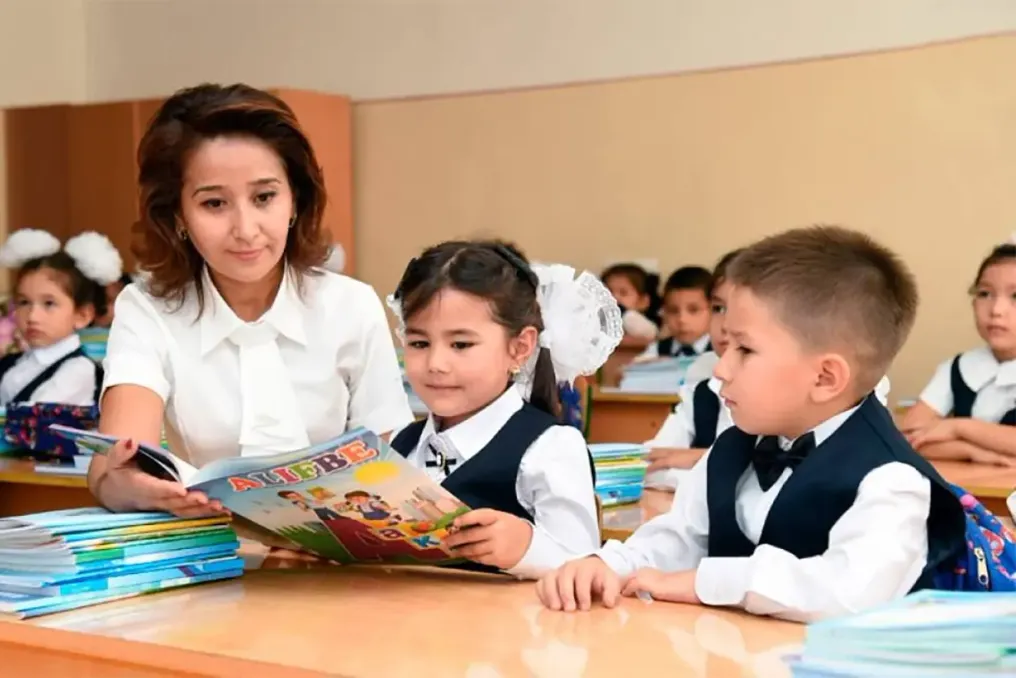
In Uzbekistan, over 4,000 educational institutions have opened preparatory groups for six-year-old children using unused classrooms. The Ministry of Education and Science press service clarified the details of how these groups operate and the requirements for the premises.
The annual pre-school preparation program will be conducted in both kindergartens and available school facilities. In remote areas where such facilities are absent, groups can be organized in 'Kelayak' centers, technical colleges, and other social infrastructure objects, including cultural institutions.
The selection of locations for classes is not arbitrary. Before opening any group, the premises undergo inspection by representatives of the sanitary service, fire inspection, and education administration. They assess the availability of heating, lighting, water supply, toilets, and other safety conditions.
If the premises meet the established criteria, they are entered into a register and equipped for lessons. Otherwise, repairs must be carried out before permission to open the group is granted.
The Ministry reported that preparatory groups are already operating in over 4,000 schools, utilizing free spaces. Furthermore, an additional 246 groups are expected to open in 191 schools soon. These groups will not be created in highly occupied schools; instead, authorities will select institutions with available rooms and suitable infrastructure.
Children attending kindergartens will receive preparation there under the guidance of their own educators. For groups based in school buildings, separate teachers will be hired. Suitable candidates include higher education teachers and final-year students studying preschool education. Existing school teachers will not be diverted from their regular lessons.
Preparatory classes in state kindergartens and schools are provided free of charge. Private educational organizations also have the option to open similar groups, and parents can choose a private institution through a contract, making the decision independently.
All groups will follow a unified curriculum, regardless of the format of instruction. The program is based on play methods and focuses on developing physical skills, speech and communication, basic reading and writing skills, as well as cognitive development and creativity. This same program is applied to both regular and short-term groups in kindergartens, as well as to groups in free school classrooms, meaning that the format of the lessons does not affect the content of the preparation program.
Currently, pre-school preparation programs cover 98% of six-year-old children in Uzbekistan, which amounts to 726,921 children. Of these, 489,172 attend kindergartens, 19,910 participate in short-term and mobile groups, 215,003 receive preparation in schools, and 2,836 do so through other formats.
Over seven years, the coverage rate has increased from 37% to 98%. Achieving full coverage will require about 800 additional groups and nearly 20,000 places. The associated costs are planned to be included in the state budget for 2027.
Authorities also intend to improve the quality of preparation, enhance the professional qualifications of teachers, and integrate programs with primary school education. Subordinate acts will be developed to address these issues after the adoption of the relevant law. The introduction of a one-year preparatory stage is intended to ensure continuity in education and bring its duration closer to international standards. Educational programs are expected to be gradually adapted to international requirements.
Examples of current practices cited include Presidential Schools and the specialized Beruni School, which use programs that have received international accreditation at the ISCED-1 level. According to a ministry representative, international accreditation of the educational program eliminates the need for students to undergo a preparatory program.