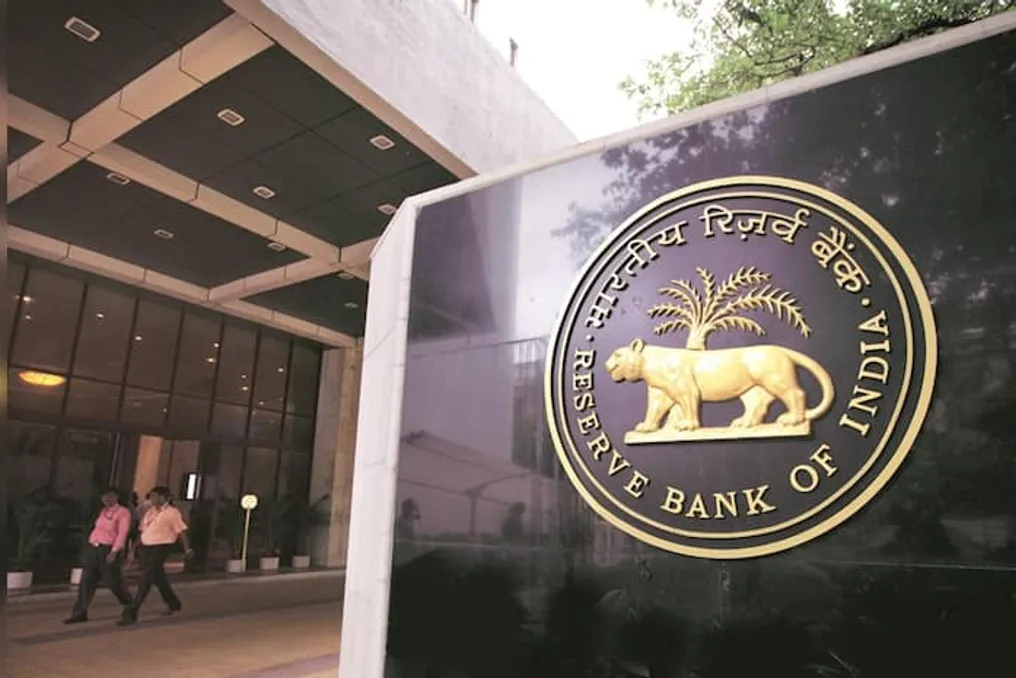
RBI returned 60 tonnes of gold in six months; domestic reserves share reached 84%
Read more
Business Standard
business-standard.com

RBI returned 60 tonnes of gold in six months; domestic reserves share reached 84%

The Reserve Bank of India (RBI) recorded the return of 60.08 tonnes of gold to the country over a six-month period ending in September. This led to an increase in the share of gold reserves held domestically to approximately 84 percent, up from 77.23 percent at the end of March. The data is presented in the RBI's semi-annual report on foreign exchange reserve management.

The total volume of RBI's gold assets amounted to 880.52 tonnes. By the end of September, 740.13 tonnes of these reserves were located in India, which is higher than the 680.05 tonnes registered in March. Consequently, the amount of gold held in the secure vaults of the Bank of England and the Bank for International Settlements (BIS) decreased from 197.67 tonnes to 140.39 tonnes.

Despite the change in distribution, the overall volume of the central bank's gold assets remained unchanged during the reporting period. However, the value of the gold reserves decreased to $106.08 billion by the end of September, compared to $115.40 billion in March. This decline was attributed to falling global gold prices, not a reduction in the reserves themselves.

Furthermore, the RBI increased the share of securities in its Foreign Currency Assets (FCA) while simultaneously reducing dependence on deposits in other central banks and the BIS. By the end of September, securities accounted for 87.06 percent of FCA, up from 84.31 percent in the previous six months.

Of the total FCA of $608.26 billion by the end of September, $529.57 billion was invested in securities, $35.95 billion was placed with other central banks and the BIS, and $42.75 billion was invested in foreign commercial banks. In March, the corresponding figures were $465.61 billion, $46.83 billion, and $39.84 billion, respectively, out of a total FCA of $552.28 billion.

As a result of this reallocation, the share of deposits in other central banks and the BIS fell to 5.91 percent from 8.48 percent. The share of deposits in foreign commercial banks also slightly decreased to 7.03 percent from 7.21 percent, despite an increase in their absolute value.

The RBI clarified that its foreign currency assets are managed through portfolios comprising multiple assets, in accordance with prevailing regulations and best international practices. A portion of the reserves was also managed by external asset managers to explore new strategies and products in reserve management and portfolio diversification.

Regarding the credit quality of investments, the central bank reported that its bonds and treasury bills represent obligations of highly-rated sovereign states, central banks, and supranational institutions. Deposits are placed with central banks, the BIS, and highly creditworthy foreign commercial banks.

The report noted that almost all investments, except for fixed deposits and financing provided to SAARC central banks, possess high liquidity and can be converted into cash quickly through direct sales or repo markets.

India's foreign exchange reserves grew to $737.78 billion by the end of September, up from $691.11 billion in March. RBI's net forward liability stood at $239.18 billion by the end of September.

Nevertheless, some reserve adequacy indicators deteriorated. The short-term debt-to-reserve ratio rose to 23 percent by the end of June from 21.6 percent in March, and the capital flow volatility-to-reserve ratio increased to 68 percent from 66.6 percent. Import coverage decreased to 9.8 months from 10.6 months.


Similar stories

Gold and silver prices fell: current rates presented in Delhi, Mumbai, Chennai, Ahmedabad, and Lucknow
Read more
www.aajtak.in

Gold and silver prices fell: current rates presented in Delhi, Mumbai, Chennai, Ahmedabad, and Lucknow

On November 18, significant drops were observed in the prices of gold and silver on precious metal markets, including the commodity and jewelry markets. Specifically, on the MCX exchange, the price of gold fell by more than 3000 rupees, while the cost of silver decreased by over 6000 rupees.

This decline occurred as the wedding season has not yet begun, leading buyers to question the current prices for 24, 22, and 18-karat gold in their respective cities.

On Wednesday, gold continued to fall in the Delhi jewelry market for the seventh consecutive day. The price of 10 grams of 24-karat gold dropped by 2800 rupees, reaching 1,35,800 rupees. The price for 22-karat gold was 122,300 rupees, and 18-karat gold reached 100,000 rupees. Meanwhile, silver became cheaper by 5000 rupees, settling at 1,64,500 rupees.

In Mumbai, the price for 10 grams of 24-karat gold was 1,33,260 rupees, while 22-karat gold cost 1,22,150 rupees for 10 grams. 18-karat gold was valued at 99,940 rupees for 10 grams. The cost of silver in Mumbai was also 1,64,500 rupees.

In Chennai, 10 grams of 24-karat gold were valued at 1,36,030 rupees. The price for 22-karat gold was 1,24,690 rupees for 10 grams, and 18-karat gold was sold at 1,02,040 rupees. Silver in Chennai cost 1,64,500 rupees per kilogram.

In Ahmedabad, 10 grams of 24-karat gold cost 1,36,090 rupees. 22-karat gold had a price of 1,24,740 rupees for 10 grams, and 18-karat gold was 1,02,070 rupees for 10 grams. The price of silver in Ahmedabad was set at 1,64,500 rupees.

In Lucknow, 10 grams of 24-karat gold cost 1,33,410 rupees. 22-karat gold was valued at 1,22,200 rupees for 10 grams, and 18-karat gold was priced at 1,00,100 rupees for 10 grams. The cost of silver in Lucknow was also 1,64,500 rupees.

Gold prices dropped today: current rates for 18, 22, and 24 karat presented in major cities
Read more
www.aajtak.in

Gold prices dropped today: current rates for 18, 22, and 24 karat presented in major cities

Those planning to purchase gold are advised to review today's prices. On November 13, 2026, the cost of gold decreased across the country. The price of 24-karat gold fell by 131 rupees per gram, and prices for 22-karat and 18-karat gold also decreased.

According to Goodreturns, on Friday, the price of 24-karat gold was 13,849 rupees per gram. The price of 22-karat gold dropped to 12,695 rupees per gram, and 18-karat gold was priced at 10,387 rupees per gram. Compared to November 12, 22-karat gold became cheaper by 120 rupees, and 18-karat gold by 98 rupees per gram. These prices are listed per gram; additional manufacturing fees and relevant taxes may be charged when purchasing jewelry, and the final cost may vary across different jewelry stores.

Current rates for 24, 22, and 18-karat gold are provided in nine major Indian cities, including Delhi, Mumbai, and Chennai.

In the country's capital, Delhi, on November 13, 2026, the price of 24-karat gold was recorded at 13,864 rupees per gram. The cost of 22-karat gold was 12,710 rupees, and 18-karat gold was sold at 10,402 rupees per gram. In Delhi, prices for all three karats of gold were the highest among the mentioned cities.

In Mumbai, the price of 24-karat gold is 13,849 rupees per gram, 22-karat is 12,695 rupees, and 18-karat is 10,387 rupees per gram. These figures correspond to the national averages. In Pune, on November 13, 2026, 24-karat gold was sold at 13,849 rupees per gram, while 22-karat and 18-karat gold cost 12,695 and 10,387 rupees, respectively.

In Kolkata, on November 13, 2026, 24-karat gold was sold at 13,849 rupees per gram, with 22-karat gold costing 12,695 rupees, and 18-karat gold at 10,387 rupees per gram. Similar rates were recorded in Bangalore: 24-karat gold costs 13,849 rupees per gram, and 22-karat and 18-karat cost 12,695 and 10,387 rupees.

In Hyderabad, 24-karat gold is valued at 13,849 rupees per gram, 22-karat at 12,695 rupees, and 18-karat at 10,387 rupees. In Chennai, the price of 24-karat gold reached 13,849 rupees per gram; 22-karat gold costs 12,695 rupees per gram, and 18-karat is 10,390 rupees per gram.

Data on gold prices is available for Vadodara and Ahmedabad.

Popular