Italian handbag brand Carpisa aims for 100 stores and ₹500 crore revenue in India
Read more
Business Standard
business-standard.com

Italian handbag brand Carpisa aims for 100 stores and ₹500 crore revenue in India

The Italian handbag and luggage brand Carpisa plans to achieve a network of 100 retail outlets and a revenue of ₹500 crore in India over the next eight to ten years. This plan is based on the growth of the middle class in the country, increased demand for international brands, and the expansion of organized retail trade.

Kuvera S.p.A. (Carpisa), headquartered in Naples, Italy, has entered into a long-term licensing agreement with Neopolis Brands to develop and expand the brand in India. The first store was opened in Bengaluru a year ago.

This week, Carpisa will open its second store in Jaipur, and by 2027, it plans to enter five new cities, adding another eight stores, which will increase the total number of outlets to ten. Furthermore, the company intends to strengthen its presence through temporary sales points in 10-15 cities.

On Expansion Plans

Shailesh Chaturvedi, Chairman of Neopolis Brands, told Business Standard that they are very excited about the response in Bengaluru and consider India a larger opportunity, making 100 stores the target. He also noted that the company is working towards achieving a potential revenue of ₹500 crore over the next eight-to-ten-year period.

In 2027, the company has allocated approximately ₹30 crore for capital investments for expansion in India. According to Chaturvedi, these funds will support the development of nearly 25 sales points, including 10 stores.

Currently, Carpisa has about 500 stores in 29 countries and generates annual sales of approximately €240 million. The brand, founded in Italy in 2001, is part of the Pianoforte Group, which also owns the lingerie and swimwear brands Yamamay.

Positioning and Market

In India, Carpisa is positioned in the segment of affordable premium handbags and luggage. Most bags are priced between ₹4,000 and ₹6,000, sling bags start at around ₹3,000, while leather bags cost about ₹10,000.

Francesco Pinto, a board member of Pianoforte Group and President of Yamamay, noted that pricing in India is generally comparable to Italy's, despite import duties. This is because the company aims to offer Indian consumers international goods without the additional markup of 30-40% often imposed by some global brands.

Chaturvedi added that the handbag and luggage market in India in this price range represents an addressable potential of almost ₹5,000 crore and is growing at approximately 10% annually.

Currently, Carpisa imports its products into India, but the company views local manufacturing as the second phase of its expansion. Local production is expected to begin in three to four years, with potentially up to 30% of production being carried out domestically.

Pinto believes that within eight to ten years, India could become Carpisa's second-largest market after Italy. Neopolis is also considering another international brand for India, which is expected to be announced next year, but emphasized that the immediate focus will remain on scaling Carpisa.
Similar stories

PepsiCo India invests 868 crore rupees in new food plant in Tamil Nadu
Read more
business-standard.com

PepsiCo India invests 868 crore rupees in new food plant in Tamil Nadu

PepsiCo India announced on Wednesday an investment of 868 crore rupees in the construction of a new food manufacturing plant in Manapparai, Tamil Nadu. This move is part of the company's expansion of production capacity in South India.

The new facility, spanning 28 acres, will be located in the SIPCOT industrial park in the village of Kannudaiyanpatti. This investment is part of PepsiCo India's broader plan to invest 5,700 crore rupees by 2030.

Earlier in May, the company had stated its intention to invest up to 5,700 crore rupees in India by 2030, with a particular focus on expanding production in the states of Madhya Pradesh, Assam, and Tamil Nadu.

PepsiCo India emphasized that this investment reflects the company's long-term confidence in the state's growth potential and its commitment to strengthening India's agricultural ecosystem, manufacturing presence, and economic development.

The plant will produce Lay's and Kurkure snacks, which will help strengthen PepsiCo's distribution network across South India by bringing production closer to key consumer markets. The company also noted that thanks to advanced production and warehousing capabilities, the facility will ensure greater operational efficiency and enhance supply chain resilience in the region.

Comments from government officials

Selvi S Keerthana, Minister for Industries, Investment Promotion and Trade of Tamil Nadu, stated that this project marks another stage of the state's industrial expansion. She expressed delight over the opening of the new PepsiCo India manufacturing facility in Manapparai, calling it an important step in Tamil Nadu's industrial growth.

The Minister noted that this investment demonstrates the growing trust of global corporations in Tamil Nadu's strong manufacturing ecosystem and the government's commitment to developing industries outside major cities. She added that under the leadership of Chief Minister Tirum Se Joseph Vijay, the goal is for investments to bring tangible opportunities, quality jobs, and overall prosperity to Tamil Nadu, and she expressed hope for a strong partnership with PepsiCo that will bring new opportunities to the residents of Tiruchirappalli and surrounding areas.

PepsiCo India's investments are focused on establishing a concentrate plant in Madhya Pradesh, a snack facility in Assam, and expanding operations in Tamil Nadu. Previously, the company had reported that acquiring land in Tamil Nadu would allow it to increase snack production capacity in the South.

PepsiCo management's view

Jagrut Kotecha, CEO of PepsiCo India and South Asia, stated that South India remains an important market for the company, possessing a strong consumer base and significant potential for sustainable growth. He stressed that this investment confirms the company's long-term commitment to the region and its belief in its industrial and economic potential.

The new plant is expected to create around 650 direct and indirect jobs, as well as provide additional economic activity through the local supplier ecosystem. Kotecha noted that the project will open opportunities for micro, small, and medium enterprises, as well as related industries such as packaging, laminates, cardboard, and biomass.

He concluded that this is more than just an investment in manufacturing capacity; it is an opportunity to make a significant contribution to the industrial growth and economic development of Tamil Nadu.

It should be noted that PepsiCo India reported revenues of 9,789 crore rupees for the 12 months ending December 2025, and a net profit after tax of 905 crore rupees, with the company's food business growing by approximately 11 percent over the year.

India and Italy aim to increase bilateral trade to 20 billion euros by 2029
Read more
timesofindia.indiatimes.com

India and Italy aim to increase bilateral trade to 20 billion euros by 2029

India and Italy have set a goal to increase bilateral trade volume to 20 billion euros by 2029, raising the figure from 14.2 billion euros recorded in 2025. Furthermore, both countries plan to establish working groups to simplify business operations and explore the possibility of creating an economic corridor connecting Asia and Europe.

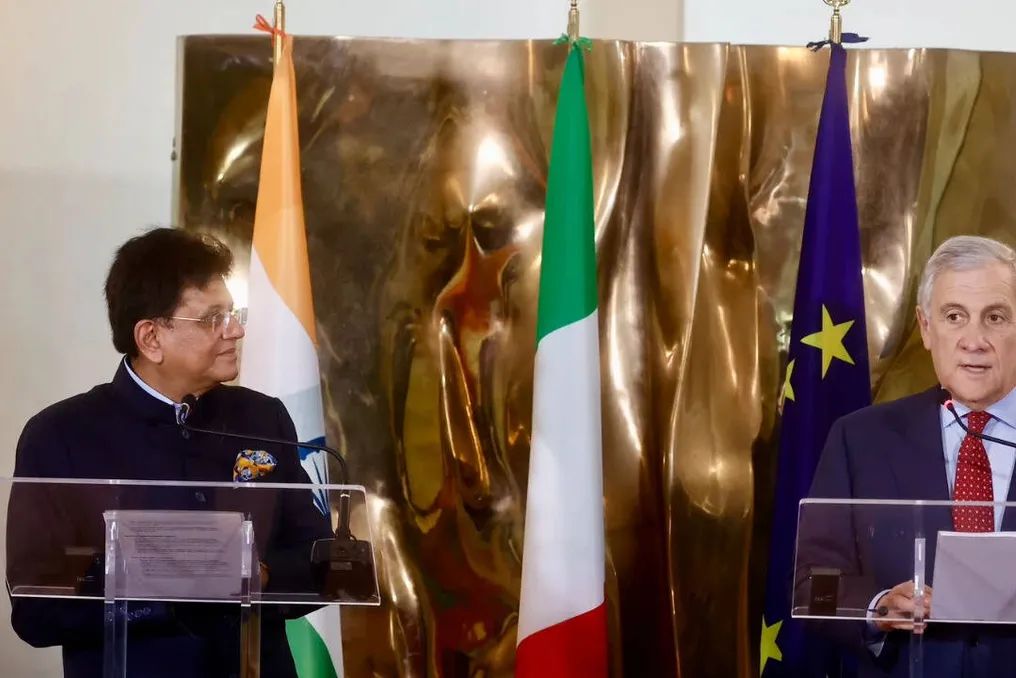
These decisions were agreed upon during the meeting between Indian Trade Minister Piyush Goyal and Italian Deputy Prime Minister and Foreign Minister Antonio Tajani in Rome on November 18, according to the Italian Ministry of Foreign Affairs.

The parties also discussed the India-Middle East-Europe Economic Corridor (IMEC), which aims to connect Indian markets with Europe via the Middle East using rail and sea routes. Italy is interested in strengthening the role of its Mediterranean ports within this proposed corridor. Tajani highlighted the port of Trieste as a potential entry point for goods destined for Central and Eastern Europe.

A decision was also made to create dedicated working groups in India and Italy to help businesses overcome administrative and bureaucratic hurdles. According to the Italian MFA, these groups will work to streamline procedures and promote trade and investment between the two nations.

The Italian Ministry of Foreign Affairs emphasized that IMEC has the potential to open new opportunities in trade, logistics, and energy interconnection. For India, this proposed route could provide additional connectivity to European markets and contribute to supply chain diversification.

India and Italy are also considering establishing an Innovation Center in India, modeled after the INNOVIT center in San Francisco, Italy. The proposed center would bring together startups, businesses, and research institutions to advance technological partnership, innovation, and investment.

Additionally, the parties discussed expanding cooperation in areas such as pharmaceuticals, chemical industry, industrial machinery, automotive industry, aerospace, agriculture, and renewable energy. According to the Press Information Bureau of India (PIB), sectoral discussions focused on technology transfer, joint research, electric mobility, food processing, and advanced manufacturing.

The meeting also addressed the Free Trade Agreement between India and the European Union (FTA). According to the PIB, both sides welcomed the completion of negotiations and discussed how this agreement can improve market access, stimulate investment, and strengthen supply chains. Italy stressed the need for the prompt signing of this pact.

Thomas Cook India plans to spin off resort business by October 2027
Read more
business-standard.com

Thomas Cook India plans to spin off resort business by October 2027

Mahesh Iyer, Managing Director and CEO of Thomas Cook (India) Ltd, stated that the company expects the scheme to separate its resort and resort management business in favor of Sterling Holiday Resorts to be effective by October 2027, with the scheme coming into force by mid-financial year 2028.

According to information provided by a senior company official in an interview with PTI, Thomas Cook (India) Ltd plans to proceed with the proposed separation of its resort and resort management business in favor of Sterling Holiday Resorts Ltd (SHRL). Iyer clarified that the application for the composite settlement scheme has been filed with the NCLT Mumbai, and the implementation of the scheme depends on obtaining necessary approvals from regulators and shareholders.

In March, the Board of Directors of Thomas Cook (India) Ltd (TCIL) approved the plan to separate the resort and resort management business into SHRL, as well as the subsequent capital restructuring of TCIL.

Regarding the strategy for inorganic growth, Iyer stated that Thomas Cook India is open to considering acquisitions and strategic partnerships that could strengthen its capabilities and accelerate development across all business verticals. He highlighted the significant potential in collaborating or investing in technology platforms that complement the existing ecosystem in travel, corporate travel, and foreign exchange.

The company continues to build organic growth, but partnerships and acquisitions can help gain faster access to new opportunities, integrate them into its system, and respond more effectively to changing traveler needs. Any such opportunity will be evaluated based on its strategic viability and ability to create long-term value.

The company's growth planning takes place against the backdrop of recovering travel demand following geopolitical disruptions that affected sentiment and operating conditions in some international markets during the first half of FY2027. Iyer noted that business momentum has significantly strengthened in recent months, with the Indian tourism sector showing a sharp recovery in the quarter from July to September 2027 (Q2 FY27).

He reported that the tourism business in India recovered, ending the quarter only 6 percent below the previous year's figures, with healthy Gross Profit (EBIT margins) standing at 3.8 percent. The recovery was driven by domestic and short-haul tourism, supported by sustained customer demand and a shift in preferences towards destinations with better connectivity and value.

The company anticipates maintaining this positive trend. Booking forecasts for domestic tourism in India for the third quarter of FY2027 indicate stable demand, despite high airfare and other resource costs. Iyer predicts that the current quarter (Q3 FY27) is expected to see a healthy level of advance bookings at 30 percent, signaling positive future demand trends.

Popular