Tomb Raider Franchise Review: History, Games, and Series Development
Read more
Olhar Digital
olhardigital.com.br

Tomb Raider Franchise Review: History, Games, and Series Development

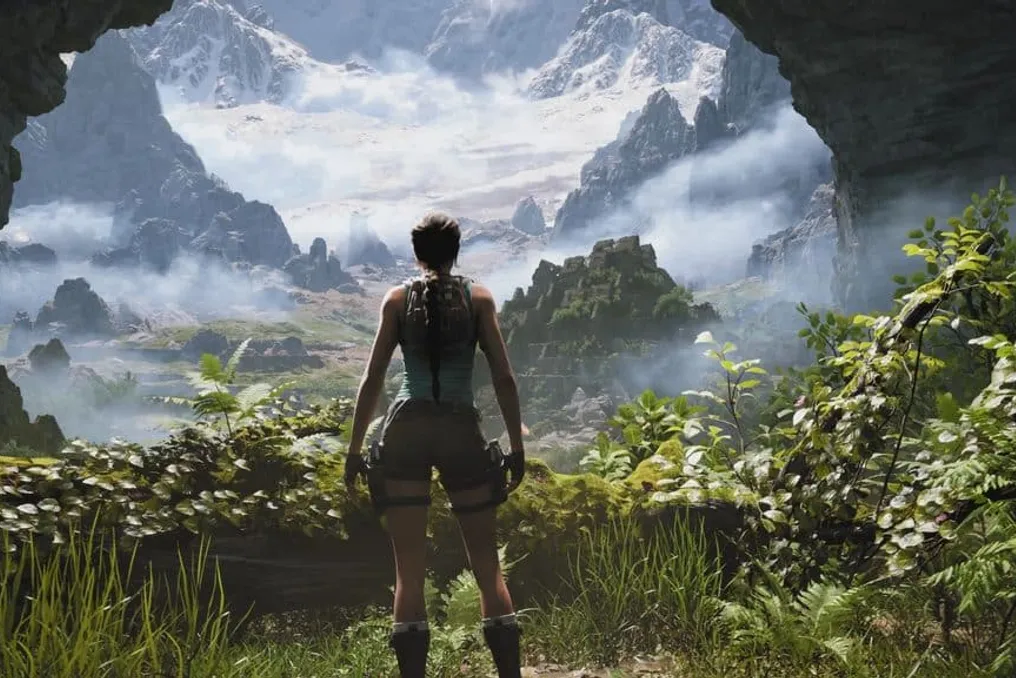
The first Tomb Raider game was released by Core Design, a studio from Derby, England, on October 25, 1996. Since then, the franchise has included 12 main games, as well as remasters, spin-offs, and mobile versions. In October 2024, Crystal Dynamics announced that total sales of the entire franchise exceeded 100 million copies.

The character Lara was created by Toby Gard, and Core Design released games almost annually until the formula became stale. Tomb Raider: The Angel of Darkness (2003) was considered a failure, after which Eidos handed over the franchise to Crystal Dynamics, who introduced Lara in the game Legend (2006). In 2013, the same Crystal Dynamics rebooted the story from scratch, releasing the Survivor trilogy, which concluded in 2018.

The criterion used for compiling this list was the number of copies sold. In the first expedition, Lara Croft, a young archaeologist, sets out on the Endurance ship in search of the lost kingdom of Yamatai. However, a storm sinks the vessel on an island off the coast of Japan, splitting the group. There she discovers that the place is controlled by the Solarii Brotherhood cult, striving to free Queen Himiko, and her friend Sam is at the center of the ritual. To save her, Lara must survive and stop being just a student.

In another adventure, Lara searches for the lost city of Kitej in Siberia and the Divine Spring, an artifact promising immortality. The journey begins in the Tomb of the Lost Prophet in Syria and leads to a conflict with the Triumvirate, an organization led by Constantine and his sister Anna. Along the way, Lara meets Jacob and the Remnants, a people protecting the city, and witnesses the Triumvirate invading the Valley of the Remnants. In the end, she decides to destroy the Divine Spring.

Lara and John follow Dominguez, the leader of the Triumvirate, to Cozumel, Mexico. He seeks the Chac Chel dagger and the Silver Box X Chel to recreate the world with the power of the god Kukulkan. When Lara extracts the dagger from the Moon Temple, she triggers the Cleansing, a Mayan apocalypse. The search continues in Peru, where the hidden city of Paititi is located, and Lara is forced to take on the role of X Chel to stop the ritual.

At Jacqueline Natla's request, Lara searches for the Scion, an artifact connected to Atlantis, starting in Calopek, Peru. Along the way, she encounters rivals such as Larson and Pierre Dupont, and realizes that Natla hid more than she said. The search passes through Greece, home to St. Francis’ Folly and Tiokan, and Egypt, revealing that Natla was the third ruler of Atlantis.

Marco Bartoli, leader of the Fiamma Nera sect, desires the Xian Dagger to transform into a dragon. Lara pursues the group across the Great Wall of China, Venice, an oil rig, the Maria Doria ship, and Tibet to the Xian Temple. She opens the dagger's chamber but falls into the catacombs before reaching it; Bartoli stabs himself and turns into a dragon. After the confrontation, the story ends at the Croft estate.

In childhood, Lara witnessed her mother, Amelia, disappear in a temple in Nepal after a plane crash in the Himalayas. As an adult, she finds clues in Tiwanaku, Bolivia, linking the disappearance to the legend of Excalibur. An old acquaintance, Amanda Everett, crosses her path as the search travels through Japan, Ghana, Kazakhstan, and England. In Nepal, Lara recovers the Galali Key and strengthens Excalibur in a monastery. Returning to Bolivia, Amanda informs her that Amelia is in Avalon, and Lara sets out to find her.

Lara investigates a meteorite in Antarctica linked to RX Tech and Dr. Willard. To understand what is at stake, she retrieves the Infada Stone in India, then the Ory Dagger in the South Pacific, the Eye of Isis in London, and Element 115 in Nevada. The journey concludes in Antarctica, where the meteorite explains the entire history.

The main series includes five other games that did not reach the sales threshold but helped tell Lara's story. Tomb Raider: The Last Revelation (1999) took Lara to Egypt and ended with her seemingly buried in a pyramid after awakening the god Set. Tomb Raider Chronicles (2000) used this ending as a frame: Lara's friends gather to reminisce about her old adventures, and each phase tells one of them. Tomb Raider: The Angel of Darkness (2003) presented the series on PlayStation 2, where Lara is accused of murder in Paris and involved in a conspiracy related to Obscura, and the character Curtis Trent is introduced. Tomb Raider: Anniversary (2007) recreated the 1996 game on the Legend engine. Tomb Raider: Underworld (2008) concluded the Crystal Dynamics trilogy by searching for Lara's mother, passing through Avalon and Thor's hammer.

The franchise also received spin-offs. Lara Croft and the Guardian of Light (2010) by Crystal Dynamics changed the third-person view to isometric and added a cooperative mode, and it had a sequel in Lara Croft and the Temple of Osiris (2014). Lara Croft Go (2015), developed by Square Enix Montreal, turned exploration into turn-based puzzles for mobile devices. Lara Croft: Relic Run, from Simutronics in collaboration with Crystal Dynamics, focused on the endless runner format, also for mobile devices.

Aspyr released remasters of Tomb Raider I-III on February 14, 2024, and IV-VI on February 14, 2025. On February 12, 2027, Tomb Raider: Legacy of Atlantis, a remake of the 1996 game, will be released, developed by Crystal Dynamics in collaboration with Flying Wild Hog and published by Amazon Games for PC, PS5, Xbox Series X|S, and Switch 2. Tomb Raider: Catalyst, set in northern India, is mentioned in forecasts for 2028, without an official date.

Since 1996, Lara has undergone two rebirths, crossed generations of consoles that did not exist during the first game, and returned to the starting point. Ultimately, the franchise continues to operate with the same idea: the desire to enter a tomb and discover what lies within.

Similar stories

Tamagotchi celebrates 30 years and surpasses the mark of 100 million units sold
Read more
olhardigital.com.br

Tamagotchi celebrates 30 years and surpasses the mark of 100 million units sold

Tamagotchi turned 30 this Monday (23). Originally launched on November 23, 1996, the virtual pet from Bandai reached the goal of over 100 million units distributed to the market, a milestone achieved in July 2025.

What initially seemed like a passing trend in 1996 transformed into one of the few portable games that have experienced three revivals. The name combines the words 'tamago' (egg) and 'watch'.

The idea originated in Bandai's children's toy department during a period of financial difficulty for the company, when the project did not receive support. Taro Tsuji, who currently holds the position of Chief Tamagotchi Officer, admitted in an interview with PRESIDENT Online that at the time, he did not possess the necessary vision for the product's success.

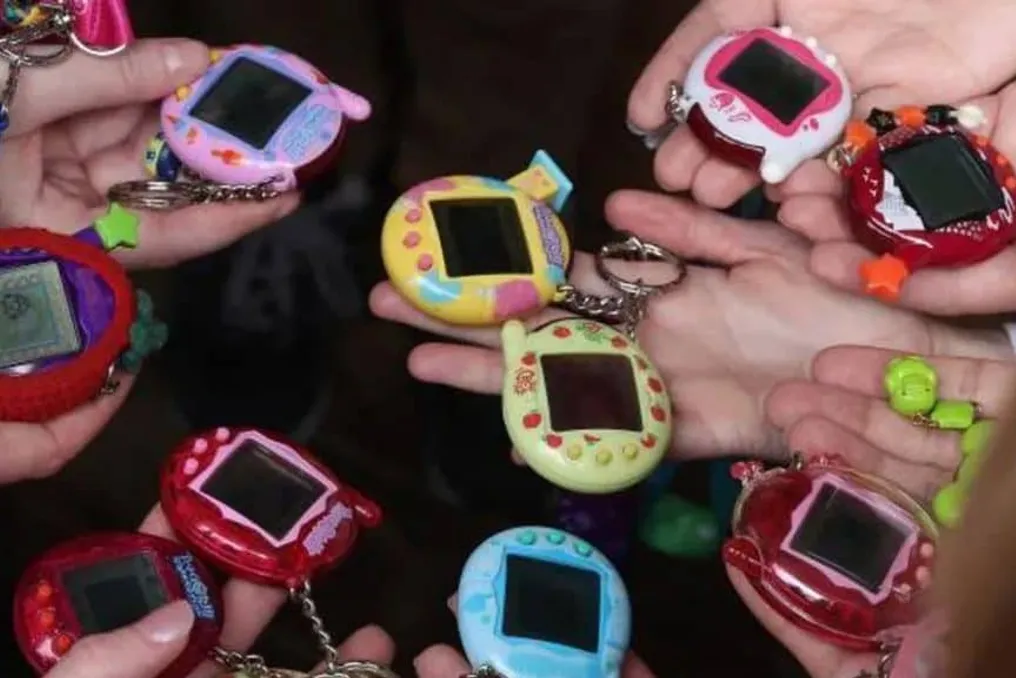
Market research indicated that the ideal target audience was high school students, leading Bandai to alter the initial plan. The watch was adapted to become an egg-shaped keychain, measuring approximately 50 millimeters, intended to be attached to backpacks.

After the peak of popularity and the emergence of imitation products, Bandai accumulated a large amount of stagnant stock and recorded an extraordinary loss of about ¥6 billion in the fiscal year ended in March 1999. In 2004, models equipped with infrared communication brought Tamagotchi back to the market, selling about 5 million units in a single year.

In 2008, the introduction of the first color screen, which required larger batteries and increased the device size to 68 millimeters (37% larger than the original), marked another evolution. According to Tsuji, Tamagotchi has gone through a cycle of boom and return three times. The current phase is driven by the Original Tamagotchi, a reprint of the version sold internationally in 1997, and Tamagotchi Paradise, launched in July 2025. Additionally, a touch screen was added in 2021 and the first model with Wi-Fi connectivity, Tamagotchi Uni, in 2023.

Currently, two consumer segments sustain this phase of renewal. On one hand, there are women aged 30 to just over 40 who experienced the first success in 1996 and now acquire the latest models for their children. On the other hand, there are women in their 20s who participated in the second boom in the early 2000s. Regarding this second group, Tsuji commented in an interview with PRESIDENT Online that many of these people keep the old editions in their collections, treating them as accessories that evoke the 'Heisei retro' style.

Of the 100 million devices sold, 49% went to Japan, 33% to the United States, 16% to Europe, and 2% to Asia, excluding Japan. Celebrating this milestone, Tsuji stated in a Bandai press release: 'We were welcomed by people from all over the world and managed to deliver more than 100 million Tamagotchi units.'

A permanent store has been operational in Tokyo, located in the Harakado complex in Harajuku, since November 22, 2025. The exhibition titled 'Dai Tamagotchi' took place at the Roppongi Museum from January 7 to February 2, 2026, and subsequently traveled to Nagoya, Mito, Sapporo, Osaka, and Niigata. The next scheduled stop is Fukuoka, from December 29 to January 25, 2027, while Ishikawa and Hyogo are planned for the Japanese spring, between March and May.

Internationally, Paris hosted a space at the Gashapon store on rue de Rivoli from August 27 to November 4, and the United States conducted a tour across eight cities. Partnerships were also established with Uniqlo and Medicom Toy, the most recent being a collaboration with the 7-Eleven chain in Japan, which included six themed food items and an exclusive Tamagotchi.

The centerpiece of the anniversary celebration is the Tamagotchi Ring, announced on August 27, 2026. This model measures 28 millimeters, representing 56% of the original size, and features only 64 components, making it the smallest among the color devices manufactured by Bandai. The company stated that it took two years to develop what it describes in its press release as the 'smallest color screen device in the world.'

This ring is offered in three colors and features 30 characters from the series' history, costing ¥7,700 in Japan (approximately US$ 48). Pre-orders on Premium Bandai closed on October 6. Bandai confirmed that deliveries will begin in February 2027, and a second round of orders, opened on August 29, will be delivered in April. The manufacturer has not yet disclosed the price or sales channels for Brazil.

Although innovations such as color screens, Wi-Fi, and the ring have kept the brand visible, Tamagotchi has not survived solely on its sophistication. The essence that caused the toy's success in 1996 remains central: caring for a creature that can die. The 2025 Paradise, moreover, includes a 'peaceful death' scene for those who complete 30 years in the game.

Titanic items sold at auction: watch for 3 crore rupees, diamond ring for 1.77 crore
Read more
www.aajtak.in

Titanic items sold at auction: watch for 3 crore rupees, diamond ring for 1.77 crore

After 114 years since the sinking of the liner 'Titanic', auctions were held for items recovered from the ship's wreckage, which were sold for huge sums. These items, ranging from pocket watches to diamond rings, attracted buyers' attention.

The history of the 'Titanic' is well known worldwide, as the tragedy that occurred in the Atlantic Ocean 114 years ago became part of history and inspired films. Despite the passage of time, the ship's wreckage still cannot be fully retrieved from the water, but the items that have been found are periodically put up for auction.

'Titanic' sank in 1912. According to historical data, several months before the disaster, a large ice chunk measuring 500 meters separated from part of Greenland and began moving south. This giant piece of ice collided with the 'Titanic' on the night of April 14, 1912, and the ship, traveling at a speed of 41 kilometers per hour, sank into the sea in just four hours.

According to a report published in Business Today and citing the BBC, rare items belonging to passengers of the sunken 'Titanic' were sold at record prices. Over 100 memorabilia related to the 'Titanic' were sold, and the total sale amount exceeded 1 million pounds sterling (equivalent to over 12.66 crore rupees).

Among the most valuable lots were various artifacts. A pocket watch belonging to Mary Mageen, a 32-year-old Irish third-class passenger, was recovered from the wreckage and sold for 250,000 pounds sterling (approximately 3.17 crore rupees). These watches were recently displayed along with Mageen's other collection in Belfast.

Additionally, a diamond ring worn by Lady Daphne Gordon was sold for 140,000 pounds sterling (over 1.77 crore rupees), setting the highest price ever achieved for a jewelry item from the 'Titanic'.

Another major lot—a letter written by Herman Artagavite Gohem, a first-class passenger, was sold for 80,000 pounds sterling (about 1.01 crore rupees). This letter was written on official 'Titanic' paper in Spanish and contained information about the ship, including paint color, temperature, and passenger count. It was found in Gohem's belongings.

A postcard written by 'Titanic' senior radio operator Jack Phillips four days before the disaster was sold for approximately 32,000 pounds sterling (40.5 lakh rupees). He wrote this postcard to his sister Elsie while the 'Titanic' was anchored in Southampton.

Other items were also sold, including an insurance document related to the 'Titanic', valued at 27,000 pounds sterling (34.2 lakh rupees), as well as a rare ticket for 45,500 pounds sterling (57.6 lakh rupees).

Andrew Eldridge, an auctioneer from Henry Aldridge & Son in Devizes, Wiltshire, noted that the total revenue exceeded 1 million pounds sterling, and 'Titanic' items constituted a significant portion of this sum. He emphasized that interest in the 'Titanic's' history is global, with clients arriving from all corners of the world. In his opinion, the prices reflect a constant interest in this topic, and their work aims to preserve people's memories through these objects. Previously, items such as menus and cookies used at the time were sold at auctions.

Halo: Franchise Review, from the launch of Combat Evolved to the most recent titles
Read more
olhardigital.com.br

Halo: Franchise Review, from the launch of Combat Evolved to the most recent titles

On November 15, 2001, Bungie released Halo: Combat Evolved for the Xbox. This title evolved from a real-time strategy game started in 1997, through a third-person shooter, to consolidating into a first-person format. Microsoft had acquired Bungie in 2000 with the goal of including the game in the console's launch titles.

This Sunday (11/15), the complex production project celebrates 25 years. The game is recognized as a milestone in the modernization of the shooter genre and a crucial factor in the success of the Xbox.

At the core of the narrative is the Halo Array, a network of circular megastructures conceived by the Forerunners, an ancient civilization. The Forerunners faced the Flood parasite, exterminating all sentient life in the galaxy to deprive it of food. About one hundred thousand years later, in the 26th century, humanity established colonies on other planets under the management of the UNSC, becoming the target of a holy war waged by the Covenant, a theocratic alliance of alien species that considers humans an affront to their Forerunner gods.

Master Chief, a supersoldier identified as John-117, and Cortana, his artificial intelligence, are central figures in this conflict, responsible for destroying a ring and discovering the true purpose of the network. Later, the series addresses the internal civil war in the Covenant, introducing the Arbiter, a disgraced alien commander, and the awakening of the Didact, a Forerunner commander. Cortana breaks away from the UNSC to seek control of the galaxy through the Created. In Halo Infinite, she deliberately destroys part of the Zeta Halo ring to prevent the Banished, a mercenary group, from using it in a dispute with the UNSC.

Currently, the franchise has 17 games, encompassing main titles, remasters, spin-offs, mobile versions, mixed reality experiences, and even arcade games, exceeding 81 million copies sold in February 2021. Over these 25 years, the series has transitioned between console shooting, online multiplayer, real-time strategy, and mobile games.

Due to the vast amount of content, a list of the nine games that have had the greatest impact in terms of sales and notoriety was selected, based on an analysis of sales figures, Metacritic reviews, and fan perception.

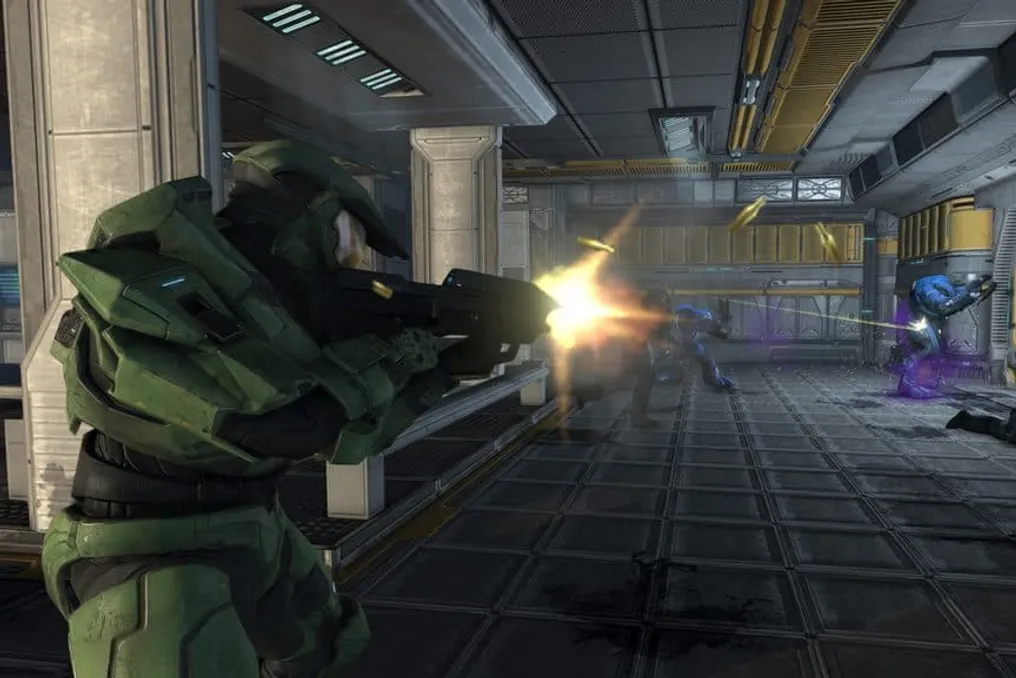
In the 26th century, Master Chief, a cybernetically enhanced supersoldier, and Cortana, his AI, battle alongside the UNSC against the Covenant, the alien theocratic alliance. They seek to unravel the mysteries of the Halo ring, a gigantic artificial structure that gives the game its name. This was the beginning of the saga and is credited with revolutionizing first-person shooter games.

The campaign develops with Master Chief and the Arbiter, the disgraced alien commander. While the Covenant plunges into a civil war and a plan to activate the rings advances, both work to prevent the annihilation of all sentient life. The suspenseful ending shows the Ark of the True Prophet's ship arriving on Earth. The game also set the industry standard with its Xbox Live multiplayer, solidifying concepts such as matchmaking and lobbies.

The story begins on Earth, located in East Africa, where Master Chief returns to combat alongside the Arbiter against the Covenant and the Flood. The objective is to prevent the True Prophet, leader of the Covenant, from activating the ring network from the Ark. To contain the Flood, the protagonist activates a new ring, culminating in the Forward Unto Dawn frigate being split in half. The game introduced Forge, a map editor, and Theater, a feature to save and review matches, as well as allowing cooperative campaigns for up to four players.

From another perspective, the player assumes the role of the Rookie, one of the ODST Marines (Orbital Drop Shock Troopers), on a mission to find lost comrades in the devastated streets of New Mombasa during the Covenant invasion. This plot occurs between Halo 2 and Halo 3, set in a noir style with jazzy influences, and includes the Firefight cooperative mode, where the group faces increasing waves of enemies.

Another point of view is that of Noble Six, a member of the Noble Team, a squad of supersoldiers attempting to defend the planet Reach from the Covenant attack. While Cortana uses data from an alien artifact to guide the Pillar of Autumn ship to a Halo ring, Noble Six offers a final resistance against overwhelming forces. This was Bungie's last title, incorporating armor upgrades such as jetpack and camouflage.

Later, Master Chief and Cortana explore Requiem, a shield planet built by the Forerunners, confronting a new faction of the Covenant and the Prometheans, mechanical warriors of the ancient empire. Cortana experiences rampancy, the mental decline of AIs after the end of their useful life, and the hero manages to free the Didact, a Forerunner warrior. This was the first title developed by 343 Industries, which took over the franchise after Bungie.

Instead of presenting a totally new narrative, a collection gathered the saga from Combat Evolved up to Halo 4. Released on Xbox One in 2014, this collection included four games: Combat Evolved Anniversary, Halo 2 Anniversary, Halo 3, and Halo 4. It later added the ODST campaign in 2015 and Reach. It is currently available for PC and Xbox Series X/S, facilitating access to the classics on modern platforms.

The story divides between two units: the Blue Team, led by Master Chief, and Fireteam Osiris, commanded by Spartan Locke. When the Blue Team separates to locate Cortana, Master Chief's loyalty is questioned, and Osiris is dispatched to bring him back. The game introduced Warzone, a 24-player mode, and abandoned split-screen.

In Halo Zeta Halo, Master Chief confronts the Banished and encounters Weapon, an AI designed to replicate and capture Cortana for its exclusion. This is the series' most recent main title, which suffered a postponed announcement in August 2020, and its multiplayer mode is free.

These nine games represent the greatest weight of the franchise, either in revenue or cultural relevance. The eight excluded titles demonstrate the experimental nature of the series. Halo Wars (2009) introduced real-time strategy on the Xbox 360, following the Spirit of Fire ship. Halo Wars 2 (2017) added the Blitz mode, which combines card and strategy elements. Combat Evolved Anniversary (2011) offered a reinterpretation of the first game, allowing switching between old and new graphics with a single button. Spartan Assault (2013) and Spartan Strike (2015) are PC and mobile shooters with dual-stick controls. Halo: Recruit (2017) is a brief five-minute mixed reality experience, and Fireteam Raven (2018) is a cooperative arcade shooter for up to four players. The remake Halo: Campaign Evolved (2026) concludes this list.

On July 28, 2026, Halo Studios released Campaign Evolved, a remake of the first game developed in Unreal Engine 5 for PS5, PC, and Xbox Series X/S. It features three new missions set one year before the original, nine additional weapons, sprinting, and real-time destructible vehicles. Critical reception was positive, with scores ranging between 77 and 81 on Metacritic, depending on the platform.

Popular