Uzbekistan plans to introduce labeling for footwear and transformers in the domestic market
Read more
UzDaily
uzdaily.uz

Uzbekistan plans to introduce labeling for footwear and transformers in the domestic market

Uzbekistan intends to implement digital labeling for certain types of footwear and transformers sold on the domestic market. Initially, the labeling will be introduced in a test mode starting January 1, 2027, and will then become mandatory on January 1, 2028, according to the draft Cabinet of Ministers resolution, which is currently under public discussion until December 10.

This document was developed to implement two presidential decrees. Decree PP-250 from July 2, 2026, concerns supporting the production of finished goods in the leather and footwear industry and stimulating exports. Meanwhile, Decree PP-325 from September 12, 2026, focuses on developing the electrical engineering industry.

The first decree provides for mandatory labeling of footwear in the domestic market, while the second introduces requirements for transformer labeling starting in 2027. The requirements will apply to footwear with HS codes 6401–6405 and transformers with code 8504. The draft proposes including these goods in the list of products subject to mandatory identification marking, with the requirement taking effect on January 1, 2028.

Footwear and transformers produced or imported into Uzbekistan before January 1, 2028, without labeling, will be allowed to remain on sale during the transition period. Producers and importers will have until April 1, 2028, wholesalers until July 1, 2028, and retailers until October 1, 2028, to sell off remaining stocks.

Furthermore, the draft tightens requirements for accumulator batteries and their separators, which are subject to mandatory labeling since January 1, 2026. Starting January 1, 2027, the production of these goods in Uzbekistan without labeling will be prohibited. Importing such goods will not be able to pass free circulation under customs procedures if the aggregated import code is not specified in the cargo customs declaration.

Producers, importers, and wholesale companies will receive six months to sell off unlabeled batteries. Wholesalers and retailers are permitted to voluntarily and free of charge label existing stocks. After this period expires, producers and importers can only supply batteries further down the distribution chain provided that the marking codes are included in electronic invoices and the relevant data is transmitted to the national information system Asl belgisi. The sale of unlabeled batteries will be prohibited.

Similar stories

Uzbekistan introduces unified scientist identifier and registry of scientific organizations
Read more
uzdaily.uz

Uzbekistan introduces unified scientist identifier and registry of scientific organizations

According to a government decree that came into force on November 3, 2026, Uzbekistan will begin issuing lifelong identification numbers for researchers and will also create a unified electronic registry of scientific results and organizations.

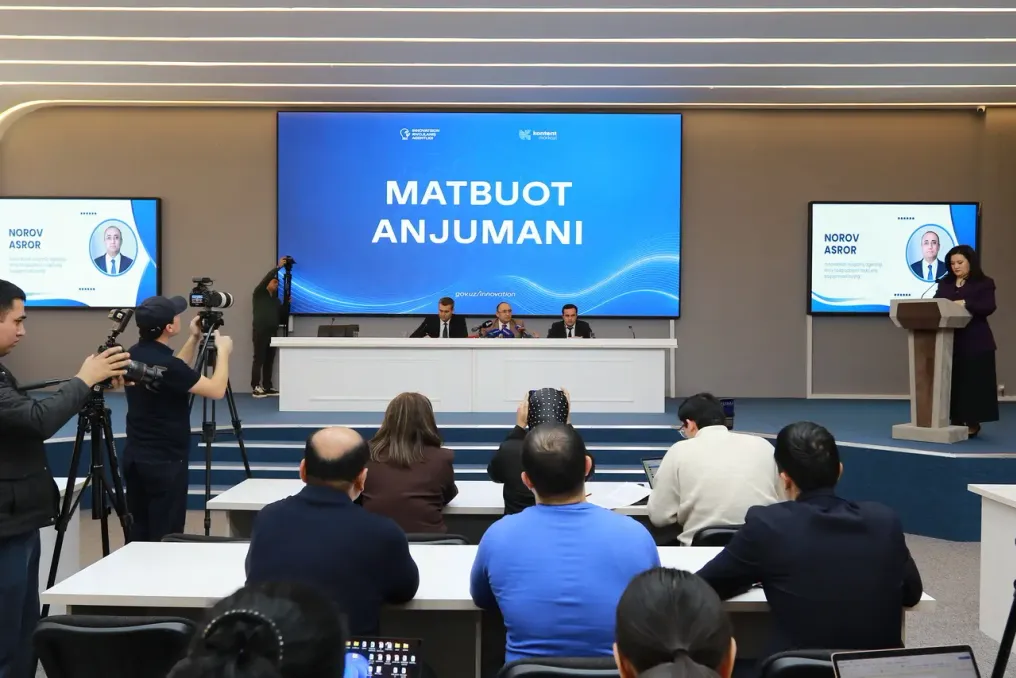
Cabinet of Ministers Decree No. 604 provides for the digitalization of scientific data, improvement of mechanisms for supporting scientists, and the formation of a single system for tracking scientific achievements. The document, dated October 31, 2026, aims to create a common electronic environment for scientific and innovative structures, systematize research results, and reduce bureaucratic procedures. The main provisions of this document were presented by the Innovation Development Agency at a press conference.

Unified Registry of Scientific Organizations

The Agency has been tasked with developing and maintaining a unified registry of organizations engaged in scientific and innovative activities, as well as introducing electronic records of research results. This work will be carried out in stages. It is planned that the platform at reyestr.ilmiy.uz will be ready by January 1, 2027.

By February 1, 2027, the agency must define the types of activities to be included in the registry and launch the registration service through public service centers and the my.gov.uz portal. The unified electronic database of scientific and innovative information is planned to be introduced by April 1, 2027. Organizations included in the registry will gain access to the agency's relevant information systems.

Science ID: one number for the entire research career

Science ID will serve as a unified identifier for all scientists and researchers. The system will cover university lecturers, employees of research institutes, doctoral students, independent researchers, and innovation specialists. This identifier will be automatically generated in the electronic system and assigned only once, remaining with the person throughout their entire scientific career, even when changing jobs or personal data.

Scientists will be able to use the agency's information systems through a single personal account. This will allow consolidating information about their participation in grant programs, research projects, and innovation initiatives in one place. Researchers with a high level of scientific activity can also apply for additional payments of up to 10% of their official salary.

How will additional payments to researchers be determined?

The decree amends Cabinet of Ministers Decree No. 1030 of December 24, 2019. Now, employees holding academic degrees must provide supporting documents through the electronic library kutubxona.ilmiy.uz to qualify for additional payments. Documents under consideration include scientific articles, monographs, patents, textbooks, participation in research projects, and practical application of obtained results.

The confirmed information will be used to create an electronic certificate, which will be stored in the Unified Electronic Database. Workplace commissions and collegial bodies within organizations will use this certificate when considering the issue of additional payments. The Agency emphasized that the system will not automatically assign additional payments; its task is verification and data organization. The final decision remains with the organization's working commission, which takes into account the employee's individual contribution and established criteria.

New requirements for foreign internships

The procedure for sending young researchers abroad for short-term internships will also change. Host institutions must meet international rating requirements: universities must be in the top 500 according to QS, THE, or ARWU rankings, and scientific organizations and research centers must be in the top 1000 according to the AD Scientific Index.

Requirements for competition candidates have been clarified: they must be between 20 and 40 years old, and can participate in only one competition at a time. A special expert group will evaluate reports on completed work after internships, checking whether participants achieved the goals and objectives of the program.

Other programs

Changes will also affect the Academic Mobility and 'Future Scientist' competition programs. The processes for organizing, financing, and monitoring these programs will be digitized.

What will change for researchers?

Decree No. 604 ensures the transition to a unified digital system for managing scientific and innovative activities. Scientific organizations will be registered in the general database, and researchers will receive permanent Science ID numbers. Research results and documents confirming applications for additional payments will also be recorded electronically. These changes are expected to streamline information about scientific personnel and organizations, increase the transparency of state support procedures, and simplify researchers' access to state information systems.
Uzbekistan launches digital platform to connect businesses and attract investments
Read more
uzdaily.uz

Uzbekistan launches digital platform to connect businesses and attract investments

Uzbekistan has introduced the first phase of the World Business Integration Platform (wbip.uz) — a digital service created to assist foreign companies in finding partners, investors, and clients.

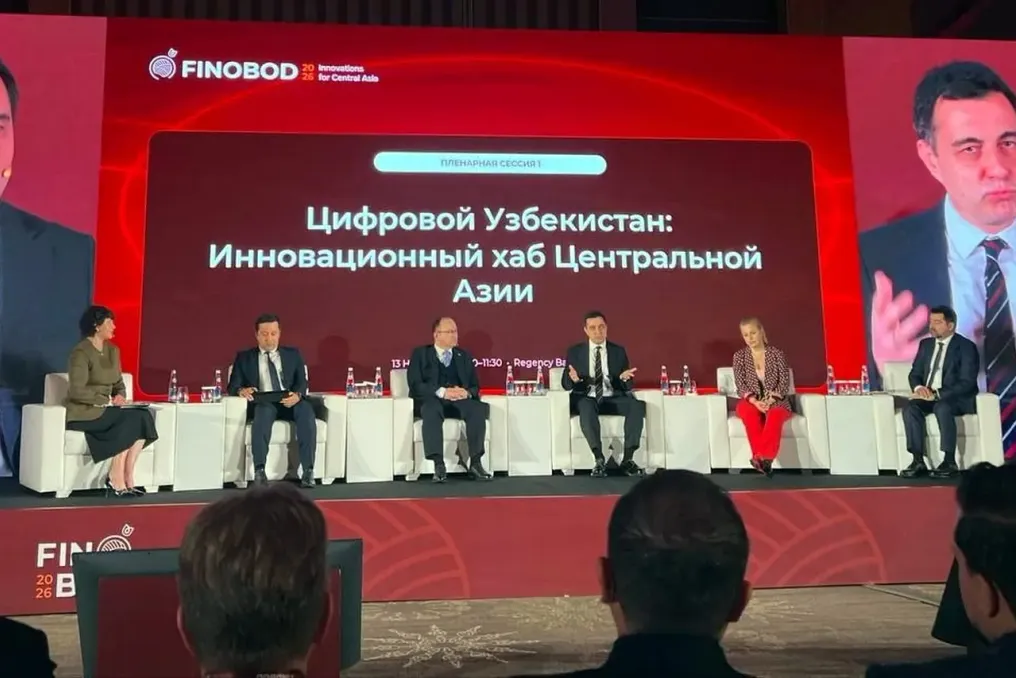
The launch was announced by Mukhtar Umarov, Chairman of the Assembly of the Economy of Uzbekistan, during the FINOBOD 2026 forum in Tashkent. The project was presented on November 13 at a plenary session titled 'Digital Uzbekistan – an Innovation Hub of Central Asia.' According to Umarov, the platform is part of the OS Assembly System cluster, which uses artificial intelligence to unite 65 industry associations representing about 100,000 companies.

Additionally, a separate platform called Tijorat Markazi is available for Uzbek entrepreneurs, designed for selling goods, attracting investments, and hiring personnel. Umarov reported that over 2,000 Chinese companies have already applied to participate in this international platform.

He noted that this service can facilitate cooperation with partners from China, Japan, Russia, and European countries. A session moderator emphasized that Uzbekistan previously lacked a single platform of this scale.

According to data presented at the meeting, as of September 1, 2026, approximately 21,500 enterprises with foreign investments were operating in Uzbekistan, of which about 17,000 were wholly foreign-owned. Chinese companies constituted the largest group, followed by Russian, Turkish, Kazakh, and South Korean enterprises.

Ildus Khalitov, representative of the Ministry of Economic Development of Russia in Uzbekistan, stated that more than 3,500 companies with Russian capital operate in the country, accounting for nearly 20% of all enterprises with foreign investments. He added that Russian companies are increasingly entering Uzbekistan with the aim of localizing production and gaining access to third-country markets. He also mentioned that one Russian-Uzbek technological park is already fully occupied by local companies.

Timur Kornilov, Managing Director of the Skolkovo Foundation, reported that about 70 out of 3,500 resident companies of the foundation operate in Uzbekistan, calling this a relatively small number. In September, the foundation signed an agreement with the Ministry of Higher Education, Science, and Innovation of Uzbekistan and approved a roadmap for creating an artificial intelligence center in Tashkent, scheduled for 2027–2028.

Kornilov pointed to the limited size of the Uzbek venture market as one of the factors slowing down the country's development as a regional innovation hub. He estimated the market at approximately 145–150 million US dollars, noting the presence of about 13 funds. Furthermore, he highlighted the shortage of qualified personnel and the need to harmonize business conditions in the region.

Ekaterina Yelmanova, Deputy Chairman of the Board of Rosbank, reported that the bank has been using its proprietary AI-based end-to-end platform since 2023, covering processes from data processing to model management. She specified that about two-thirds of the bank's architecture consists of internal developments, and Rosbank is ready to cooperate with Uzbek partners in the field of banking platforms and artificial intelligence.

Hasan Rakhmatov, Chairman of the Supervisory Board of Asia Alliance Bank, stated that clients expect integrated platforms and fast solutions, while speed and security remain key requirements.

Popular