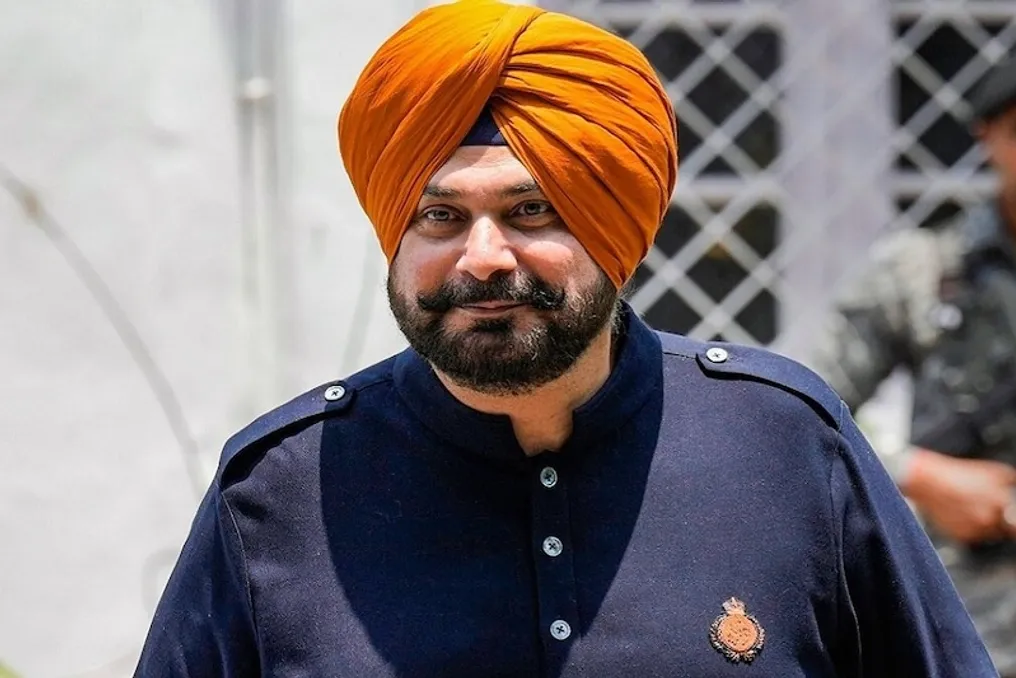
Navjot Singh Sidhu states that the resumption of the cricket series between India and Pakistan depends on government decision
Read more
Aaj Tak
www.aajtak.in

Navjot Singh Sidhu states that the resumption of the cricket series between India and Pakistan depends on government decision

Former Indian cricketer Navjot Singh Sidhu has made his position clear regarding the resumption of bilateral cricket matches between India and Pakistan, emphasizing that it is purely a political issue and the decision rests with the government.

Siddu believes that cricket can be used to bridge the gap between the two countries when the government deems it an appropriate time. No bilateral series has been held between India and Pakistan since 2012–2013.

Nevertheless, teams from both countries continue to participate in multi-national tournaments organized by the ICC and Asian Cricket Council (ACC) across various age groups and in men's/women's competitions at neutral venues.

Following the terrorist attack in Pahalgam last year, which resulted in 26 deaths, a state of military confrontation arose between the nations. Subsequently, the Indian government amended its sports policy, suspending bilateral sporting relations with Pakistan.

When asked about resuming cricket ties between India and Pakistan while acting as a commentator for DP World ILT20 in Dubai, Sidhu stated that political matters remain political. He clarified that any decision would be made by the government, as it is elected by the people and vested with the authority to decide. He added that if the government decides that matches will not take place for a certain reason, the Ministry of Home Affairs is aware of the reasons.

Siddu concluded that when the government decides to bridge the gap, it will indicate the inclusion of cricket in this process, and this is the only path he supports.

Siddu also shared his views on the growing strength of India in world cricket and the influence of the IPL. He noted that the economic power of Indian cricket has changed its status globally. Previously, Indian players traveled to England to play county cricket to improve their skills, but now players from all over the world come to Indian leagues.

In Sidhu's opinion, thanks to the IPL, Indian athletes have the opportunity to spend time with top international players and coaches. This helps build their confidence and sense of belonging. He compared his playing days, when they came from Patiala and did not feel part of such an environment, with today's players who feel like part of a large community surrounded by the best specialists from the start.

Responding to the question of reducing slots for Test and ODI formats, Sidhu explained that modern cricket evolves according to viewer demand and market needs. He stressed that while the popularity of T20 has led to this format being played, it does not mean ignoring ODIs. He gave the example that if 20 ODI matches are held, then 25 T20 matches are also held.

Siddu stated that in cricket, priority will be given to the format that is in demand and proves to be commercially viable. He concluded that what sells and is commercially sensible will always have the advantage.

Furthermore, Sidhu highly praised sports administrators for expanding cricket through leagues like ILT20, calling it a wonderful example of promoting cricket worldwide.
Similar stories

Despite abandoning bilateral series, India and Pakistan regularly meet in multinational tournaments
Read more
www.aajtak.in

Despite abandoning bilateral series, India and Pakistan regularly meet in multinational tournaments

Bilateral cricket series are not held between India and Pakistan because the distance in relations between the two countries is maintained due to the political situation. Nevertheless, teams from both countries constantly face each other within multinational competitions, whether it is the Asia Cup for senior teams, the U-19 Asia Cup, or tournaments for rising stars.

Since September 2025, 14 matches have taken place between India and Pakistan. Notably, the number of games per year was higher than when bilateral matches were held. This raises a question about the nature of this rivalry: why is there a refusal of bilateral series, yet a constant number of encounters in tournaments?

Another match between India and Pakistan took place in Doha on Sunday. Virat Kohli and Rohit Sharma did not participate, and it was neither a U-19 nor a women's cricket match. It was a group game in the Rising Stars Asia Cup between India A and Pakistan A. The Indian team, led by Tilak Verma, included players such as Abhishek Sharma and Vaibhav Suryavanshi, and lost to India by 48 runs.

During the match, not only sporting moments but also verbal altercations and tension between players were observed. The match started on Sunday at 15:30 Indian time and finished on Monday at 00:20, taking about nine hours to complete 100 overs. The game was repeatedly interrupted due to disputes between players, requiring significant effort from the umpires.

On the same day, the first Test between India and New Zealand was taking place in Wellington, starting at 03:30 Indian time. Thus, cricket fans had the opportunity to watch cricket for about 21 hours in one day, which could rather be called 'cricket overdose' than a 'super Sunday.'

The match in Doha was the second meeting between India and Pakistan within eight days. Previously, on November 14, both teams met in the Asia Cup U-19 final, where India defeated Pakistan to win the title, scoring 338 runs with one wicket remaining.

However, this trend is not limited to these two matches. Since the men's senior Asia Cup in September 2025, the teams of India and Pakistan have played 14 times, including competitions for senior, A-teams, and youth categories. This figure is important given the ban on bilateral cricket relations between the two countries.

One can recall the example of 2007, when the last bilateral Test series between India and Pakistan was held. That year, there were only 10 international matches between the two countries: five ODIs, three Tests, and two T20 World Cup matches. That is, during the period when bilateral matches were held, the annual volume of games was 10, whereas today the teams meet 14 times without bilateral series.

The question arises: what is this restriction? If the teams of India and Pakistan are willing to play in multinational tournaments, why is there such an avoidance of bilateral series? Is the principle of playing cricket changing depending on the tournament format and potential commercial gain?

The contests between India and Pakistan are among the most watched cricket matches in the world. As broadcasters and cricket boards know, the commercial significance of these encounters is high. This is why the probability of the teams facing each other in the same group in multinational tournaments is almost guaranteed, and the knockout format opens the way for additional matches.

Active advertising begins before the match, which is called the 'Mother of all Battles'. Promotional videos are shown on television, and an atmosphere is created on social media, trying to leverage the interest of millions of viewers. There is nothing wrong with the cricket business developing according to audience preferences. However, the question arises when these matches are repeated again and again for commercial gain, even though they could be held in the format of a bilateral series.

The Asian Cricket Council (ACC), both cricket boards, and broadcasters must answer this paradox. Is the number of India-Pakistan matches determined by the needs of the tournament or by how much profit can be made from another match?

It is also necessary to understand that tournaments at the A-team and U-19 levels are important. Young athletes gain international experience and the opportunity to play under pressure. But it is natural to ask about the motivation behind organizing such a number of tournaments and turning India-Pakistan matches into the main attraction. Has the market value of India-Pakistan matches become more important than the development of young cricket?

Another worrying aspect of this story is the behavior of players on the field. India-Pakistan matches have always been known for tension and excitement. However, recently, more attention has been paid to players' gestures than to the game itself.

India and Pakistan teams to meet in the Rising Stars Asia Cup 2026 in Doha
Read more
www.aajtak.in

India and Pakistan teams to meet in the Rising Stars Asia Cup 2026 in Doha

A match between the India-A and Pakistan-A teams is scheduled as part of the Rising Stars Asia Cup 2026 tournament, which will take place on November 22 (Sunday) in Doha. The game will be held at the West End Park International Cricket Stadium and is set to start at 15:30 Indian time. Both teams won their first matches, suggesting an intense confrontation.

India-A previously defeated Nepal by a large margin of 306 runs. India-A, having lost the draw, started the game by scoring 332 runs in 50 overs, losing 9 batsmen. In this innings, Kumar Kushagra performed brilliantly with 117 runs, and captain Tilak Verma scored 107 runs. In response, the Nepali team managed to score only 26 runs. Prince Yadav took five wickets, and Harshit Rana took four.

In the upcoming match, special attention will be paid to aggressive batsmen such as Vaibhav Suryavanshi and Abhishek Sharma. They are supported by Rinku Singh, Tilak Verma, and Kumar Kushagra. On their side, Pakistan-A defeated the UAE in their first match by a margin of 61 runs. Pakistan scored 245 runs, while the UAE could only manage 184. Shemil Hussain scored 62 runs, and Maj Sadakat scored 53. In bowling, Sufian Mukim and Ali Raja each took three wickets.

Pakistan-A is led by Abdul Samad, whose squad also includes the experienced player Mohammed Hasanin. This creates a serious bowling threat for the Indian batsmen. It should be noted that in the previous tournament final, Pakistan-A defeated India-A by a margin of 128 runs, and now the Indian team intends to avenge this defeat.

The tournament features eight teams divided into two groups, where the top two teams from each group will advance to the semi-finals. India-A's last group match will be on November 24 against the UAE, while Pakistan-A will play against Nepal on the same day.

According to the presented squads, potential players for India-A include Abhishek Sharma, Vaibhav Suryavanshi, Tilak Verma (captain), Ayush Badoni, Rinku Singh, Kumar Kushagra (as wicketkeeper-batsman), Shahbaz Ahmed, Suryansha Shedge, Vipradja Nigam, Harshit Rana, and Prince Yadav. Pakistan-A's expected lineup includes Farhan Yusuf, Abdul Samad (captain), Ali Raja, Hasan Nawaz, Maj Sadakat, Rohail Nazir (as wicketkeeper-batsman), Mohammed Imran Randava, Ahmed Daniyal, Sufian Mukim, Sad Masud, and Shemil Hussain.

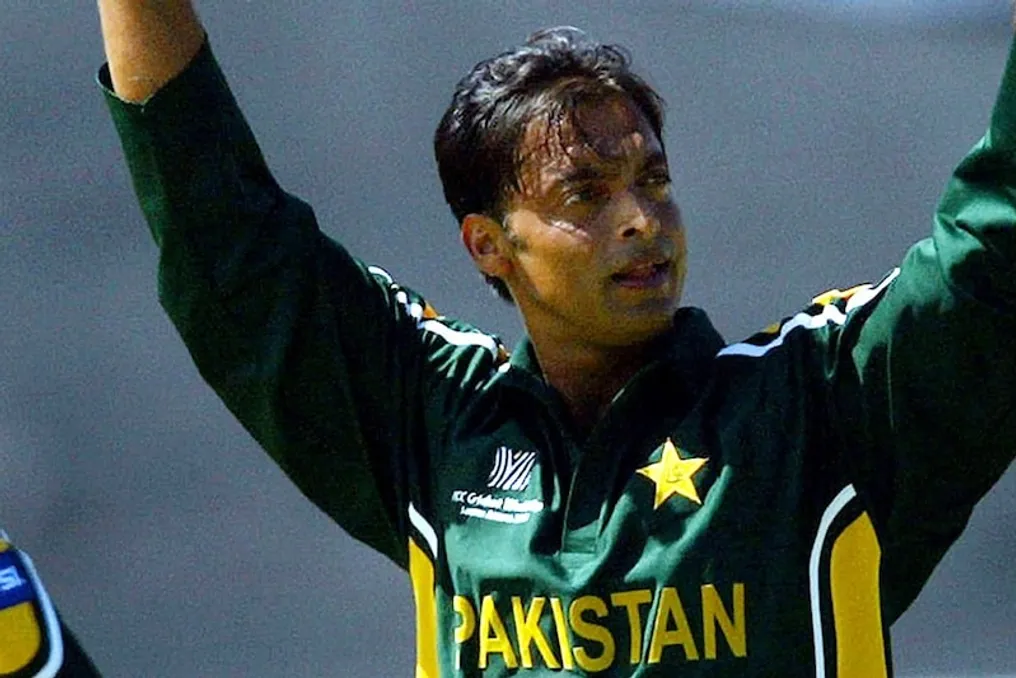
Shoaib Akhtar reveals details of ball tampering in Pakistan and raises allegations of match-fixing
Read more
www.aajtak.in

Shoaib Akhtar reveals details of ball tampering in Pakistan and raises allegations of match-fixing

Former fast bowler from Pakistan, Shoaib Akhtar, made a significant statement regarding ball tampering. Amid ongoing discussions surrounding the Australian sandpapergate scandal, Akhtar admitted that various methods of ball manipulation were also employed during his playing days in Pakistan. He disclosed that techniques such as using bottle tops and replacing the balls themselves were utilized.

Akhtar's statement came at a time when the 2018 Sandpapergate scandal is being actively discussed again, following the publication of autobiography 'Sabr' by former Australian batsman Usman Khawaja and new statements from Cameron Bancroft.

This incident occurred during a Test against South Africa in Cape Town. Cameron Bancroft was filmed polishing the ball with sandpaper. Following this, an investigation was conducted by Cricket Australia, resulting in bans for Bancroft, David Warner, and then-captain Steve Smith.

Commenting on the dispute, Akhtar stated that the issue should not be overly sensationalized. He also questioned Khawaja's public remarks about his former teammates. In an interview with Wisden, Akhtar noted: 'Friend, just leave this matter in the past. Why are you making such a big deal out of it? I understand it harmed cricket. Our cricket was also damaged. In England, we used bottle tops, not sandpaper. We also changed balls and did many other things. The truth came out, and now we just need to move on from this topic. It shouldn't be turned into such a huge scandal.'

Information about ball tampering was known to the entire team: Shoaib Akhtar

Akhtar agreed with Khawaja's assertion that such ball tampering incidents cannot be the result of one or a few players' decisions. In his view, the entire team participates in such cases. He emphasized: 'What Usman said must be a team decision. It cannot be the decision of two or three players. I am sorry to say this, but we played with cricket balls. I also did many different things. The whole team knew about it because if we couldn't make the ball spin back, we couldn't win the match. Now, everything that surfaces causes complete chaos. Although it shouldn't have been like that. He did the right thing by telling the truth, but there could have been a better time for it.'

In an additional message translated from the Indian Cricket Ministry's post, Akhtar stated: 'Shoaib Akhtar revealed that in Pakistan, bottle tops were used, balls were replaced, and various things were done in the 90s. There was a time when I felt like I was playing against 22 people because every player I faced was under scrutiny due to match-fixing. I do not want to name names because I cannot betray them.'

In 2018, during a Test against South Africa in Cape Town, Cameron Bancroft was seen on video polishing the ball with sandpaper. After the Cricket Australia investigation, Bancroft, David Warner, and Steve Smith were sanctioned. Questions then arose about the role of other team members.

Now, Usman Khawaja claims in his book 'Sabr' that information about this incident was widely circulated in the Australian team dressing room. Bancroft also stated in a detailed statement of about 4000 words that the entire team and coaching staff knew about the plan to use sandpaper during the visit to South Africa. Expressing dissatisfaction with Pete Cummins' previous stance, he reported feeling deceived and isolated. Having spoken out, he felt relieved.

On the other hand, the current captain of the Australian Test team, Pat Cummins, dismissed Khawaja's statements as 'nonsense' and maintained his original position. David Warner supported Bancroft and Khawaja, calling Bancroft's statement truthful and questioning the 2018 Cricket Australia investigation. Former coach Darren Lehmann requested time to provide a detailed response to Bancroft's allegations, stating he had nothing to hide. Meanwhile, Steve Smith has not yet given a public response to Bancroft's recent statement.

Meanwhile, Cricket Australia CEO Todd Greenberg announced the creation of an independent forum for participants of the 2018 South Africa tour, where they can present their views. However, some individuals, including former number 12 player Chad Sizers, have expressed doubt about this initiative.

Popular