An American investor overseeing the reconstruction of the Afrosiyob Palace hotel on Registan Street in Samarkand has proposed extending customs exemptions, currently granted to international hotel brands, to Uzbek labels.
This proposal was made by a representative of Arjun Construction during an open dialogue with tourism industry entrepreneurs. The investor stated that the hotel will feature 263 rooms; initially, the project planned a four-star establishment, but the company decided to develop a five-star hotel. He noted: 'Samarkand deserves this.'
The hotel is being created as a national brand based on Uzbek craftsmanship, hospitality traditions, and the Uzbek language. The company plans to expand beyond Samarkand to include Bukhara, Namangan, and Tashkent, followed by Bishkek, Kabul, and Dubai. By 2030, it is planned to open over 1250 rooms with a total investment volume exceeding 2 trillion soums.
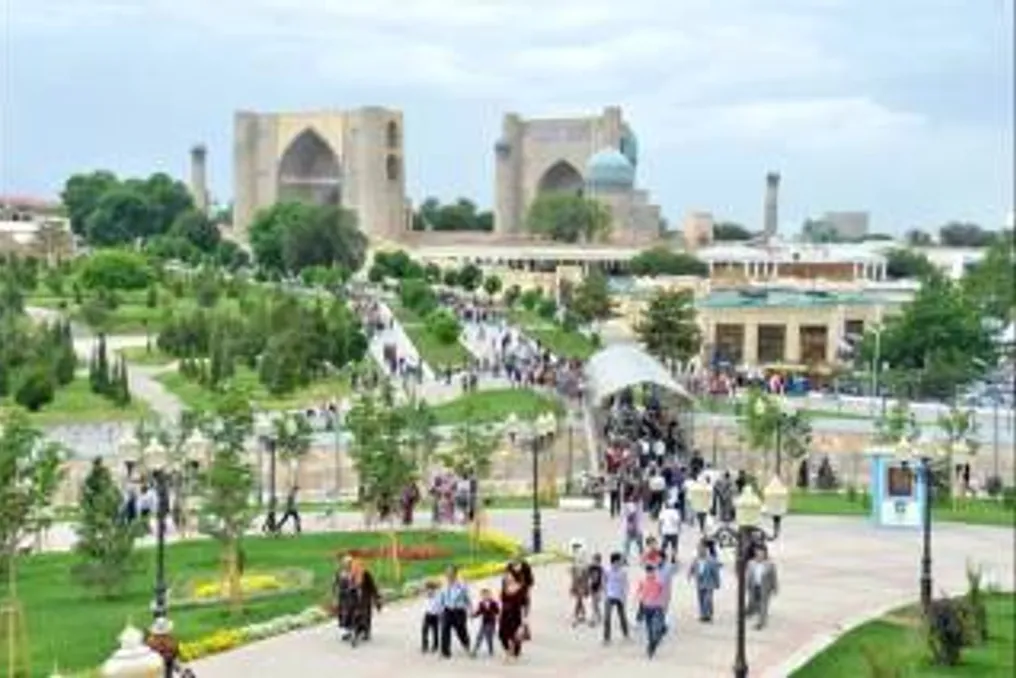
Furthermore, the company intends to register its brand in three countries within the next twelve months. Adjacent to the hotel, near Registan Square, a shopping complex named Afrosiyob is being built. The investor's goal is for the complex and the hotel to form a tourist corridor, including cafes, branded shops, and elite restaurants, which should boost tourist spending.
The company has approached the Ministry of Energy for support in ensuring the complex's power supply. The investor's main concern relates to Cabinet of Ministers Decree No. 348, which was amended this year. According to this document, hotel brands listed by the Cabinet of Ministers are exempt from customs duties until 2030. The investor explained: 'We understood that the goal was not only to attract international brands but also to support and develop our own.'
In August, the company submitted an application to the Tourism Committee requesting inclusion of its brand in this list. According to the investor, the administration of Samarkand Region supports this initiative. However, without the committee's position, the issue cannot be presented to the Cabinet of Ministers, while the hotel equipment is stored in a customs warehouse.
The investor stated that instead of paying royalties to foreign hotel chains, the company is prepared to use the saved funds to establish training academies and improve hospitality standards. He put forward three demands to the government: to dispatch a working group from the Tourism Committee to evaluate the project, to clarify who compiles the list of suitable brands and what criteria are used, and to appoint a responsible contact person within the committee.
Deputy Prime Minister Jamshid Khodjayev reported personally visiting the construction site. He noted that current government decisions do not provide for equivalent advantages for national brands. The Tourism Committee has been instructed to consider expanding customs preferences for high-level national brands comparable to international ones and to submit a corresponding proposal to the country's leadership.
The initiative was supported by the owner of Poykent Bukhoro hotels in Bukhara. His business includes three- and four-star hotels, and he plans to open a five-star establishment under a national brand in March or April. He also proposed reducing the social tax rate for hotels in Bukhara, Samarkand, and Khiva from 12% to 1%, since the tourist season in these cities lasts five to six months, after which trained staff leaves.
Government representatives stated that all proposed measures would be considered. According to the Tourism Committee, 32 international hotel brands currently operate in Uzbekistan, managing 52 hotels. By 2030, the government aims to increase the number of hotels managed by international brands to 100.