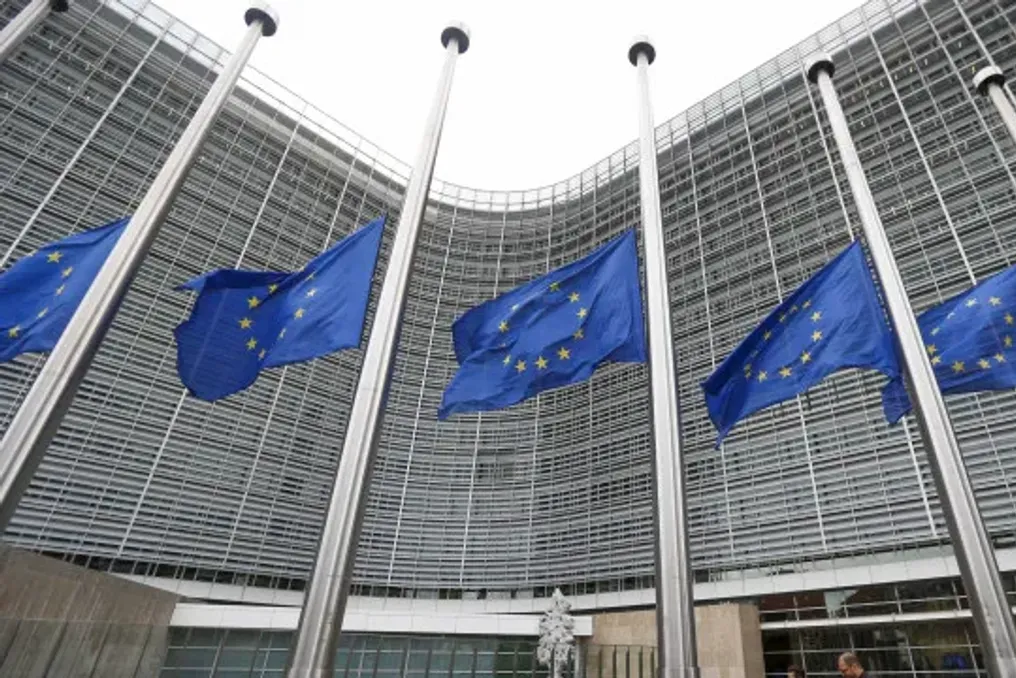
European Union Rejects US Arguments for Imposing New Tariffs
Read more
Noticias ao Minuto
noticiasaominuto.com

European Union Rejects US Arguments for Imposing New Tariffs

The European Union has currently rejected the arguments used by the United States to impose new tariffs on the bloc and expressed hope that the Trump administration will not violate the terms of the trade agreement signed in July 2025.

This reaction followed the announcement by U.S. Trade Representative Jamison Green regarding the introduction of new tariffs of up to 20% on 14 economies, including the European Union, China, and Japan. The reason cited was practices that, in the view of the US, unfairly disrupt the bilateral trade balance.

In a statement to the press, European Commission representative Olaf Gill 'preliminarily rejects' the possibility of the EU resorting to such practices, emphasizing that, on the contrary, Europe is 'one of the most vulnerable regions' due to the excessive production capacity of third countries.

He noted that 'the EU and the United States share a genuine concern about global overcapacity, a phenomenon largely linked to state intervention and particularly present in third countries.' However, the Commissioner expressed regret that 'a joint response to this issue could not be developed.'

Olaf Gill reminded that under the Turnberry trade agreement, signed by Donald Trump and Ursula von der Leyen in July 2025, the tariffs applied by the United States to European products cannot exceed a cumulative limit of 15%. He added: 'We hope that any measures resulting from this investigation will fully respect this limit, including combinations with existing customs duties.'

The representative also stressed that the EU will continue dialogue with the Trump administration to identify 'new products that can benefit' from tariff reductions, as well as areas where cooperation can be strengthened.

The proposed new tariffs, announced under Section 301 after a review period, involve an increase of up to 20% for certain Chinese imports, which overall could lead to an increase of up to 40%. This measure is aimed, in particular, at combating the overproduction of Chinese industry, which puts pressure on competitors' prices.

Representative Jamison Green stated that these tariffs on China could reach 40% if agreements related to the trade truce established last summer between U.S. President Donald Trump and his Chinese counterpart Xi Jinping are not reached. The increase in customs duties will also affect allied economies such as India, Japan, Singapore, and South Korea. Meanwhile, the United States has decided to exclude Mexico and Norway from this tariff increase for now.
Similar stories

EUA reject Brazil's request for WTO panel on US tariffs
Read more
noticiasaominuto.com

EUA reject Brazil's request for WTO panel on US tariffs

The United States (US) rejected a request made by Brazil to establish a panel at the World Trade Organization (WTO) regarding North American tariffs applied to Brazilian goods.

In a statement released on Tuesday, the WTO informed that the US not only opposed but also expressed regret over the Brazilian request. Despite this, Washington assured its willingness to dialogue with Brasília with the aim of ensuring greater balance and reciprocity in bilateral trade relations.

The US justified that the two tariffs imposed on Brazilian products aim to address long-standing concerns related to Brazilian policies that, according to them, harm American companies.

Brazil brought the WTO into action in July against two tariffs implemented during Donald Trump's administration. One of these tariffs was 25%, applied because Washington considered that Brazil adopted practices deemed unfair towards American companies. Furthermore, the US imposed 12.5% tariffs on Brazil, along with dozens of other countries, due to alleged failure in inspecting imports of items produced with forced labor.

The Brazilian government requested the formation of a panel after consultations held between the two countries on September 25, but the WTO reported that these conversations were unable to resolve the dispute.

Four days earlier, the US had rejected a request from China to participate in the consultations requested by Brazil at the WTO. According to the organization's rules, countries involved in the consultations must authorize the presence of a third member.

The North American position was formalized in a communication sent by the US delegation to China on September 21 and subsequently distributed to the WTO's Dispute Settlement Body. In this document, the US mentioned having received a letter from China, dated August 6, in which Beijing asked to participate in the consultations requested by Brazil.

The US argued that the consultation request presented by Brazil 'does not concern any acts, policies, or practices of China' nor 'any tariffs imposed on products originating from China.' For this reason, the US declared that the Chinese claim of having a significant commercial interest in the consultations was unfounded.

The communication sent to the Chinese delegation clearly stated: 'The United States is, therefore, rejecting your request to participate in these consultations.' In August, China had justified its request by alleging a 'substantial commercial interest' in the discussions between the two countries. China also highlighted that such measures impacted its exports to the North American market, except for some specific products, and modified the competitive conditions of its goods due to the extra tariffs imposed.

Popular