New Bus Route No. 158 Launched, Connecting Kensai Settlement with Tashkent
Read more
UzDaily
uzdaily.uz

New Bus Route No. 158 Launched, Connecting Kensai Settlement with Tashkent

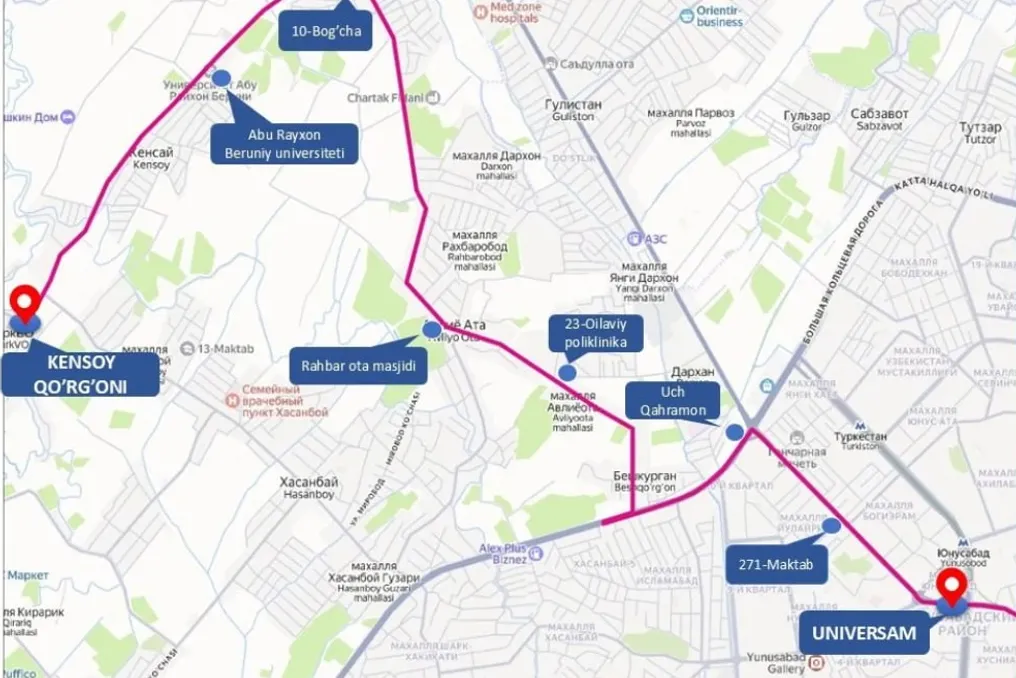
The Ministry of Transport of Uzbekistan announced the start of operations for the new bus route No. 158 within the capital area of Tashkent. This route began functioning on November 23, 2026, and provides a connection between the Kensai settlement and the Yunusabad Unisamabd stop in the capital.

The route passes through several significant locations: the Kensai settlement in the Tashkent region, Abu Raihan Beruni University, Rakhbar Ota Mosque, Family Polyclinic No. 23, Uch Kahramon checkpoint, and School No. 271.

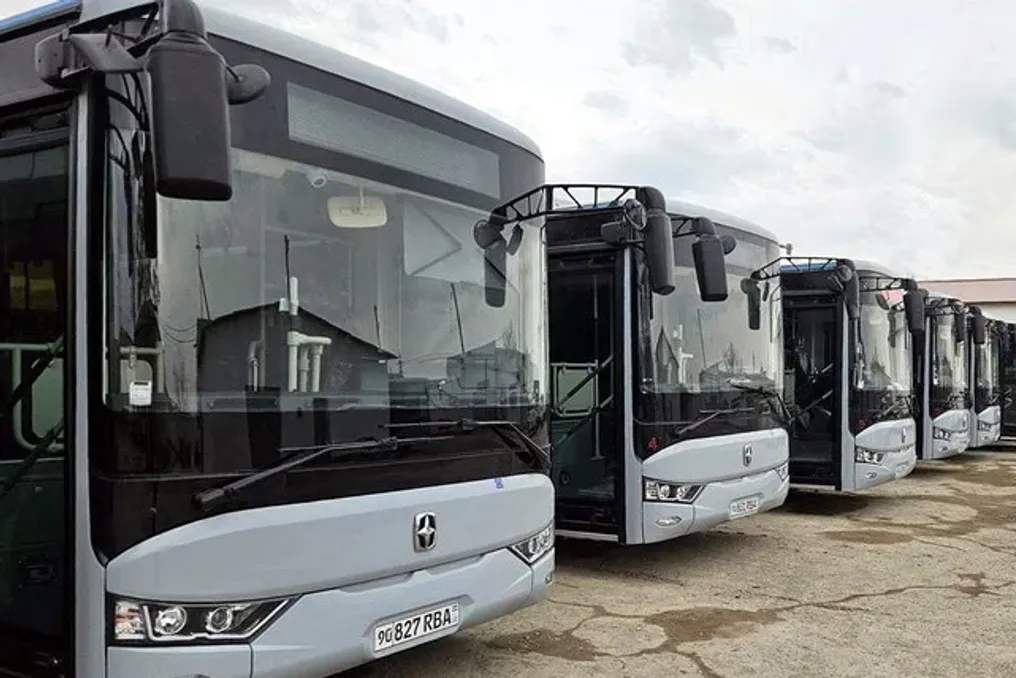
Ten medium-sized buses operated by ZiyoTrans LLC serve passengers on this route. The launch of this direction is intended to expand public transport coverage and improve transport links between Tashkent and adjacent territories.

Similar stories

New Bus Route No. 158 Launched, Connecting Kensai and Yunusabad Massifs
Read more
podrobno.uz

New Bus Route No. 158 Launched, Connecting Kensai and Yunusabad Massifs

Starting November 23rd, a new bus route No. 158, named 'Kensai Massif – Yunusabad Department Store,' has begun operating in Tashkent and the adjacent territories of the Tashkent region. The purpose of this route is to simplify daily commutes for suburban residents traveling to the capital.

The route involves buses traveling from the Kensai Massif to the final stop 'Yunusabad Department Store.' During its journey, the transport passes by several landmarks, including the Abu Raihan Beruni University, the 'Rahbar Ota' mosque, Family Polyclinic No. 23, the 'Uch Qahramon' post, and School No. 271.

The line is serviced by ten medium-capacity buses provided by Ziyotrans LLC. Representatives of the capital transport department stated that the introduction of the new route aims to improve the quality of connection between Tashkent and neighboring districts, as well as expand the coverage area of public transport and enhance travel comfort.

However, information regarding the schedule, time intervals, and the start and end times of the trips has not yet been disclosed. It should be noted that previously, Tashkent residents had complained about malfunctions in the new buses, specifically tinted windows and non-functional electronic displays. Passengers noted that due to the tinting, it becomes difficult to navigate the city at night or in overcast weather, and the non-functioning displays hinder the timely identification of the required stop.

New railway line connects Tashkent and the Parkent district
Read more
uzdaily.uz

New railway line connects Tashkent and the Parkent district

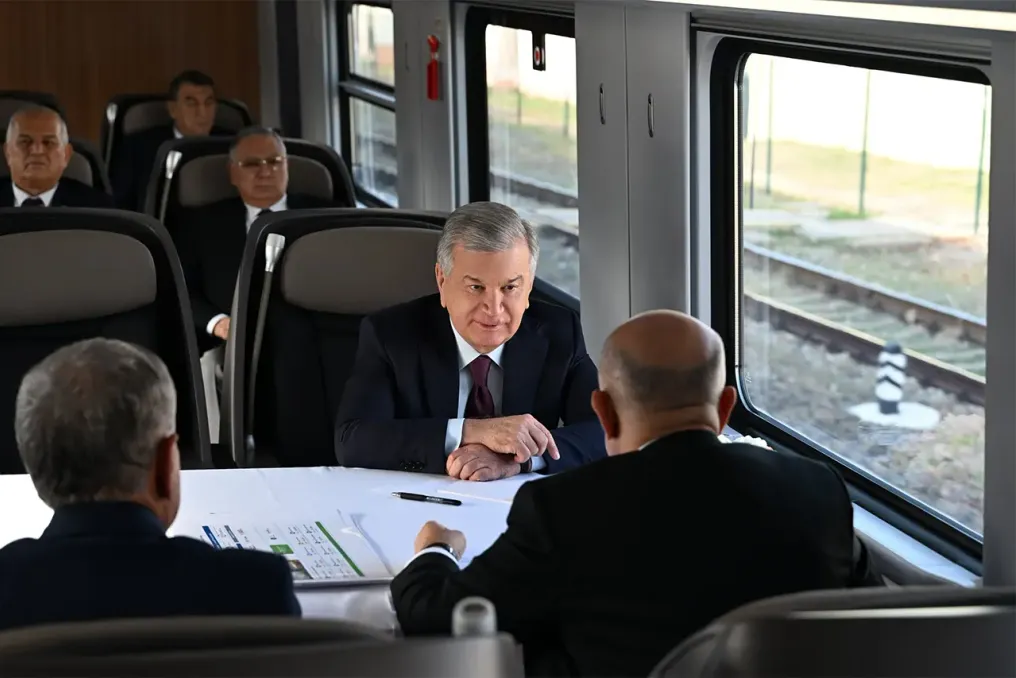
Uzbekistan President Shavkat Mirziyoyev used an electric train for a trip from Tashkent to the Parkent district on November 20. This trip took place after the launch of a new railway branch connecting the capital and this district, according to the president's press service.

The construction of this railway was carried out based on a presidential decree dated January 27, 2025, which concerned the further development of Uzbekistan's transport and logistics system. Electric trains on the Tashkent–Parkent route began running in September 2026.

The project required investments of 535.4 billion soms for the construction of a 24-kilometer electrified line between Baitkorgan and Parkent. Infrastructure works included the construction of a new station, three bridges, an overpass, and 77 culverts. Additionally, sixteen road and railway crossings were equipped.

A 24-kilometer contact network and power line were installed. The implementation of the project allowed for the creation of 40 jobs.

The total length of the Tashkent–Parkent route is 57.6 kilometers. A six-car electric train of model EP3D, valued at 124 billion soms, operates on it, designed to carry 586 passengers. The maximum speed of the train reaches 120 kilometers per hour.

The travel time is 1 hour and 13 minutes, and the ticket price is 10,000 soms, which, according to the president's press service, is 2.5 times cheaper than the average taxi fare. The route is designed to serve up to 2000 passengers daily and 300,000 passengers annually.

The carriages are equipped with climate control systems, comfortable seats, USB ports, free Wi-Fi, and information electronic displays. Elevators and special places are provided for people with disabilities. The train is also equipped with bicycle racks, a video surveillance system, and an energy absorption system upon collision.

During the trip, Mirziyoyev discussed ways to more effectively utilize the economic potential of the Tashkent region. He emphasized the need for more rational use of land resources, ensuring food security, and demanding that the potential of the agricultural and processing industries be doubled.

At the new railway station in Parkent, the president instructed officials to continue developing railway infrastructure, improving station services, and expanding passenger amenities. He also called for increasing the efficiency of transport operations and improving the condition of territories along the railway line.
A 22.7-kilometer express bus corridor is being created in Tashkent, connecting Sergeli and Yunusabad
Read more
podrobno.uz

A 22.7-kilometer express bus corridor is being created in Tashkent, connecting Sergeli and Yunusabad

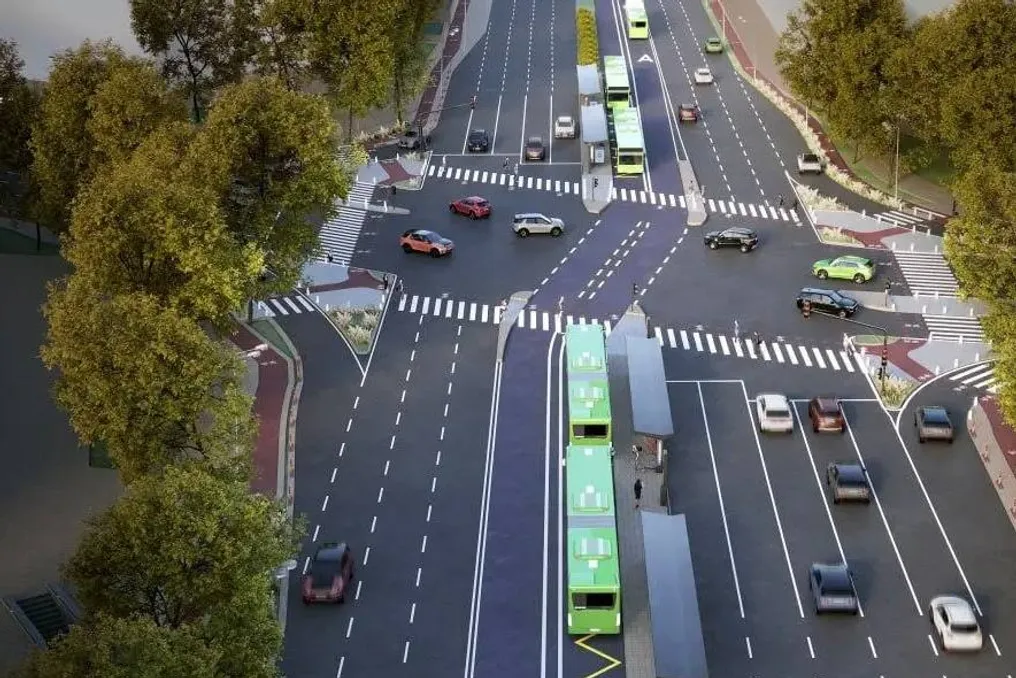
The formation of a unified Bus Rapid Transit (BRT) corridor is underway in Tashkent, which will connect the Sergeli and Yunusabad districts. The total length of this corridor will be 22.7 kilometers. In addition to dedicated lanes, modern stops, intelligent traffic lights, and electronic displays showing bus arrival times will be installed along the route.

According to information provided by the Road Traffic Organization Center, this corridor will run along four main streets of the capital. On Shota Rustaveli Street, the 6.5-kilometer BRT system has been operational since 2025. On Shahrisabz Street, 2.2 kilometers have been put into operation out of the planned 3.2 kilometers. Construction is ongoing on Amir Temur Avenue, where 7.6 kilometers of dedicated lanes are planned, and preparatory work is underway on Yangi Sergeli Street over a section spanning 5.5 kilometers.

The project involves not only dedicating lanes for buses. New stop complexes and platforms with increased capacity will be installed along the entire corridor, and lighting and traffic light systems will be modernized. In subsequent stages, the 'green wave' system is planned to be implemented, allowing buses to cross intersections with minimal stops.

At the stops, passengers will be able to use information boards displaying transport arrival times, as well as video surveillance cameras and SOS emergency call buttons. Simultaneously, there are plans to increase the bus fleet and revise the movement schedule to reduce waiting times for passengers.

The Road Traffic Organization Center presented preliminary operating results of the BRT on Shota Rustaveli Street. According to the Ministry of Transport, the average speed of buses on this section has increased by 45% compared to 2023, and the speed of passenger cars has increased by 18%. Furthermore, daily public transport usage on this route has increased by approximately 8 thousand people.

The department believes that prioritizing public transport contributes to a more efficient use of the city's road network. Nevertheless, during the construction period, residents are forced to accept temporary changes to their usual routes and face traffic restrictions. The exact completion date for the entire 22.7-kilometer corridor has not yet been announced.

Popular