Coral symbiont response to rising temperatures proved heterogeneous
Read more
N+1
nplus1.ru

Coral symbiont response to rising temperatures proved heterogeneous

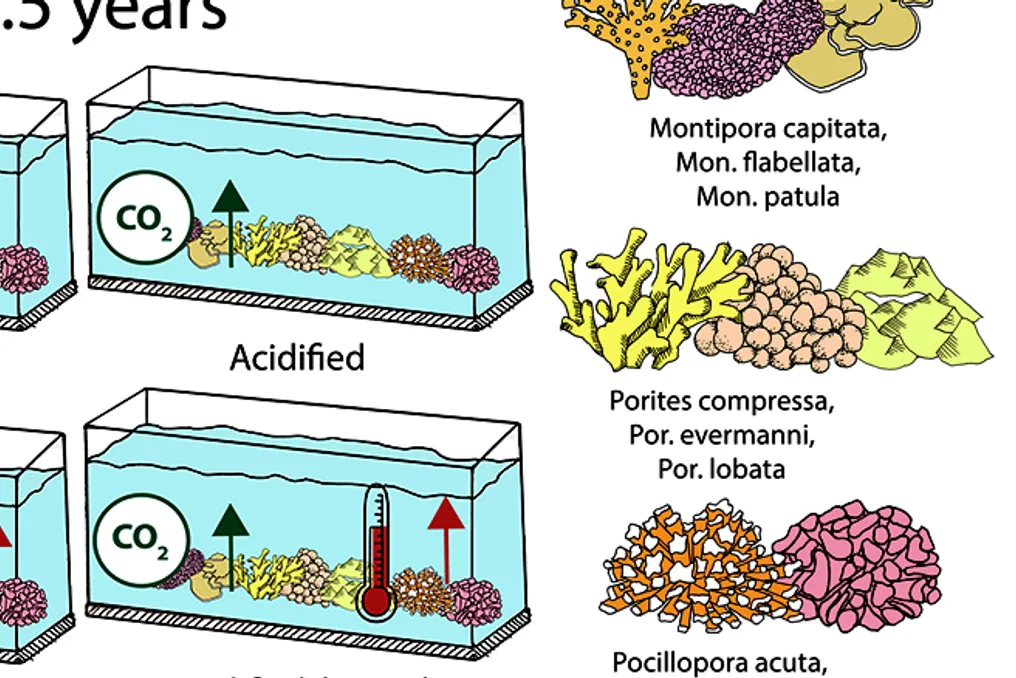
A study conducted in Hawaii demonstrated that populations of symbiotic algae living inside corals exhibit varied responses to the consequences of global climate change, including rising temperatures and ocean acidification.

Over two and a half years in experimental aquariums, surviving corals showed two different types of response to temperature stress, while remaining resistant to water acidification. In some samples, the composition of symbiotic communities underwent chaotic and unpredictable changes, whereas others showed an ordered and regular transformation of these communities.

It was established that the determining factor in this situation is not the coral or symbiont species itself, but the location from which the sample was taken. The results of this study were published in the scientific journal Science.

Similar stories

Six countries join coral reef protection agreement at COP31
Read more
noticiasaominuto.com

Six countries join coral reef protection agreement at COP31

Colombia, Niue, Haiti, Jamaica, Samoa, and Tuvalu have joined governments under a science-based coral reef protection agreement. These countries increase the number of signatories to the High-Level Commitment for Climate-Resilient Coral Reefs to 29.

These six nations participated in the commitment, which unites governments striving for urgent measures to protect coral reefs with enhanced climate resilience. This occurred during COP31—the UN climate conference scheduled to conclude today in Antalya, Turkey.

Governments recognize the critical role of coral reefs in the blue economy, coastal protection, food security, and the livelihoods of local communities.

With these new additions, the coalition now comprises 30 signatories: 29 countries and one French overseas region, as well as over 50 partner organizations.

In a statement released at COP31, Semineli Baleikakau, President of the Fiji National Coral Reef Conservation Centre (NHCRC), emphasized that for communities like his in Fiji, 'coral reefs are much more than just beautiful places to visit.' He explained: 'they provide food, protect homes, support livelihoods, and connect us to the generations that preceded us.'

The representative noted that 'the true measure of this global commitment will not be the number of signatures collected, but the impact it has on the people living near these reefs.'

The Climate-Resilient Coral Reefs Agreement represents a joint political commitment to 'implement the best available scientific knowledge.' Under this agreement, signatory governments pledge to protect reefs identified as having the greatest potential for climate change resilience, utilizing the best available scientific knowledge.

The addition of six new countries comes as the latest scientific findings on coral reef resilience strengthen the need for national action.

Marie-Celine Piednouar, Coordinator of the High-Level Commitment, noted: 'What started with 11 governments has evolved into a global coalition demonstrating growing political will to protect these vital reefs.'

Turtle hatchlings returned to nature after successful egg hatching in California
Read more
noticiasaominuto.com

Turtle hatchlings returned to nature after successful egg hatching in California

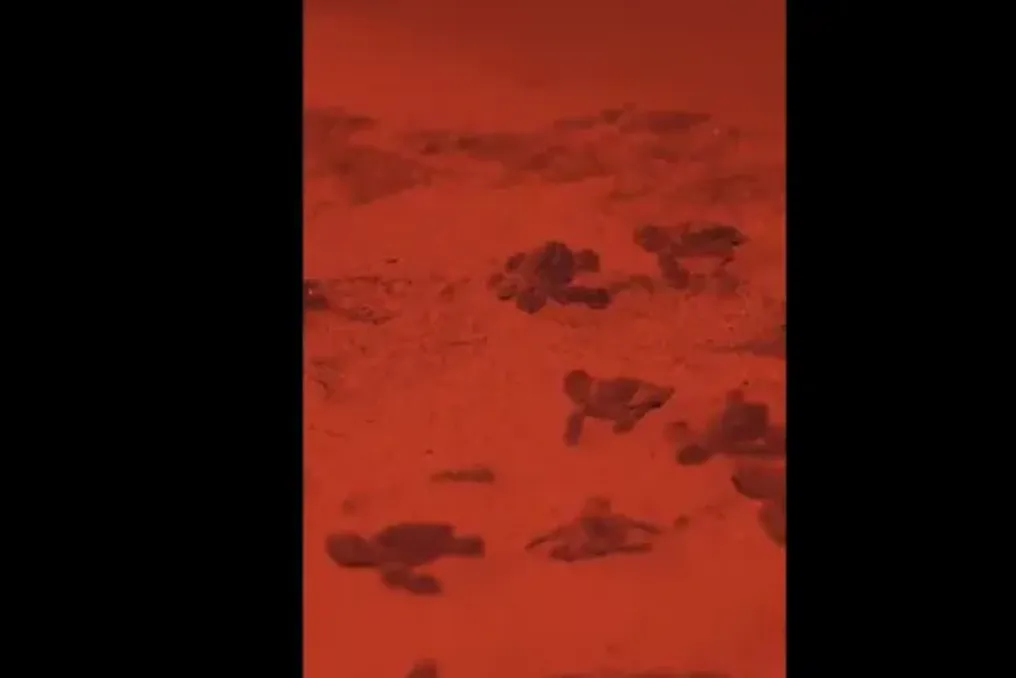
Two olive ridley turtle nests were identified in Seal Beach and Huntington Beach, California, USA, in mid-September. This weekend, the hatchlings were released into the natural environment after the eggs successfully hatched.

The Pacific Aquarium issued a statement on Sunday informing that the eggs had successfully hatched at the institution. In partnership with other involved parties, the hatchlings were carefully released in the early morning hours onto the same beaches where the nests had been built. It was ensured that all hatchlings made it from the sand to the sea after the release, in an area with minimal human disturbance and few distractions.

These two nests, discovered on September 16 and 19, represented the first confirmed natural sea turtle nests on the west coast of the United States, according to the responsible team.

The organization mentioned that the eggs were transferred to the institution for protection due to a tropical storm, with the Pacific Aquarium being chosen for its experience and resources in animal care.

Lance Adams, Director of Veterinary Services at the Pacific Aquarium, expressed satisfaction with the viability of some sea turtle eggs, highlighting not only the successful hatching but also the journey of the hatchlings from the sand to the ocean.

The note also detailed that the eggs were kept in closed incubators under sand while aquarium staff monitored them in a secure room, with controlled temperature and humidity, located at the Molina Animal Care Center.

Federal authorities and local partners, led by the U.S. Fish and Wildlife Service, decided to transfer the eggs. On the morning of Friday, September 25, biologists collected the eggs from Huntington Beach and Seal Beach and brought them to the Pacific Aquarium. Subsequently, after Tropical Storm Rachel, high waves and stagnant water were observed near the nests in both locations, Seal Beach and Huntington Beach.

Scientific explanation for the presence of three 'eyes' on a coconut and the reason for the softness of one of them
Read more
www.aajtak.in

Scientific explanation for the presence of three 'eyes' on a coconut and the reason for the softness of one of them

Regardless of the heat season or religious rituals, people often encounter green coconuts and consume their water. However, many notice that there are three small 'eyes' on the surface of the coconut. One of these eyes is soft, while the other two remain very hard. Coconut sellers often use this soft 'eye' to pierce and extract the water. A natural question arises: why does this happen, where do these three 'eyes' on the coconut come from, and why is only one of them soft?

There is an interesting scientific mechanism behind this phenomenon. The coconut is not only an edible fruit but also a potential source of a new coconut tree. When flowers appear on the coconut tree, three small areas form in each flower, called ovule primordia. Simply put, a seed can develop from these spots in the future. But as the coconut grows, only one of these three areas fully develops; the other two fail to form. This is why three marks resembling eyes are visible on one end of the coconut. These marks are not real eyes but traces formed during the development of the coconut.

Next comes the question of why only one of the three eyes is soft. The answer lies inside the coconut itself. Under one of the three 'eyes' is a small area that can later give rise to a new plant—this is the embryo. This part grows and turns into a new coconut tree. Over this part, the coconut shell becomes slightly thinner, making this area softer compared to the other two eyes. Whereas under the other two eyes, such an area is absent, the coconut shell there is significantly thicker and harder, which makes piercing difficult.

Imagine that a coconut is picked from the tree and placed on the ground. Can a new tree grow from it? Yes, it is possible, but certain conditions are necessary for this: suitable humidity, warmth, and other required factors. When the coconut receives the right environment, the small embryo inside begins to grow slowly. Then, a small sprout appears from that same soft area that has an 'eye'. This sprout gradually increases and turns into a coconut plant. Over time, this plant can become a large tree on which new coconuts will begin to grow. Thus, the spot where you pierce the coconut to drink the water is the same place that nature prepared for the appearance of a new tree.

As a rule, only one of the three eyes on a coconut is soft. Nevertheless, the degree of softness of this part can vary slightly depending on the variety and age of the coconut. This is why sellers who sell coconuts with water examine all three eyes and make a puncture in the softest spot to extract the liquid. Therefore, the next time you drink coconut water, be sure to pay attention to these three 'eyes' on the surface—they are not just marks, but they can be the path to the birth of a new coconut tree.

Popular