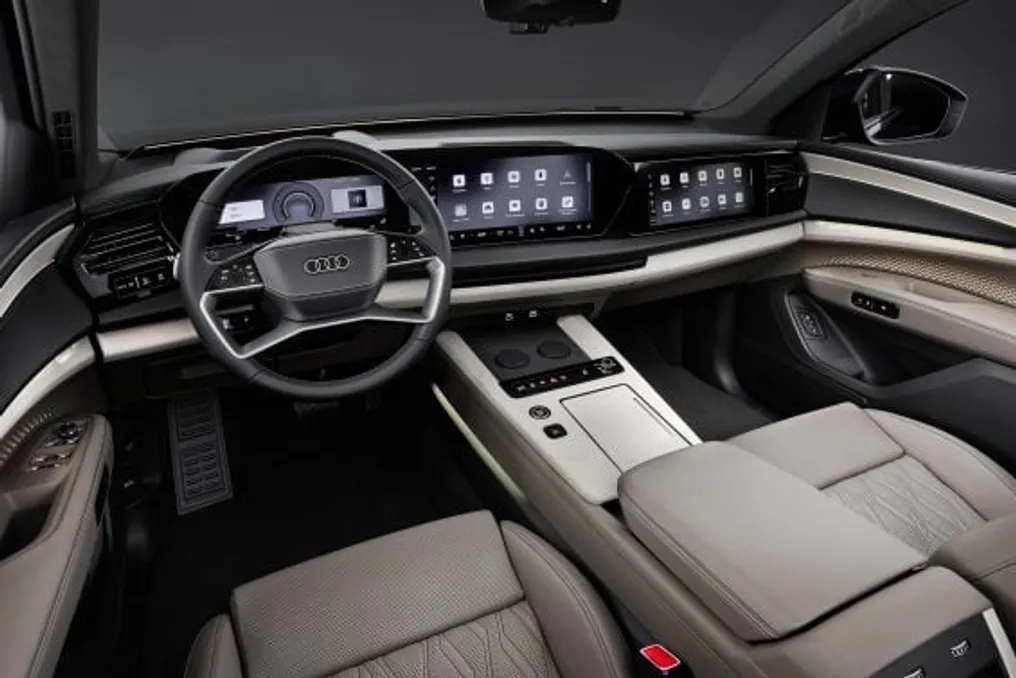
Audi is looking to reintroduce physical buttons for drivers, but only upon request. The German automaker has filed a patent application in Germany for a motorized button bar that remains hidden behind the bottom edge of the multimedia system and only becomes visible when requested.
This innovation comes in response to a common complaint about contemporary vehicles: the strong dependence on touchscreens, which forces the driver to navigate through various menus just to make simple adjustments, such as changing the air conditioning output.
In the presented concept, the screen itself remains static. The component that moves is the button module, which projects out from the back of the display and returns to its level position when not in use.
According to the patent application documents, there are three ways to activate this bar: automatically when starting the vehicle, via voice command, or through a manual gesture.
Even with the bar retracted, all functionalities remain accessible. The screen displays a 'digital twin' containing the same commands organized in the same sequence as the physical buttons. This way, users who prefer to interact by touch do not lose any functionality, while those who appreciate buttons gain in ergonomics.
The patent also highlights a practical advantage: when the controls are projected outwards, such as during video playback, there is an increase in the free space available on the screen.
This solution reflects a shift in Audi's thinking. Massimo Frascella, the brand's creative director, had previously stated that very large screens do not represent the best experience, criticizing the trend of prioritizing technology for technology's sake.
This change in direction began with the electric A2 E-Tron model, which brought back elements such as the rotary volume knob, four dedicated window buttons, and a physical control for the windshield wiper.
However, the company's more recent SUVs, specifically the Q7, SQ7, and Q9 models, maintain the focus on the screen interface for adjustments, including directing the air conditioning airflow.
Currently, this retractable bar is only a patent application, and there is no confirmation of a production car. If implemented, it will introduce moving parts where there are currently only fixed buttons, which could result in higher costs for eventual maintenance.