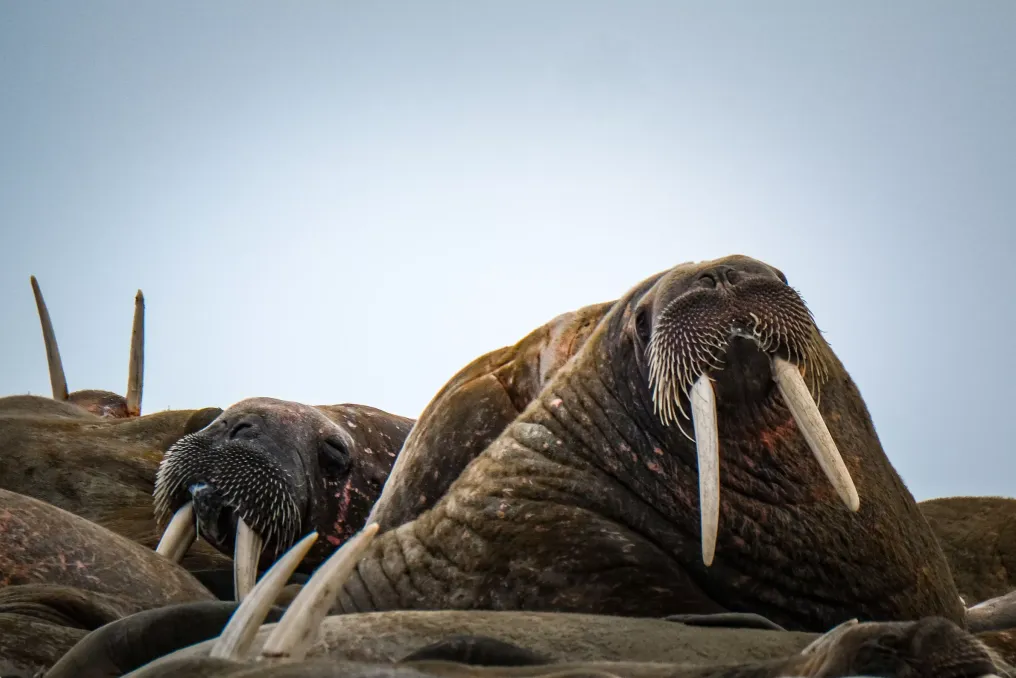
Pacific walruses gather in large groups on beaches along a narrow stretch of the Northwest Alaska coast. Residents of the nearby village of Point Leigh can hear their calls. The barrier islands where the animals go, as well as the neighboring Cassegul Bay, have now been included in a conservation agreement that permanently protects an area of about 192 square kilometers.
This agreement, announced in November, took about ten years to finalize. The conservation fund acquired a conservation easement from Calli Corporation, which is an Alaska Native corporation, and the Alaska Interior Lands Trust will oversee it. This deal restricts surface development while allowing local residents to continue hunting and using the area for traditional subsistence activities.
For female Pacific walruses and their calves, traveling north across the Bering Strait leads to feeding grounds in the shallow Chukchi Sea. Ice cover long provided them with a resting place between dives. As summer ice has become less reliable, more walruses are coming ashore along the Arctic coast of Alaska—a trend documented since 2007.
The spot where the walruses gather to rest is called a 'haul-out.' When thousands of animals crowd together, a low-flying plane or passing boat can provoke them into fleeing into the water. Calves and other young individuals are particularly vulnerable to injury during this chaotic movement.
Residents of Point Leigh have helped maintain quiet at these resting spots for years. Locals restricted visits and asked pilots and boat crews to leave enough space for the animals. Local hunters also changed some of their methods so as not to scare the herds.
The walruses have already left for the season, heading to Russia. When they return to this part of Alaska, they will have a section of coastline protected for the long term. And the people who can hear them from afar will be able to continue doing what they have done for years: providing the animals with a place to rest.