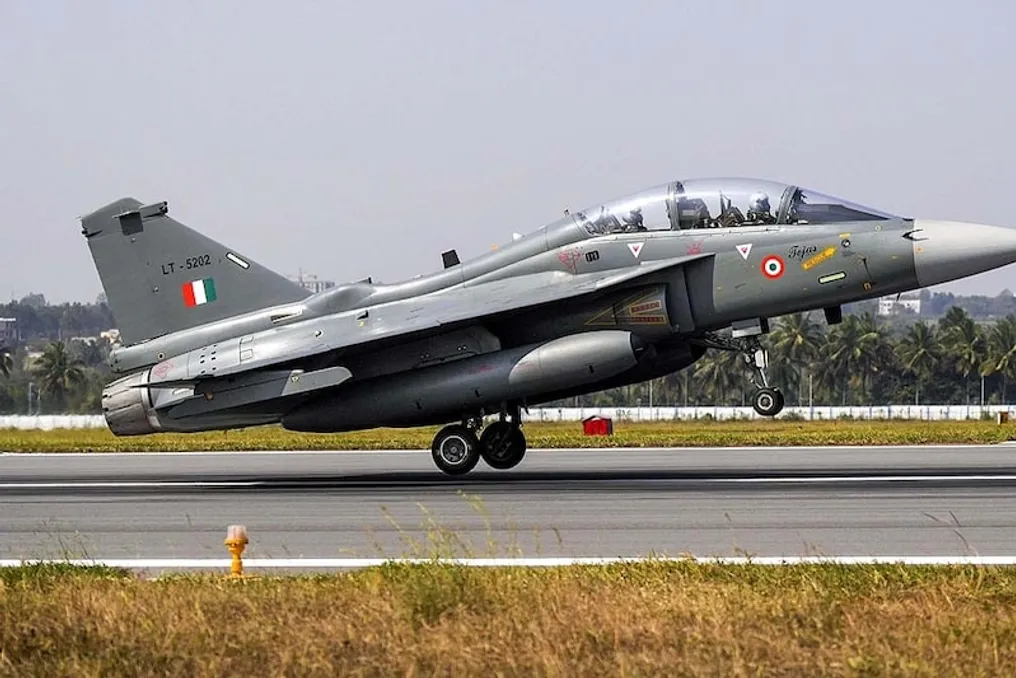
The Indian Air Force may have to wait until March 2027 for the first squadron of Tejas Mk1A fighters. After years of delays, all attention is focused on this advanced domestic fighter jet. Although this aircraft, manufactured by Hindustan Aeronautics Limited (HAL), retains many capabilities of the original Tejas Mk1, modern radars, an improved electronic warfare suite, and advanced avionics have been added.
These upgrades make the aircraft significantly more capable of early detection of enemy threats, rapid information processing, and ensuring self-protection. Given the shortage of combat squadrons in the Air Force, this aircraft will be an important step in strengthening indigenous capabilities.
According to the initial plan, HAL was supposed to start supplying 83 Mk1A aircraft from March 2024. However, the entire schedule has shifted due to various reasons, including delays in the supply of F404 engines from the American company GE Aerospace. Now, the first squadron is expected to arrive by 2027.
The government placed the first contract for 83 aircraft in February 2021, and the second order for 97 aircraft, received in September 2025, brought the total to 180 units. These aircraft will replace older fighters and strengthen the domestic Air Force fleet. Despite the delays, the Mk1A's capabilities make it much more effective compared to the previous version.
The main advantage of the Mk1A is its Active Electronically Scanned Array (AESA) radar. The old Mk1 used a mechanical multi-mode radar that scanned different parts of the sky by physically rotating the antenna. The AESA radar uses hundreds of small electronic modules that direct radio waves without moving parts.
This allows the aircraft to scan multiple sectors and track several targets simultaneously. Early detection of an enemy aircraft gives the pilot more time to assess the situation and react. The Ministry of Defence noted this radar as a critical capability of the aircraft back in 2021.
Tejas Mk1 already had a self-defense suite, but the Mk1A features a much more advanced and integrated electronic warfare system. According to DRDO, it includes a radar warning receiver and an advanced self-defense jammer. The radar warning receiver detects enemy radar signals and alerts the pilot. The jammer sends electronic signals that confuse the enemy radar, making it difficult to determine the exact location of the aircraft.
This system can protect against ground radars, surface-to-air missile systems, anti-aircraft artillery, and airborne radar systems. It utilizes active phased array technology and digital radio frequency memory. In modern air warfare, simply attacking is not enough; ensuring self-protection is equally important, and this is the task this upgraded suite will perform.
The Mk1A is equipped with a new digital flight control computer. It operates on the Tejas fly-by-wire system, where pilot commands are transmitted to the control surfaces via electronic signals. The new computer rapidly processes these commands and helps maintain the stability of the aircraft's flight. In February 2024, DRDO reported that this computer, developed in India, was successfully integrated and tested in a prototype, possessing enhanced computational power.
Improvements were also made to the cockpit. The advanced mission computer gathers information from various systems, assisting the pilot in mission management. Intelligent multi-function displays show flight and mission information on digital screens, eliminating the need for the pilot to look at numerous individual instruments. A digital map generator provides geographical information, and an improved altimeter measures height above the ground, while a combined transponder-interrogator helps identify friendly aircraft. All these improvements enhance pilot awareness and mission success probability.
Although the Mk1A has many new features, some important previous capabilities remain. The ability to launch beyond visual range missiles was already present in the final operational clearance configuration of the Mk1. The possibility of in-flight refueling was also demonstrated in 2018 tests. The head-up display and basic self-defense suite were also available earlier. The Mk1A combines all of this with more advanced systems.
The Indian Air Force faces a shortage of combat squadrons. Therefore, the arrival of 180 Tejas Mk1A aircraft is a major step towards enhancing indigenous capabilities and replacing outdated equipment. The improved radar, robust electronic protection, and modern avionics make it more effective in regional air engagements. Despite the delays, when these aircraft enter service, it will lead to a significant improvement in both the offensive power and safety of the Air Force.