Problems in ChatGPT and Codex cause instability in OpenAI services this Wednesday
Read more
Olhar Digital
olhardigital.com.br

Problems in ChatGPT and Codex cause instability in OpenAI services this Wednesday

OpenAI registered instability and an increase in the occurrence of errors during message processing and response sending in both ChatGPT and the Codex programming assistant this Wednesday, the 25th.

According to the company's official status page, the technical team implemented containment actions and is monitoring service recovery while investigating the origin of the problem.

This incident resulted in a significant increase in failures in both the standard version of ChatGPT and enterprise versions, such as ChatGPT Work and Codex Cloud.

Regarding Codex, which is a programming-focused assistant, the failures affected four different ways of accessing the service.

However, the instability did not compromise all resources offered by OpenAI. Tools such as the image generator, web search functionality, voice mode, and Deep Research remained operational without registering interruptions.

For this reason, some users may not have noticed the problems affecting other functionalities of the company.

After applying the initial control measures, the technical team reported that traffic and conversation processing began to gradually improve. The investigation to determine the fundamental cause of the failure continues, with engineers maintaining constant vigilance over the systems to ensure stability and prevent new fluctuations throughout the day.

Similar stories

OpenAI tests new interface for ChatGPT mobile app and expands Dots functionality
Read more
olhardigital.com.br

OpenAI tests new interface for ChatGPT mobile app and expands Dots functionality

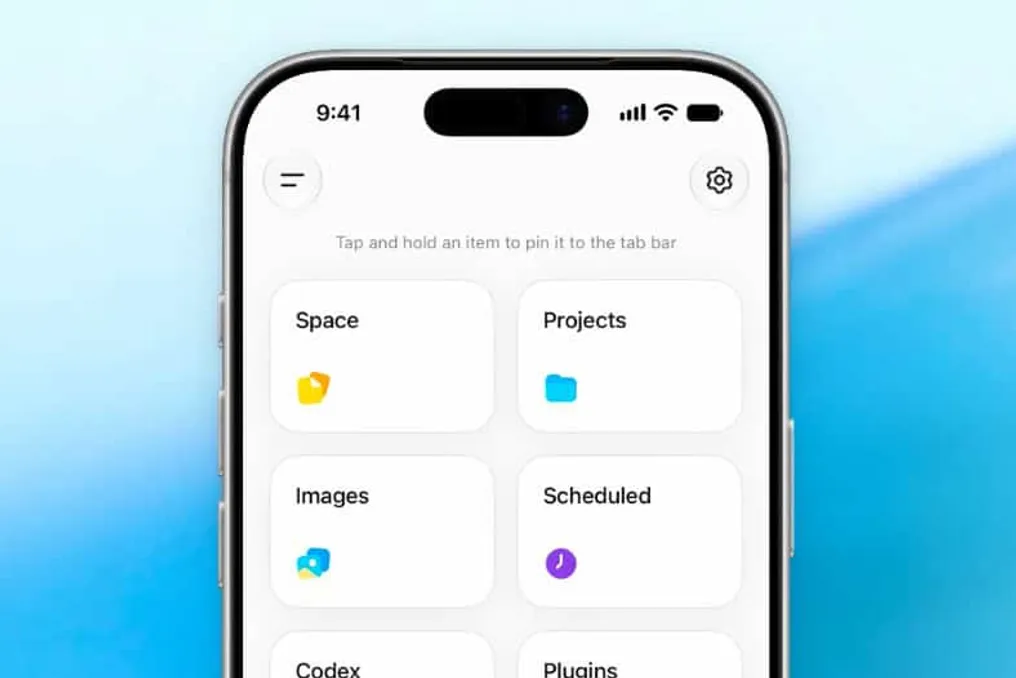
OpenAI has begun testing a new interface for the ChatGPT mobile application. According to the platform's product chief, this update will allow users to pin features such as Codex, Projects, and Images to the bottom navigation bar.

The new design will include a dedicated section for the Dot agent and a redesigned discovery area, aiming to simplify tool location and display platform updates.

Initially, access to this testing phase will be restricted to ChatGPT Pro subscribers aged 18 or older who have a Dot or are eligible to create an agent. A smaller group of Plus plan users will also participate in the tests.

Some participants will receive the new interface automatically, but those who prefer the previous look can restore it through the app settings by following the path Settings > New ChatGPT Design.

OpenAI's release notes indicate that this test will not be available in certain regions, including the European Economic Area, the United Kingdom, Switzerland, and South Korea. However, Ukraine is not listed among the excluded areas, making the country's accounts potentially eligible, provided they meet the other established criteria.

The implementation of the update will occur progressively, meaning it will not be released simultaneously to all qualified users.

In parallel with the interface adjustments, OpenAI is expanding the reach of Dots. The company has started testing these agents with a small set of ChatGPT Plus subscribers. Furthermore, all Business Standard plan users will gain access to Dots starting November 20.

The company has not yet disclosed the exact number of Plus subscribers who will participate in the tests nor when it plans to increase the availability of this feature.

Introduced at the end of September, Dots possess their own cloud-hosted computers and are capable of interacting with connected applications, maintaining task execution even during conversation pauses. This allows them to perform complex, multi-step activities, as exemplified by OpenAI.

One case cited by OpenAI demonstrates the capability of one of these agents: while organizing an office move, an agent sent approximately 300 emails to moving companies, insurers, and building administrators. This event illustrates the autonomy a Dot can exercise and underscores the importance of monitoring its work, even when operating without direct user intervention.

OpenAI's Artificial Intelligence Discovers Critical Vulnerability in Java Capable of Granting Access to Hackers
Read more
olhardigital.com.br

OpenAI's Artificial Intelligence Discovers Critical Vulnerability in Java Capable of Granting Access to Hackers

Artificial intelligence has helped researchers discover a critical vulnerability in Java, a programming language used in systems of approximately 90% of companies on the Fortune 500 list. This vulnerability, named Java4Shell, potentially allows attackers to gain unauthorized remote access to internal systems.

The discovery was announced on Tuesday (17) by Calif, a cybersecurity startup, which utilized OpenAI's GPT-6 Cyber model designed for digital security research. According to the company, the vulnerability was found in Java's Base64 decoder, a component responsible for converting specific binary data into text.

The issue attracted attention due to its potential scale. Java is used in banks, hospitals, airlines, technology companies, and government agencies, including those related to national security. Bruce Dang, a senior researcher at Calif, stated that 'Java is the beating heart of the modern economy,' and suggested that almost all large companies would be affected by this vulnerability.

This finding also highlights a shift in the digital security sector: AI tools are accelerating the detection of software bugs, a pace that may challenge the work of system protection specialists.

In recent days, Calif has been working to coordinate the disclosure of the vulnerability with governments and technology companies. These efforts have involved countries in the Five Eyes intelligence-sharing alliance: the United States, Canada, Australia, New Zealand, and the United Kingdom. Companies such as Google and Microsoft were also notified. Oracle, which owns the Java brand and provides commercial licenses for the language, released a security update on Tuesday.

The U.S. Cybersecurity and Infrastructure Security Agency (CISA) also published a warning recommending that organizations immediately install the fix. Google stated that after receiving information about the vulnerability, it implemented protective measures and updates in its services, and developed detection mechanisms to check for exploit usage, publishing guidelines for customers.

It is unclear whether temporary outages in the U.S. National Security Agency (NSA) network on Tuesday are related to the fix. The Times reported that the agency did not respond to a request for comment on this matter.

This discovery is the second major vulnerability identified by Calif using OpenAI models in recent weeks. Last month, the startup discovered serious flaws in PHP, a programming language used in approximately 70% of websites and applications on the internet. This incident triggered an international mobilization to patch vulnerable systems before criminals could exploit them.

At that time, government bodies, including the NSA, recommended that companies take their sites offline if they could not immediately apply the necessary patches. Despite initial concerns, the consequences turned out to be less severe than predicted, as hackers were unable to easily reproduce the attack method.

The difference is that Java is present at a broader level of digital infrastructure. In addition to standard applications, this language supports cloud computing services, identity and authentication systems, and mail platforms.

Thai Duong, CEO of Calif, noted that the vulnerability is not as simple to turn into an attack, giving companies and developers more time to apply fixes. Nevertheless, he warned that such errors can remain a threat for years; systems that do not receive updates over the next five to ten years may remain susceptible to this problem.

This case also demonstrates how AI is changing the dynamics of cybersecurity. Advanced models help researchers find code issues and develop exploit demonstrations in much less time than previously required. This can help defensive teams identify vulnerabilities sooner than criminals. On the other hand, the same tools can reduce the effort needed to create sophisticated digital attacks.

Ollie Whitehouse, CTO of the UK's National Cyber Security Centre, stated that AI is already being used to detect a growing number of software and digital service vulnerabilities. However, there is concern that the technology is also facilitating the activities of malicious actors. This week, the FBI issued a warning about hackers allegedly using autonomous AI tools to attack government agencies and companies in various countries.

Fouad Matin, head of research and cybersecurity at OpenAI, stated that Calif's research shows how AI can help specialists find serious errors in software used by millions of people. He added that collaboration between researchers and developers can make critical systems more secure.

The progress of AI in cybersecurity is reminiscent of World Chess Champion Garry Kasparov's prediction after his defeat by IBM's Deep Blue nearly 30 years ago. At that time, Kasparov suggested that the best games would be played in a combination of human and computer, a concept known as centaur, after the mythical creature combining a human and a horse. For years, players combining human abilities and computational power were considered the strongest in chess. Now, the same idea is beginning to emerge in digital security, where researchers and AI tools work together to find and exploit vulnerabilities.

Calif and other teams have already demonstrated that small groups of experts can develop attacks that previously required months of work from large, highly specialized hacker teams, in just hours or days. According to Thai Duong, the startup's CEO, AI may soon be able to develop complex attacks autonomously. 'I don't know how much time we have—maybe three months, maybe three years. But right now, the best hacker is a centaur hacker,' he told The Times.
OpenAI tests official business profiles of companies on the ChatGPT platform
Read more
olhardigital.com.br

OpenAI tests official business profiles of companies on the ChatGPT platform

OpenAI has begun testing a feature called Businesses in ChatGPT, a set of functionalities that allows companies to claim official profiles and directly serve consumers through its artificial intelligence assistant interface.

This new feature also provides means for businesses to display their product catalogs and develop virtual support agents capable of interacting with customers within the platform itself.

Qualified companies will be able to promote their own virtual assistants to answer consumer questions, allow comparison between different product models, and provide personalized suggestions.

It is important to note that commercial interactions will be kept separate from usual conversations with ChatGPT. To identify the service provided by the brands, the system uses specific badges and stores these dialogues in separate tabs from the AI's standard responses.

The dashboard known as Business Hub centralizes all management tools for these commercial profiles. After completing the identity verification process, merchants have the ability to update corporate data, link their inventory, and monitor their brand performance on the platform.

Among the offered features, the possibility of integrating inventories stands out, which ensures the availability of current product information, in addition to metrics that provide companies with detailed data on their visibility on ChatGPT.

Currently, the beta phase of Businesses in ChatGPT is limited to the North American market. Implementation is occurring progressively, being released to selected e-commerce companies and online service providers located in the United States. No date has been set for this feature's arrival in other countries.

Popular