Karnataka announces 47 startup winners under the ELEVATE 2026 program
Read more
YourStory [india, en]
yourstory.com

Karnataka announces 47 startup winners under the ELEVATE 2026 program

As part of the flagship early-stage grant support program, Karnataka has selected 47 startups through the general ELEVATE 2026 competition. This competition is one of four held under the 2026 edition.

Collectively, the ELEVATE 2026, Aspire, Shakti, and Unnati programs have supported 196 startups. These programs provide grants of up to 50 lakh rupees and align with Karnataka's startup policy for the period 2025–2030, as well as the Local Economy Accelerator Program (LEAP).

Of the 47 ELEVATE 2026 winners, who achieved a qualifying score of 70.00, Aspire selected 69, Shakti selected 63, and Unnati selected 17, including enterprises led by 14 representatives from the SC category and three from the ST category. It is important to note that the 47 selected startups belong to the general ELEVATE competition, not the separate ELEVATE NxT deep technology program.

Geographical distribution shows the dominance of Bengaluru: 42 winners are based in the Bengaluru urban area, and three are in rural areas. One winner is from Dharwad and one from Gadag. Thus, 45 out of the 47 selected startups are located in the two districts of Bengaluru, and only two are in other parts of Karnataka.

Among the selected startups are Agribotic Systems, Arthaveda, Arys Garage, Aviominds Global, Carnad Engineering, Ganesis Semiconductors, Gridflow Technologies, Insulin Yogi, Jatayu Saga, Pravaaha Biotech, Prakashikam Space, VIVIDSILICON, Wayve Electric, and XALES AI.

The selection process, which ran from July to October, included four stages: data verification, pitch deck review, multi-city presentations, and a final event held in person in Bengaluru. A total of 2,429 applications were received across the four competitions, of which 2,213 passed the initial data sufficiency check. Out of 627 finalists, 624 were evaluated, leading to the selection of 196 startups across the four cohorts.

The ELEVATE program, launched in 2017, has supported over 1,227 startups, and according to the 'Bengaluru Innovation Report 2025', more than 280 crore rupees in funding has been allocated.

In September 2026, the Karnataka Cabinet approved three initiatives to strengthen the state's innovation ecosystem: the creation of an AI Hub worth 35 crore rupees at IIIT-Bengaluru, the construction of a drone testing ground valued at 42.83 crore rupees, and the launch of the Government First initiative amounting to 25 crore rupees under ELEVATE to promote innovation-based public procurement.

Similar stories

Six Indian Startups Selected for Hub71 Immersion Program in Abu Dhabi
Read more
yourstory.com

Six Indian Startups Selected for Hub71 Immersion Program in Abu Dhabi

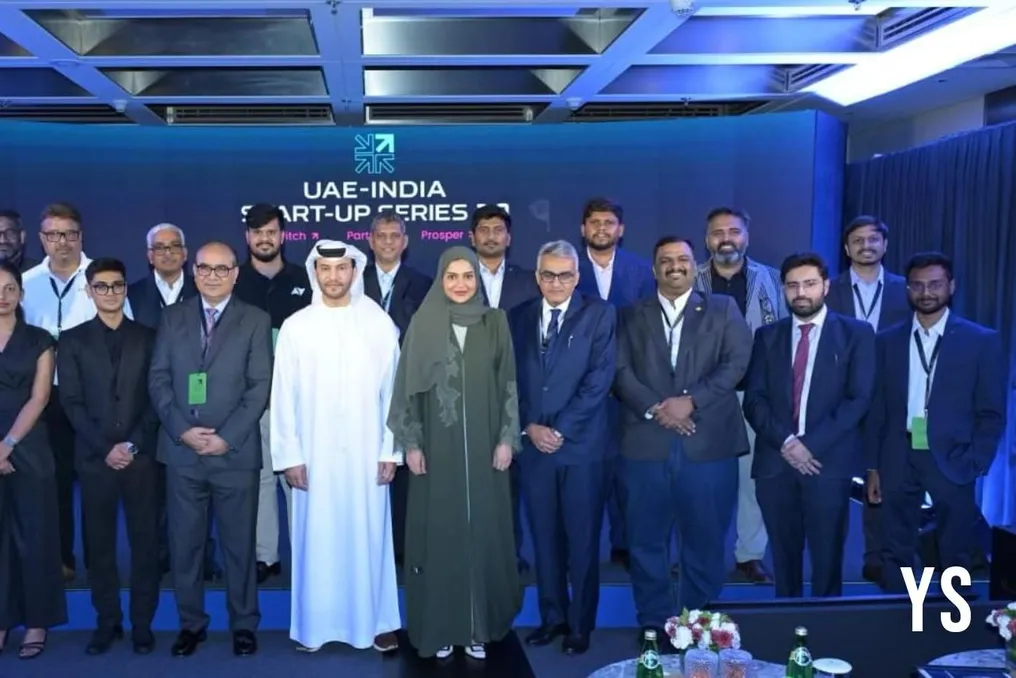
Six Indian startups have been selected to participate in the Hub71 Immersion Program in Abu Dhabi following the final round of the UAE-India Start-Up Series 2.0 held in Bengaluru.

Hub71, Abu Dhabi's global technology ecosystem, acts as a cross-border partner connecting these startups with investors, corporate and government partners, regulators, and potential clients.

The series attracted over 11,000 applications, organized by the UAE Embassy in New Delhi. Winners were chosen from ten finalists in areas such as artificial intelligence, clean energy, advanced manufacturing, and digital finance.

According to the statement, this series helps Indian companies expand their global presence by leveraging the UAE as a gateway to investment and growth.

It is reported that since the entry into force of the Comprehensive Economic Partnership Agreement (CEPA) in 2022, bilateral trade has increased from approximately $73 billion to over $101 billion. UAE President Sheikh Mohammed bin Zayed Al Nahyan and Indian Prime Minister Narendra Modi have set a target of reaching $200 billion by 2032.

UAE Ambassador to India Abdullah Saif Al Nuaimi announced the winners. Three of them will be included in the Hub71 Access Program shortlist, and one startup will join the program and receive 250,000 AED in kind and 250,000 AED in cash via a SAFE note.

Al Nuaimi emphasized that the UAE and India aim to double bilateral trade to $200 billion by 2032, and innovative companies will play a central role in achieving this goal. He noted that the UAE provides Indian founders access to new markets, capital, and partnerships, and they will support these winners in their development there. He congratulated all ten finalists on the level they demonstrated.

Ahmad Ali Alwan, CEO of Hub71, stated that India is a vital source of technological innovation and entrepreneurial talent, and collaboration with the UAE-India Start-Up Series helps more ambitious founders connect with investors, partners, and market opportunities through Hub71. He added that through the Hub71 Immersion Program, startups can deepen market understanding, establish significant connections, and gain opportunities conducive to their growth in the UAE and abroad.

The final in Bengaluru brought together 10 startups for two days of investor meetings, mentorship, and live pitches: CYRAN AI Solutions, Nawgati, KoinX, Onsite, Forthcode, Flo Mobility, Pointo, Econovus, XYMA Analytics, and Sustvest.

The jury included Al Nuaimi, Tushar Ved, President of Apparel Group, and representatives of the UAE-India business community. Al Nuaimi also presented the Top-50 Investment Dossier, which profiles 50 leading applicants.

The six winners will participate in a two-week hybrid program, which includes a week of virtual preparation followed by a week of in-person stay at Hub71 in Abu Dhabi, starting December 7th. The program includes mentorship, curated introductions, and training sessions on the Abu Dhabi business and regulatory environment.

The first edition in 2025 paved the way for Indian startups to explore the UAE through Hub71. Endimension, an AI-based radiology platform, later joined the Hub71 Access Program under Cohort 18. Other startups that completed the Immersion Program include BioReform, Docket Run, Data Sutram, and SBNRI.

The deep tech company uses AI to assist aerospace and precision manufacturers in detecting defects before parts are shipped, returning engines to service, or launching satellites. Founded by IIT Delhi Professor Manan Suri, it also creates edge AI for Industry 4.0 and geospatial clients.

The AI and IoT-based platform helps fuel companies, dealers, and governments monitor and manage gas stations from a single real-time view. The startup, founded by Aalap Nair, Vaibhav Kaushik, and Aryan Sisodiya, raised $2.5 million in a pre-Series A round led by Ajay Upadhyay and has deployments in Sri Lanka and the UAE.

This crypto platform for taxation and accounting helps investors and businesses calculate taxes, track assets, and maintain proper books. Founded in 2022 by Puneet Agarwal, its CEO, the startup raised $1.5 million in seed funding from investors, including Sandip Nailwal from Polygon, and subsequently received investment from CoinDCX Ventures.

Puneet Agarwal, founder and CEO of KoinX, told YourStory that he has been actively involved in the crypto industry for about 10 years and previously headed Crypto Relief Fund, an almost $500 million fund based in the UAE. He noted that India has the strictest cryptocurrency tax regime in the world, and the crypto market will grow in the country if regulation is in place.

Agarwal added that KoinX began generating revenue for the first time in the June-July 2023 tax season. Revenue grew from approximately $140,000 in the first year to $700,000 in the third. He expects around $1.5 million in the current fiscal year, supported by B2B contracts. In the UAE, KoinX sells enterprise B2B software. Agarwal believes that local presence through the Hub71 Immersion Program will help build trust.

The AI-based construction management platform helps contractors and developers control costs and timelines from site to office. The startup, founded in March 2021 by Sumit Garg, Diraj Anand, and Akshansh Agarwal, raised $1.5 million in 2022 in a round led by Foundamental.

The aviation technology company helps airlines increase ancillary revenue and automate operations at the airport, onboard, and post-flight. Its platform automates inflight retail, services, and catering management. It has partnered with Worldline for inflight payments in India.

Founder and CEO Ajit Balakumar told YourStory that Forthcode developed an AI model for aviation on sovereign AI models Core42. Core42 is a technology company based in Abu Dhabi. On passenger seatback screens, passengers can search for movies or ask complex questions, such as what a city looked like 2000 years ago. He clarified that the software is isolated from avionics and flight control systems, and question limiters narrow them down to movies, food, and destination. Balakumar also noted that AI can answer ground staff queries regarding dangerous goods compliance and support ancillary revenue and disruption management. Forthcode is a winner of the AviationX Labs competition from Emirates, Thales, Collins, GE, and Airbus, has completed a paid pilot project with Emirates, and collaborates with Thales as its go-to-market partner.

The construction robotics company, founded by Manesh Jain and Pratik Patel, helps builders and contractors move materials on large sites using autonomous electric vehicles. The startup's Flo Hauler robot can carry up to 1.5 tons. Over 60 of its robots are deployed in 10 states for developers, including L&T and Godrej Properties. Flo Mobility raised $2.5 million in a pre-Series A round co-led by Mela Ventures and Arali Ventures.
Eight Tamil Nadu Startups Showcase Innovations to Prime Minister Modi
Read more
yourstory.com

Eight Tamil Nadu Startups Showcase Innovations to Prime Minister Modi

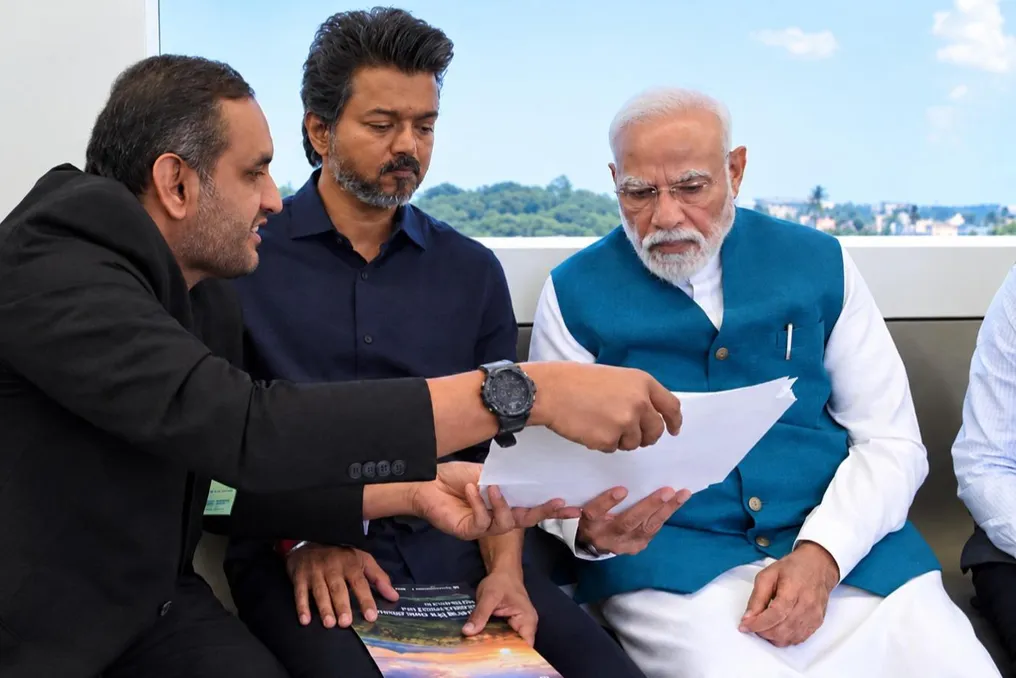
During Prime Minister Narendra Modi's metro ride in Chennai with the Chief Minister of Tamil Nadu, C. Joseph Vijay, the journey served as an unusual platform for entrepreneurs wishing to present their ideas.

Reports indicate that over fifteen startup founders participated in the interaction, presenting innovations from fields such as aerospace technology, aviation, healthcare, agriculture, and urban finance.

Below is an overview of eight companies and the problems they aim to solve.

Harry Krishnan KDJ, founder, CEO, and CTO of Dream Aerospace Technologies, discussed the company's engine systems for satellites, spacecraft, and return vehicles. These systems provide the thrust necessary for maneuvering spacecraft.

The startup, founded in 2022, has about 25 people on its team, with an average age of approximately 25 years. Krishnan mentioned that the Prime Minister was interested in the company's founding, team size, and average employee age, and was surprised by the youth of the team.

The discussion also touched upon the growing satellite industry and the company's expansion plans. Krishnan informed the Prime Minister that the startup is focused on increasing domestic production capacity, having orders from clients for the next two to three years. He also highlighted how IN-SPACe helped private space companies gain access to India's space ecosystem.

Blunav Technologies develops software for managing airport operations, integrating information on aircraft movement, passenger services, and baggage handling. Founder and CEO Susendar Marimuthu told Prime Minister Modi that the company developed its platform specifically for small and medium-sized airports where replacing existing systems can be costly.

The Prime Minister showed particular interest in how the technology could support regional connectivity under the UDAN scheme. Marimuthu noted that Modi wanted to see the platform tested at a UDAN airport.

The conversation also shifted to the company's international expansion. Recalling the Prime Minister's advice, Marimuthu stated: 'Always remember that this is an Indian company... and you are Indian. So be proud of that badge wherever you go.'

This exchange took place against the backdrop of India's efforts to expand regional aviation and develop more airports under the revised UDAN scheme.

Grahaa Space is developing a constellation of nanosatellites for Earth observation to transmit surface video data almost in real-time. Co-founder and CEO Ramesh Kumar described this goal as creating an 'eye in the sky.'

During his interaction with Prime Minister Modi, Kumar showed him photos of two launch attempts by the company, its SOLARAS satellite, and the technology under development. The first launch attempt, which took place in Brazil in December 2025, failed due to a rocket explosion. However, in July 2026, the company successfully placed SOLARAS into low Earth orbit aboard the Vikram-1 rocket from Skyroot Aerospace.

Kumar also explained the company's patented modular satellite platform and communication systems. He recalled that the Prime Minister asked about the payload and highly appreciated the startup's contribution to India's growing space economy.

Kumar stated: 'He assured me that the Government of India would provide all necessary support to startups in space technologies like ours.'

FarmwiseAI applies artificial intelligence and geospatial analysis in agriculture and land management. The company's technology uses satellite imagery and geographic data to assist in mapping agricultural fields and generating information useful for planning and administration.

The company reported starting collaboration with the Tamil Nadu Department of Agriculture and the Tamil Nadu Agricultural University in 2021. It also reported completing a field measurement book mapping program across the state, covering over 4.5 crore land parcels, 45 lakh cadastral numbers, and 17,700 villages.

Based in Tirunelveli, Thazhal Geospatial Analytics uses satellite imagery, drone data, and IoT sensors to monitor physical assets and assess environmental risks. The company's work transforms geographical information into analytical data that can help lenders, insurers, businesses, and government agencies understand risks associated with infrastructure and climate conditions.

Founder Vignesh Kandasamy mentioned that applications discussed included monitoring construction progress, identifying potential delays, and assessing roads, bridges, lakes, and mangrove ecosystems. During the metro interaction, he told reporters that Prime Minister Modi specifically asked if this technology could be used to monitor roads and bridges.

Diagno Intelligent Systems develops an AI-based tool for screening patients for osteoporosis—a condition that weakens bones and increases the risk of fractures. Their product, iOsteoporos Screen, analyzes routine chest X-rays to measure clavicle features using a method called radiogrammetry. These measurements are then used to estimate hip bone mineral density, an indicator of bone strength. The goal is to identify individuals who may be at risk and could benefit from further examination.

A crucial aspect of this approach is the use of chest X-rays that patients may have already taken, potentially reducing the need for additional imaging during the initial screening stage.

MEDxAI Innovations operates at the intersection of artificial intelligence, medical diagnostics, and drug discovery. The startup, incubated by Vellore Institute of Technology and founded by Dr. Shina S. Parin, presented two complexes during the interaction with Prime Minister Modi.

The first, CerviLens, is designed to support preliminary screening for cervical cancer using colposcopy and Pap smear analysis, augmented by AI. The system integrates information from various screening methods to assess potential cervical lesions and support clinical decision-making. The second complex, Quantum PharmX, applies AI and computational methods for drug discovery and molecular research.

Munify Datatech operates in the less traditional field of fintech. Instead of focusing on consumer payments or lending, the company creates a data platform around municipal finance. Its platform systematizes financial information from city local authorities, including municipal budgets, audited reports, property tax collection, and expenditure models. It also uses this data to develop credit ratings and assess the financial health of municipalities.

The company's website states that its database covers over 200 municipal corporations and contains thousands of municipal documents. The company is also developing a platform to connect creditworthy cities and viable infrastructure projects with lenders and development partners.

Popular