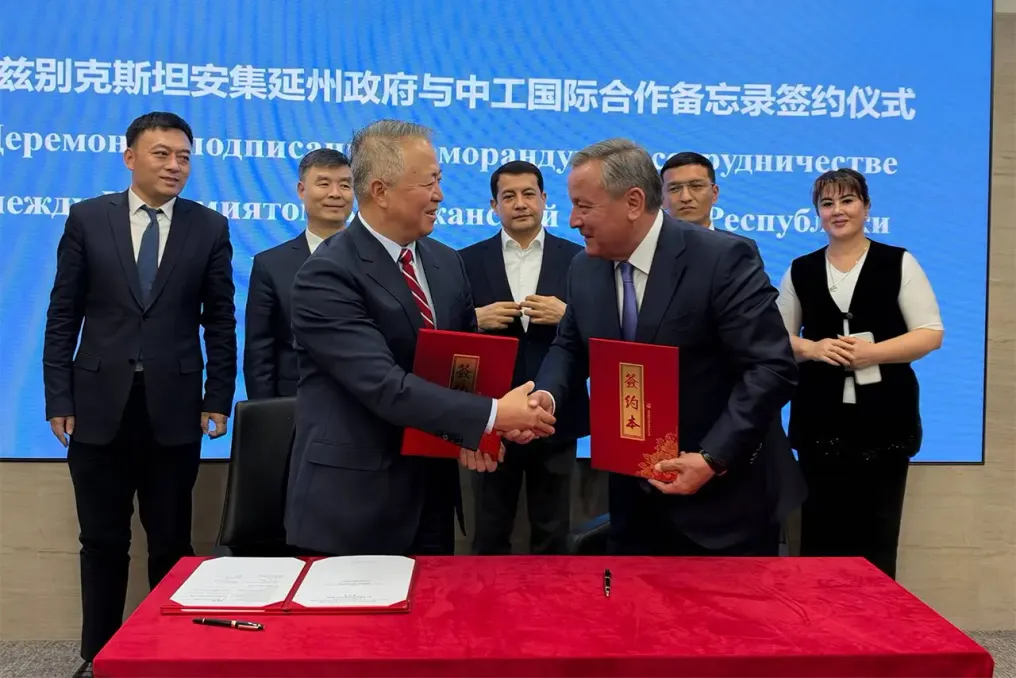
Andijan Region Signs Three Agreements with Chinese Company CAMCE
Read more
UzDaily
uzdaily.uz

Andijan Region Signs Three Agreements with Chinese Company CAMCE

The Andijan Region and the Chinese company CHINA CAMCE have concluded three agreements covering projects in infrastructure, education, and healthcare. These documents are the result of negotiations between the regional delegation, led by Governor Shukhratbek Abdurakhmonov, and Wang Bo, Chairman of the company's board of directors.

The parties discussed attracting foreign investment, increasing the region's investment attractiveness, as well as implementing major projects in the social sphere and infrastructure.

One of the agreements provides for the joint development and construction of the Andijan Logistics Hub along the China-Kyrgyzstan-Uzbekistan railway line. This initiative aims to expand the region's transport and logistics capabilities.

The second document is a memorandum of understanding concerning the training of qualified specialists for the clean energy sector. The parties intend to develop the necessary human resources potential for this field.

The third agreement is dedicated to the construction of a modern multi-purpose hospital. This project is designed to improve medical infrastructure and enhance the quality of healthcare services for residents.

Following the meeting, the parties also agreed on specific tasks required to accelerate the practical implementation of the planned projects.
Similar stories

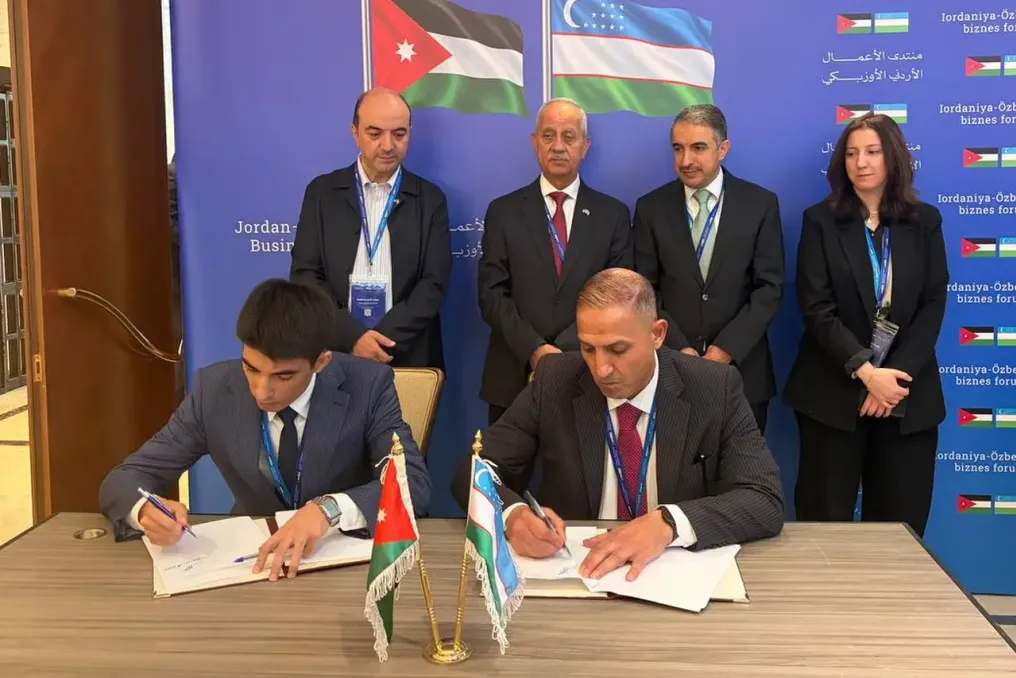
Uzbekistan and Jordan Sign Four Agricultural Cooperation Agreements
Read more
uzdaily.uz

Uzbekistan and Jordan Sign Four Agricultural Cooperation Agreements

The Ministry of Agriculture reported that Uzbekistan and Jordan concluded four agreements on agricultural cooperation during the visit of the President of Uzbekistan to the Hashemite Kingdom of Jordan.

These agreements cover joint projects in seed potato production, agricultural biotechnology, resource-saving farming, plant protection, veterinary drug production, as well as fruit and vegetable processing.

Details of the Signed Agreements

One of the agreements was concluded between the Ministry of Agriculture of Uzbekistan and the Jordanian company Technoseeds. It provides for cooperation in growing seed potatoes, agricultural biotechnology, and investment activities.

Another document was signed with Manaseer Trade House. The parties intend to develop resource-saving farming, including the introduction of non-chemical fertilizers and technologies to strengthen and promote the growth of fodder crops.

A separate trilateral agreement was reached between the Ministry of Agriculture of Uzbekistan, the Jordanian company VAPCO, and the Uzbek company Samo Farm Servis LLC, based in Samarkand. This project involves creating production facilities for plant protection products and veterinary medicines, which is planned for phased implementation.

The fourth document is a memorandum of understanding between the Jordanian company AFICO and the Uzbek company Berry Valley LLC. It concerns the processing of agricultural products and expanding export opportunities.

Within this project, the implementation of IQF (Individual Quick Freezing) technology for fruits and vegetables in Uzbekistan is planned. AFICO commits to providing technical expertise and training local specialists. In turn, Berry Valley will share experience in growing berry crops in plastic greenhouses in Jordan.

Uzbekistan and China Agree to Expand Healthcare Cooperation
Read more
uzdaily.uz

Uzbekistan and China Agree to Expand Healthcare Cooperation

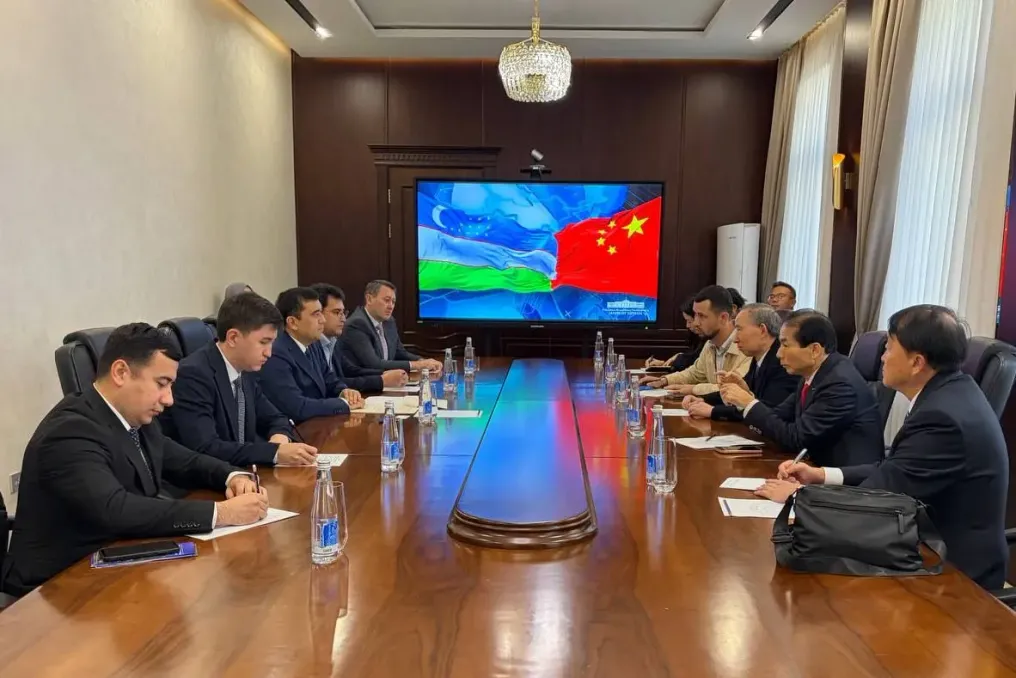
The Ministry of Health of Uzbekistan reported that Uzbekistan and China have reached an agreement to expand cooperation in the field of healthcare. This cooperation will cover areas such as advanced surgery, pharmaceutical production, and the development of traditional medicine.

During the meeting, Jaloliddin Asamutdinov, Deputy Minister of Health for Compliance and Internal Anti-Corruption Control, met with a delegation from the Chinese Center for International Cultural Exchange led by its chairman, Lun Yusang. This meeting emphasized the strengthening of broad strategic partnership between the two countries, and both sides particularly noted the significance of healthcare in bilateral relations.

Currently, Uzbekistan and China are implementing joint projects in several areas, including the introduction of modern technologies, training medical personnel, and developing the pharmaceutical industry. Over the past three years, more than 500 Uzbek doctors have undergone in-depth training in China, and more than ten Chinese pharmaceutical companies operate in Uzbekistan.

188 types of medicines produced by Chinese companies are registered in Uzbekistan, and permission has also been granted for the registration of 1900 medical devices and diagnostic products from these same companies.

The discussion also focused on the development of traditional medicine in Uzbekistan. Participants discussed the possibility of utilizing Chinese experience, conducting joint research, and training qualified specialists.

The Chinese delegation expressed interest in Uzbekistan's investment environment, its potential, and available incentives. Representatives from China proposed organizing visits for Chinese investors operating in the medical and pharmaceutical sectors.

Following the negotiations, the parties agreed to develop cooperation in several areas. These include performing high-tech surgical operations on a grant basis with the participation of specialists from China. Another area will be the cultivation and processing of medicinal plants. Furthermore, both sides intend to cooperate in the production of medications from natural raw materials, as well as controlling their quality and safety.

China's Belt and Road Initiative Partners Span Over 150 Countries and 30 Global Organizations
Read more
cgtn.com

China's Belt and Road Initiative Partners Span Over 150 Countries and 30 Global Organizations

According to a statement by the official representative of China's chief economic planner, China has concluded cooperation agreements under the Belt and Road Initiative (BRI) with over 150 countries and more than 30 international organizations. This covers three-quarters of the world's nations and major international structures.

Lian Linzhong, Director General of the Department of Regional Opening of the National Commission for Development and Reform, announced this achievement during a press conference.

Since BRI was proposed by China in 2013, the initiative has gained widespread recognition for opening new avenues for global economic growth.

A report titled 'Building an Open World Economy Through Cooperation on the Belt and Road,' published by an analytical center on Tuesday, emphasizes that high-quality cooperation within the BRI demonstrates China's commitment to the principle of openness as a fundamental national policy and a mutually beneficial strategy of openness.

The report notes that countries are becoming more interdependent than ever before, creating significant opportunities to address global challenges through cooperation and openness. In light of these changes, China's approach is to consider both domestic and international conditions, expand high-standard openness, and form global partnerships in development.

According to the report, China thus aims to transform difficulties into a powerful impetus for building an open world economy and realizing the vision of inclusive development and mutual benefit for all.

Popular