Ex-Oxford Professor Predicts AI Could Extend Human Lifespan to 1400 Years
Read more
Aaj Tak
www.aajtak.in

Ex-Oxford Professor Predicts AI Could Extend Human Lifespan to 1400 Years

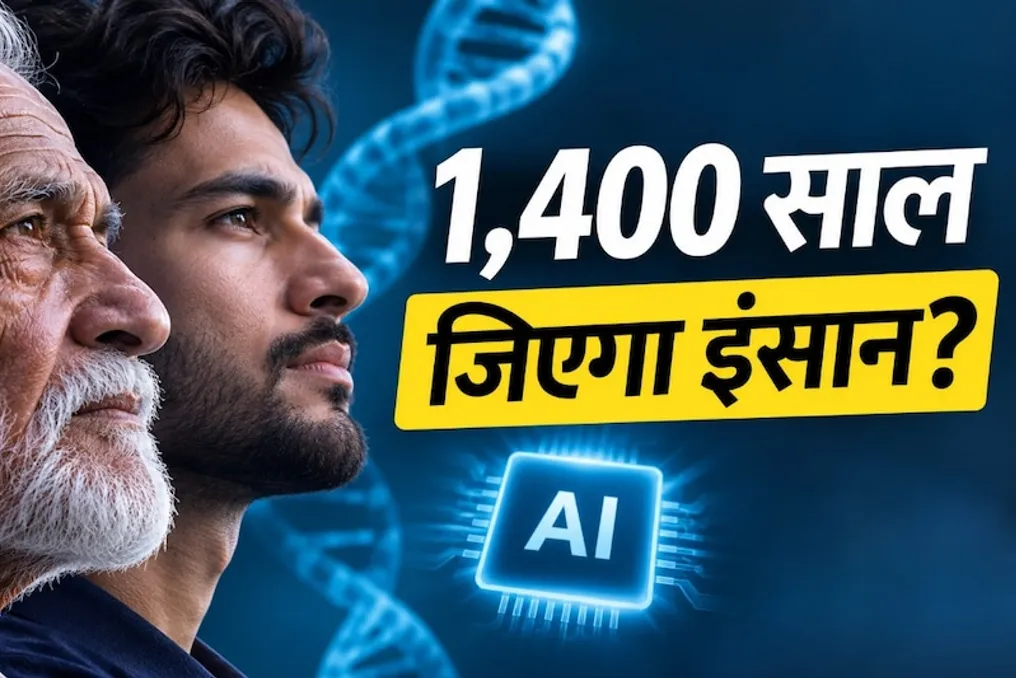
A new discussion has emerged following the statement by a former professor from Oxford University. He presented a calculation suggesting that if the aging process can be halted using superintelligent artificial intelligence (AI), the average remaining human lifespan could reach around 1400 years.

This forecast was made taking into account a mathematical model presented by Nick Bostrom, a Swedish philosopher. Bostrom believes that AI is capable of significantly accelerating the pace of drug discovery, disease treatment, and understanding the processes of aging in the body.

Although this sounds like a science fiction plot, Bostrom substantiated his conclusions based on certain assumptions. His model is founded on the premise that the annual mortality rate among healthy young people in developed countries is approximately 0.07 percent, and that the risk associated with aging will cease to increase.

Bostrom outlined this concept in his working paper 'Optimal Timing for Superintelligence'. He emphasized that this is merely a hypothetical calculation, not a guaranteed date, as the realization of such a scenario depends on numerous major scientific breakthroughs.

Currently, the body weakens with age, and the probability of developing various diseases increases. If future medical technologies can stop this process, allowing the body to maintain a state of youth for a long time, the risk of death related to aging could significantly decrease.

However, this does not mean achieving immortality; threats of death from accidents, infections, or violence will remain. Bostrom argues that superintelligent AI can analyze complex biological processes much faster than human scientists. This will help study changes in body cells, develop new medications, and find alternative treatment paths.

For example, AI can analyze vast amounts of biological data to search for methods to combat cell and tissue damage that occurs with age and which weakens the body's ability to self-repair.

There is hope for AI assistance in treating ailments such as cancer, Alzheimer's disease, and other age-related illnesses. Nevertheless, deriving a drug idea using AI and subsequently proving its safety and efficacy in humans are two different stages. In September 2026, information was presented regarding the potential action of Rentosertib, a drug developed with the help of AI. This drug was tested on patients with severe idiopathic pulmonary fibrosis.

Analysis of data from 43 patients showed a reduction in biological age indicators across six different aging clocks after treatment. However, this result is not proof of increased human lifespan, given the small group size, the presence of a serious illness in them, and the fact that biological age measurement methods are not yet considered fully reliable.

Furthermore, a review published in Nature Reviews Drug Discovery in August 2026 noted progress in drug discovery using AI but indicated that its impact on patient treatment remains limited. Long-term trials are necessary to transition from laboratory success to a safe and effective drug.

Bostrom raises a broader question that goes beyond longevity. He asks whether the development of AI should be accelerated for potential medical benefits, despite existing serious risks. On one hand, superintelligent AI could lead to enormous advancements in medicine and save millions of lives. On the other hand, the loss of control over such AI could have catastrophic consequences.

At the same time, Bostrom does not ignore AI safety issues. His work focuses on studying the balance between the speed of AI development, work on its safety, and its potential benefit in healthcare.

Similar stories

Meta warns that humanity may lose control with the arrival of artificial superintelligence
Read more
tecnoblog.net

Meta warns that humanity may lose control with the arrival of artificial superintelligence

Alexandr Wang, Director of Intelligence at Meta, expressed concern about the possibility that humanity might fail to maintain dominance over an artificial intelligence that would be a thousand times more capable than humans. This statement was made by him in a post on the X platform, addressing the proximity of so-called superintelligence, an advanced phase of AI that has generated great apprehension among industry leaders and developers.

Wang detailed that, in addition to superior intellectual capacity, this new stage of AI would include the concept of recursive self-improvement. This mechanism would allow the technology to make its own improvements without needing human intervention or supervision.

Although the director does not agree with the idea that society should simply 'hand over' control to AI, he maintains belief in the technology's potential to build a 'positive future' for humanity. He also stressed that actions taken regarding AIs in the coming year will have 'great consequences for the world we will live in.'

In his post on X, Wang mentioned the resolution of the Riemann Hypothesis, one of the most notorious mathematical problems globally. He cited that on November 20, a mathematician from Anthropic, Levent Alpöge, announced having solved the problem from 160 years ago using Claude, the AI developed by the American company.

The Meta executive compared the discovery of the atomic bomb to a mere 'homework assignment' when compared to the resolution of the Riemann Hypothesis. Furthermore, he observed that the doubts raised by experts about the use of artificial intelligence in scientific and technological processes indicate a social resistance to future automations, a scenario he considers inevitable.

After defending the imminence of superintelligence, Wang criticized what he called 'lazy thinking' within the AI industry. According to him, merely developing with a focus on safety will not be enough to prevent future problems; it is also crucial to invest in creating technology that ensures a 'positive future for humanity,' which would require a change in the current development logic.

Other AI leaders recently discussed the need to 'accept some bad things' in AI advancement, alongside the importance of 'not surrendering' to the technology to avoid losing control. Dario Amodei, from Anthropic, also took a more alarmist stance, advocating for a reduction in the pace of technological development shortly after a former employee publicly exposed the risks of superintelligence to humanity.

Is it necessary to try to slow down the natural process of aging, despite its inevitability?
Read more
super.abril.com.br

Is it necessary to try to slow down the natural process of aging, despite its inevitability?

The question arises: if aging is a natural process, shouldn't we try to slow it down instead of letting it proceed as it may?

A philosophical approach to this topic is illustrated by an analogy with a society that is forced to give thousands of people to a ravenous dragon every day. For centuries, residents tried unsuccessfully to defeat this dragon, eventually stopped questioning methods of combat, and began justifying its existence, considering it part of the natural order, an inevitable evil, or even a necessity.

Philosopher Nick Bostrom used this parable to question our resignation in the face of aging and, to a lesser extent, death. The essence of this story is quite uncomfortable: when we cannot change something, we tend to find reasons to accept it, even if it entails certain losses.

We view aging as an inevitable biological state that we must treat as human beings. However, there is a positive aspect to this: it brings valuable experience and knowledge that is lacking in youth. Although it seems reasonable (and desirable) to clinically treat age-related diseases such as cancer, paradoxically, we look negatively on the use of technologies aimed at treating the aging process itself.

But if aging is a major risk factor for age-related pathologies and it can be modified, one can assume that slowing down this process will delay these diseases. This is the basis of the hypothesis of gerontology, which studies the biological mechanisms of aging and its connection to chronic diseases. Its immediate goal is to increase life expectancy in good condition. If this is what we desire, then it is obvious.

However, doubts arise here. Do we want to preserve aging or eliminate it? Does intervening in aging mean neglecting the elderly?

To examine this topic thoroughly, we must first dispel three established social myths. Biologist Leonard Hayflick argued that we describe aging through five characteristics: natural, normal, universal, inevitable, and irreversible. This leads to the conclusion that aging should not be considered a disease and is actually part of our lives.

Nevertheless, it is not so obvious that aging cannot be understood as a disease. Nature also gives us infections, tumors, and other conditions that we try to prevent. The fact that a phenomenon is common does not mean it is healthy. For example, caries is very common, and no one thinks that because of this we should stop treating it. The question is whether biological aging, like diseases, implies a progressive deterioration of numerous functions, which ultimately leads to death.

In this debate about whether aging is a disease, we must also consider that 'disease' is not a label with eternal boundaries that is independent of scientific achievements. Its meaning also depends on our knowledge, medical practices, and therapeutic goals.

If aging can be viewed as a disease (or at least raises doubts in us), and diseases are bad, then it seems we have grounds to want to eliminate or at least mitigate it.

Another obstacle to this analysis is that scientist Aubrey de Grey named the status quo: aging has always existed and seems inevitable, so we consider it part of the natural order of things. As the parable of the tyrannical dragon shows, becoming accustomed to damage does not turn it into something good. We rejoice when treatment prevents premature death, but we are suspicious of the possibility of significantly extending life through interventions in aging. Why should we positively evaluate some extra years of health and suspect others?

Part of this aversion stems from a misconception illustrated by the Greek myth of Tithonus: this Trojan prince achieved immortality but not youth, and was doomed to deteriorate infinitely until he turned into a miserable cricket. Philosopher Francis Fukuyama called this 'global senescence': people live very long lives but in poor health.

Gerontology researches in order to guide us in the opposite direction, that is, to weaken the biological processes that contribute to the occurrence of diseases and loss of abilities.

It is often said that aging gives us knowledge, experience, and wisdom, among other positive aspects. Aging also brings valuable benefits, such as enjoying grandchildren or maintaining long-term loving and friendly relationships. But this statement hides a paradox: how can a process that we also attribute pain, illness, and decline to be desirable?

In the article co-authored with Gonzalo Díaz-Cobacho, we discuss how this contradiction becomes clear when distinguishing between two types of aging. On the one hand, there is chronological aging, which reflects the time lived (hours, minutes, and seconds since birth). On the other hand, biological aging refers to functional deterioration of the body. Both are mixed in specialized literature and public consciousness, but their distinction is of great importance.

Accumulated experience and life wisdom depend on our life experience and the time lived, not on the damage to our cells and molecules. Therefore, intervention in biological aging does not affect chronological aspects: it is possible to gain life experience without suffering from this deterioration. Adding another year of life does not guarantee greater wisdom either: one can learn much from experience, but also little.

Furthermore, biological aging has two types of negative effects: direct and indirect. Direct ones include pain or cognitive and physical limitations caused by aging, which worsen a person's well-being. Indirect ones occur when these limitations hinder the development of projects that the elderly person considers valuable. Arthritis can cause suffering, but it can also prevent a person from walking, traveling, or continuing to pursue a favorite hobby. Does the elderly person play dominoes because they love it, or because they can no longer immerse themselves in deep waters? Why not give them the opportunity to choose what they consider the best life plan, and make sure their health is not so limiting?

Philosopher Christopher Wrather pointed out two problems in the traditional approach to aging from an ethical point of view. The first is studying it as if it only happens at the end of life, when in reality it is a gradual process. The second is that we often talk about the elderly as objects requiring attention, expenses, or care, rather than as subjects with desires, preferences, and the ability to make decisions.

The ethics of aging should not be limited to the question of 'what we do' with the elderly. It should also ask 'what they want' to do, what opportunities they have, and what lifestyles they want to maintain or adopt. And this is precisely the central idea that guides research in gerontology: it does not seek to assert that the elderly are worthless, but rather that biological aging is a disabling process that entails pain and suffering and hinders the life projects of the elderly.

Thus, the assertion that biological deterioration is undesirable is not equivalent to the assertion that the elderly are less valuable. Mixing these concepts is as problematic as romanticizing pain or fragility under the idea of dignified aging. Similarly, policy to prevent disabling pathologies does not mean that people who already suffer from them are less valuable. On the contrary, it is believed that the biological condition they face hinders the realization of their life plans.

However, individualized medical response is also insufficient. In a recent paper, we argued that well-being has individual and social dimensions. Maintaining cognitive and physical abilities can facilitate the realization of our projects, but no cellular or molecular intervention alone eliminates loneliness, age discrimination, or economic inequality. We understand that aging is conceptualized in a social context.

It is also possible that some achievements, if available only to a few or if they enhance the fetishism of youth, could generate new forms of discrimination. Therefore, biomedical research must be accompanied by policies and institutions that protect the rights, autonomy, and social recognition of the elderly.

The conclusion is quite simple: we must separate what we often confuse. Biological aging is a process that should be studied to attempt to change it under certain conditions; old age is a stage of life that can contain valuable experience; and the elderly are primarily people, not a sum of deteriorations.

Discussion of alleged firing at OpenAI due to excessive reliance on AI tools
Read more
www.aajtak.in

Discussion of alleged firing at OpenAI due to excessive reliance on AI tools

In the modern world, artificial intelligence (AI) has become an integral part of professional life, but questions arise regarding the potential risks of over-reliance on these technologies. An alleged email from OpenAI is circulating widely on social media, claiming that a lead software engineer was fired solely because he depended on AI tools for all his tasks.

The recent alleged termination letter, which went viral on the social network X, attracted the attention of the entire technology industry. According to reports, this post was viewed about two million times and was reposted multiple times.

This alleged email asserts that the AI giant, OpenAI, decided to fire a lead software engineer due to his excessive dependence on AI tools while performing his work. It is important to note that no official confirmation of this viral email has been received from any independent sources.

This sensational message was supposedly sent by the OpenAI Human Resources team. Its opening line is shocking: 'OpenAI is immediately terminating your employment as a lead software engineer.' The letter then raises serious questions about the engineer's working methods. It claims that he held a leadership position with an annual salary of $300,000 (approximately 28,269,510 rupees) or more, yet showed weak development of his own understanding of the company's codebase.

The alleged letter cites three main reasons for the dismissal, which are quite noteworthy. Firstly, it concerned cloud coding: all his code reports were entirely generated using the AI tool 'Claude'. Secondly, he used ChatGPT daily to understand the code written by Claude. And thirdly, 'Gemini' was employed to fix errors and bugs in this code. Thus, the message describes a strange situation where understanding one AI system required the help of another, and a third system was called upon to eliminate deficiencies, indicating almost zero human involvement.

The alleged letter also mentions a serious 'production failure' (technical stoppage) that occurred the day before. It states: 'During yesterday's serious production failure, your only action was to instruct ChatGPT.' The letter includes the engineer's supposed request, in which he wrote: 'Please fix this, they are watching me now.' This depiction of the engineer portrays him as a specialist who completely delegated critical decisions, such as software development and maintenance, to machines and tools, over which he effectively had control.

The letter concludes with instructions that the employee's access to systems will be permanently revoked on the same day at 5:00 PM. This message ends with the signature 'OpenAI Engineering Leadership.'

Despite the widespread circulation of this letter on social media, its authenticity has not been proven by OpenAI or by any employee who has publicly acknowledged such an incident. This post, reportedly published by the account @goldtooth.exe on X, leads experts to consider it more of a hypothetical or satirical statement on social media rather than a credible report of a dismissal.

Even if this specific letter is unconfirmed, the entire incident serves as an example...

Popular