Archaeological finds in Havarman indicate over 70,000 years of human history
Read more
Tehran Times
www.tehrantimes.com

Archaeological finds in Havarman indicate over 70,000 years of human history

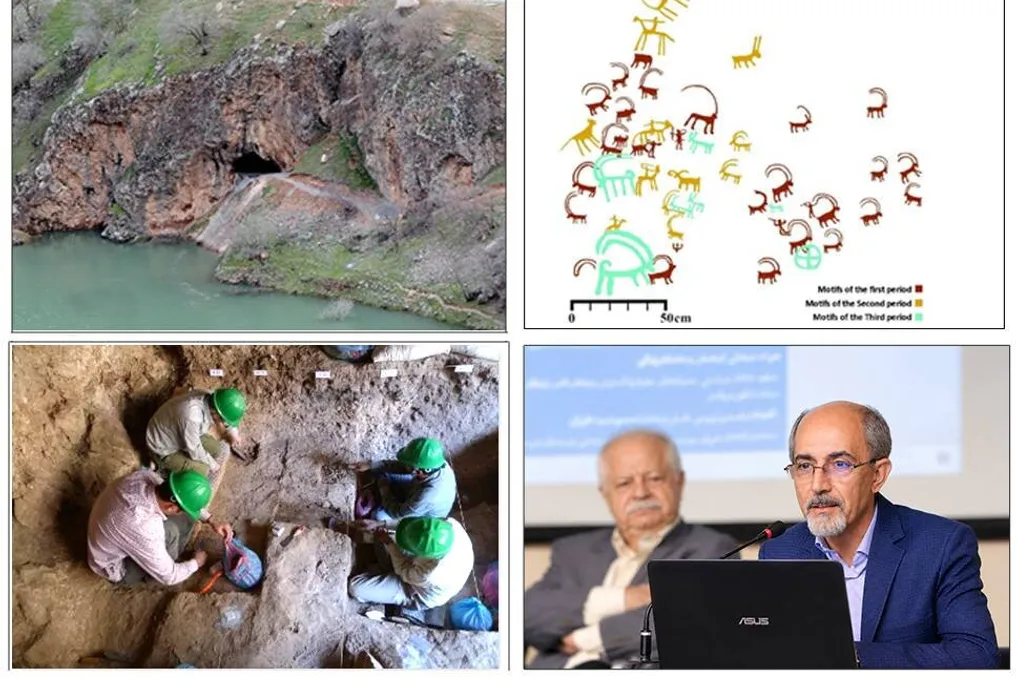
Archaeological research in the Sirvan Valley has uncovered evidence of human presence dating back more than 70,000 years. These discoveries shed light on the long history of regional settlement and its cultural development, according to an archaeologist from the National Museum of Iran. The valley is part of the Oramanat/Havarman Cultural Landscape, which is listed as a UNESCO World Heritage site in western Iran.

Fereydoun Biglari, head of the museum's Paleolithic Department, presented these findings at a conference titled 'Havarman: Oramanat Cultural Landscape,' held on Monday, November 23rd, at the Scientific Research Institute of Cultural Heritage and Tourism.

In his presentation, titled 'The Archaeological Landscape of the Sirvan Valley with Emphasis on Rescue Excavations near the Darian Dam,' Biglari reviewed the history of archaeological investigations in Havarman. He focused on surveys and rescue excavations conducted in the area affected by the Darian Dam project.

Archaeological surveys conducted in 2015 and 2016 identified over 70 archaeological and potential sites across the region. Discoveries included caves, rock shelters, open settlements, cemeteries, rock art sites, castles, bridges, and an ancient mountain road, highlighting the archaeological diversity of the Sirvan Valley.

Of these locations, 16 sites threatened by the planned reservoir underwent rescue excavations. These included open settlements, caves, rock shelters, and cemeteries. The research revealed evidence belonging to the Middle and Upper Paleolithic, Epipaleolithic, as well as the Middle and Late Chalcolithic, Iron, historical periods, and Middle and Late Islamic eras.

These findings confirm the presence of humans in Havarman for over 70,000 years, providing a long-term perspective on settlement patterns and cultural development in this mountainous area.

However, Biglari reported that 22 identified sites and potential archaeological locations within the project zone were ultimately submerged after the filling of the Darian Dam reservoir in the winter of 2015–2016. The submerged sites included nine confirmed archaeological sites and 13 potential ones.

He also outlined the scientific and research outcomes of the project, noting that his conclusions have already been published in 20 articles in Persian, English, and French.

The study was further discussed at the First National Conference on Havarman Archaeology, held at Kurdistan University in 2018, which focused on the Darian Dam rescue excavations. The event featured 12 presentations covering topics such as Paleolithic archaeology and early communal settlements, as well as the Bronze and Iron Ages and later historical periods.

Other papers addressed the geology and geomorphology of the region, archaeozoological evidence, and ethnoarchaeological studies.

The 'Havarman: Oramanat Cultural Landscape' conference was jointly organized by the Tourism Group of the Scientific Research Institute of Cultural Heritage and Tourism and the Society of Iranian Architectural Monuments. It brought together researchers, cultural heritage officials, and the public for two panel discussions dedicated to the Oramanat cultural landscape in the Kurdistan and Kermanshah provinces.

The Sirvan Valley is part of the Oramanat/Havarman Cultural Landscape, which was inscribed on the UNESCO World Heritage List in 2021 during the 44th session of the World Heritage Committee. This inscription increased Iran's total number of World Heritage sites to 26, recognizing the cultural and historical significance of the region and its long association with human communities.
Similar stories

Ancient settlements and Mesolithic stone tools discovered in Navoi region
Read more
podrobno.uz

Ancient settlements and Mesolithic stone tools discovered in Navoi region

Archaeologists conducted excavations in the Navoi region and discovered ancient settlements, cave dwellings, and stone tools. These findings indicate that human presence in this area may have begun about ten thousand years ago, and similar monuments had not been recorded in this region before.

According to information provided by Samarkand State University, the expedition took place in the Khatyrchin district, near the Nuratinsky mountain range. Employees of the university and specialists from the Yahi Gulomov Samarkand Institute of Archaeology participated in the work.

During the search operations, scientists found ancient settlements and caves, and collected a collection of stone tools near mountain springs. Among the found items were knives, scrapers, blades, and small plates made of sandstone and flint, which were used by ancient inhabitants in daily life.

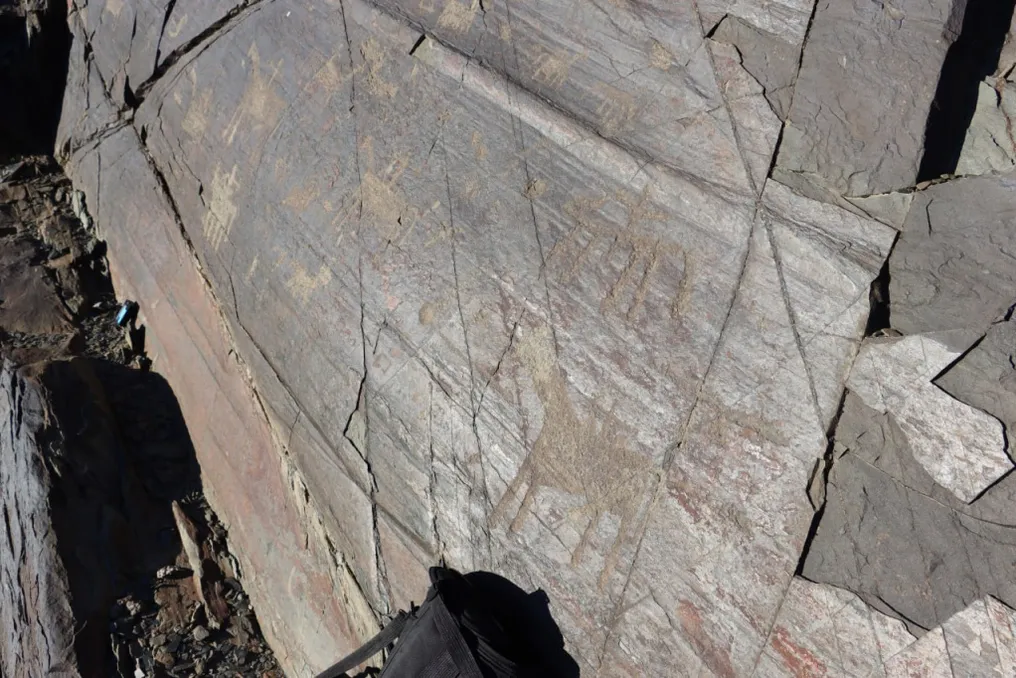
Preliminary examination showed that these artifacts belong to the Mesolithic and Neolithic periods—stages of the Stone Age when the transition from a hunter-gatherer lifestyle to agriculture and animal husbandry occurred. Additionally, near the Chinor village, researchers discovered rock paintings.

The significance of this discovery lies in the fact that Stone Age monuments in the Khatyrchin district have been registered for the first time. Scientists hypothesize that the discovered settlements may be related to ancient stone processing centers located approximately 25–30 kilometers from the discovery site. Further study is planned to more accurately determine the age of these artifacts.

It should be noted that previously, in October, archaeologists found traces of Bronze Age settlements and rock drawings in another part of the Nuratinsky range, in the Koshrabad district of the Samarkand region.

Photographer Herbert Karim-Masighi explores Iran's cultural heritage beyond monuments
Read more
www.tehrantimes.com

Photographer Herbert Karim-Masighi explores Iran's cultural heritage beyond monuments

For photographer Herbert Karim-Masighi, the cultural heritage of Iran is not merely a collection of historical buildings and monuments. It is also the history of the people, cultures, and beliefs that have shaped the country over millennia.

In a recent interview with Tehran Times, Karim-Masighi noted: 'Iran is a living land that has embraced thousands of years of life, cultures, beliefs, and experiences of various peoples.' He added that everything formed on this land—from mosques, churches, and temples to palaces, villages, and the homes of ordinary people—is part of the identity of this land.

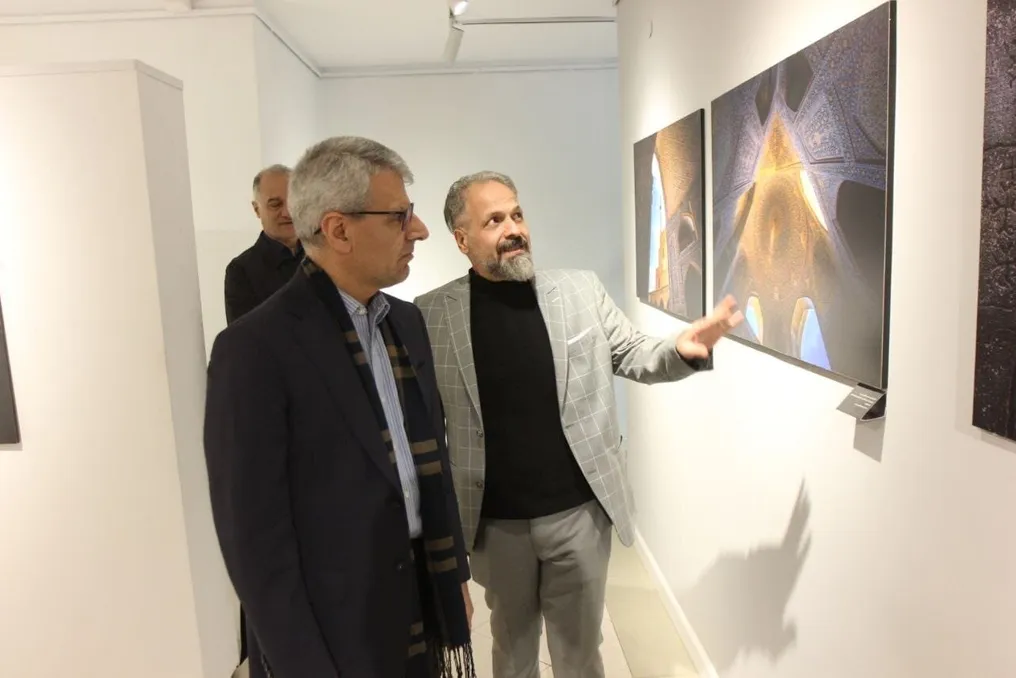
These reflections came after the presentation of his photo book, 'A Thousand Years, Iran,' last month. The book showcases various aspects of the country's historical, cultural, and architectural heritage. The official ceremony took place at the Bank Melli of Iran and was attended by the Minister of Tourism Seyed Reza Salehi-Amiri, the South Korean Ambassador to Iran Kim Joonpyo, Bank Melli CEO Mohsen Saifi Kafshgari, and the head of Bank Melli Publishing Company Amin Arefnia.

The event also gathered archaeologists, cultural heritage experts, members of parliament, and cultural officials, including Jabreal Nokandeh, head of the National Museum of Iran, Mohammad Mehdi Asgarpour, chairman of the board of directors of the Iranian House of Cinema, and Gholamareza Amirhani, head of the National Library and Archives of Iran.

Instead of focusing exclusively on famous landmarks, Karim-Masighi's photographs aim to capture the broader cultural landscape of Iran, encompassing different historical periods, religious traditions, communities, and daily life. He also prefers to leave many shots without detailed captions, allowing viewers to engage with them before encountering historical explanations or interpretations.

In a subsequent interview, he discusses the ideas behind his book, his approach to photographing Iran's diverse heritage, and the role of personal perspective in documenting the country's past and present.

When asked about the motivation for the project, he replied that he, Herbert Karim-Masighi, a photographer of this land, had traveled through Iran for many years, photographing quiet monuments and remote landscapes in search of something subtle: the continuity of life in a country that has repeatedly changed its appearance but never stopped moving forward.

From his perspective, Iran cannot be reduced to a single historical period associated solely with one ruling dynasty or defined by one religion. It is a living land carrying the accumulated experience of its people. He emphasized that the soil of Iran is sacred, and everything that has grown or been formed on it matters.

He makes no distinctions between buildings from the Achaemenid or Sasanian eras and those from the Safavid era, nor between Ilkhanid monuments and others. In his view, all of these are parts of a greater whole, which is Iran.

Regarding his approach to shooting different historical periods, Karim-Masighi strives to distance himself from ideological views and historical prejudices. For him, history is a combination of greatness and defeat, kindness and oppression. He does not wish to glorify one period due to personal convictions while ignoring another.

He believes that the inheritors are not only the Achaemenids and Sasanians but also all ethnic groups, languages, religions, cultures, and ways of life that have developed on this land throughout history. This is why he rarely feels the need to classify or label everything in his photographs, as he does not want to limit the viewer's imagination to a specific historical name or date before they see the image.

Karim-Masighi explained that he wanted the audience to first encounter the photograph itself before learning its name or background, because written explanations sometimes stand between people and what they see. He believes that the initial contact should belong to the image and the viewer.

Discussing the link between daily life and cultural heritage, he stated that history cannot be understood by looking only at magnificent buildings and archaeological remains. Sometimes history remains alive in the simplest actions of ordinary people. He recalled a visit to a village near Persepolis, where he observed a man cleaning a cattle shed, which reminded him of the continuity of traditional life.

He also recounted meeting a Japanese traveler who chose a difficult mode of transport, and remembered his response: many cultures are best understood among ordinary people. He asserts that Iran's heritage is not limited to stones and museums, but is present in the lives of people who continue traditions.

Speaking about the role of time, light, and patience, Karim-Masighi notes that photography, for him, is understanding time and discovering moments. He believes that a change in light can reveal a completely different meaning in a historical structure. He also stressed that patience and familiarity with the place are necessary, as sometimes understanding the rhythms of a place requires living there long enough.

Regarding the value of an image in an era of rapid technological development, he insists that what matters is not so much technical perfection as the photographer's vision and narrative. What remains in photography is what the author saw, why they decided to capture it, and what story lies behind the frame.

In conclusion, Karim-Masighi expressed hope that readers would see Iran again, free from prejudice and ideological constraints, with greater curiosity. He believes that Iran is the shared heritage of countless generations, and each of us is a storyteller of one of its chapters.

Scientists from Uzbekistan and China have begun excavations of an ancient settlement in the Namangan region
Read more
podrobno.uz

Scientists from Uzbekistan and China have begun excavations of an ancient settlement in the Namangan region

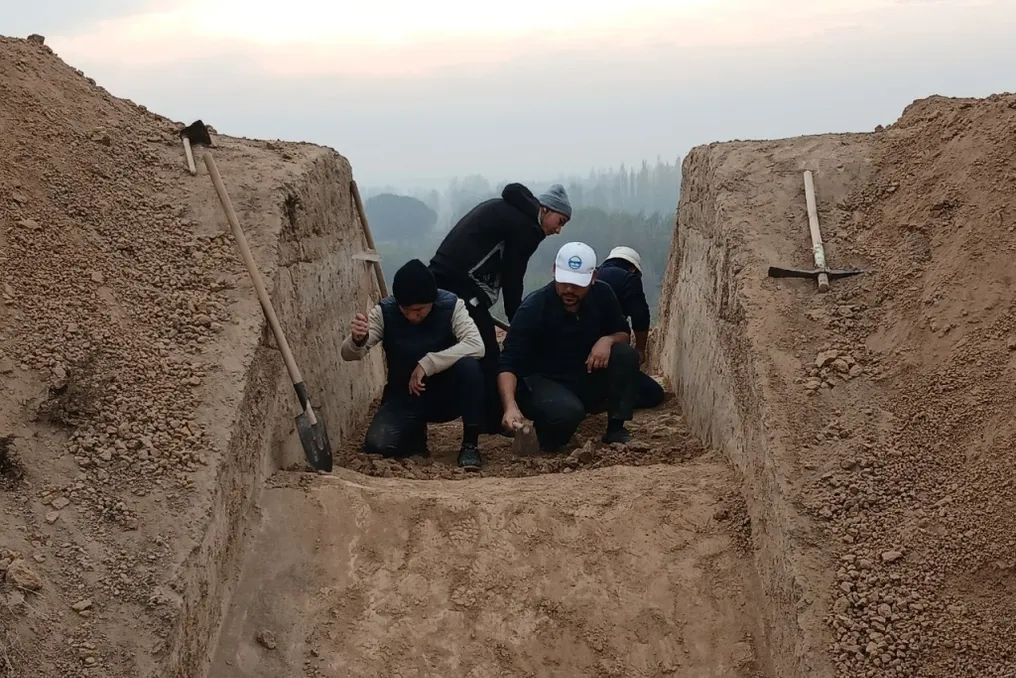
Archaeological surveys are underway at the ruins of the ancient settlement of Kyrkkhujra in the Papsky district of the Namangan region. The goal of the work is to determine the external appearance of the city in the past and the way of life of its former inhabitants.

Specialists from the Institute of Anthropology of the Academy of Sciences of Uzbekistan, as well as employees of the Institute of Archaeology of the Chinese Academy of Social Sciences, are participating in this scientific expedition. Additionally, lecturers and students from Namangan State University are involved in the work.

Leadership and Composition of the Expedition

The research is supervised by Doctor of Historical Sciences, Professor Abdulhamid Anarbayev. He is assisted by his Chinese colleagues Liu Tao, Ai Aisa, and Wang Xin.

The excavations were organized in four different areas. Archaeologists focused on the citadel, which represents the core of the settlement, as well as its northern and western sectors.

During the work, specialists are finding many artifacts, including old pottery, everyday objects, and building remains. These discoveries will serve as a basis for determining the stages of settlement development, the features of its urban planning, and the daily life of the local population.

According to the researchers, the results of this expedition will provide fresh data on Kyrkkhujra, its architectural features, and the lifestyle of people in ancient times. Moreover, new findings contribute to a deeper understanding of the history of the current Namangan region.

It is worth noting that previously, archaeologists found petroglyphs in the Koshrabad district of the Samarkand region, which likely date back to the Mesolithic and Neolithic periods, as well as traces of Bronze Age settlements in the Nuratinsky range mountains.

Popular