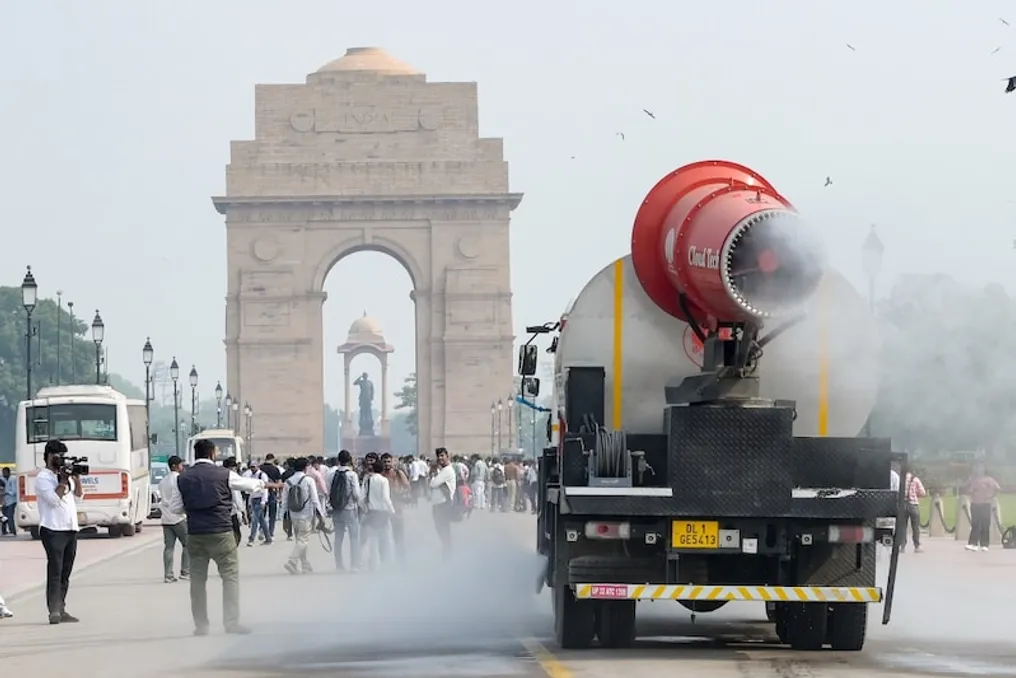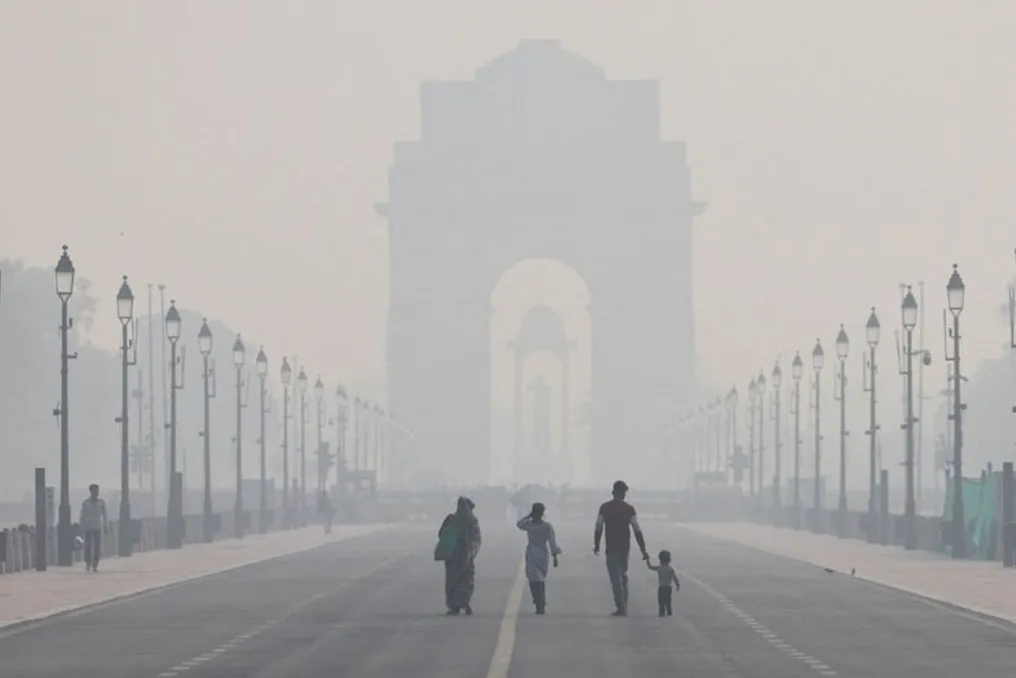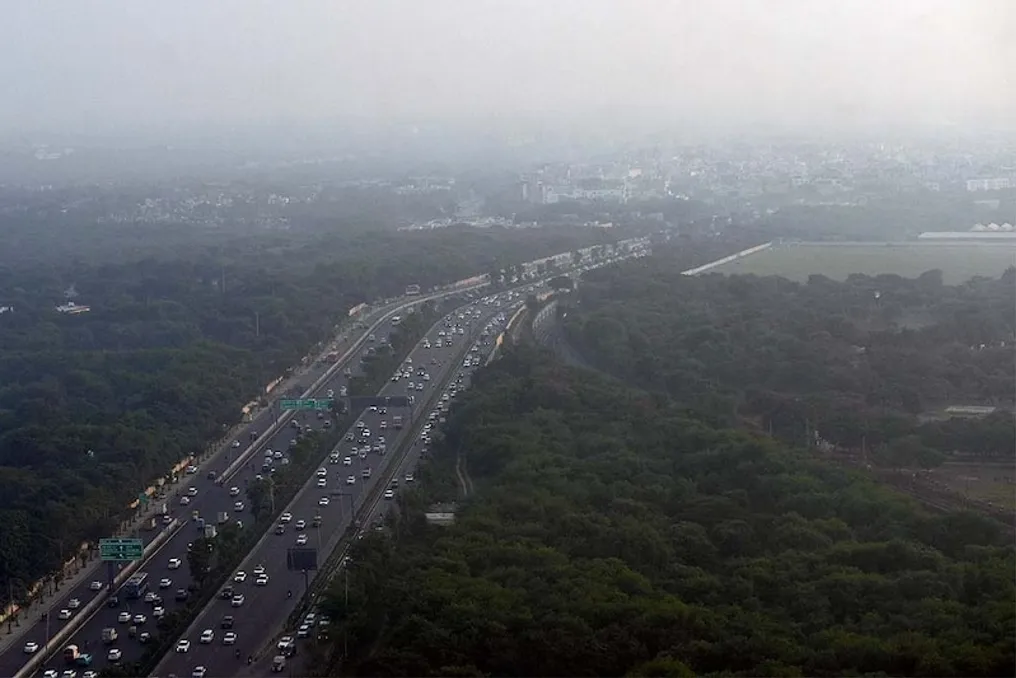
The air in Delhi remained in the 'poor' category on Wednesday, marking the eleventh consecutive day that the city's average Air Quality Index (AQI) exceeded the 200 mark. On Wednesday, the average 24-hour AQI was 220. Out of 58 monitoring stations in the city, 30 were in the 'poor' category, four were in the 'very poor' category, and 24 were in the 'moderate' category.
The highest pollution was recorded in Anand Vihar, where the AQI reached 357. Since November 15, the air in Delhi has been in the 'poor' category; on that day, the AQI was 290, then it dropped to 275, 204, 232, 280, 270, 265, 239, 260, 227, and now 220. These data indicate some reduction in pollution levels, but the danger persists.
According to data from the Real-Time Source Apportionment application, vehicle exhaust fumes were the main source of PM 2.5 in Delhi on Wednesday, accounting for 22.1 percent. The second place was held by biomass burning smoke, i.e., burning stubble and using domestic fuel, which contributed 21.3 percent. Secondary organic aerosols accounted for 20.1%, and secondary inorganic pollutants accounted for 15.8%, including nitrates, ammonia, and sulfates.
Pollution also came from garbage burning (7.2%), fireworks (4.7%), and industrial emissions (2.9%). These figures clearly show that Delhi's pollution is caused not by a single source, but by a combination of numerous local and regional factors. In winter, when the air becomes stagnant, all these factors combined make breathing difficult for citizens.
According to the Indian Meteorological Department's Air Quality Early Warning System, the air in Delhi is expected to remain in the 'poor' category from November 25 to 27. By November 28, it may transition to the 'very poor' category due to adverse weather conditions. The ventilation index will remain weak. It is forecasted that on November 25, it will be 4500, on November 26—4000, on November 27—only 1000, and on November 28—1500 square meters per second. Wind speed will also be below 10 kilometers per hour, and the mixing height, i.e., the height of pollutant dispersion, will remain limited. As a result, pollutants will not be able to rise and will accumulate near the ground, hindering air purification despite the drop in temperature.
On Wednesday, Delhi registered the coldest morning temperature of the season. The minimum temperature in Safdarjung was 10 degrees Celsius, 1.3 degrees below normal, while the maximum reached 28 degrees. The onset of cold weather prompts people to burn more fuel for heating in homes, which exacerbates pollution. Furthermore, cold air pushes pollutants downwards. Doctors warn that prolonged inhalation of polluted air can trigger asthma attacks, bronchitis, heart diseases, and vision problems. Children, the elderly, and those already suffering from illnesses should exercise extra caution. Using masks, limiting time outdoors, and using air purifiers indoors may be helpful.
The problem of Delhi's pollution is not solely due to the weather. The air will not clear without control over the number of vehicles, stubble burning practices, weak waste management, and control of industrial emissions. The government needs to adopt strict measures, such as regulating construction, supporting public transport, and improving coordination on stubble management with neighboring states. Citizens can also contribute by carpooling, using public transport, and refraining from burning garbage. If these efforts are not made, the air in Delhi could worsen further in the coming winter months.