
EU Commission fines three perfume industry giants for cartel participation
Read more
Noticias ao Minuto
noticiasaominuto.com

EU Commission fines three perfume industry giants for cartel participation

The European Commission has fined three global perfume giants—Firmenich, Givaudan, and International Flavors & Fragrances (IFF)—a total of 471.9 million euros for participating in an international cartel that lasted four years and involved the exchange of pricing information.

The institution stated in its announcement that the European Union Commission imposed fines totaling 471.9 million euros on Firmenich, Givaudan, and International Flavors & Fragrances, which are the three largest global flavor and fragrance producers. The fine was issued for involvement in an international cartel within the sector, which constitutes a violation of European Union competition rules.

According to the investigation from Brussels, these three companies 'exchanged commercially confidential information, including pricing details related to their business relationships with Unilever, the world's largest buyer of fragrance ingredients for consumer goods.'

Furthermore, it is alleged that Givaudan and IFF shared sensitive information about the global operations of their companies dealing in consumer fragrance and luxury perfumery, including price increase targets and client negotiations.

The executive body specified that the cartel covered the entire European Economic Area and operated from March 2019 to March 2023, when surprise inspections were conducted at the companies' facilities.

The Commission noted that by exchanging such information, Firmenich, Givaudan, and IFF reduced uncertainty regarding each other's future market policies in the fragrance sector, replacing effective competition with coordination.

The fines were distributed as follows: Firmenich received 137.7 million euros, Givaudan received 252.4 million euros, and IFF received 81.9 million euros. These amounts took into account factors such as geographical scope, severity, and duration of the infringement.

The three companies received discounts due to cooperation and admission of responsibility, including a 10% discount for the agreement. A less extensive level of participation by Firmenich was also considered a mitigating factor.

These companies act as suppliers of fragrances and aromatic ingredients used in the production of perfumes, cosmetics, personal care products, and detergents, working with well-known brands. Firmenich and Givaudan, based in Switzerland, as well as IFF, an American company, primarily operate in the B2B market, developing scents that are then sold under perfume and consumer brands.

Similar stories

Demand for coarse grains from Madhya Pradesh rises in the US and Europe; export of kodo, kutki, and saama reaches 550 million rupees
Read more
www.aajtak.in

Demand for coarse grains from Madhya Pradesh rises in the US and Europe; export of kodo, kutki, and saama reaches 550 million rupees

In Madhya Pradesh, the cultivation of Shrianna, or millet, is becoming a new source of income for farmers, especially in tribal areas. Efforts to promote the production of kodo, kutki, and saama are beginning to yield results, with the export of these millet varieties estimated at around 550 million rupees over the last three years. Demand for these crops is growing in the UAE, the US, and European countries.

The state government is working on a strategy to support organic farming and Shrianna production under Chief Minister Mohan Yadav. The government's priority is not only to preserve traditional crops but also to increase the income of tribal farmers.

According to official data, in the financial year 2024-25, a total of 183 million rupees worth of kotki, kodo, and saama was exported from Madhya Pradesh. This amount included 49.30 million rupees of kotki, 126 million rupees of kodo, and 7.48 million rupees of saama.

In the financial year 2025-26, the export of these three millet varieties increased to 224.32 million rupees. During this period, the export of kotki amounted to 94.54 million rupees, kodo to 119 million rupees, and saama to 10.1 million rupees.

Information provided for the year 2026 indicates that the export of these crops reached 142.55 million rupees from the markets. This sum included 55.54 million rupees of kotki, 78.86 million rupees of kodo, and 8.14 million rupees of saama.

To ensure the economic well-being of farmers from tribal areas, the state government has launched a program to incentivize Shrianna production called Rani Durgavati Shrianna Producten Promotion Yojana. Under this program, Shrianna is being procured for the first time in 16 districts.

These districts include Jabalpur, Katni, Mandla, Dindori, Chhindwara, Shahdol, Anuppur, Umaria, Riw, Mauganj, Satna, Maihar, Balaghat, Seoni, Sidhi, and Singaul.

As per the program, farmers are paid an incentive of 1000 rupees per quintal of kodo and kutki. More than 15 thousand farmers have registered to participate, and the total area of their registered land is about 21 thousand hectares.

The government has also increased the procurement prices for kodo and kutki. The price of kutki was increased from 3500 to 3600 rupees per quintal, and the price of kodo from 2500 to 2600 rupees per quintal.

It is planned to procure 32,500 metric tons of millet this year, compared to about 3000 metric tons purchased last year.

The cultivation of kodo and kutki is traditionally practiced in the tribal areas of Madhya Pradesh. The main producing regions are Mandla, Jabalpur, Dindori, Balaghat, Katni, Chhindwara, Pandurna, and Seoni.

According to the data presented, approximately 19 thousand hectares are cultivated in Dindori, 12,700 hectares in Umaria, 12 thousand hectares in Mandla, 10 thousand hectares in Shahdol, 7,500 hectares in Jabalpur, and 6,500 hectares in Katni.

The state government, in collaboration with agricultural experts, is working on a plan to conserve and increase the production of these traditional crops.

Information has been announced regarding the GI tagging for kutki from Sitahi and kutki from Nagdaman in Madhya Pradesh. Sitahi kutki is a local short-duration millet variety that matures in about 60 days.

This variety is considered beneficial for rain-fed areas and late sowing conditions. Due to its ability to withstand drought, water scarcity, and some major pests and diseases, it can be advantageous for farmers.

Thanks to its average height and strong stem, the problem of crop lodging is also reduced. It can be grown even on hilly, uneven, and poor soil.

It is reported that the cultivation area of Sitahi kutki in Dindori has increased to 10,395 hectares, with a stable yield of 10 to 11 quintals per hectare. This is expected to strengthen the livelihoods and food security of Baiga and Gond tribal farmers.

Nagdaman kutki, grown in Dindori, is also known for its local identity and nutritional properties. Jawaharlal Nehru Agricultural University in Jabalpur is preparing to establish Sitahi kutki as a national brand, which could open up new market opportunities for farmers.

The use of Shrianna is not limited to increasing farmers' incomes. In the Shiypur area, millet-based dishes are being promoted to combat malnutrition among children from the Saharia tribe.

Staff from Anganwadi workers and personnel of the Integrated Child Development Programme have been trained on preparing nutritious millet dishes and have been provided with information about its nutritional qualities.

In the district, about 130 acres of land are used for cultivating kodo and kutki, involving about 200 farmers. According to official information, this initiative has led to improved nutrition for about 2000 children.

In the Samnapur block of Dindori district, women farmers have been involved in the production of kodo and kutki. About 1250 women farmers from 32 villages are participating in this agriculture. Each female farmer has an average of two and a half...

Government sets 50% registration target for women entrepreneurs in the SME sector
Read more
timesofindia.indiatimes.com

Government sets 50% registration target for women entrepreneurs in the SME sector

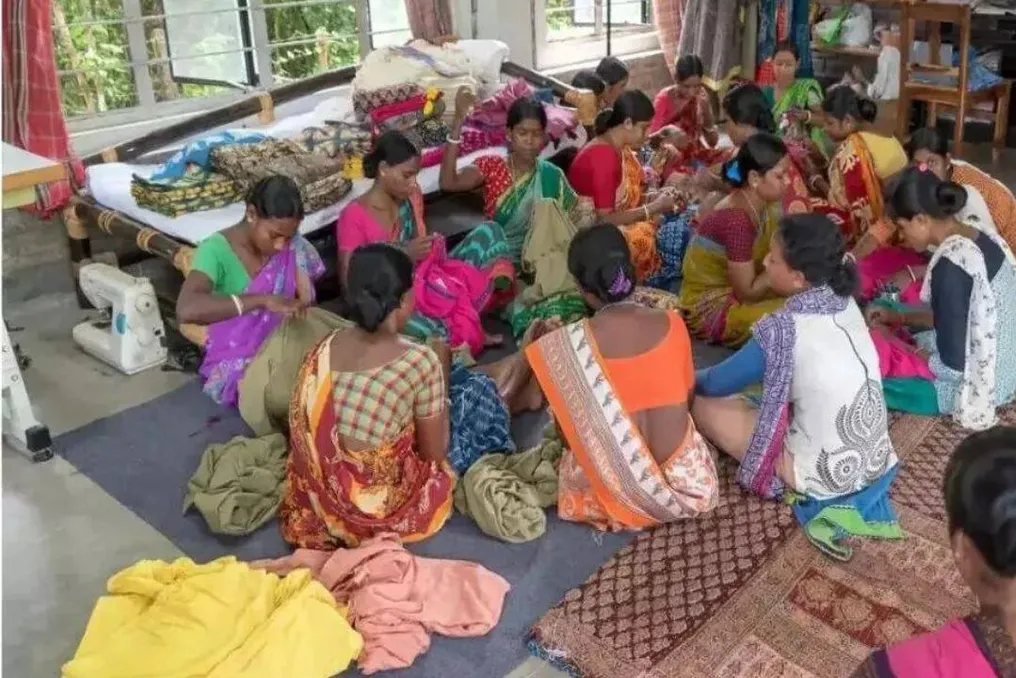
Union Minister of MSMEs, Jitan Ram Manjhi, stated on Wednesday that the government intends to increase the share of female registrations on Udyam platforms to 50%, raising it from the current 37.6%.

He emphasized the need to ensure broader participation in the growth of the micro, small, and medium enterprise (MSME) sector.

Speaking at the annual FICCI-CMSME 2026 summit, Manjhi noted the critical role of MSMEs in India's economic growth, as they contribute 31.1% to the country's GDP, 35.4% to industrial output, and 48.58% to exports, while also fostering job creation and entrepreneurship, according to PTI agency.

He stressed the necessity of creating more opportunities for women entrepreneurs, young innovators, artisans, startups, and enterprises from underrepresented communities, especially those belonging to listed Castes and tribes.

He stated, 'Women already own 37.6 percent of businesses registered on Udyam platforms, and now we must strive to bring this share up to 50 percent.'

According to the Ministry of MSMEs, as of October 30, 2026, the total number of registrations on the Udyam Registration Portal and Udyam Assist Platform exceeded 100 million. Women-led enterprises accounted for 37.8% of the total, or 3.76 crore registrations.

Manjhi added that the next phase of growth should focus on helping enterprises scale from micro to small and medium businesses so that they can ultimately compete in national and global markets. He identified three key priorities: strengthening global competitiveness and exports, improving access to capital for growth, and accelerating the adoption of technology and digital transformation.

Highlighting nine free trade agreements signed by India over the last six years, Manjhi mentioned that the agreement between India and the UK allows almost 99% of Indian exports to be imported into the UK duty-free, and the EFTA agreement provides tariff concessions covering 99.6% of Indian exports. However, he warned that improved market access alone does not guarantee success.

MSME Secretary Bharat Khehra reported that the government plans to expand business support in key areas, including finance, technology, marketing, and skill development, to help them scale and adopt advanced technologies.

He also emphasized the importance of strengthening equity financing for MSMEs. He mentioned that the Self-Reliant India Fund, launched with a capital of ₹10,000 crore, has attracted ₹48,000 crore in investments from private venture funds.

The government has also provided an additional ₹2,000 crore for micro-enterprises and launched a separate MSME Growth Fund worth ₹10,000 crore. Khehra identified defense industry, electronics, semiconductor manufacturing, pharmaceuticals, textiles, and engineering as key growth sectors for MSMEs, urging large companies to view small businesses as partners in co-development rather than just suppliers. He also noted that larger enterprises should assist smaller firms in meeting quality standards and integrating into their supply chains.

Popular