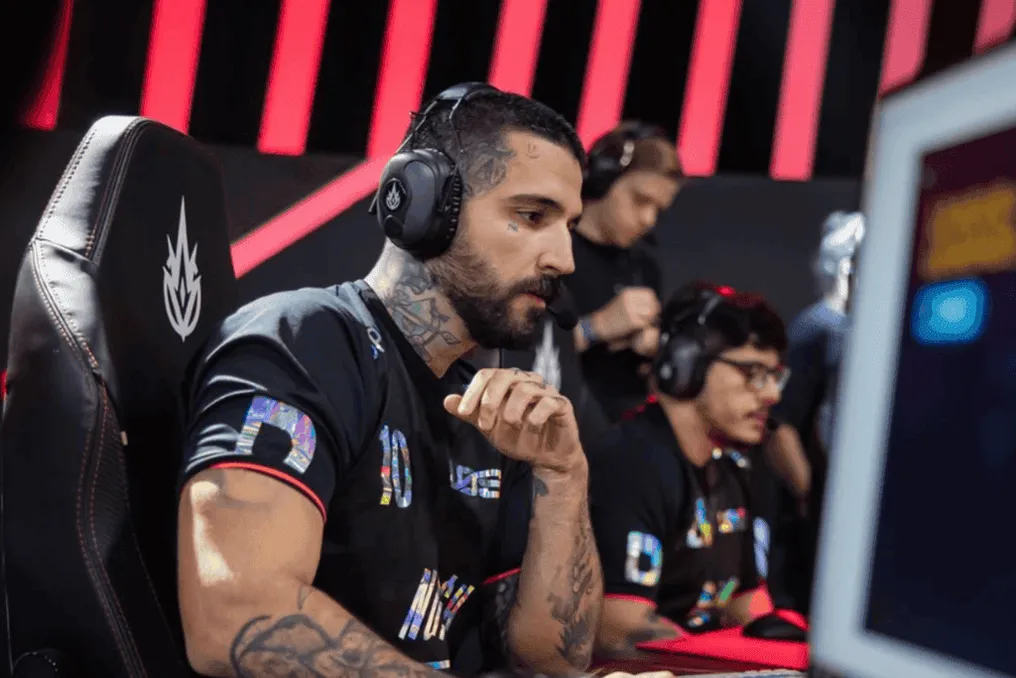
University esports leagues aid in the training of new professionals in the sector
Read more
Olhar Digital
olhardigital.com.br

University esports leagues aid in the training of new professionals in the sector

When thinking about university sports, one often refers to modalities such as football, basketball, or volleyball. However, electronic sports have also gained ground in Brazilian universities, establishing teams, championships, and structures focused on student development.

Games like League of Legends, VALORANT, and Counter-Strike are part of this ecosystem, where university students can compete while balancing training with their academic studies. However, the relevance of this scenario transcends the mere pursuit of titles, as university leagues serve as a gateway to the esports job market, benefiting even those who do not aspire to be professional players.

Just as it happens in traditional sports, students represent their respective institutions in confrontations against other universities. Generally, teams are structured by athletic clubs or student groups dedicated to esports, which conduct selection processes, define training routines, and manage various competitive modalities.

In São Paulo, the Paulista University Esports League (LUPE) is a notable example, promoting competitions aimed at higher education students in the state. In collaboration with AcadArena, this league has an Inclusive VALORANT opening tournament scheduled for November 28, 2026, following the standards of the Riot Games Game Changers circuit.

Initiatives like these promote the democratization of access to university competitions, increase diversity in the competitive environment, and stimulate the emergence of new talents in the esports universe.

Campinas features two prominent university esports organizations: PUC-Campinas Cardinals and Unicamp Tritons. Cardinals, founded in 2016, represents PUC-Campinas in competitions and develops activities that go beyond players, covering areas such as communication, design, management, and audiovisual production.

Unicamp Tritons, established in 2015, has been part of the Brazilian university competitive scene since its inception. This organization has a history of participating in national and international university tournaments, in addition to having experience with sponsorship, receiving support from SiDi, the technology institute of Campinas, in 2019.

These two cases illustrate how the academic environment can function as a space for creating competitive structures and for improving professional skills.

There is an important distinction between playing ranked matches and acting representing a team in a championship. In the university context, participants begin to experience responsibilities analogous to those in the professional scene, such as meeting training schedules, analyzing opponents, receiving feedback, and developing collective strategies.

Additionally, participation in championships allows for the building of a competitive record, the establishment of contacts, and gaining visibility. Just like in Tier 3 (T3) championships, the university environment can serve as a showcase for new talents.

Although there is no guaranteed direct connection between university leagues and major professional championships, the value of these competitions lies in the accumulated experience and the ability to develop necessary aptitudes at more advanced levels.

Another significant benefit is the possibility of balancing competitive development with academic training. In a market marked by instability and the short lifespan of many player careers, having a degree can expand professional options both inside and outside of esports.

One of the greatest contributions of the university setting may be introducing students to professions that do not always receive comparable attention to athletes. An esports organization requires individuals responsible for various tasks: a marketing student can gain experience managing social media; someone from communications can try narration or broadcast production; and business administration students can work with sponsorship negotiation and project management.

Such experiences can turn into a professional portfolio even before graduation. The university environment also offers the chance to test different roles, identify affinities, and understand the practical functioning of the esports industry.

When discussing the formation of new talents in esports, the focus usually falls on players who will join large organizations. However, the growth of the industry also depends on the training of good managers, communicators, coaches, and technology specialists.

Universities possess a particularly valuable characteristic in this regard: they bring together people from different fields of knowledge in one place. With institutional support, adequate infrastructure, commercial partnerships, and consistent competitive calendars, university organizations can increase their contribution to the advancement of the market.

The challenge lies in creating conditions for these initiatives to maintain their longevity, even after the graduation of the students responsible for their administration. More than just forming future champions, university leagues have the potential to shape the professionals who will be behind the next championships, as professionalizing esports implies preparing not only those who play at a high level but also those who make the entire industry operate.

Similar stories

How major League of Legends teams identify new talent through scouting
Read more
olhardigital.com.br

How major League of Legends teams identify new talent through scouting

Many League of Legends players have found teammates in ranked matches who demonstrated a superior level of play. However, what allows these talents to attract the attention of major organizations and secure a spot in the professional scene? The answer lies in the scouting process, which involves identifying and evaluating players with potential.

Similar to scouts in football, esports specialists monitor games, analyze statistical data, and observe athletes who could join their rosters. However, achieving a high rank does not automatically guarantee a contract.

One of the main platforms where new talents stand out is the ranked queue, particularly at the Challenger level, which gathers high-performance players, including professionals. Coaches and analysts use matches, competitive records, and statistics platforms to evaluate these athletes' performance. Evaluation criteria include mechanical skill, strategic knowledge, the range of champions used, and consistency.

It is crucial to note that there is a distinction between having good individual performance and performing in a professional team. In the competitive environment, players must execute collective tactics, communicate information, and adjust to teammates' decisions. For this reason, organizations frequently conduct tryouts, evaluation periods where candidates participate in training and matches to prove their abilities.

During these trials, the technical staff monitors not only performance but also the candidate's ability to accept guidance, collaborate in a team, and manage difficult situations. In addition to ranked matches, Tier 3 (T3) championships offer another chance for those aiming to enter the professional circuit. These competitions form the foundation of the scene and allow athletes to gain experience in organized structures.

Unlike ranked matches, T3 tournaments demand joint preparation, opponent study, and adaptation during competition series. For coaches and analysts, monitoring this context provides valuable information about a player's potential. An athlete who performs well in various confrontations demonstrates not only personal skill but also aptitude for group competition.

However, participating in a T3 championship does not guarantee a professional spot; visibility depends on multiple factors, such as performance, the quality of the competition, and organizational interest.

There is one point that many players neglect when starting their search for a place in the competitive scene: the need to establish an easily recognizable identity. Imagine a player who uses a different nickname in ranked matches, another in tournaments, and a third on social media. Even with great results, it can be complicated for coaches, analysts, and other professionals to link all these profiles to the same person.

Therefore, maintaining a standardized, or at least easily identifiable, username makes a difference in building a career. In esports, the nickname serves as a professional identity, being the means by which players are recognized in broadcasts, statistics, tournaments, and social media. Names like Faker, brTT, and Kami are examples of consolidated identities throughout their competitive journeys.

For beginners, some simple actions can help: using similar names across different platforms, keeping profiles always updated, and specifying the role played and the tournaments contested. It is not necessary to become an influencer or accumulate thousands of followers. The focus should be on facilitating the recognition of the athlete and allowing their competitive history to be located. After all, attracting attention in a match is useless if no one can identify who the player is later on.

Although individual skill is relevant, it constitutes only one part of the evaluation. Organizations also look for athletes who demonstrate discipline, good communication, adaptability, and willingness to learn. A player might dominate their lane in ranked matches but struggle to apply collective strategies or receive instructions from a coach. Similarly, someone who still needs to develop certain skills may attract interest due to their potential for evolution and understanding of the game.

Another important factor is behavior. The way a player interacts with teammates, opponents, and professionals can impact their reputation in the competitive scene. Thus, scouting aims not just for the player with the best statistics, but for one whose characteristics align with the organization's project.

For those who wish to pursue a professional career in League of Legends, the first step is to improve skills and seek consistency in matches. Participating in T3 championships also helps in acquiring competitive experience and building a record of results. Additionally, maintaining a clear identity, organizing data about competitions, and demonstrating professionalism are attitudes that facilitate the presentation of the player. Although none of these measures guarantees a contract, they help build a trajectory that can be noticed by organizations and professionals.

In summary, scouting reveals the difference between being a good player and being prepared for a competitive career. Playing well can attract an organization, but building a consistent and recognizable trajectory helps ensure that your name is remembered.

Reasons for the Early Retirement of Professional Esports Players
Read more
olhardigital.com.br

Reasons for the Early Retirement of Professional Esports Players

The age of 24 may be perceived as late by some employers, posing complex questions for esports players. While many specialists are just starting their journey, players might face doubts about their performance, risking losing their spot to younger talents or considering leaving the sport.

In the competitive environment of games like League of Legends, VALORANT, and Counter-Strike, this perception is quite common. Athletes often begin competing in their teenage years, spending years under intensive training regimes and constantly adapting to changes within the games themselves.

However, the question arises: is there a specific age after which a player ceases to be competitive? Or does the problem lie in the working conditions of an industry that demands increasingly rapid results?

The career paths of athletes such as Felipe “brTT” Gonçalves, Gabriel “FalleN” Toledo, and Gustavo “Sacy” Rossi demonstrate that the answer to this question is far more complex than just reflexes.

A study published in 2025 in the journal Team Performance Management analyzed data from 4159 professional League of Legends players and identified a statistical peak in performance, tournament participation, and prize money around age 21. This study also included interviews with former players and coaches to examine factors related to premature career termination.

Among the identified issues were mental exhaustion, difficulties adapting to new features, and a lack of proper support for athletes. Researchers noted that organizations often prioritize immediate results, while preparation for a sustainable career receives less attention. This means that a player's exit from the professional scene is not always linked to a loss of skills.

In many cases, continuing a career becomes less appealing due to a combination of pressure, instability, and lack of prospects.

Another study, also published in 2025 and based on records of 15021 competitors, also showed a shortening of career duration among younger generations of athletes. In certain groups, the average duration approached only two years. These results underscore the need to discuss not only the age of players but also the conditions that allow them to remain in the competitive environment.

One of the most well-known reasons for early retirement in esports is reaction speed. Competitive games require quick decision-making, motor coordination, and the ability to interpret various information in mere seconds. A 2014 study conducted with StarCraft II players revealed age-related changes in response speed during matches, with signs of decline starting at age 24.

Nevertheless, this conclusion does not mean that a 25-year-old player is automatically at a disadvantage or obligated to end their career. This study analyzed a specific context, and competitive performance encompasses much more than just reaction speed. Knowledge of strategy, anticipating movements, communication, and experience also influence results. An experienced player can compensate for some physical changes with a deeper understanding of the game. For example, in League of Legends, recognizing an enemy movement before it happens can be as important as reacting quickly to an ability.

The problem arises when age begins to be used as an isolated criterion for assessing an athlete's abilities.

One of the most famous names in Brazilian League of Legends history, Felipe “brTT” Gonçalves, announced a break from his competitive career in November 2021 at the age of 30. At that time, the player held six titles of the Brazilian League of Legends Championship (CBLOL) and participated in international tournaments. After a decade of participating in championships, his departure seemed like the end of a historic journey. However, in 2024, brTT decided to return to the professional scene to defend LOS in CBLOL. The return came after more than two years away from competition. In an interview at the time, the player acknowledged the pressure to meet public expectations but also noted that his experience could contribute to the team. This decision showed that leaving the competitive environment does not always mean a permanent loss of ability or motivation. The case of brTT also raises an important question: if a player can return after a long break, how strongly is early departure linked to age?

Gustavo “Sacy” Rossi is another important example in this discussion. The Brazilian built a remarkable career in VALORANT, winning a world title in 2022 with LOUD, and later defending that organization with North American Sentinels. In September 2024, at the age of 26, he announced his departure from the competitive scene. At that time, Sacy had completed four years of professional VALORANT career, having also had previous experience in League of Legends. His path illustrates a unique characteristic of esports: a player can accumulate years of competition across different disciplines even before reaching 30. His departure also shows that reaching the top does not necessarily mean wanting to stay there forever. Winning international titles, representing major organizations, and facing elite rivals requires constant dedication. After many years in this environment, some athletes prefer to seek new professional experiences or re-evaluate their personal priorities. In Sacy's case, leaving competition did not mean a complete rejection of the gaming world, but rather the conclusion of a phase of his activity as a professional player.

If brTT and Sacy represent different transition points, then Gabriel “FalleN” Toledo demonstrates that it is possible to build a much longer career in esports. The Counter-Strike player announced in April 2026 that he would conclude his professional career at the end of the season. At the time of the announcement, at 34, FalleN had accumulated about 23 years of experience in the game. During this period, he won international titles, represented some of the leading organizations in the scene, and became a role model for different generations of Brazilian players. His presence in the competitive environment was also linked to the ability to take on responsibility beyond individual performance. As a captain and leader on the team, FalleN uses strategic knowledge, communication, and experience to guide his teammates. In an interview with ge, the player explained that his decision to leave was related to a desire for a different life experience, especially with family. After so many years dedicated to Counter-Strike, ending his career represents a personal and professional choice, not proof of competitive inability. FalleN also intends to continue contributing to the community through off-server activities. His trajectory refutes the idea that players necessarily become uncompetitive by age 25.

The routine of a professional player involves much more than participating in broadcasted matches. Team practices, known as scrims, match analysis, opponent study, and individual preparation are part of the job. In some organizations, this routine also includes travel, commercial obligations, and content creation for sponsors. Furthermore, players have to cope with constant social media exposure. A series of losses can lead to public criticism, questions about personal performance, and pressure to change the roster. Unlike professions with greater stability, an athlete's tenure in an organization can directly depend on season results. This combination contributes to burnout situations, especially without psychological support or adequate workload planning. Wear and tear can also change a player's attitude towards the game itself. An activity that started as entertainment turns into a professional responsibility, a requirement, and a daily obligation. In this context, departure may occur not because the athlete stopped loving the discipline, but because they no longer want to live in the same conditions.

Another important factor is how organizations evaluate their players. Discovering new talent is crucial for the development of any competitive discipline. However, the value of young athletes should not be contrasted with the experience of veterans. More experienced players can contribute through leadership, strategic knowledge, and adaptability. In League of Legends teams, for instance, making collective decisions depends on skills developed over many years of competition. The same applies to VALORANT and Counter-Strike, disciplines where reading opponents and communication play a fundamental role. Replacing an athlete solely due to age can lead to the loss of valuable team knowledge. The task of organizations is to determine when there is a real decline in performance, and when the player needs changes in regime, support, or roles within the squad.

Ending a player's career does not necessarily mean leaving esports. Many former athletes find opportunities as coaches, analysts, commentators, content creators, or organization managers. However, this transition is not always easy. A 2025 study in Team Performance Management points to the lack of structured career transition programs as one of the sector's weaknesses. Players who started competing in their teenage years may retire with little professional experience outside the gaming environment. There is also a significant difference between the opportunities available to well-known athletes and those offered to players from smaller teams. A world champion can count on public recognition and commercial opportunities. A player from a lower-tier team may be forced to rebuild their professional path without the same level of visibility. Therefore, discussing early departure also means discussing education, financial planning, health, and preparation for the future. Concerns about longevity in the profession should not only begin when a player reaches the elite level.

Grassroots championships, such as CELOL and VPLA, organized by Liga GG, represent important stages in the development of athletes aspiring to enter the professional scene. In these competitions, participants gain the opportunity to gain experience in organized matches, work in a team, and learn to handle pressure. Nevertheless, athlete development should not be limited to improving gaming skills. Building healthy habits, understanding professional responsibilities, and developing off-server competencies can also contribute to more sustainable careers. This is especially important in scenarios where some players begin professionalizing in their teenage years. Developing new talent also means helping them understand that a competitive career can change direction, and that there are professional opportunities beyond playing as a player. Examples like brTT, Sacy, and FalleN show that there is no single answer. brTT paused his career and then decided to return. Sacy concluded his career.

International Association of Athletics Federations announces updated qualification system for the 2028 Olympic Games
Read more
uza.uz

International Association of Athletics Federations announces updated qualification system for the 2028 Olympic Games

The International Association of Athletics Federations (World Athletics) has unveiled an updated qualification system for the Summer Olympics, which will take place in Los Angeles, USA, in 2028.

Popular