Young Leaders Present Nuclear Energy Cooperation Initiatives
Read more
UzDaily
uzdaily.uz

Young Leaders Present Nuclear Energy Cooperation Initiatives

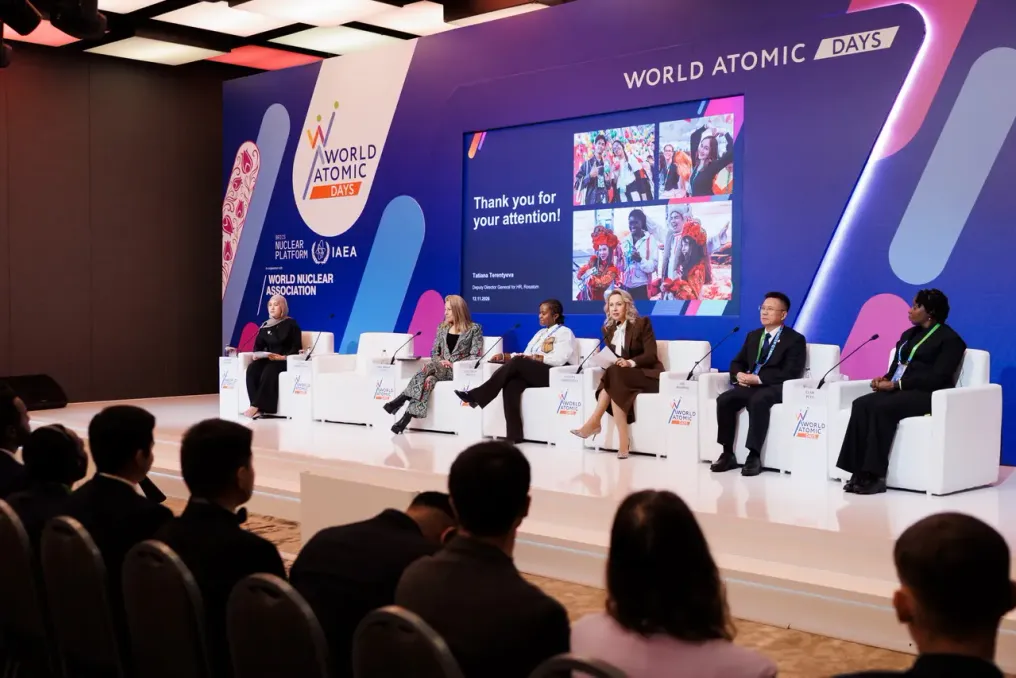
At the Youth Day in Antalya, young representatives from various countries presented a number of initiatives aimed at developing nuclear energy and expanding international cooperation. The event took place as part of the World Nuclear Week forum during COP31.

The meeting brought together representatives from state structures, international organizations, the nuclear industry, and youth groups. Participants discussed issues such as training specialists for low-carbon energy, educational programs, and youth involvement in the development of nuclear technologies.

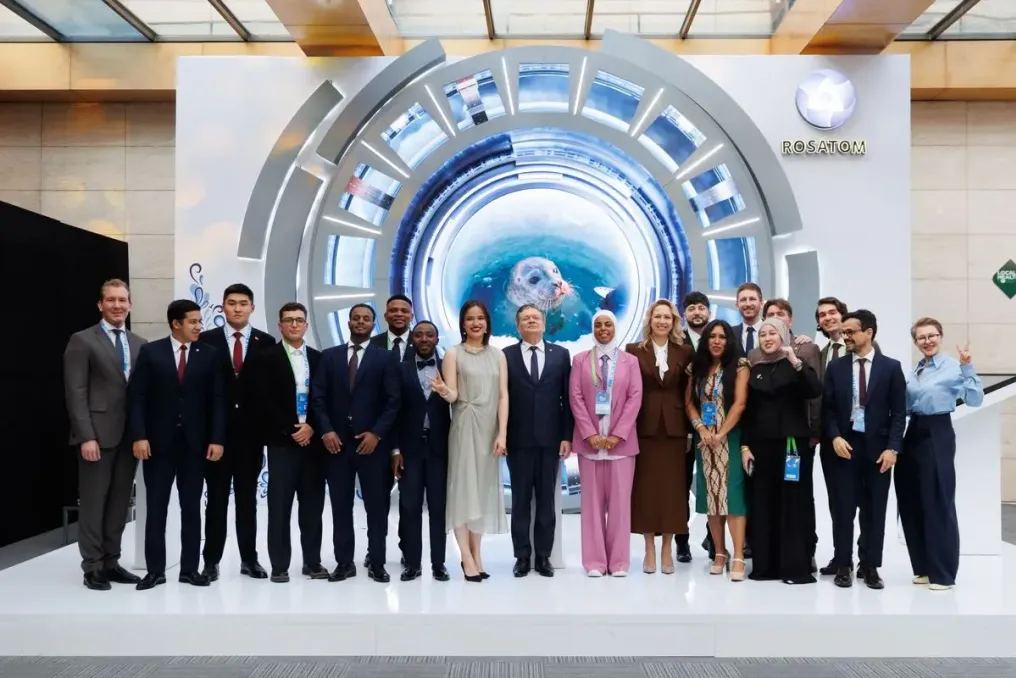
The program was opened by Alexey Likhachev, CEO of the state corporation Rosatom. Welcoming remarks were given by Russia's Minister of Economic Development Maxim Reshetnikov, CEO of the World Association of Nuclear Energy Sama Bilbao y Leon, and Elsi Paul, Chief Coordinator of the BRICS Nuclear Energy Platform.

The central session was dedicated to a dialogue titled 'Personnel for Technological Breakthrough in Response to Climate Change.' Representatives from Russia, China, South Africa, and international organizations discussed ways to ensure high-tech industries have qualified specialists.

Reshetnikov, Bilbao y Leon, Tatiana Terentyeva, Deputy CEO of Rosatom for Human Resources, Liu Jianping from the China National Nuclear Corporation, and Sitembile Mbuisa, Deputy CEO for Human Capital of the South African Nuclear Energy Corporation, participated in the session. Nadira Sansabila from Indonesia, representing the 'Impact Team 2050' Youth Coordination Council, moderated the discussion.

International educational programs, career advancement opportunities, and methods for attracting young specialists to the nuclear industry were discussed. Terentyeva emphasized that in addition to recruiting young people, conditions must be created for their long-term professional development.

Another session focused on the results of the international program of national youth nuclear dialogues. This initiative, organized by participants and mentors of 'Impact Team 2050,' covered 15 countries and included 16 dialogues. The goals were to study youth attitudes towards nuclear energy, identify obstacles to choosing engineering and scientific professions, and develop international educational ties.

In the discussion titled 'Climate Action: International Youth Dialogue on Nuclear Energy,' representatives from Indonesia, Brazil, Rwanda, Serbia, Uzbekistan, and Bangladesh presented the results of their national discussions. Topics included access to specialized education, employment and career prospects, participation in international projects, and public perception of nuclear energy.

At the next meeting, young leaders presented the Youth Declaration on Nuclear Cooperation. Participants also outlined projects aimed at strengthening international professional ties, facilitating knowledge exchange, and expanding youth participation in the development of low-carbon technologies.

Representatives from the African Youth in Nuclear Sector (AYGN), the International Atomic Energy Agency (IAEA), Turkey's Young Generation in Nuclear Sector, Akkuyu Nuclear, the International Youth Nuclear Congress (IYNC), 'Impact Team 2050,' and the 'Nuclear for Climate' initiative participated in the discussion.

Elsi Paul, Chief Coordinator of the BRICS Nuclear Energy Platform, characterized the declaration as a tool for interaction between countries and generations. She noted that such endeavors can help young specialists gain greater access to knowledge and technology, as well as ensure their views are represented on international platforms.

The program also featured the presentation of the 'BRICS Green Future' award for women's environmental projects. Attendees included Terentyeva, Galina Karelova, Chair of the Eurasian Women's Forum Council, and Nadezhda Galaktionova from Sibur. They discussed the contribution of women to solving environmental problems, developing the circular economy, and educational projects.

Another event was the Global Atomic Quiz, an international educational competition on nuclear technologies and their practical application. The in-person stage in Antalya gathered 250 participants from various countries, including attendees of COP31. Five participants—Nikita Yurchik, Melissa Atamturk, Vladimir Dolmatov, Ilya Arbatsky, and Milan Afanasyev—won cameras. The grand prize, a trip to Russia to visit the world's first nuclear power plant, went to Abu Al Khair Addam. Another 100 winners will be determined after the online quiz and will receive commemorative prizes. The top three participants will also travel to Russia to visit the world's first nuclear power plant. All quiz participants received electronic certificates.
Similar stories

Young Nuclear Energy Experts Propose Creation of Global Cooperation Platform
Read more
uzdaily.uz

Young Nuclear Energy Experts Propose Creation of Global Cooperation Platform

Professionals from the young nuclear industry have proposed the creation of an international platform to coordinate initiatives following a series of national youth dialogues, according to Rosatom.

This proposal was presented on November 12, 2026, at the Impact Team 2050 Council meeting during the World Atomic Days 2026 forum, which took place in Antalya parallel to the UN Climate Change Conference COP31.

The meeting included General Director of Rosatom Alexey Likhachev, Deputy General Director for Personnel Tatyana Terentyeva, CEO of the Rosatom International Network Egor Kvyatkovsky, and CEO of the Rosatom Corporate Academy Yulia Uzhakina. Sixteen members and mentors of the Impact Team 2050 Council also participated.

From August to November 2026, the Council's members and mentors conducted 17 national youth dialogues in 15 countries. The organizers noted that these events brought together over 15,000 young people from all continents.

During the meetings, future specialists in the nuclear industry communicated with leaders of relevant state agencies and energy companies. Discussions focused on the prospects of peaceful nuclear energy and career growth opportunities in this field. Additionally, the organizers conducted a large-scale survey among university students, schoolchildren, and young professionals to identify obstacles for youth considering a career in the nuclear industry.

After conducting the dialogues, the Council members proposed establishing national Impact Team 2050 groups. The next step should be the development of regional youth nuclear platforms.

According to the proposed model, the global platform will coordinate the activities of national and regional groups, as well as support youth initiatives in countries and regions where the Council operates.

In late October 2026, representatives of the Council from Kazakhstan, Uzbekistan, Kyrgyzstan, and Tajikistan put forward an initiative to create a regional platform. This proposal was voiced at a meeting with heads of nuclear and energy departments of Central Asian countries in Tashkent.

Plans include holding an annual nuclear-ecological camp in the region's countries, as well as organizing meetings with leaders and experts in the nuclear industry, mentoring programs, and additional educational courses.

Rosatom General Director Alexey Likhachev supported the proposals for creating national groups and regional platforms. He also called for extending this initiative to Latin America, Africa, Europe, and the Asia-Pacific region.

Likhachev emphasized the need for a common coordination structure for youth platforms that could function as the secretariat of the Impact Team 2050 initiatives and ensure the continuous work of young specialists in all regions. He suggested using the 'Obninsk NEW' forum as the central venue for annual gatherings of youth activists.

The Impact Team 2050 project was launched by Rosatom in December 2021 at Likhachev's initiative. Its goal is to strengthen the corporation's cooperation with young leaders from other countries and encourage youth participation in nuclear science and technology.

The first Council, active from 2022 to 2026, consisted of eight young specialists from eight countries: Brazil, China, South Africa, Kazakhstan, Armenia, Thailand, Argentina, and India. The selection process for the second Council concluded in May 2026, when experts selected 207 finalists from 58 countries.

Following a multi-stage selection, 13 young leaders from 13 countries were invited to the new Council. Egypt, Tanzania, Rwanda, Ethiopia, and South Africa represent Africa. The remaining members came from Kyrgyzstan, Uzbekistan, Indonesia, Bangladesh, China, Hungary, Serbia, and Brazil. Four members of the first Council continued their work in the project as mentors.

The World Atomic Days 2026 forum took place in Antalya on November 12–13. Rosatom organized this event for international partners with the support of the BRICS Nuclear Energy Platform. The forum complements the COP31 climate agenda and focuses on promoting nuclear technologies.

Uzbekistan Presents Its Nuclear Energy Development Program at World Atomic Days
Read more
uzdaily.uz

Uzbekistan Presents Its Nuclear Energy Development Program at World Atomic Days

At the international forum 'World Atomic Days,' held in Antalya, Turkey, on November 12–13, Uzbekistan demonstrated its experience in developing national nuclear energy and also presented youth initiatives.

The event gathered representatives from government bodies, major nuclear industry companies, international organizations, and young people. Uzbekistan participated in the forum through senior officials from its nuclear sector and members of the international youth initiative Impact Team 2050.

The forum was organized by the Russian state corporation Rosatom with the support of the BRICS Nuclear Energy Platform, the International Atomic Energy Agency (IAEA), and the World Association of Nuclear Energy. Discussions focused on the future of global nuclear energy, its importance for energy security, achieving climate goals, and sustainable development. Participants also addressed topics such as international cooperation, technological innovations, and training the next generation of specialists.

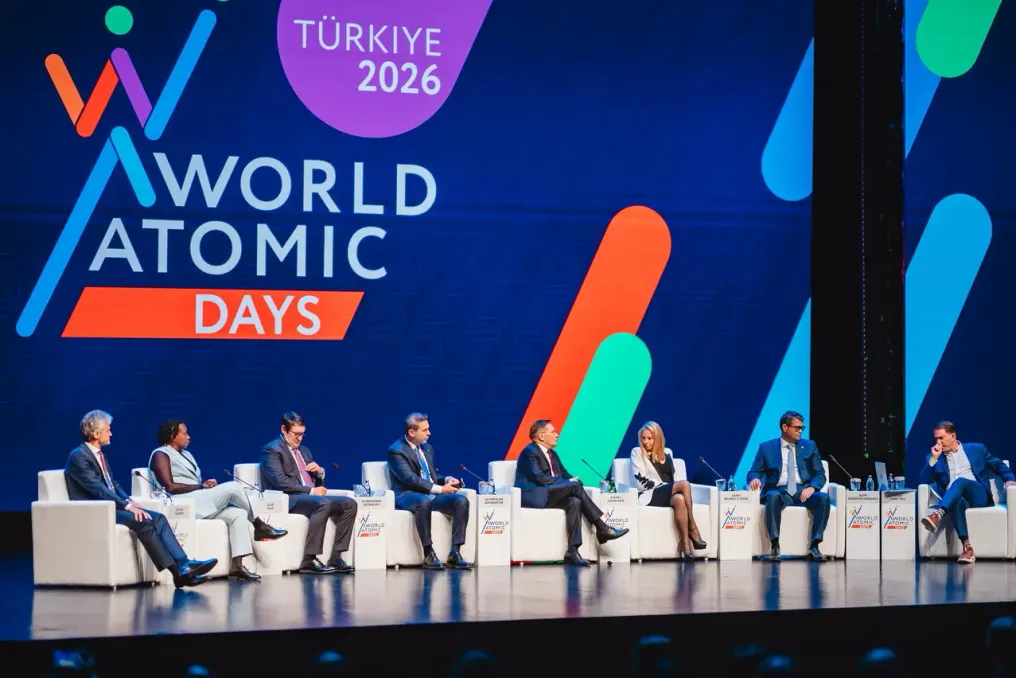
During the plenary session on November 13 titled 'Nuclear Energy for People and the Planet,' participants included Alexey Likhachev, CEO of Rosatom; Azim Ahmedkhadzhayev, Director of Uzatom; Sama Bilbao y León, CEO of the World Association of Nuclear Energy; Almasadam Satkaliyev, Chairman of the Kazakhstan Atomic Energy Agency; Elzi Pule, Chief Coordinator of the BRICS Nuclear Energy Platform; and Attila Shagodi, CEO and Chairman of the Board of Directors of Paks II Ltd.

Discussions covered the prospects of nuclear energy, its role in meeting growing electricity demand, and contributing to energy security. This agenda is particularly relevant for Uzbekistan, as the country is implementing a project to build its first integrated nuclear power plant. Uzbekistan views the development of nuclear energy as an integral part of its long-term strategy for energy security, industrial growth, and strengthening the economy's technological potential.

Youth involvement was also one of the central themes of the forum. Uzbekistan was represented by Mukhidden Umidov, a member of the Impact Team 2050 Council, under the leadership of the CEO of Rosatom, and a graduate of the Tashkent Branch of the National Research Nuclear University MEPhI.

He took part in a meeting of the Impact Team 2050 Council, which included Likhachev, Tatiana Terentyeva, Deputy CEO of Rosatom for Personnel; Egor Kvyatkovsky, CEO of the Rosatom International Network; Yulia Uzhakina, CEO of the Rosatom Corporate Academy, as well as 16 council members and mentors. At this meeting, the results of national youth nuclear dialogues organized by members of the Impact Team 2050 Council were presented. These initiatives were conducted in 15 countries and brought together over 15,000 young people across different continents.

The dialogues provided future nuclear industry specialists with the opportunity to meet with officials from relevant government agencies and energy companies, discuss the prospects of peaceful nuclear energy, and exchange views on career opportunities in the sector. Furthermore, a large-scale survey was conducted among university students, schoolchildren, and young professionals to identify the main obstacles preventing young people from entering the nuclear industry.

After presenting the dialogue results to the CEO of Rosatom, members of the Impact Team 2050 Council proposed several measures to develop the international youth ecosystem. These measures included establishing national Impact Team 2050 groups in individual countries, followed by the development of regional youth nuclear platforms. A global youth nuclear platform could coordinate the network and support initiatives at national and regional levels.

The proposed structure aims to expand international exchange, strengthen professional ties among young people in the nuclear sector, and create more opportunities for their participation in international projects. Previously, Uzbekistan itself held a national youth nuclear dialogue where representatives of the nuclear industry, students, and young specialists discussed career prospects, international cooperation, and the role of the younger generation in shaping the future of the energy sector.

Uzbekistan's participation in 'World Atomic Days' marked another step in international cooperation on the peaceful use of nuclear energy. The forum allowed for discussions on strategic industry issues, establishing professional contacts, exchanging experiences, and strengthening youth interaction.

Popular