US Proposed Tariffs Up to 25% on Goods from Six Countries Including India, and 40% on China
Read more
Aaj Tak
www.aajtak.in

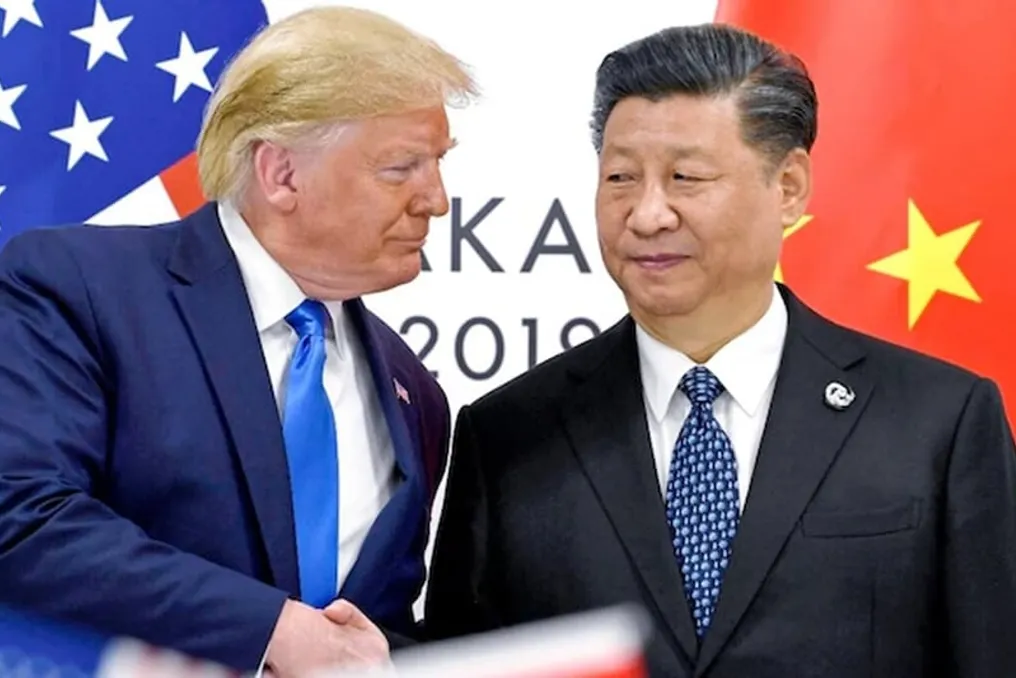
US Proposed Tariffs Up to 25% on Goods from Six Countries Including India, and 40% on China

The United States has proposed imposing tariffs of up to 25 percent on Indian goods. In addition to India, this proposal extends to six other countries. Furthermore, a higher tariff of 40 percent is proposed for China.

According to an official statement provided to Reuters, India is among the seven countries for which the US Trade Representative (USTR) proposes introducing tariffs of up to 25 percent under the new plan. This group also includes Cambodia, Indonesia, South Korea, Malaysia, Taiwan, and Thailand.

Moreover, the USTR proposed tariff rates of up to 20 percent for Bangladesh, the European Union (EU), Japan, Switzerland, and Singapore, up to 35 percent for Vietnam, and up to 40 percent for China. The USTR also specified that for Cambodia, Indonesia, Malaysia, Thailand, and Bangladesh, the tariff rates will be limited to a maximum of 18 percent.

For South Korea, Taiwan, the EU, Japan, and Switzerland, these rates will be 15 percent (excluding the most favored nation duty). Regarding China, in addition to existing duties, an additional rate of 20 percent will be added. A hearing has been scheduled for changes to tariffs for Brazil on January 14, 2027.

The report indicates that the introduction of these tariffs is due to the need to restrict excess industrial capacity in America's major trading partners.

Similar stories

Trump's Dollar: 16 Countries Under Threat of Tariff Hikes, Including India
Read more
www.aajtak.in

Trump's Dollar: 16 Countries Under Threat of Tariff Hikes, Including India

Donald Trump is preparing to introduce a new wave of tariffs, dubbed the 'Trump bomb,' and this new list includes 16 countries. According to one report, the inclusion of India in this list is a cause for serious concern. It is reported that the US plans to increase existing tariffs on these countries, and India faces the threat of new American tariffs.

According to a report by The Wall Street Journal, India may face another round of tariffs. This is because President Donald Trump's administration intends to increase tariffs on countries that, according to the administration, receive government support in the form of subsidies and other aid for their domestic industries. Major economies such as China, India, Japan, South Korea, and the European Union are expected to fall under the scope of Trump's tariffs.

These tariff actions are the result of months of US investigation into industrial subsidization. America claims that such support gives foreign producers an unfair advantage over American companies because they produce goods at lower prices and bring them to the international market in large volumes. Simply put, in the view of the US, financial assistance and other political support allow foreign producers to create products more cheaply, enabling them to sell them on the global market at favorable prices, hindering competition for American manufacturers. The Trump administration states that this weakens domestic production in the US.

According to data cited in the WSJ report, representatives associated with Trump's tariff plan stated that US Trade Representative Jamison Greer may announce the results of the US investigation this week, although he warned that timelines could change. For India, this Trump tariff plan is particularly complex, as New Delhi and Washington are still negotiating a trade agreement. Due to a Supreme Court ruling regarding Trump, this agreement has not yet been concluded, despite changes in US trade policy.

The Wall Street Journal indicates that the proposed tariffs by the Trump administration will cover most goods exported by the target economies. However, some industrial goods, such as steel, aluminum, and automobiles, may be excluded because separate tariffs based on national security are already in effect on them. Although the final rates of Trump's tariffs for India or any other country on the list have not yet been determined, American officials have repeatedly hinted at the Trump administration's desire to impose duties equivalent to those imposed in 2025. It is noted, however, that the impact will not be the same for all countries. According to sources, Japan, the EU, and South Korea, which have discussed trade agreements with the US, may face a tariff of 15% or less.

US Imposes Chip Export Restrictions on Five Countries, Creating AI Industry Crisis
Read more
www.aajtak.in

US Imposes Chip Export Restrictions on Five Countries, Creating AI Industry Crisis

The conflict between the US and China in the semiconductor sector has intensified: America has banned the export of advanced artificial intelligence (AI) chips to five countries to prevent China from accessing them through foreign data centers. This move comes amid new regulatory pressure on NVIDIA, including reports of potential accounting issues from the US Securities and Exchange Commission (SEC).

Following the publication of these reports, Nvidia's shares dropped by 11.5% on November 20. According to the GREED & fear report from November 19, the export restrictions could halt investments in AI infrastructure across Southeast Asia while accelerating China's efforts toward semiconductor self-sufficiency.

The report warns that the technological rivalry between Washington and Beijing has entered a new phase as Washington tightens control over advanced AI chips, preventing Chinese companies from accessing American technologies via foreign cloud infrastructures.

According to GREED & fear on November 19, the US Bureau of Industry and Security (BIS) began requiring export licenses for AI chips to countries such as Malaysia, Thailand, Indonesia, Singapore, and Brazil, with exceptions only for qualified exports to American companies. These restrictions are capable of reshaping the global semiconductor supply chain and calling into question the sustainability of the AI investment boom.

The new measures aim to close potential loopholes in existing export regulations. Although Chinese companies face a ban on purchasing advanced American chips, they continue to obtain computing power through overseas data centers. GREED estimates that approximately 240,000 Nvidia chips were shipped to China after the restrictions were implemented in 2024.

The report also cites estimates from the Institute for Progress, which suggests that MegaSpeed in Singapore leases about 86,000 GPUs for Alibaba and other Chinese clients. These restrictions are introduced to prevent such indirect access.

Increased US control over semiconductor exports and foreign computing infrastructure could pose challenges for NVIDIA. GREED highlighted NVIDIA's significant financial involvement in the AI ecosystem, which includes $61 billion in equity investments, along with $164.5 billion in leasing guarantees and cloud capacity reserves. A reduction in AI infrastructure funding could affect smaller cloud providers heavily reliant on advanced chips.

The report states that the stock price of CoreWeave, an AI infrastructure company, has already fallen by 25% following news related to NVIDIA, and its bond yield has risen to 15.7%.

China is intensifying efforts to reduce dependence on American technologies by developing domestic capabilities in semiconductor design, manufacturing, equipment, and materials. Goldman Sachs Global Investment Research's semiconductor supply chain map identified Chinese companies operating in these segments. In chip design, domestic capabilities are demonstrated by companies such as HighSilicon, Cambricon, and Lungsun, while SMIC and Hua Hong are involved in semiconductor manufacturing. Among equipment suppliers are Nora and AMEC, and in the materials sector, NSIG and Zhonghuan Semiconductor.

It is projected that by 2025, the semiconductor equipment market in China will reach $49 billion, and the materials market will reach $16 billion, demonstrating the scale of domestic supply chain potential.
China sharply criticizes new US restrictions on semiconductor chip exports ahead of Trump's visit to Shenzhen
Read more
www.aajtak.in

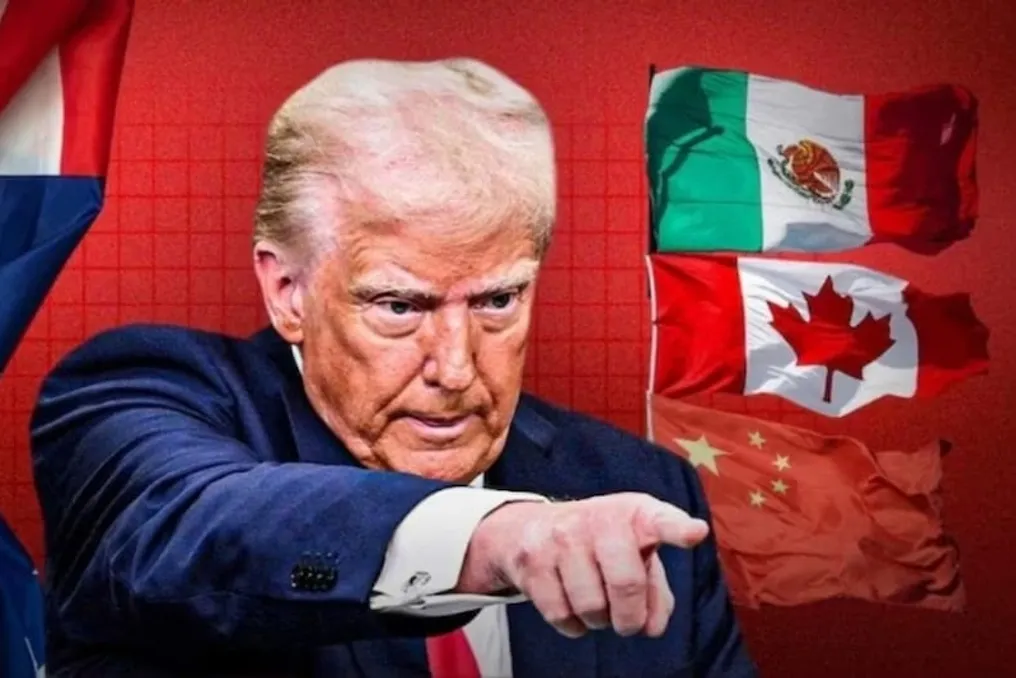
China sharply criticizes new US restrictions on semiconductor chip exports ahead of Trump's visit to Shenzhen

Ahead of Donald Trump's visit to Shenzhen, China sharply criticized the new sanctions imposed by the US on the export of semiconductor chips to five countries. These restrictions were established by the US to prevent advanced semiconductor chips from reaching China.

The US Department of Commerce published a temporary final rule titled 'Addressing Remote Access to Advanced Semiconductors' on Monday. According to this rule, obtaining a license is now required for the export of advanced semiconductor chips to Singapore, Thailand, Malaysia, Indonesia, and Brazil. The American side stated that there is an increased risk of chips being delivered from these countries to China.

China's Foreign Ministry spokesperson, Guo Jiakun, reacted to this measure during a press briefing on Tuesday. He stated that this is another example of Washington's excessive use of the national security concept and improper application of export controls. Guo Jiakun accused the US of interfering in normal trade and technological cooperation between China and other states, as well as targeting China's high-tech industry.

He emphasized that such economic pressure and the use of jurisdiction in the affairs of other countries contradict the general consensus between the two nations. According to him, this harms the legitimate rights and interests of Chinese companies and negatively affects global supply chains. China, in turn, stated its intention to take necessary steps to protect its legitimate rights and interests.

This strong reaction from China came just hours before Trump's arrival. Trump plans to visit Shenzhen to participate in the 33rd meeting of the Asia-Pacific Economic Cooperation (APEC) leaders, which begins on Wednesday and lasts for two days. Before this, Trump arrived in Shenzhen from Manila, where he had previously participated in the ASEAN summit and Quad leaders' meetings.

The significance of this 21-country summit is heightened by the fact that trilateral talks involving the presidents of China, the US, and Russia will take place on Thursday. According to the Chinese Ministry of Foreign Affairs, this meeting will discuss in detail maintaining world peace and strengthening strategic stability among key powers.

Prime Ministers Narendra Modi of India, Anthony Albanese of Australia, and Sanae Takeda of Japan also participated in the Quad meeting. No comments have been received from Beijing regarding the meeting in Manila, but China consistently opposes the Quad. China views this alliance as a strategic group created to contain influence in the Indo-Pacific region. The Chinese Ministry of Foreign Affairs has previously stated its disapproval of any special groups or confrontation in the form of blocs.

Popular