Report shows that over a third of Muslim students in UK universities face Islamophobia
Read more
Middle East Eye
www.middleeasteye.net

Report shows that over a third of Muslim students in UK universities face Islamophobia

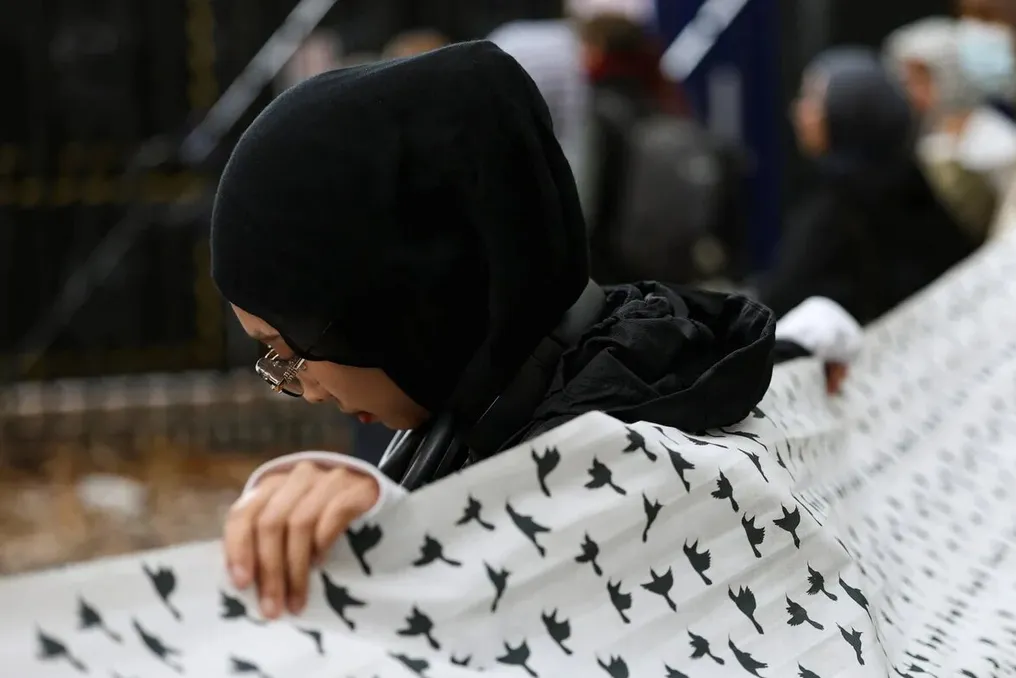
According to a new study by the Federation of Islamic Student Societies (Fosis), more than one in three Muslim female students in the UK has experienced Islamophobia in the university environment. Many affected individuals report instances of abuse, threats, and religious discrimination.

The report, titled 'Belonging in Question,' found that 38 percent of surveyed Muslim students have experienced Islamophobia on campus. Furthermore, 68 percent of those affected stated that they do not feel able to report what happened.

Rahma Heggi, Vice President of Fosis for Students, emphasized that despite feeling unwelcome on campuses, Muslim students continue to make significant contributions to university life and British society as a whole. She noted that many students feel they do not belong on campuses that should welcome them.

Heggi added that they face discrimination and often remain silent because they do not expect anyone to take responsibility for it. The lack of accountability has become one of the organization's main problems, and she called on universities, student unions, and the government to take action.

The study results are based on responses from 715 students across 63 higher education institutions in the UK, making it one of the largest recent surveys on the experiences of Muslim students in British universities. Students described a wide range of incidents, including spitting, receiving death threats, and being urinated on while wearing a hijab.

Others reported being excluded from lab sessions after requesting time off for Friday prayers, being asked to remove their hijab before clinical practice, or being labeled as terrorists during peaceful protests.

The report also showed that Muslim women are more frequently subjected to Islamophobia than men: 42 percent of women reported discrimination compared to 34 percent of men. A higher level of Islamophobia was recorded among students at Russell Group universities, which include some of the UK's most prestigious institutions. There, 44 percent of respondents reported discrimination, compared to 34 percent in other universities.

The study also revealed concerns about the influence of the political climate surrounding Palestine on Muslim students' ability to voice their opinions. Three out of five respondents stated that they fear or feel intimidated when expressing views on Palestine.

Additionally, 45 percent of students who experienced Islamophobia reported that it had a moderate or severe impact on their mental health. Fosis insists on the need for more decisive action from universities, student unions, and the government to combat anti-Muslim discrimination and protect students' rights.

The organization calls on universities to officially recognize Islamophobia, develop a definition, and implement mandatory awareness training for staff and student leaders. Fosis also demands that universities incorporate a specific category for Islamophobia into their reporting systems, improve the accessibility of prayer practices, and ensure that timetables and clinical placements accommodate the religious obligations of Muslim students.

The report strongly recommends that institutions hold staff and students accountable for Islamophobic behavior, while simultaneously urging the government and higher education sector to protect freedom of expression and reduce what they call the securitization of university campuses. Recommendations include reviewing the Prevent duty of the government, which requires public bodies, including universities, to consider preventing radicalization.

Former First Minister of Scotland, Humza Yousaf, who wrote the report's foreword, described the students' testimonies as 'so heartbreaking as they are outrageous.' He shared his personal experience, stating: 'My family and I were subjected to the most vile threats of rape and death for many years, simply because of our faith.' Yousaf stated that what is happening did not occur in a vacuum, and he had repeatedly warned that too many in the political establishment promoted far-right hatred.

Yousaf urged universities to view the Fosis report as evidence, not a complaint, arguing that what is most 'distressing' is what happens after the hostility—when barriers to reporting and weak institutional follow-up deprive students of real change. The Office for Students, which regulates higher education in England and monitors universities' compliance with the Prevent duty, did not respond to requests for comment at the time of publication.
Similar stories

Study shows Muslim population share in India could significantly increase in coming decades
Read more
www.aajtak.in

Study shows Muslim population share in India could significantly increase in coming decades

According to a new study, the Muslim population of India may grow faster than the Hindu population in the coming decades. This projected growth occurs even though the average fertility rate among Muslim women is showing a steady decline. The reason for this phenomenon was identified in the new work, which points to the relatively young age structure of the Muslim community.

The report by the American research organization Pew Research Center forecasts that the share of Muslims in India will increase by approximately 57% between 2020 and 2070. Although the Hindu population will also grow, the pace of this growth is expected to be slower. According to the report, in 2020, the share of Muslims was about 15% of India's total population, while by 2070 it could reach 20%. Meanwhile, the share of Hindus is predicted to decrease from approximately 79% to 76%, remaining more than three-quarters of the country's population.

This report, published on November 18, contains forecasts of changes in the size of seven major religious groups in 201 countries and regions worldwide. According to it, by 2070, India could become the second largest country in the world with a Muslim population; Indonesia currently holds the second spot, but Pakistan may overtake it in the future to take the first place.

The question of why the Muslim population will grow despite declining fertility lies in the combination of age and the average number of children in the Muslim community. Although the fertility rate among Muslim women in India is higher than among Hindu women, this gap has significantly narrowed over the last three decades. Data from the National Family Health Survey (NFHS) shows that in 1992–93, the birth rate among Muslim women was 4.4 children per woman, which dropped to 2.36 by 2019–21. Correspondingly, the birth rate among Hindu women in 1992–93 was 3.3 children per woman, which fell to 1.94 by 2019–21. Despite the overall decline in fertility in both groups, the current rate for Muslim women remains higher, and the low average age of the Muslim population also plays a significant role.

A key finding from the Pew Research Center report is the five-year age gap between the Muslim and Hindu populations of India. In 2020, the average age of Muslims was 24 years, while the average age of Hindus was 29 years. Experts note that a larger proportion of youth in any community means that more people will reach marriage and childbearing age in subsequent years. Thus, even with a decline in the average number of births, the total population can continue to grow. In demography, this phenomenon is called the 'population momentum.' Simply put, having a large number of young people allows the population to grow for many decades, even if the fertility rate falls.

The Ministry of Health also pointed to population momentum as one of the reasons for India's population growth, noting in a statement in the Lok Sabha in 2016 that the large number of young people reaching reproductive age contributed to population increase despite slowing growth rates.

Parallel to the forecasts of Muslim population growth, an interesting fact is also observed: India has recorded the sharpest decline in the fertility rate among Muslim women. According to NFHS data, this indicator was 2.62 in 2015–16 and dropped to 2.36 by 2019–21. Over the same period, the fertility rate among Hindu women decreased from 2.13 to 1.94. This indicates a significant reduction in the average number of children among Muslim women, linked to the adoption of family planning methods and increased awareness. Overall fertility in India has also dropped to 2 according to NFHS-5, which is below the replacement level. The replacement level is the indicator where a generation supports the size of the next generation, equivalent to the birth of approximately 2.1 children per 10 women.

Pew Research Center believes that in the coming decades, the difference in fertility between Hindus and Muslims may narrow further. The report used data from the UN World Population Prospects for 2024, which suggests that due to increased female education levels and wider access to contraceptives, fertility in different communities will gradually converge. The report's forecast indicates that by 2100, the fertility gap between different communities will likely narrow significantly.

Popular