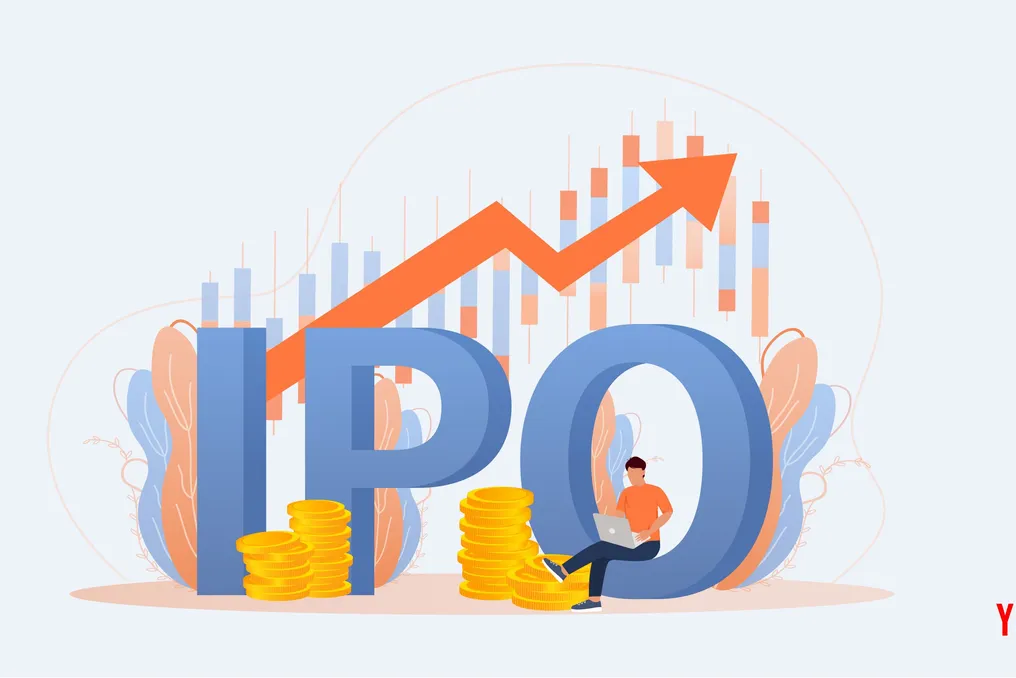
PhonePe resumes IPO process with target listing in February-March at a $12-15 billion valuation
Read more
YourStory [india, en]
yourstory.com

PhonePe resumes IPO process with target listing in February-March at a $12-15 billion valuation

According to brokers familiar with the developments, PhonePe has resumed its plans for an Initial Public Offering (IPO) and is targeting a market debut between February and March with a valuation of $12–15 billion (equivalent to approximately 1.2–1.5 lakh crore rupees).

The major digital payments player is expected to file a revised Draft Red Herring Prospectus (DRHP) soon. The planned IPO is set to raise between 12,000 and 14,000 crore rupees and will be entirely through an Offer for Sale (OFS) by shareholders.

Previously, PhonePe had postponed its public offering plans due to geopolitical uncertainty, weak macroeconomic conditions, and increased volatility in stock markets. However, the company has restarted IPO preparations following an improvement in the overall market environment, strengthening stock market sentiment, and recovery in its business performance.

The anticipated listing is viewed as a significant milestone for India's fintech and digital payments sector. The macroeconomic situation has improved, reflected by the return of Foreign Portfolio Investors (FPIs) to the Indian stock market; November was the strongest month for FPI inflows so far.

The company's business metrics have also picked up pace. After a period of slow growth last year, PhonePe has returned to revenue growth of around 40% year-on-year, excluding Merchant Discount Rate (MDR) commissions and digital incentives. Furthermore, the group achieved a positive Profit After Tax (PAT) in the first half of the current fiscal year, excluding Employee Stock Option Plan (ESOP) expenses. It was also noted that the company's lending business has nearly doubled year-on-year.
Similar stories

Anthropic's Initial Public Offering occurs amid questions about AI investment returns
Read more
olhardigital.com.br

Anthropic's Initial Public Offering occurs amid questions about AI investment returns

Anthropic, the developer of the Claude chatbot, is set to finalize its Initial Public Offering (IPO) this Wednesday, an operation that could position it among the world's most valuable corporations.

This launch comes amidst uncertainties regarding the return on massive investments in Artificial Intelligence, raising questions from consumers, investors, and voters about the costs and inherent risks of this technology.

Founded in early 2021 by former OpenAI members, Anthropic gained prominence late last year thanks to updates to Claude Code and its assistants, capable of performing tasks such as coding with minimal supervision. This progress sparked great interest among executives and developers, boosting optimism about artificial intelligence.

David B. Yoffie, a professor at Harvard Business School, commented to the Washington Post that 'no company in history has grown as much, as fast,' but warned that such ascent intensifies pressure on the company because 'expectations for continuous rapid growth will be extraordinary.'

However, enthusiasm has begun to be replaced by caution. Starting in the second half of the year, executives noticed that corporate clients were resisting the prices charged by top-tier models. Several organizations began cutting expenses and switching suppliers, seeking more affordable alternatives, including those from Chinese companies.

Similar to other industry players, Anthropic still cannot cover its own development costs. The company announced that it will continue to rely on investors to raise capital and needs a constant flow of customers to meet financial commitments estimated at US$ 900 billion (approximately R$ 5.13 trillion) in the coming decades.

According to data from S&P Global Market Intelligence, Anthropic's revenue reached US$ 35.3 billion (about R$ 201.21 billion) last year. This amount fell short of the revenue of other major tech companies, such as Nvidia, with US$ 303 billion (R$ 1.73 trillion); Apple, with US$ 478.8 billion (R$ 2.73 trillion); and Amazon, with US$ 797.5 billion (R$ 4.55 trillion).

Distrust has also affected other industry giants. Last month, Google suffered a drop of US$ 500 billion (about R$ 2.85 trillion) in its market value in a single day, driven by the belief that the financial return of AI would take longer than expected. For investor Howard Marks, events like this signal the breaking of the sector's 'invincibility bubble.'

Financial challenges are not the only ones. The industry also faces resistance in the United States due to concerns over cyberattacks, fatalities related to the technology, job losses, and the impacts of building data centers. The expansion of these facilities already encounters obstacles in obtaining sufficient electrical power to increase computational capacity.

Discontent was also visible in this month's legislative elections, where voters opted for representatives more critical of the AI industry and data center construction.

Diane Swonk, chief economist at KPMG, observed that while the peak of the dot-com companies raised salaries and reduced disparity in the United States, recent advances in artificial intelligence have yet to materialize into widespread benefits for the population. The economist concluded that 'something needs to give.'

Popular