When making online purchases, users may encounter situations where the application constantly prompts them to buy something additional. Initially, the product price may seem low, but at the payment stage, shipping fees and other charges are suddenly added. Sometimes a message appears on the screen stating that only two items remain, which encourages an urgent purchase. There are also cases where additional services are selected by default, and finding the option to cancel the subscription becomes extremely difficult.
This phenomenon goes beyond simply poor application design. In fact, companies intentionally create such systems so that consumers make decisions not of their own free will, but under pressure created by the application itself. In technology terminology, this is called 'dark patterns.'
A recent assessment conducted in India regarding online shopping, food delivery, taxi booking, and other digital services revealed the seriousness of this issue. According to the LocalCircles report, 354 most frequently used online platforms were checked, and at least one dark pattern was found on 334 of them. This means that designer techniques capable of influencing customer decisions were found on approximately 94 percent of the platforms.
Another alarming aspect of the report is that among the 31 companies that declared to the Central Consumer Protection Authority (CCPA) their freedom from dark patterns, similar techniques were also identified on the platforms of 23 companies. This highlights that relying solely on the company's statements is insufficient; the user experience when using the application is key.
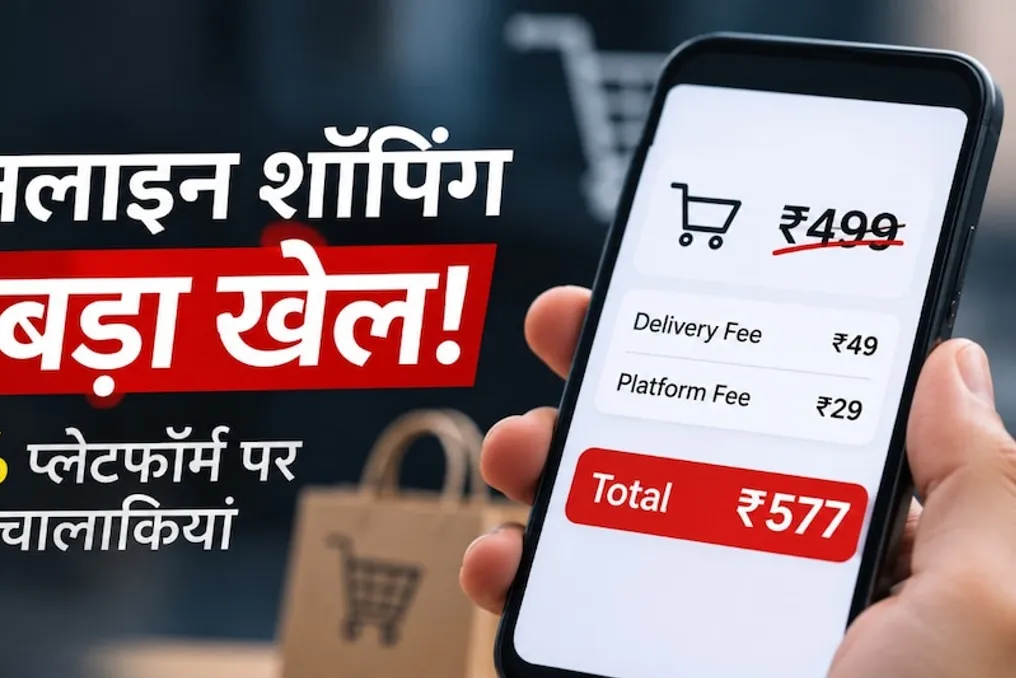
The most common problem in online purchases is the increase in the final price at the last moment. For example, if a product is displayed at a price of 499 rupees, the buyer considers it a good deal. However, when proceeding to payment, shipping fees, platform commissions, or other payments are added, causing the same product to cost more than initially shown.
This phenomenon is called 'drip pricing,' where the full cost is not disclosed initially. New charges appear as the purchase process progresses. By the time the customer decides to buy, they have often spent a lot of time and are inclined to complete the order despite the price increase.
According to the LocalCircles assessment, this method was found on 222 out of 354 platforms, which is about 63 percent. This figure is important because customers usually compare products based on the amount shown to them first, whereas a true comparison should take into account all necessary charges.
When viewing a product, a message may appear stating that only two units remain, or that the promotion will end in five minutes. The customer perceives this as an opportunity that must be used immediately. Although such information can sometimes be true, if the platform creates pressure based on false assumptions of scarcity or time expiration, it is an improper approach. This is called 'false urgency.'
This directly affects the customer's decision: instead of studying the price, reviews, and other options, they may hastily place an order. After the purchase, they may discover that the same promotion is available again or that the stock has not been depleted.
While limited offers or low stock on online platforms are not always mistakes, the customer has the right to know whether the presented information is real or is used solely to create buying pressure.
When you carefully check your cart before paying, you might find that even after selecting only one item, some additional services, packaging, or other items have appeared on the bill. If an additional item or service is added to the cart without the explicit consent of the customer, it is called 'basket sneaking.' The customer may quickly pay for the order and later realize they paid for something they did not choose.
The main drawback of this design is that the customer is forced to check their purchases on every screen: what exactly has been added to the cart, which service has been selected, and what the total amount due is.
Applications claiming to provide a convenient shopping experience bear an even greater responsibility to obtain clear customer consent for every additional charge or service.
Many applications and digital services offer subscriptions disguised as a free trial period or a low-priced introductory plan. The customer uses the service for a while and forgets that money will start being debited after the trial period ends. In many cases, subscribing takes only a couple of clicks, but canceling it requires opening numerous menus. Sometimes users are shown messages preventing cancellation, and the cancellation option is simply inconspicuous. This is called a 'subscription trap.' In the LocalCircles assessment, this pattern was found on approximately 32 percent of platforms.