Beco do Bragança, in Rio de Janeiro, enters the ranking of the world's most modern streets
Read more
Viagem e Turismo
viagemeturismo.abril.com.br

Beco do Bragança, in Rio de Janeiro, enters the ranking of the world's most modern streets

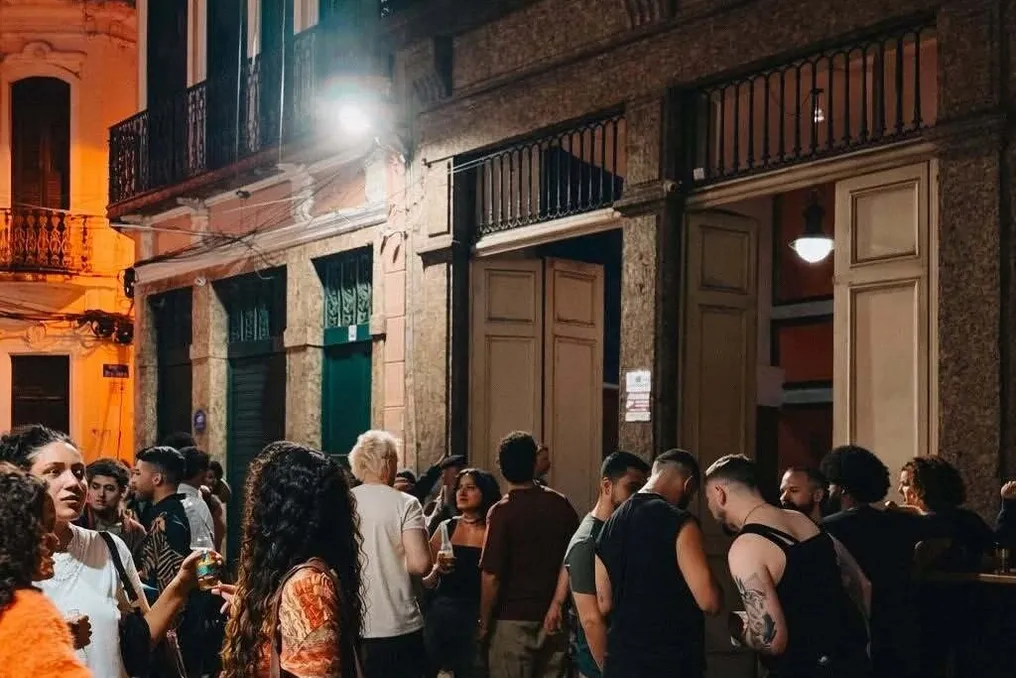
Beco do Bragança, located in downtown Rio de Janeiro, reached the 11th position in the global ranking of the coolest streets in 2026. This recognition was granted by the British magazine Time Out. The pedestrian alley was included in the list of 28 locations for presenting a combination of urban art and a diverse cultural program, ranging from samba circles to vinyl nights.

This is the third consecutive year that Rio de Janeiro has featured in this selection. Previous years also saw highlights: in 2024, Rua Arnaldo Quintela in Botafogo achieved eighth place, and in 2025, Rua do Senado, also in Downtown, was elected the most modern in the planet.

To compile this ranking, Time Out collects suggestions from editors and specialists from various cities, focusing on streets where community life is most vibrant. The magazine's team analyzes these nominations using criteria such as gastronomic offerings, shopping options, nightlife, interaction between residents, and the presence of independent businesses.

Characteristics and Creative Circuit

With approximately 155 meters in length, Beco do Bragança maintains a segment of the colonial layout of Downtown Rio. Originally, this cobblestone alley, surrounded by historic townhouses, served as a pedestrian shortcut and motorcycle parking area.

The introduction of studios, independent shops, bars, and an art gallery transformed the alley and its surroundings into an attractive circuit for both tourists and residents, encouraging daytime strolls and nighttime activities. This transformation was the factor that caught Time Out's attention. A visit can include stops at design studios and breaks for a drink, potentially culminating in outdoor samba or jazz performances on the corner with Candelária.

Highlights of Beco do Bragança

Among the places that well represent the creative circuit of Beco do Bragança, Casa Capioca stands out. After three years of online sales, it now has a physical space where customers can closely inspect, handle, and test furniture before purchasing. This vintage furniture store, managed by Marina Caroni, occupies a two-story townhouse.

Monthly, about 60 items from different eras and styles are selected for Casa Capioca. Before being sold, these pieces undergo work by carpenters and upholsterers, who strive to preserve the original characteristics of each piece, maintaining the history of the find. Visitors can see both restored furniture and those still undergoing restoration.

Tapilogie started operations in 2020, when Mariana Wakim began selling vintage rugs through Instagram. After a period in São Paulo, Mariana returned to Rio and found a large house in Beco do Bragança. The physical store offers artisanal pieces in wool, cotton, and silk, sourced from countries such as Turkey, Iran, India, and Pakistan. The spaces are set up to allow customers to observe the weaves up close and visualize how each rug contributes to the decor. Time Out suggests combining a visit to Tapilogie with Casa Capioca on a Friday.

Opening at the end of 2025, Vidadura integrated into the circuit with a structure combining a gallery, cafe, bar, and cultural space. The venue sells food and hosts exhibitions of contemporary urban art and screen printing bazaars. On certain nights, the gallery transforms into a dance floor. For example, in October, the 'Back to 2000s' party featured DJs playing 2000s pop and R&B. Vidadura's event schedule can be checked on the establishment's Instagram.

On the corner with Candelária, the Mergulho programming extends to the street, offering samba circles and jazz performances. The schedule for this spot is coordinated by David Coelho, a cultural producer associated with Acarajazz and Festejos da Conceição. The bar is managed by Matheus Araújo, responsible for the Caipirinha Oficial project at Pedra do Sal. At the Mergulho unit, Time Out highlighted the cashew caipirinha with Sicilian lemon.

Firma, which established itself in the same townhouse as Cabiúna and Tapilogie at the end of 2025, complements the circuit. This space operates as a bar, gallery, and party house, promoting lively nights with loud music, vinyl sessions, album releases, and themed wine gatherings. The venue is ideal for complementing store visits with a drink and enjoying music. For meals, Time Out recommends the burgers and snacks, suggesting a visit from Wednesday to Sunday, when the DJs take over the soundtrack.

Similar stories

Salto São Francisco is the largest waterfall in the Southern Region of Brazil, located in Paraná
Read more
viagemeturismo.abril.com.br

Salto São Francisco is the largest waterfall in the Southern Region of Brazil, located in Paraná

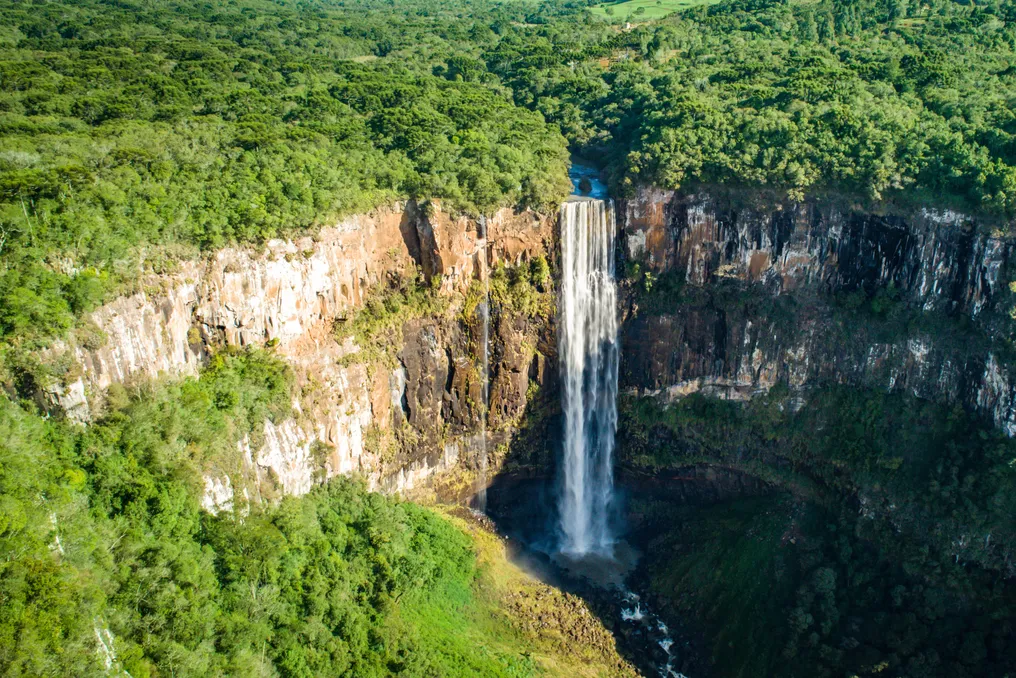
The Salto São Francisco, located in the interior of Paraná, is recognized as the largest waterfall in the Southern Region of Brazil, considering both its height and water volume. This freefall reaches an impressive 196 meters and is situated on the border between the municipalities of Guarapuava, Prudentópolis, and Turvo, atop the Serra da Esperança, approximately 330 km from Curitiba.

The main access to the site is through the Salto São Francisco da Esperança Municipal Park in Guarapuava, and entry is free. Although there is access via Prudentópolis, the latter is more complicated, depending on dirt roads. In Prudentópolis, there is also the Salto dos Cavalheiros, a 14-meter drop, where visitors have the opportunity to cool off at the base of the water.

Salto dos Cavalheiros

Besides the scenic beauty and lush landscapes, the park offers various leisure options for those seeking adventure. Visitors can choose between short or longer intensity trails and enjoy the pools formed by the waterfalls, always observing the signage, as not all drops are safe for swimming.

Trilha dos Mirantes

The Trilha dos Mirantes is classified as moderately difficult. This route covers about 1.2 kilometers and passes through native vegetation, featuring species such as araucaria, bromeliads, and orchids. The trail leads to three viewpoints, ideal spots to appreciate the landscape and capture travel moments. The final destination of this trail is the highest area of the 196 meters, providing a panoramic view of the park and illustrating the grandeur of the waterfall.

For those with more stamina, there is the Trilha do Pé da Cachoeira. This route is significantly longer and more demanding, totaling 6 kilometers (round trip), and may require four to seven hours of walking. The path follows down the slope and then returns, passing through dense forest areas, muddy sections, and slippery rocks due to the mist generated by the water. It is mandatory that this route be done under the supervision of a local guide.

Salto dos Cavalheiros

The Salto dos Cavalheiros represents a pleasant alternative for those who wish to enjoy the park's waters. Being smaller than the Salto São Francisco, it has designated pools for swimming. The path to it is considered easy and has stairs facilitating the journey.

When planning the visit, it is essential to consider the operating hours of the complex. The Salto São Francisco da Esperança Municipal Park operates from Wednesday to Monday, from 8 am to 5 pm, with free entry. It is recommended to arrive early, especially if the intention is to take the longest trail, as this activity requires the whole day. The park does not offer restaurant or snack bar services, so it is advisable to bring snacks for those planning to spend the day there.

Additionally, it is important to bring water, sunscreen, and repellent. For greater comfort during walks, it is suggested to wear appropriate clothing and footwear for the activity. Visitors traveling by car must check road conditions beforehand, as the final access stretch is dirt and can become muddy and impassable on rainy days. It should be noted that rainy weather is also not the most recommended time for the park's activities, particularly for the more challenging trails.

Rio de Janeiro Botanical Garden is the oldest in Latin America and highlights its attractions
Read more
viagemeturismo.abril.com.br

Rio de Janeiro Botanical Garden is the oldest in Latin America and highlights its attractions

The Rio de Janeiro Botanical Garden is recognized for its beautiful landscapes, created from collections of flowers and plants that attract both tourists and city residents. In addition to its aesthetics, the garden holds great scientific importance for botany, housing species from diverse origins ideal for research. This site has been designated as a protected heritage by the National Institute of Historic and Artistic Heritage (Iphan) since 1937.

Its historical trajectory dates back to 1808, the year it was established by Prince Dom João VI, granting it the title of the oldest institution of its kind in Latin America. Initially, the purpose was to establish an acclimatization area for spice seedlings from the East, such as cinnamon and nutmeg. Currently, the Botanical Garden is one of the most appreciated attractions in the capital of Rio de Janeiro.

With an area exceeding 540,000 square meters, the park is segmented into multiple thematic spaces filled with world flora. One of the most emblematic points is the Barbosa Rodrigues Avenue, the main avenue of the complex, lined with imperial palms, serving as a classic backdrop for travel photographs.

Japanese Garden

The Japanese Garden, as its name suggests, displays species characteristic of Japan. In this environment, one can find bonsai and cherry trees, as well as an oriental-style bridge spanning a pond with carp, referencing Japanese culture.

The Orchidarium and Bromeliadarium greenhouses cultivate hundreds of varieties of orchids and bromeliads. This section of the park is also highly sought after by visitors due to the beauty and variety of species, including rare specimens.

For visually impaired people, there is the Sensory Garden, designed to provide an intense experience of textures and aromas, allowing visitors to touch and smell all the vegetation present on the site.

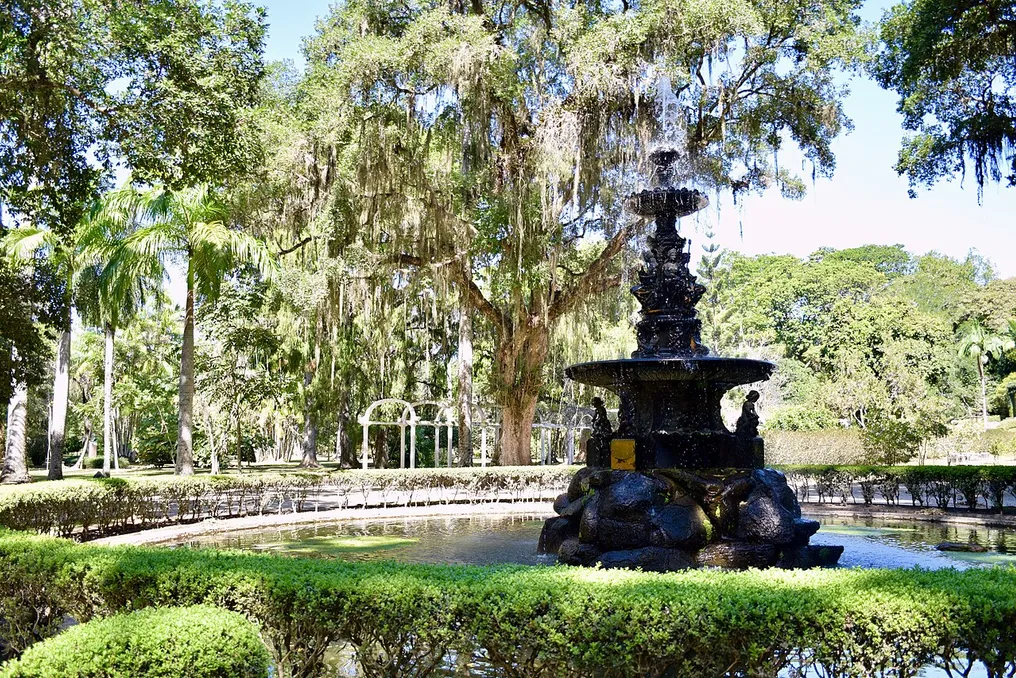
In the center of the park, there is the Fountain of the Muses, another frequently photographed spot. This fountain consists of two basins and is decorated with four sculptures symbolizing science, poetry, art, and music. The work was relocated from Largo da Lapa to its current position in 1905.

The Botanical Garden also houses a cultural center, the Botanical Garden Museum. This space offers art exhibitions and interactive content, in addition to an educational schedule. Its objective is to highlight the work carried out by the park and biologists in developing public policies and strategies for the conservation of local flora over its more than 200 years of existence.

Located at Rua Jardim Botânico, number 1008, access can be made by car, ride-sharing apps, or bus. It is important to note that the location does not have its own parking for private vehicles.

The park operates from Monday to Sunday, from 8 am to 5 pm, except on Wednesdays, when it opens later, at 11 am. The museum is not open on this day. Tickets can be purchased on the official Botanical Garden website, costing R$ 40 for Brazilian citizens and R$ 80 for foreigners.

Overview of Brazilian Wine: Production Growth and National Market Challenges
Read more
super.abril.com.br

Overview of Brazilian Wine: Production Growth and National Market Challenges

During a tasting held in October in Bento Gonçalves (RS), the author observed a spectacular service where dozens of waiters distributed the same wine synchronously to about 800 people. This event was part of the 34th edition of the National Wine Evaluation. Annually, producers send samples to the Brazilian Association of Enology (ABE), where one hundred enologists taste the beverages blind to select those that best represent the national harvest across various categories, including dry red, rosé, and sparkling bases.

The wines evaluated came from 558 samples. The identity of the producers is only revealed at the end of the tasting. This year, 14 wines from Rio Grande do Sul, one from Santa Catarina, and one from the Federal District were presented.

Although the Cerrado may not be the initial image associated with a winery, this fact illustrates the current panorama of Brazilian wine: there has never been so much production in so many distinct regions. In 2025, Brazil counted 965 wineries in 18 states plus the DF, an increase of 41.5% compared to 2020. Lucia Porto, journalist and co-founder of the website Brasil de Vinhos, estimates that the real number could be between 1,000 and 1,200. The diversity of labels has also grown significantly, reaching 16.2 thousand different products, representing an 88.1% increase in the last five years.

The proliferation of wine in a country with multiple climates is possible due to a unique characteristic: Brazil is the only place in the world where grapes are cultivated in three ways. Contrary to the global trend of reducing vineyards and consumption, the opposite is happening in Brazil. In 2025, vineyard area grew by 9.6% compared to 2024, while wine consumption increased by 19.9% above the average of the last five years, totaling 440 million liters.

Despite the Brazilian per capita consumption being about 2 liters annually (compared to triple that of France), Brazil shares with Japan the status of growing demand, with 2025 being the year with the lowest global wine consumption of the century. The wine sector moved R$ 21.1 billion in Brazil in 2025, indicating a heated domestic market, although logistical and distribution challenges for national labels exist.

The Earth

The grape belongs to the genus Vitis, comprising about 80 species. Among them, Vitis vinifera stands out, originating from Europe and Asia. Although thousands of vinifera varieties exist, only a few dozen are commercially cultivated, such as Merlot, Cabernet Sauvignon, Chardonnay, and Pinot Noir.

Many vinifera grapes are not suitable for direct consumption because they are small, have seeds, and astringent skins. However, they are ideal for wine production, as sugar serves as fuel for yeasts during alcoholic fermentation. Acidity and tannins, when well managed, provide freshness, structure, and longevity to the beverage, while hundreds of aromatic compounds are revealed by the fermentation and aging process.

These grapes are extremely sensitive to the environment, which allows the same variety to produce distinct wines depending on the terroir—the combination of climate, soil, and regional management. This delicacy, however, implies greater vulnerability to pests and climate change.

The first vinifera arrived in Brazil in 1532, with the Portuguese purpose of producing wine for masses and personal consumption. Initially, attempts on the São Paulo coast failed. The vines thrived for a few decades after being taken to the mountains but were abandoned due to the focus on gold mining in Minas Gerais.

Vitis vinifera reached the current Rio Grande do Sul in the 17th century, brought by Spanish Jesuits, but production was interrupted by conflicts between missionaries, indigenous people, and bandeirantes. In 1839, the Gaucho diplomat José Marques Lisboa introduced the Isabel grape, a resistant and highly productive hybrid that could be consumed raw, after finding it in the USA.

Lisboa sent Isabel cuttings to Rio Grande. Although the variety was already planted in São Paulo, it was in the South that production took off, driven by the work of immigrants. French and German immigrants settled first on the coast and plains, followed by Italians in 1875, who settled in the Serra Gaúcha, far from Porto Alegre. The inclined terrain of this region proved favorable for the Isabel grape, facilitating water drainage and air circulation.

With the winemaking tradition, production quickly gained momentum, transforming colonies like Bento Gonçalves and Garibaldi into cities. The surplus from home production was marketed by the first wineries, giving rise to old names such as Salton, Peterlongo, and Aurora.

The Wine

Rio Grande do Sul is the main grape producer in Brazil, with 70% of what is planted being American or hybrid grapes, mainly Isabel. These grapes are used to produce juice or table wine, which has a faster and more economical process, representing more than half of the volume consumed in the country, usually in the milder versions.

Historically, table wines formed the basis of national viticulture. However, in recent decades, the fine wine category, made exclusively with Vitis vinifera, has gained prominence. These wines are more expensive and result in beverages of greater complexity, often highlighted in guides and competitions.

Fine wine production began to gain strength in Brazil in the 1970s, a crucial period for global wine. It was then that 'New World' labels began to gain recognition in competitions, equaling the millennia-old European production. This advance intensified after the Great Wine Tasting in Paris in 1976, when Californian wines surpassed French labels in a blind tasting, a phenomenon that spread to Australia, South Africa, Chile, and Argentina.

Foreign companies, such as Chandon and Almadén (now part of the Miolo group), established themselves in Rio Grande do Sul, attracted by the initial economic growth of the military regime and the difficulty of importing into Brazil. These multinationals brought enologists, new technologies, and thousands of European grape cuttings, offering bonuses to farmers who adopted these varieties. During this period, Embrapa Uva e Vinho was also created, a branch of the Brazilian state-owned company that assisted in improving cultivation and production techniques.

In the 1990s, the opening of the national market allowed the entry of imported labels with reduced customs tariffs, leading some foreign companies to leave Brazil. However, their presence left important legacies: the expansion of vineyard area with the reintroduction of Vitis vinifera in the Gaúcha Campaign and the development of fine wines in the São Francisco Valley, in the Northeast. There was also a specialization of labor, leading major Brazilian wineries, previously focused on table wines, to develop their fine lines, and grape growers who supplied vinifera to multinationals to create their own wineries.

At the beginning of the century, Brazilian wines began to be recognized in international awards, with sparkling wines leading this movement. Produced in the Serra Gaúcha since the 1910s and improved with the arrival of multinationals from the 1970s onwards, they gained global prestige. The conditions of the Serra are ideal for sparkling wines, and the quality combined with competitive price results in good cost-benefit, given that more than 85% of sparkling wines consumed in Brazil are from national labels.

The situation of still fine wines is different: more than 80% of national consumption comes from imports, maintaining a constant dispute with foreign products.

The Glass

According to the Ideal BI consultancy, imported wines (of any type) represent one-third of the volume consumed in Brazil but account for 56% of the market revenue. In the previous year, Brazil imported US$ 560.7 million worth of wine, with Chile being the largest supplier, accounting for 38% of this amount. However, this scenario may change with the free trade agreement signed between Mercosur and the European Union for 2026, which foresees a gradual reduction of taxes, potentially lowering European labels by up to 20% over eight years.

This change is positive for connoisseurs of Portuguese, French, and Spanish wines, but it represents a warning for Chilean, Argentine, and Brazilian producers due to increased competition. As an alternative, exports can be explored; in 2025, Brazil reached US$ 13.8 million in exports, a 25% increase compared to 2024, although it remains a niche difficult to exploit.

To diversify the offering, the author experimented with modern drinks in the Serra Gaúcha, such as orange wine, made with white grapes that remain in contact with the skins for longer, and options like denatured wine. Less common varieties in Brazil, such as Alvarinho (Portuguese) and Marselan (French), were also tasted, while research continues to find grapes suitable for the country.

One way to enhance national labels is through Geographical Indications (GIs), government registrations granted to regions renowned for a product or whose characteristics are linked to the territory. The first Brazilian GI was that of the Vale dos Vinhedos, in the Serra Gaúcha, in 2002. Currently, there are hundreds of GIs in the country. For wines, there are 13. Obtaining a GI requires years of study with local producers and partners like Embrapa, and the seal helps standardize production.
Popular