Former Colonel Gives Safety Tips to Couples in Hotel Rooms
Read more
Aaj Tak
www.aajtak.in

Former Colonel Gives Safety Tips to Couples in Hotel Rooms

Upon checking into a hotel, most people first place their belongings, turn on the air conditioning, and relax. However, many wonder about the level of privacy preservation in the room where they are staying for several days. Recently, news reports have frequently featured stories about leaks of private videos of couples, prompting people to be vigilant. Because of this, people start checking mirrors, wardrobes, lighting fixtures, and air conditioners for cameras, but they ignore one item located directly in front of them in the room.

A recent video that went viral on social media raised a new debate on this issue. In it, former Indian Army officer, Colonel Hani Bakshi, gives advice to hotel guests that surprises viewers.

Safety Tips in a Hotel Room

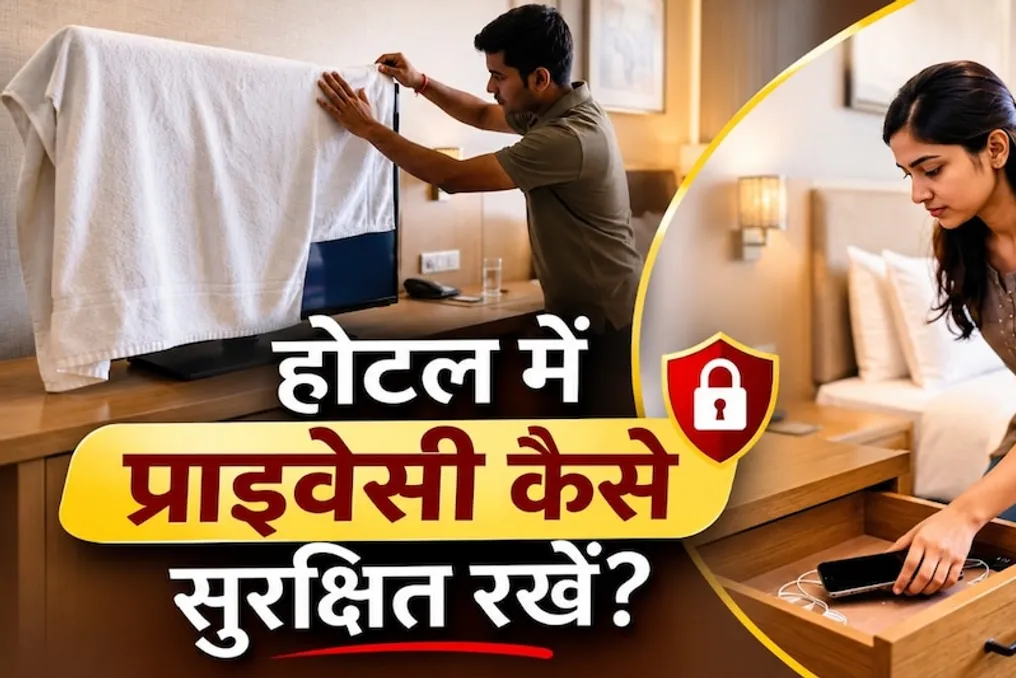
In a recent ANI podcast, Colonel Hani Bakshi advised first covering the room's television with a large towel immediately after arriving at the hotel. He recommended taking the largest towel from the bathroom and draping it over the TV. According to him, privacy can be compromised while showering, so it is crucial to be cautious about electronic devices present in the room. Nevertheless, not all hotels equip televisions with cameras, and simply covering the TV does not eliminate the threat from other potential cameras in the room.

Colonel Bakshi also warned against using mobile phones. He advised leaving one's phone in the bed drawer overnight. He explained that personal information can be used for blackmail. Therefore, when staying in a hotel, one must take care not only of their own safety but also of protecting their phone and the data stored on it.

Who is Colonel Hani Bakshi?

Colonel Hani Bakshi previously held the position of commander of the Technical Support Division (TSD) of the Indian Army. This unit was established after the 26/11 Mumbai terror attack and was responsible for operations related to intelligence gathering and technical surveillance. It is because of this that his hotel safety tips became a topic of discussion on social media. Some users advise taking his words seriously, while others consider his recommendations overly cautious.

Can Espionage Occur Through Televisions and Other Devices?

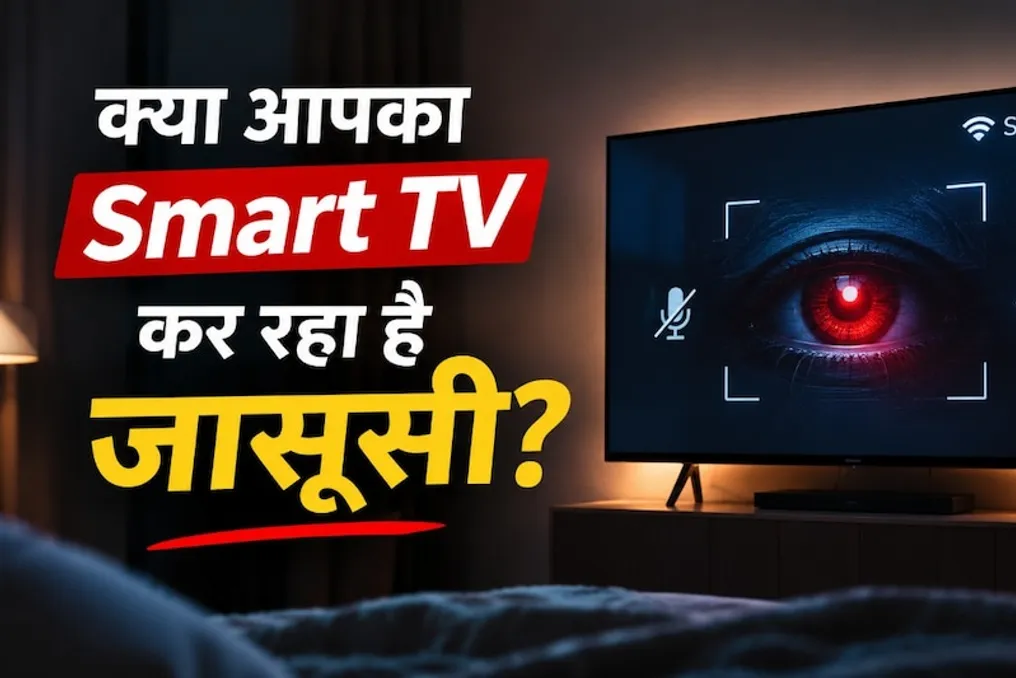
Nowadays, many hotel rooms are equipped with smart TVs and other internet-connected devices. Some smart TVs have microphones for voice commands. However, this does not mean that all conversations are recorded through the television. On the other hand, concerns about hidden cameras are not unfounded. Small cameras can be hidden in various electronic devices and decorative items. Therefore, it is wise to inspect surrounding objects after arriving at the hotel room.

5 Precautions When Staying in a Hotel

There is no need to panic while staying in a hotel, but some minor precautions regarding your privacy should be observed. Firstly, thoroughly inspect the room: pay attention to any unusual devices or small openings near the TV, clock, charger, smoke detector, and air conditioner. Secondly, do not ignore suspicious devices: if any electronic equipment looks unusually placed, you should ask the hotel to check it. Thirdly, be careful with smart devices: if a smart TV has a camera or microphone, check its settings and cover the camera if it is not needed. Fourthly, be cautious with public Wi-Fi: avoid conducting banking operations and working with confidential information via the hotel's free Wi-Fi; use a secure network if necessary. Finally, check the door lock: after entering the room, ensure that the lock, bolt, and safety latch are functional.
Similar stories

Smart TVs can collect data on your viewing habits and preferences, companies report
Read more
www.aajtak.in

Smart TVs can collect data on your viewing habits and preferences, companies report

A television set placed in the bedroom is usually perceived as an entertainment device. After a long day, people watch movies, series, or play games on such a TV. However, the question arises: can your smart TV know what you are watching, how long, and what kind of content you like?

This question is not mere fantasy. Automatic Content Recognition (ACR) technology built into smart TVs is capable of identifying the content being played on the screen. In some cases, this technology can recognize content that is not only running in the TV's own application but also on connected laptops, game consoles, or set-top boxes via HDMI. This data can be used to analyze viewing habits, content recommendations, and advertising.

This does not mean that every smart TV is constantly listening to conversations in your bedroom or tracking you through a camera. The main issue is that your TV may be collecting data about your viewing habits and transmitting it to company services or advertising systems.

Recently, The Verge contacted companies that manufacture televisions and streaming devices with questions. The companies' answers show that microphones, voice commands, viewing history, and device usage data are processed in various ways.

The ACR technology used in smart TVs is designed to identify the content displayed on the screen. Different companies may employ different methods. Some systems analyze the pixels visible on the screen, while others determine content based on digital sound patterns known as audio fingerprints.

Simply put, the TV is capable of recognizing the unique digital pattern of a movie, show, or video. Based on this information, it is possible to determine exactly which episode you watched, for how long, and what content matches your preferences.

Researchers from University College London (UCL) studied the collection of such data on Samsung and LG smart TVs in 2024. The study found that ACR technology can recognize content played by external devices in certain situations beyond traditional television. That is, if you connect a laptop or another device to the TV, the identification of what is happening on the screen is still possible.

The researchers examined the volume of data leaving the TV and the time it was sent. However, because the data was encrypted, they could not determine what specific information it contained. Therefore, this study cannot serve as proof of recording every personal activity via the TV. Nevertheless, it convincingly demonstrates that data related to viewing habits on a smart TV can be transmitted over the network.

This is the most important question. Many smart TVs and their remote controls are equipped with microphones. Users can use these to give voice commands by pressing buttons on the remote or saying a designated keyword in some models. For example, you can ask it to play a movie or lower the volume.

However, having a microphone does not mean the TV is constantly recording your conversations. According to the companies, in many devices, the microphone is activated only when the user presses a button on the remote or says a designated keyword. In some TVs, the keyword recognition process happens directly on the device. Only after receiving the command can it be sent to the company's server via the internet.

The Verge asked 17 questions to companies such as Amazon, Google, LG, Samsung, Apple, Roku, and TCL. The companies' answers varied. For instance, Google reported that the recording of voice commands or their transcript is saved in your account only when the 'Voice & Audio Activity' setting is enabled. Samsung stated that its TVs do not record private conversations, but voice commands and their transcripts may be stored on the server for processing and improving voice services.

According to LG, user consent is required for voice recognition in their TVs. Even then, for voice commands, either the microphone button must be pressed or a keyword must be used on the supported TV. These answers clearly show that each company's approach to microphones and voice data is not uniform.

Thus, it is incorrect to claim that every smart TV listens to every conversation in your room. But when using a voice assistant, your commands may be sent to the company's server for processing. You should check whether the voice assistant function is enabled on your TV and how long the associated data is stored.

One reason is advertising. If a TV company knows which movies, sporting events, or programs you watch, it can try to show you content and advertisements that match your interests. Companies also use this information to understand audience preferences, recommend content, and measure advertising reach.

The smart TV has ceased to be just a screen; it is now integrated with a full system of applications, the internet, voice assistants, games, and advertising. Even after the TV is sold, companies retain avenues for monetization through this platform. Viewing habit data is part of this business model.

Popular