How Community Pressure Influences Decisions in the Gaming Industry: An Analysis of Petitions
Read more
Olhar Digital
olhardigital.com.br

How Community Pressure Influences Decisions in the Gaming Industry: An Analysis of Petitions

When a developer cancels a game, shuts down a franchise, or announces an unpopular change, players often resort to online petitions, social media campaigns, and even boycotts, attempting to alter the company's decision.

In 2026, two instances drew public attention: mobilization against the discontinuation of physical games for PlayStation and a campaign for the survival of the Mass Effect franchise following BioWare's closure. These initiatives collectively gathered over half a million signatures.

However, the number of supporters does not always lead to changes in corporate decisions. This raises the question of the limits of the gaming community's influence.

In August 2026, despite a petition with over 345 thousand signatures, Sony confirmed its plans to cease the production of physical PlayStation games, which was scheduled for January 2028. During a financial results teleconference, the company director, Lin Tao, acknowledged consumer dissatisfaction but maintained the company's stance, attributing it to the development of digital distribution.

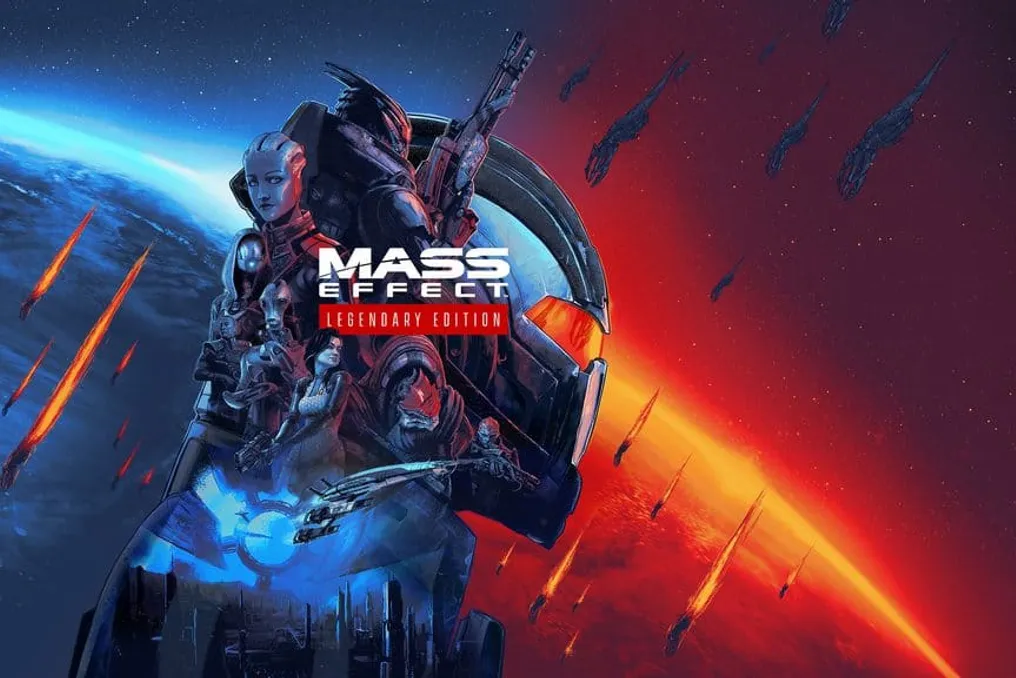
Another example relates to Mass Effect. After BioWare's closure and the cancellation of the next game in the series, a petition on Change.org garnered over 200 thousand signatures in October. Fans demand that Electronic Arts resume development of the series or license the intellectual property to another studio. At the time of the reports' publication, this mobilization failed to overturn the decision.

These two cases demonstrate the limitations of petitions: they show interest and dissatisfaction but do not legally obligate companies to meet demands.

Despite recent examples, the gaming industry has a history of decisions that were revised following consumer mobilization. In May 2024, Sony announced that Helldivers 2 players on Steam would need to link their accounts to PlayStation Network (PSN). This measure sparked a wave of negative reviews and complaints, especially among consumers in countries without official PSN support.

In response to the outcry, Sony reversed the mandatory requirement and publicly acknowledged the importance of player feedback. In 2021, Sony announced the closure of the PlayStation 3 and PS Vita digital stores. This decision drew criticism related to game preservation and access to classic titles. Following the negative reaction, the company withdrew its decision and kept the stores operational.

Nevertheless, this victory was not final. In July 2026, Sony once again announced the gradual closure of these stores, planning a global shutdown in 2027. This episode shows that public pressure can only delay corporate decisions, even if it cannot completely prevent them.

The number of signatures is just one factor that can influence a business decision. Other aspects may carry significant weight. For instance, canceling a registration requirement is usually a less complex decision than restarting a studio, funding an AAA game, or changing the entire distribution strategy.

Petitions function as tools of collective mobilization, allowing attention to be drawn to consumer demands and demonstrating demand for a specific product or service. However, one signature is not necessarily equivalent to an intention to purchase, just as thousands of negative comments do not guarantee the opinion of the majority of consumers.

Community pressure can influence decisions, but its scale depends on economic, technical, and strategic factors. In the video game industry, the ability to be heard and achieve a change in corporate decision remains different things.

Similar stories

Hype builds ahead of GTA 6 release: The game's influence is felt from the internet to offices
Read more
www.aajtak.in

Hype builds ahead of GTA 6 release: The game's influence is felt from the internet to offices

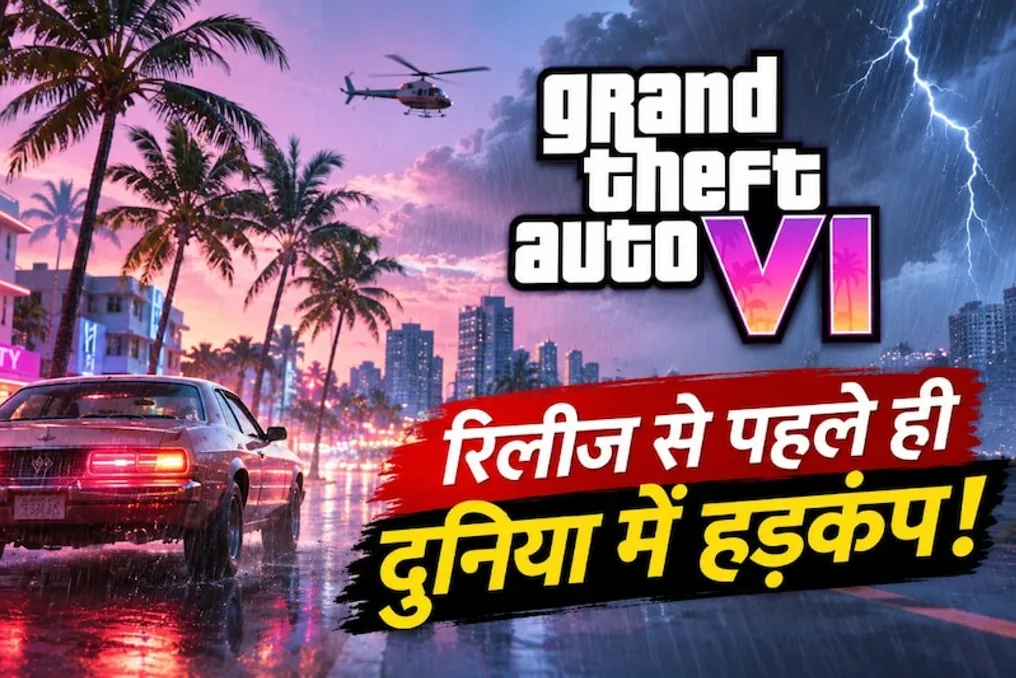
Despite the planned release of Grand Theft Auto 6 on November 19th, the game's influence is already being felt worldwide. During the pre-load of GTA 6, new records for broadband networks were set in the UK. In the US, internet company Xfinity is offering its customers speeds up to 2 Gbps for 15 days.

Approximately 12.5 million American gamers have reported plans to change their work or study schedules for the game. Logitech has even launched a special 'Game Day' for employees. It is evident that GTA 6 affects not only the video game industry but also areas such as the internet, consoles, sports, tourism, and entertainment.

The game developer, Rockstar Games, provided additional information about the in-game weather, specifying that they tried to incorporate a more realistic depiction of rain, sea fog, strong storms, and changing clouds.

The pre-load for GTA 6 began on November 10th, allowing those who pre-ordered to download the game files onto their PS5 and Xbox Series X|S before the official release. The file size is approximately 212 GB. When thousands and millions of people simultaneously download such a volume of data, the load on internet service provider networks naturally increases.

British internet company Virgin Media O2 reported that on November 10th, its broadband network recorded the highest traffic in its history. Evening traffic exceeded the previous record set by a UEFA Champions League match by 3.8 percent. The total data downloaded throughout the day was 4 percent higher than the previous Fortnite record.

According to the company, in the first hour of the pre-load, broadband traffic increased by 51.6 percent compared to the previous week. This indicated a record demand for downloading the game on the large internet company's network, rather than a complete internet outage.

Another British internet company, YouFibre, also reported speed slowdowns for some customers due to the massive demand for GTA 6 downloads. The company's CEO, Jeremy Chelot, mentioned network congestion in some parts of Yorkshire.

Internet service provider Comcast Xfinity in the US offered eligible customers an increase in download speed up to 2 Gbps for a period of 15 days. The company claims that at this speed, downloading the 212 GB GTA 6 could take about 30 minutes, although the actual time depends on the connection, network, and device.

The scale of demand for the game can also be assessed by the number of pre-orders. Sony named GTA 6 as the game with the most pre-orders in PlayStation Store history. Microsoft also stated that it is the most popular title ever in the Microsoft Store.

According to Sensor Tower estimates from November 11th, there were about 9.69 million digital pre-orders for GTA 6, valued at revenue between 8.8 and 11 billion rupees. The PS5 accounted for about 75 percent of these, with the remaining pre-orders placed on Xbox Series X|S. It should be noted that this figure is a projection by Sensor Tower, not an official sales report from Rockstar Games or its parent company Take-Two Interactive.

The success of GTA 5 is also a significant reason for this hype. The game, released in 2013, has sold over 230 million copies worldwide. Thus, about 13 years after the release of the previous major game, the anticipation for GTA 6 excites both long-time fans and a new generation of gamers.

The anticipation for GTA 6 release is not limited to those sitting in front of gaming consoles. According to a survey conducted by PCMag in collaboration with YouGov, about 8 percent of adult gamers in America plan to take a vacation or adjust their work and study schedules for GTA 6. Applying this statistic to the total gamer population in the US yields an approximate figure of 12.5 million people.

Technology company Logitech initiated a program called 'Logi Game Day' for its employees. Under this initiative, employees can take a day off to play their favorite video games. This opportunity is available not only for GTA 6 but for any game until November 10, 2027. Furthermore, the company plans to stream games from its Miami office on November 19th.

The fictional world of GTA 6, Leonida, is inspired by the state of Florida in the USA. The city of Vice City, featured in the game, resembles Miami. Because of this, business circles and local authorities in Miami are attempting to leverage the game's popularity for their own interests.

Analysis of the reasons why games are taking so long to be released on the Nintendo Switch 2
Read more
olhardigital.com.br

Analysis of the reasons why games are taking so long to be released on the Nintendo Switch 2

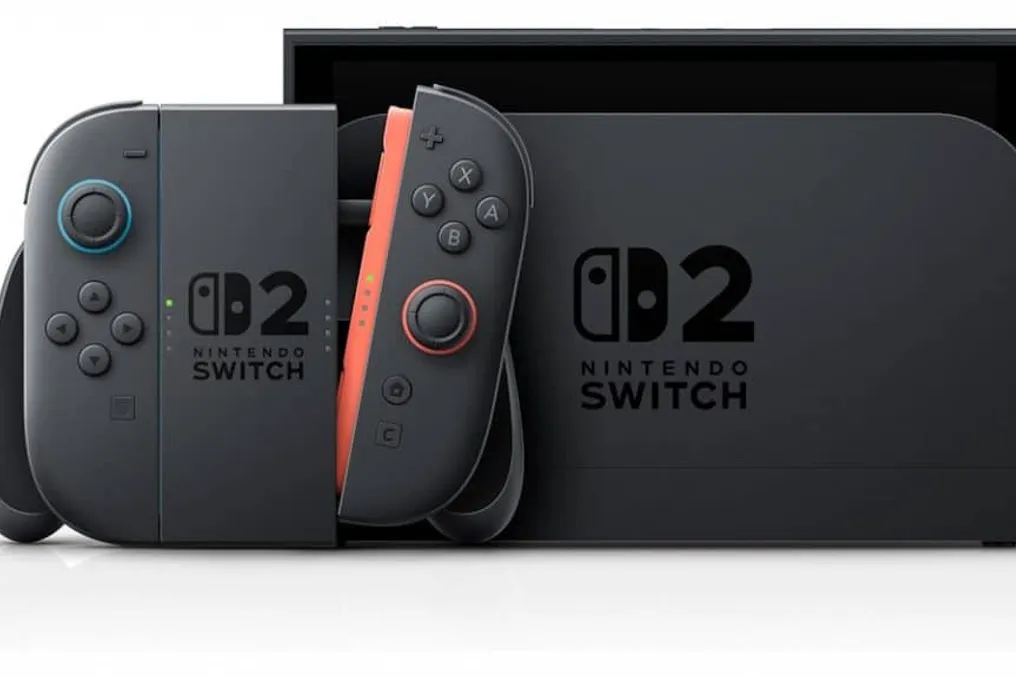
Since the release of titles like GTA 6 for PlayStation 5 and Xbox Series X|S on November 19th, the arrival of games on the Nintendo Switch 2 has been a topic of discussion. Despite rumors, Rockstar Games has never confirmed whether the title will arrive on the platform. Portability difficulty is a known pattern among Nintendo console players, given that Doom took about a year and a half to come out on the original Switch, The Witcher 3 required four and a half years, and Cyberpunk 2077 was only released in 2025, almost five years after its debut on other consoles.

Even with the Switch 2 having been on the market for a year and a half, delays persist, as exemplified by 007 First Light, which has been postponed three times and is now scheduled only for March 2027. While power limitation is a simple explanation, it is incomplete. Delays are attributed to at least four factors, the most crucial of which relates to obtaining the necessary development equipment, and not just graphics.

The technical challenge of the Switch 2 lies more in its narrow nature than in being inherently weak. According to a Digital Foundry survey, the console uses a customized Nvidia T239 chip, equipped with 12 GB of LPDDR5X memory and a 1,536-core CUDA GPU. Memory bandwidth is 102 GB/s in dock mode, dropping to 68 GB/s in handheld mode. For comparison, the PS5 operates with approximately 448 GB/s and the Xbox Series X with about 560 GB/s.

This bandwidth disparity is the most impactful factor. Reducing textures, lowering shadows, or cutting draw distance is feasible, but making a modern open world transmit data at the required speed is much more complex. Handheld mode, with one-third less bandwidth, is often where the port suffers the most difficulties.

Conversely, the Switch 2 has an advantage that the PS5 and Xbox lack: native support for Nvidia's DLSS. Street Fighter 6, for example, renders at 960x540 on the console and is reconstructed to 1080p by this technology, surpassing the Xbox Series S in certain scenarios. Digital Foundry also identified two variants of the feature for developers, including a lighter version called DLSS Light.

Therefore, porting work is not limited to subtracting elements; it requires rebuilding the graphics pipeline using a distinct tool, which demands time. The most detailed account of this process came from CD Projekt RED when adapting The Witcher 3 for the original Switch. In an interview with VGC, producer Piotr Chrzanowski detailed the necessary actions: compressing all textures to fit into 3.5 GB of memory, reducing character draw distance by 20%, simplifying shadows, recompressing cutscenes to 720p, and adjusting the audio system, all so that the game, DLCs, and expansions could fit onto a 32 GB cartridge.

Saber Interactive executed this task under the direction and knowledge of CD Projekt. The initial goal was to achieve 540x720 in handheld mode with around 30 frames per second. The result was delivered on October 15, 2019, four and a half years after the original launch.

A similar pattern is observed in Doom, released on the original Switch in November 2017. id Software did not perform the port alone, hiring Panic Button, a specialized studio, which followed the house standard: resolution below native and target frame rate halved, from 60 fps to 30 fps.

Before any optimization, the studio needs a dev kit—a modified console produced by the platform owner itself, essential for testing the game on the final hardware. In the case of the Switch 2, obtaining this kit has become the biggest hurdle in the development cycle.

At Gamescom 2025, Digital Foundry interviewed several developers, consistently receiving the same information: they wanted to release on the Switch 2 but could not access the device. John Linneman reported that Nintendo seemed to discourage development for the console, as several studios claimed they were advised to release on Switch 1 and rely on backward compatibility. Oliver Mackenzie added that even major developers were excluded from the access queue.

The most concrete case is that of Digital Extremes, which publicly confirmed it could not release an enhanced version of Warframe for the Switch 2 due to the lack of a kit.

This was not an isolated production setback. Studios requested anonymity, believing that identification could harm their chances of receiving a kit. The registration process is fast, but approval seems to follow criteria incomprehensible to outsiders.

Some interpret this as a strategic choice, and a Game Rant analysis points out that the console was available to the general consumer in six of its first eight months on the market, which weakens the idea of a purely production problem.

For developers in Brazil, there is an additional layer of bureaucracy. Consultant Rodrigo 'Chips' Scharnberg, in a column in Olhar Digital, described his experience leading the port of Starlit Adventures to the Switch: he received negative responses, including that they did not work with Brazil, forcing him to seek the dev kit personally in the United States a year later. This year was spent on bureaucracy before production even began.

With the kit in hand and the game optimized, another waiting phase begins: compliance tests conducted by each manufacturer. Here, Scharnberg makes an important distinction: the console owner's Quality Assurance (QA) does not reject gameplay bugs; if the character passes through a wall, the problem is the studio's. Certification only invalidates what violates technical and brand rules of the platform, such as a button icon outside the manual's standard or a failed communication with the manufacturer's servers.

The testing criterion varies between companies. Some evaluate the game completely and return an exhaustive list of errors, while others stop at the first detected problem. The practical result is a cycle that consumes weeks; multiplied by two or three rounds, the release can be delayed by a month and a half, without the game's quality deteriorating.

The last factor is the most mundane: the financial aspect. Success on one platform does not guarantee equivalent returns on another, and gross revenue can be misleading. Scharnberg calculates that of the R$ 10 charged in the store, about R$ 5 remain after platform fees and taxes. In publishing contracts, the developer's share drops to something between R$ 1.50 and R$ 2.50.

In practice, a game generating R$ 1 million in the store can yield close to R$ 150 thousand net to the studio, an amount that must cover the team and finance the port, a costly process that requires significant code rewriting to run on an architecture different from the original.

There is also a peculiarity in Nintendo platforms. Historically, a large part of the core audience owns a Nintendo console in addition to a PlayStation or Xbox, meaning the port competes with a version that the same consumer may have already purchased.

Additionally, there is non-existent friction on the PS5 or Xbox: the physical media of the Switch 2. It is estimated that each 64 GB cartridge costs between US$ 15 and US$ 20 for Nintendo, and the company absorbs this cost, ensuring that all its own physical releases come with the complete game on the cartridge. Most third parties do not absorb this cost, opting for the Game-Key Card, a cartridge that contains only the download key.

A February 2026 survey recorded 56 titles on Game-Key Card versus 23 traditional physical releases among announced games. Since there is no official audited number and websites use varied criteria, any fixed percentage must be analyzed with caution. Although the format has annoyed collectors, it sells well. Data from Deku Deals indicates that among 1,070 users with third-party physical releases in their collection, 735 had at least one Game-Key Card, and six of the ten best-selling physical titles were of this type. Interestingly, the best-selling third-party physical title was not one of these, being Cyberpunk 2077: Ultimate Edition, with the complete game on the cartridge, the best seller of the console's launch week.

The cost pressure of NAND memory further drove large releases to the Game-Key format throughout 2026, including Octopath Traveler, Kingdom Hearts I–III, and Minecraft.

Two cases illustrate the entire situation well. 007 First Light was supposed to be released on the same day as the other versions but was postponed to the Northern Hemisphere summer about a month and a half before the May 27 debut. On September 15, 2026, IO Interactive announced the third postponement, now to March 2027, justifying that the additional time would be dedicated to performance polishing on the Switch 2, aiming for stable 30 fps.

Borderlands 4 represents the extreme scenario. Gearbox announced the postponement just over a week before the scheduled date, October 3, 2025, and Nintendo's policy forced the cancellation of all digital pre-orders. On February 3, 2026, Take-Two spokesperson Alan Lewis informed Variety that the company made the difficult decision to suspend development of this version, removing it from the publisher's future release list. The bitter fact is that months earlier, Randy Pitchford of Gearbox had stated that they were not porting the game, but rather building Borderlands 4 for the Switch 2, with the hardware in hand.

In contrast, Modern Warfare 4 arrived on October 23, 2026, on Xbox Series X|S, PS5, PC, and Switch 2 simultaneously. This is the first modern Call of Duty to drop PS4 and Xbox One support, marking the franchise's debut on the Nintendo console. The methodological difference lies in the technical sheet: Infinity Ward led the development, with support from Beenox on PC and Digital Legends specifically focused on the Switch 2 version. When questioned about the conversion, Infinity Ward described the process as smooth, with no issues to report.

This reflects the lesson learned from Doom Eternal, seven years prior: Panic Button was involved from the beginning, and the Switch version was conceived together with the others, instead of being adapted later.

Nintendo itself seems to have understood the magnitude of the problem. In May 2024, the company acquired 100% of Shiver Entertainment from Embracer Group, the studio responsible for the ports of Hogwarts Legacy and Mortal Kombat 1 to Switch. In its statement, the company affirmed its pursuit of securing high-level resources to port and develop software, something rare for Nintendo. The acquisition of a porting house clearly signals where the bottleneck lies.

Although Nintendo does not disclose third-party sales, it publishes an approximate indicator: the proportion of proprietary software over total platform sales. In the balance sheet published on November 5, 2026, referring to the first semester of the 2027 fiscal year (April to September 2026), this proportion reached 76.6%, an increase of 9.4 percentage points compared to the 67.2% of the previous period. By deduction, third-party participation fell from about 33% to about 23%.

This data requires two important caveats. The first is accounting: Nintendo recognizes its software sales at the gross value, while sales of other publishers' games enter at the net value, meaning only the commission received. Thus, a third-party game of R$ 300 contributes a fraction of what a Nintendo game contributes for the same price, exaggerating the company's dominance. The second caveat is the comparison base: software revenues included in bundles with the console are classified entirely as hardware sales, which artificially depressed the 67.2% index in the launch semester. Much of the percentage jump is a comparison effect between a debut semester and a normal semester.

The concrete numbers from the same balance sheet demonstrate the reality of the hardware market.
Video games become a source of intellectual property for cinema and streaming
Read more
olhardigital.com.br

Video games become a source of intellectual property for cinema and streaming

Historically, the relationship between video games and cinema was marked by adaptations that did not always please enthusiasts. In the past, films were adapted into games to boost releases, and game characters appeared in cinema productions that often failed to capture their special essence.

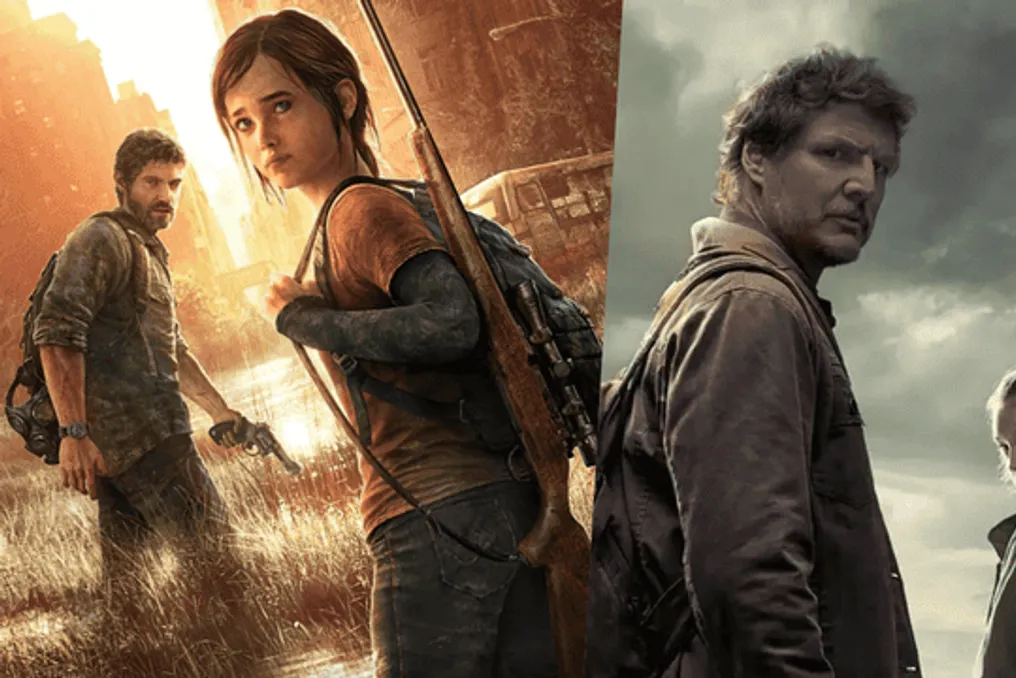
This landscape has undergone a significant change. Titles such as Super Mario Bros. Movie, The Last of Us, Arcane, Fallout, and Minecraft Movie prove that video games have established themselves as one of the primary sources of intellectual property (IP) for cinema and streaming platforms. The focus has shifted from merely adaptation to exploring universes capable of attracting audiences across various formats.

Commercial success reinforces this interest. Super Mario Bros. Movie surpassed the $1.3 billion global box office mark, and Minecraft Movie earned around $960 million, placing these works among the biggest recent Hollywood successes.

However, there is a deeper question: why do some IPs manage to transition across different media, while others do not achieve the expected success?

One of the central reasons for this transformation lies in generational change. People who grew up playing video games are now also consumers of cinema and streaming, work in the audiovisual industry, and often participate in decisions about which projects receive investment. Video games have stopped being perceived solely as children's entertainment, assuming a prominent role in popular culture.

For film studios and streaming platforms, this represents a clear market opportunity. An established game franchise brings with it recognizable characters, defined universes, and, crucially, an engaged fan base. While this does not guarantee success, it reduces the uncertainty inherent in presenting a completely new story to the public.

Another relevant aspect is the advancement of production technologies. Digital tools, animation, and visual effects have made it possible to represent worlds that would previously have been excessively costly or complex to replicate.

However, it is vital to distinguish between adapting a game and merely using its brand for promotional purposes. When a game IP migrates to audiovisual media, it carries with it a community, a visual identity, and a pre-existing universe for the audience. Conversely, cinema and streaming offer something of great value to games: the chance to reach individuals who have never handled a controller.

It is possible that someone discovers The Last of Us through the HBO series before knowing the Naughty Dog games. Similarly, a child might watch the Mario movie without having played any Nintendo titles. This movement establishes a virtuous cycle of intellectual property appreciation: the game strengthens the audiovisual production, and this, in turn, expands brand recognition, potentially generating interest in the games.

This phenomenon is known as transmedia, where an IP develops across multiple media, leveraging the specificities of each one.

There is a frequently neglected challenge: each medium has its own language. Based on its trajectory in the gaming industry, the author described two contrasting projects. In Swan Princess Hidden Tales, based on The Fairytale Princess franchise, the challenge was converting a cinema-created IP into an interactive experience. It was not enough to replicate scenarios and characters; one had to understand the franchise's audience, respect its identity, and create mechanics coherent with that universe.

Years later, the inverse process was experienced with Starlit Toons, an animated series inspired by the Starlit game universe. In the games, the characters already possessed visual identity, personality, and functions linked to game mechanics. However, an animated series demands distinct elements: narrative, conflicts, interpersonal relationships, and plot development.

A character might be effective in a game simply by possessing a fun ability, but this is insufficient on television. They must be capable of sustaining a story and captivating the viewer. These experiences reinforced the notion that adapting an IP does not mean copying the original product, but rather preserving its essence while building an experience appropriate for the new medium.

In the industry, there is the concept of 'deck appeal,' which refers to an IP's ability to spark interest in potential partners, investors, or producers. Although there is no single formula, certain components help identify a brand's potential in different formats.

The first is the presence of easily recognizable characters or symbols, such as Mario's silhouette or Pikachu, recognizable even by those who have never played Pokémon. The second is the presentation of a world with its own rules, like the visual and functional logic of the Minecraft universe. The third is the central action, the IP's 'verb': jumping in Mario, catching and training in Pokémon, or building and exploring in Minecraft. The fourth element is emotional identity, as the IP must evoke something recognizable, whether humor, adventure, nostalgia, or suspense. Finally, there is the capacity for expansion, meaning whether the universe allows for new stories, products, or experiences without losing its identity.

Minecraft serves as a notable example. Its universe, composed essentially of blocks, does not require a mandatory linear narrative, and its protagonist does not have a rigidly defined personality. Despite this, Minecraft has become a highly recognized brand in entertainment. The secret lies in the combination of a distinct visual identity, a world with its own rules, and a powerful central action: building.

LEGO follows a similar path. Its initial product is a building toy, but its versatility has allowed for the creation of games, movies, and series representing almost any universe. Transformers and Cars illustrate another path: objects that acquire personality, emotions, and conflicts, transforming into characters capable of sustaining narratives.

Tetris presents a unique case. Being essentially a pure mechanic, without traditional characters or narrative universe, its 2023 Apple TV film focused on the history behind the game's commercialization, rather than turning falling blocks into adventures. This proves that an IP does not need to start with a grand story to reach audiovisual media, but to do so, a character is essential for telling a narrative.

Despite the sector's enthusiasm, IP adaptation remains a risky endeavor. A common mistake is assuming that mere brand recognition guarantees success. Using famous characters without understanding what made them popular can lead to productions unpleasant for both original fans and the new audience.

Ignoring the fan community is another problem. Followers have expectations regarding characters, worlds, and behaviors. Although an adaptation does not need to be faithful to every detail, any changes must be logically consistent with the proposal.

There are also commercial obstacles, such as licensing rights, exclusivity, platforms, and timelines, which require a well-defined structure. A poorly planned strategy can prevent an IP from capitalizing on crucial expansion opportunities.

For independent developers, especially in Brazil, this discussion is relevant. Not every studio should turn its game into a TV series, but considering the IP's identity, characters, and universe from the beginning can increase its future commercial chances. A game can be the starting point for a much larger brand.

For a long time, developers focused primarily on mechanics, platforms, and business models. However, the growing convergence between games, cinema, and streaming introduces a new dimension: a game's value can transcend the game itself. This does not imply that every project must be a transmedia franchise; many of the best games thrive by exploring unique characteristics that other media cannot replicate.

The essential thing is to understand that a robust IP can open doors in various markets, provided there is a cohesive expansion strategy. Perhaps the most important question for anyone developing a game today is not just about sales potential, but whether, removing the gameplay, there remains a universe, a character, or an idea that people would want to follow. This answer defines whether one is creating just a game or the next great entertainment intellectual property.

Popular