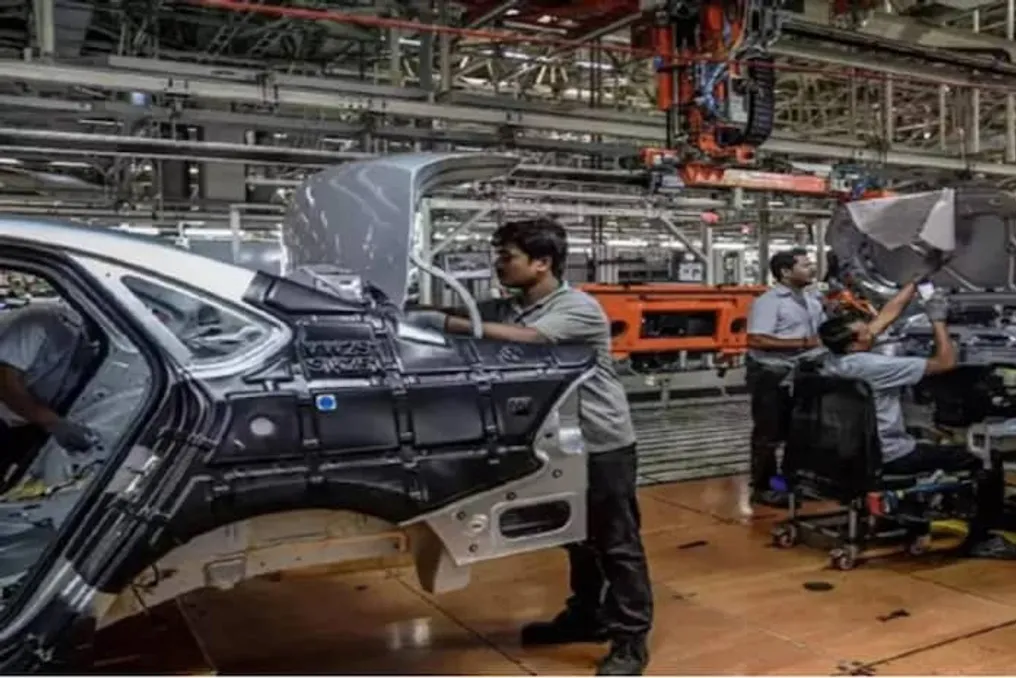
Government PLI Scheme for Automotive Industry Paid 438.5 Billion Rupees in the First Eight Months of Fiscal Year 27
Read more
Business Standard
business-standard.com

Government PLI Scheme for Automotive Industry Paid 438.5 Billion Rupees in the First Eight Months of Fiscal Year 27

The Ministry of Heavy Industries has disbursed an amount of ₹438.528 billion under the Production Linked Incentive (PLI) scheme for the automotive and auto component sector for the current fiscal year as of November 25. This amount was paid for the first eight months of the 2026-27 fiscal year (FY27) and is more than double the ₹206.436 billion paid during the entire FY26.

These figures were announced by the Ministry of Heavy Industries on Wednesday following a meeting chaired by the Minister of Union Heavy Industries, H. D. Kumaraswamy. The Cabinet Committee approved the Auto PLI program on September 15, 2021, and the government officially notified it on September 23, 2021.

The total budgetary outlay for the program is ₹259.38 billion over five years, starting from FY23 and ending in FY27. The objective of this scheme is to stimulate domestic production of advanced automotive products, including electric vehicles and their components, through sales-linked financial incentives.

The Ministry had previously disbursed ₹32.2 billion in FY25, followed by ₹206.436 billion in FY26. Including the disbursement of ₹438.528 billion between April 1 and November 25 of the current year, cumulative payouts since the launch of the program have reached ₹677.164 billion.

The Ministry noted that with the total approved budget of ₹259.38 billion, the Auto PLI program has made significant strides in promoting investment, strengthening domestic supply chains, and encouraging the production of Advanced Automotive Technology (AAT) products. It was highlighted that ₹438.528 billion was paid as incentives in FY27 as of November 25.

Furthermore, as of September 30, companies approved under the scheme reported cumulative investments of ₹528.06 billion, exceeding the government's target of ₹425.00 billion. According to the ministry, the scheme has also contributed to an increase in sales of ₹82.993 billion compared to the base year FY20 and created 77,755 jobs.

The increase in sales refers to additional sales of the respective products compared to sales registered in FY20, which serves as the baseline year for evaluating the scheme's effectiveness. To qualify for incentives, the respective products must have at least 50 percent Domestic Value Addition (DVA). This means that at least half of the product's value must be added in India through local manufacturing and other activities.

As of November 25, nine leading Original Equipment Manufacturers (OEMs), or automakers, received DVA certificates covering 139 products and variants. Ten component manufacturers received certificates covering 53 products and variants.

The Ministry stated that 'promoting domestic value addition remains a key objective of the Auto PLI program. As of November 25, DVA certificates were issued to 9 leading OEMs covering 139 products/variants, and 10 leading component manufacturers covering 53 products/variants.'
Similar stories

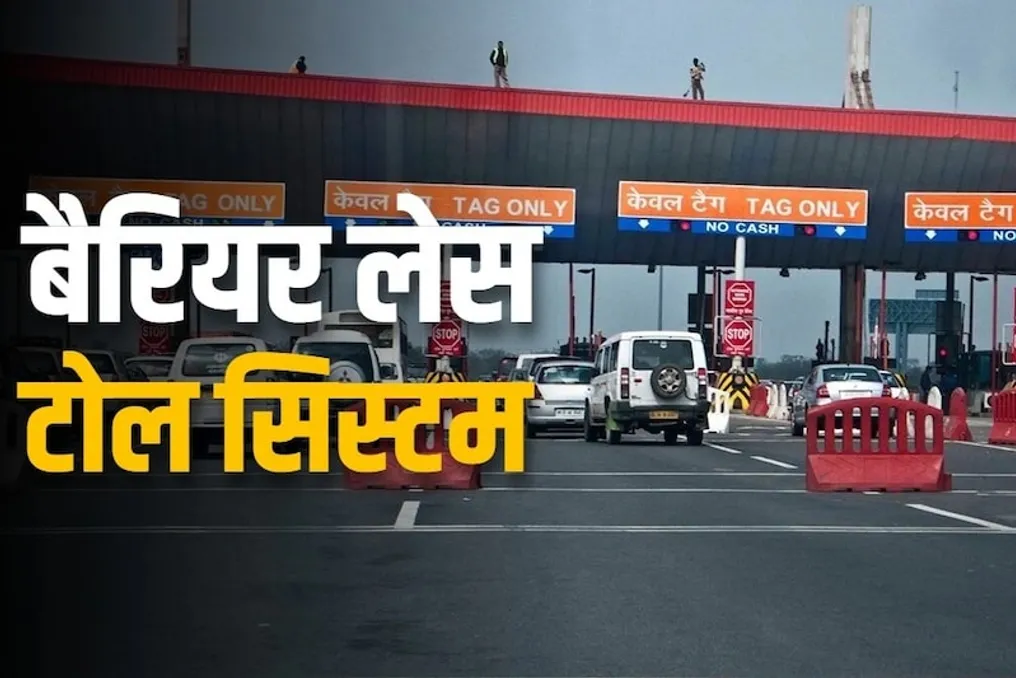
New NHAI system allows toll collection without stopping, bringing in revenue of 538.95 million rupees
Read more
www.aajtak.in

New NHAI system allows toll collection without stopping, bringing in revenue of 538.95 million rupees

The experience of passing through toll plazas on the country's national highways may soon change completely. Drivers will no longer have to wait in long queues or stop to pay road tolls. The Multi-Lane Free Flow (MLFF) system from the National Highways Authority of India (NHAI) is making significant changes in this area. This new technology not only simplifies travel but has also led to a substantial increase in government revenue from tolls.

According to the latest data from NHAI, toll collection at seven points connected to this system has increased by 15.66% to 26.85%. NHAI, which falls under the Ministry of Road Transport and Highways, has installed a total of nine such MLFF systems on the country's main highways. However, in the report as of October 31, 2026, only seven toll plazas were accounted for, as data for two recently launched plazas is still unavailable.

NHAI reports that these seven toll plazas generated a total net revenue from toll collection of 538.95 crore rupees. Before the implementation of the MLFF system, the revenue of these plazas was 449.72 crore rupees. Thus, after applying the new technology, an additional revenue of 89.23 crore rupees was generated, corresponding to a 19.84% increase in toll collection compared to old figures.

Initially, the MLFF system was launched at the Chhorasi toll plaza in Gujarat state on May 1, 2026. After this, the technology was implemented on various highways. Furthermore, in the Nemili and Chensumdram toll plazas in Tamil Nadu state, this system was opened on November 12 and November 21, 2026, respectively. These two plazas are the newest MLFF toll plazas and are not yet included in the revenue statistics of the seven plazas.

According to NHAI, after implementing this technology, the number of toll payment transactions has increased at all relevant toll plazas. This means that more vehicles pass through these routes, which also contributes to the growth of toll collection.

How does the barrier-free toll collection system work?

The MLFF system does not require vehicles to stop for toll collection. Special cameras installed above the highway scan vehicle license plates. Simultaneously, the FASTag installed in the car is identified using a long-range radio system. By comparing both these pieces of data, the identity of the vehicle and its registered owner can be established.

Thanks to this system, vehicles can pass through the toll plaza without stopping and without needing to enter a specific lane. The driver does not need to stop at the collection post, wait for FASTag scanning, or look for a spot among other cars to proceed.

Even if the vehicle's FASTag or license plate cannot be verified by the system, the vehicle does not stop on the road, thus not blocking the movement of subsequent cars. In such cases, the matter is resolved later through an electronic fine.

Toll Collection and Recovery via Electronic Fines

According to NHAI, about 60% of the amount issued through electronic fines at toll plazas linked to the MLFF system has already been recovered. This indicates that the automated system helps ensure compliance and recover debts. Another advantage of this technology is the reduction in congestion at toll plazas, which saves people's time and eliminates the need to frequently stop or slow down vehicles. Consequently, this leads to reduced fuel consumption and environmental pollution. Furthermore, NHAI's operating costs for toll plazas decrease.

NHAI's Attention to License Plate Violators

However, some challenges arise with this new technology. NHAI has recorded instances where vehicle owners intentionally cover or alter their vehicle's license plates. The goal of this behavior is to prevent cameras from recognizing the license plate and to avoid paying the toll. To curb such actions, NHAI has set up police checkpoints at some MLFF toll plazas. Simultaneously, work is being done with the respective state governments to take action against drivers who commit toll evasion.

NHAI plans further refinement of this technology in the future. Work is underway on an Artificial Intelligence (AI)-based vehicle tracking system. Additionally, MLFF is being integrated with the Central Government's Vahan vehicle database. This can facilitate vehicle identification and the detection of violators attempting to evade toll payments. Various types of penalties are also being considered to strengthen measures against those engaged in illegal toll evasion.

NITI Aayog Report: PLI Programs Reached 28% of Employment Target for FY 2026
Read more
business-standard.com

NITI Aayog Report: PLI Programs Reached 28% of Employment Target for FY 2026

According to the NITI Aayog assessment, India's Production Linked Incentive (PLI) schemes have achieved 76 percent of planned investments, but the job creation metric stands at only 28 percent of the set target. This result indicates an uneven transformation of government production stimulus policies into actual job creation.

In the first such review of the flagship government scheme, it was found that 14 PLI programs generated 849,069 jobs by the fiscal year 2026, against a target of 3 million. Furthermore, ₹2.4 trillion was attracted out of planned investments of ₹3.15 trillion, and production volume reached ₹22.66 trillion, which is 64 percent of the target of ₹35.38 trillion.

The report, titled 'Impact Assessment of PLI Schemes,' was published on Thursday and included recommendations for improving the scheme itself. It noted that despite encouraging early results, the focus must now shift from assessing initial success to strengthening long-term effectiveness. The report suggests that the future lies not just in continuing the program, but in refining it to ensure deeper and more sustainable industrial transformation.

The annual performance trend of the program was inconsistent: by the fiscal year 2023, employment achievement was 86 percent of the target, in FY 2024—around 85 percent, and in FY 2025—156 percent, after which it dropped to 31 percent of the annual target in FY 2026. The report emphasizes the importance of analyzing discrepancies between aggregate employment levels and investment and production levels.

According to the analytical center, this discrepancy is explained by the maturation period of production investments. It is pointed out that investments are usually made before facilities are fully operational; then, production increases as capacity comes online and utilization grows, and employment may rise further when operations reach commercial scale.

The report also stated that in four sectors—large-scale electronics manufacturing, pharmaceuticals, telecommunications and networking products, and food products—the PLI programs currently align with plans based on assessments of investment, production, exports, and employment. However, the Aayog assessment showed that the impact of the PLI program on the export of essential medicines, on medical device employment, and on electronic/technology products (IT Hardware 2.0) on investments was weak or partial.

Ishtiaq Ahmed, program director at the analytical center, stated that the program is generally successful, noting that 'we never expected everyone to show results across all indicators, but 70 percent of participants and indicators are on the right track.' Similarly, Anurag Jain, CEO of NITI Aayog and former Secretary of DPIIT, noted that any programs requiring adjustments will address issues through coordination between NITI Aayog and relevant ministries.

Aayog concluded that the current stage is advanced enough to assess emerging results but not yet mature enough to judge the programs solely by their end-of-life targets. While some industries have shown a strong response with noticeable growth in investment, production, employment, and exports, others have shown relatively modest progress. This variability is often linked to differences in technology adoption, maturation periods, global competition, and capital requirements.

The report recommends understanding limitations on a sector-by-sector basis so that policy can move away from a uniform approach and become more strategically targeted. Furthermore, future generations of PLI programs will consider demand-stimulating measures. Currently, the scheme is largely supply-oriented, prompting firms to increase output and expand capacity through volume-linked financial incentives. Nevertheless, long-term sustainability requires strong demand support, including strengthening domestic procurement frameworks, developing export markets, strategic government procurement, and policies that encourage consumption of high-value domestic products.

Popular