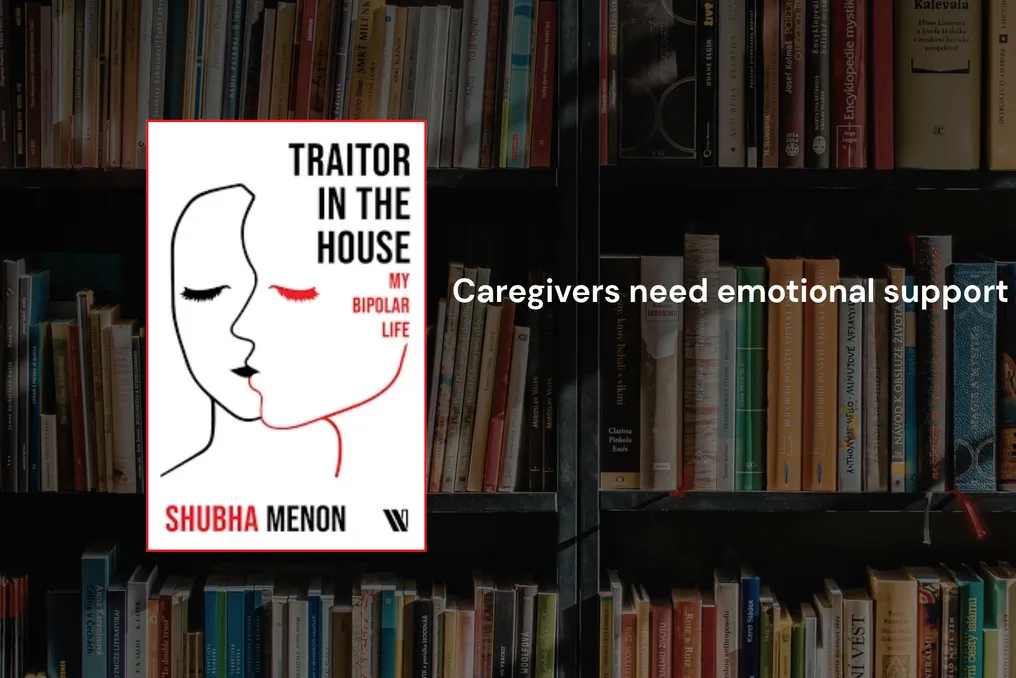
Shubha Menon's memoir, titled 'Betrayer in the House: My Life with Bipolar Disorder,' is a deeply personal narrative about growing up in a family affected by bipolar disorder. Through experiences of childhood trauma, caregiving, denial, and subsequent diagnosis, Menon explores how untreated mental illness can impact relationships and affect entire generations.
The book goes beyond one person's experience to examine the emotional realities of families living with mental health issues. It also sheds light on how understanding, acceptance, and self-awareness can help people cope with painful experiences.
One of the most important takeaways from the memoir is that mental illness should never be viewed as a personal failure or a character flaw. Based on her mother's experience with bipolar disorder, Menon demonstrates how a lack of awareness and understanding can exacerbate an already complex situation for the whole family.
The book emphasizes the need to recognize mental health conditions, seek professional help, and replace judgment with compassion. The first step toward empathy, rather than accusation, is understanding another person's difficulties.
The experiences we have in childhood shape our way of thinking, behavior, and how we build relationships in adulthood. Menon reflects on how her upbringing in an unpredictable family environment affected her sense of security and emotional well-being. The memoir shows that painful memories from childhood do not disappear with age; they can determine how people react to stress, relationships, and difficult life circumstances later on.
Acknowledging childhood trauma is crucial, as healing often begins with realizing how the past shaped the present.
The book explores how the consequences of trauma can extend beyond one person, influencing future generations. Menon's family history reveals how unresolved emotional pain, untreated mental illness, and unhealthy coping mechanisms can affect parent-child relationships.
Nevertheless, recognizing these patterns opens the possibility of approaching them differently. Understanding family history helps people identify harmful behavioral patterns and make conscious decisions to prevent their recurrence. While you may not be responsible for the pain passed down through the family, you can take steps to prevent the continuation of harmful patterns.
Families supporting someone with a serious mental illness often face emotional exhaustion, fear, and uncertainty. While attention naturally focuses on the person needing help, the emotional state of family members is easily overlooked. Menon's account highlights the complex aspects of growing up in a caregiving environment where love, responsibility, fear, and disappointment can coexist.
This serves as a reminder to readers that supporting someone with a mental illness should not mean neglecting one's own emotional needs. Caregivers also deserve understanding, support, and space to heal.
One of the strongest moments in Menon's journey is her gradual transition from fear and denial to diagnosis, understanding, and acceptance. The memoir demonstrates that confronting painful experiences is not easy, but acknowledging reality makes it possible to seek help and develop healthier ways to cope with difficulties.
Acceptance does not mean approving of everything that happened or forgetting the past. It means acknowledging what has occurred without letting it define every part of your future. Healing begins when you stop running from difficult truths and start understanding them with honesty and compassion.
'Betrayer in the House: My Life with Bipolar Disorder' is more than just a memoir about living with bipolar disorder. It is an exploration of family relationships, childhood experiences, intergenerational trauma, and the complex journey toward self-knowledge. Through her personal experience, Shubha Menon encourages readers to view mental illness with greater empathy and to recognize the importance of addressing emotional wounds instead of hiding them. The book leaves readers with an important reminder: understanding the past does not change what happened, but it can help us make a different choice about the future.