AI-based assistant for neurosurgery developed at Tehran University Science and Technology Park
Read more
Tehran Times
www.tehrantimes.com

AI-based assistant for neurosurgery developed at Tehran University Science and Technology Park

A company based on knowledge and operating within the Tehran University Science and Technology Park has created an artificial intelligence-based intelligent assistant designed to support neurosurgeons during operations.

According to an IRNA report, this system integrates medical image processing, surgical navigation, and artificial intelligence technologies. This enables more precise planning of surgical interventions and provides surgeons with real-time guidance during procedures.

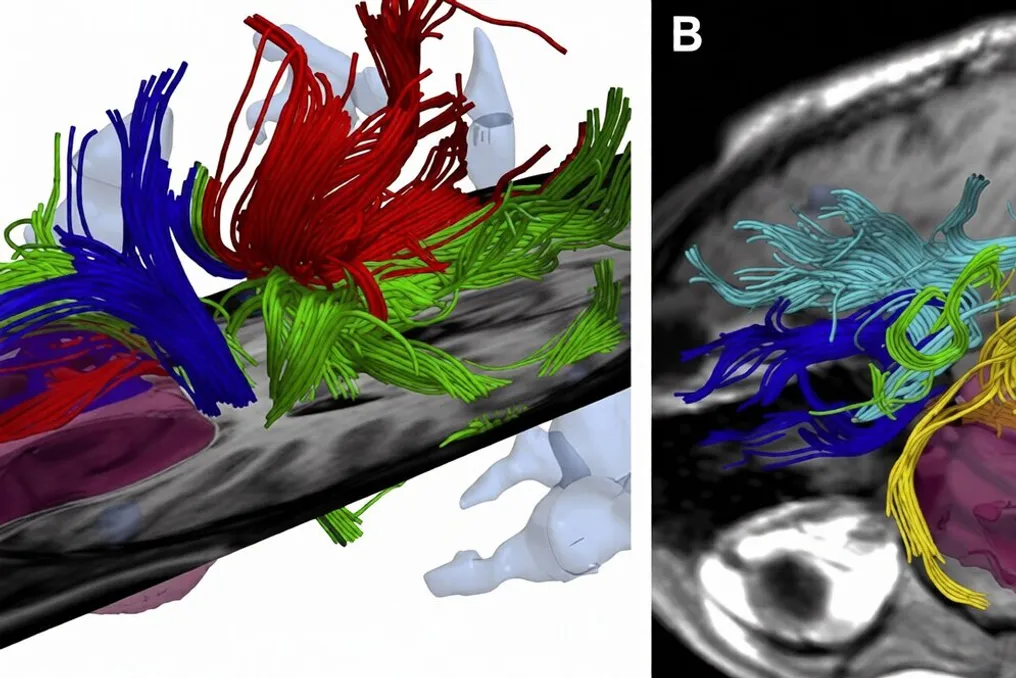
The intelligent system is named ++BiNASO. It helps doctors study brain structures and tumor locations with increased accuracy before surgery, as well as plan and perform brain surgeries. During the procedure itself, the system displays the location of surgical instruments and images of the patient's brain structures, helping the surgeon control the instruments with high precision.

In addition to improving patient safety and service quality, ++BiNASO minimizes the probability of unforeseen injuries and complications during surgery. A distinguishing feature of this AI-based surgical assistant compared to previously developed domestic systems is that ++BiNASO goes beyond standard surgical navigation, functioning as an integrated intelligent assistant that supports the surgeon's decision-making process.

One of the most important advantages of this system is the use of advanced image processing algorithms to analyze MRI and CT scans, detect and segment tumors and brain structures, and perform three-dimensional reconstruction for surgical planning. Another key feature of the product is the integration of the preoperative planning phase directly into intraoperative guidance.

Access to such technologies is limited for many hospitals due to the high cost of foreign equipment, sanctions restrictions, difficulties in procuring components, and problems with servicing. Developing an advanced, domestic solution to address these issues will reduce dependence on foreign technologies and improve patient access to modern medical equipment.

Artificial intelligence is set to transform the healthcare system

In December 2025, the Ministry of Health developed eight projects focused on implementing intelligent e-health using artificial intelligence to achieve the goal of transforming the healthcare system. According to Ali Jafarian, an employee of the Ministry of Health, these projects include improving health literacy and self-help skills, creating an intelligent patient referral system, launching a national health observatory, converting medical data into actionable knowledge, managing the supply chain of subsidized medicines using AI, implementing a Diagnosis-Related Group (DRG) payment system, designing a productive smart hospital, and integrating online insurance processes.

This official spoke at an event dedicated to the intelligent e-health system called 'AI in the Healthcare Sector'. He emphasized the importance of using AI to increase the speed, accuracy, and quality of medical services, noting that AI can help cope with healthcare staff shortages, reduce diagnostic and treatment errors, and promote the effective use of big data.

He detailed the wide range of AI applications in medicine, such as predicting pandemic outbreaks, preventing health problems using AI-based wearable devices, and providing personalized care through personal intelligent assistants. Highlighting the broad application of AI in diagnosis and treatment, he stated that AI has accelerated and increased the accuracy of diagnosis in pathology and radiology. Furthermore, in the future, AI will adapt treatment plans to individual patient characteristics.

Jafarian also stressed the potential of AI in improving public health, including increasing public health awareness through AI self-help applications, launching an observatory for disease prediction using AI-based systems, developing an intelligent referral system, creating smart hospitals, and establishing an efficient insurance system.

In August 2025, Minister of Health Mohammad-Reza Zafarkandi specifically highlighted the importance of artificial intelligence (AI), telemedicine, and mobile health in managing non-communicable diseases (NCDs). According to Zafarkandi, key aspects of the future healthcare system are the development of a smart healthcare system and increasing public awareness through preventive education and promoting health literacy. He added that the adoption of modern technologies is inevitable, and these tools can be used to reduce costs and facilitate access to services.


Similar stories

Study shows teenagers actively use AI not only for studying but also for solving personal issues
Read more
podrobno.uz

Study shows teenagers actively use AI not only for studying but also for solving personal issues

Teenagers are increasingly integrating neural networks into their lives, using them not only to complete school assignments but also to help with personal matters. The role of artificial intelligence in children's daily life was studied by the 'Kaspersky Lab'.

The results of the analytical report 'Adults and Children on the Internet' were presented at the Kaspersky CyberSecurity Weekend 2026 conference in Tashkent. According to the study, 71% of surveyed teenagers aged 12 to 17 use neural networks. A significant portion—40%—uses AI daily or almost daily, while another 37% does so two to four times a week.

The most frequent areas of AI application among teenagers are education (77%) and information retrieval (62%). However, nearly a third of users (29%) turn to neural networks for support in solving personal problems, 28% use them to clarify complex messages and expressions, and 19% use them for direct communication.

In the field of education, 53% of teenagers who use AI for studying use it as an assistant when completing homework independently. Additionally, 20% delegate the solution of tasks entirely to neural networks, and the same number seek their help to check already completed solutions.

Most young people (69%) inform their parents about using AI for educational purposes. Those who prefer to keep this information secret are usually afraid that adults will deem them incapable of handling tasks independently or believe that dependence on neural networks is excessive.

Parents show a mixed attitude towards this technology. On one hand, they recognize its educational value, but on the other, 44% express concerns about the formation of 'intellectual laziness' in children, and 42% believe that teenagers may develop a habit of turning to AI for almost any question.

Adults notice the risks of AI use more often, as 79% of parents are aware of potential dangers, whereas only 50% of minors know about these risks. Parents are particularly concerned about the spread of inaccurate information and the decline of children's skills in independent material analysis.

Furthermore, UNESCO previously approved the creation of a department at the Nordic International University in Tashkent dedicated to the application of artificial intelligence in education. Specialists in this department will focus on studying the responsible use of AI in the educational process and training pedagogical personnel.

Robotic Surgery Improves Orthopedic Care in Kenya
Read more
cgtn.com

Robotic Surgery Improves Orthopedic Care in Kenya

Advances in robotic surgery are contributing to increased accuracy in planning and performing knee replacement operations, offering new treatment methods for individuals suffering from severe knee arthritis.

In Nairobi, orthopedic surgeon Dr. Faraj Al-Kizim utilizes robotic technologies for planning and guiding surgeries. The process begins with computed tomography (CT) scans, which create a three-dimensional model of the patient's knee. Specialized software allows surgeons to simulate the operation and make necessary adjustments before it begins.

Al-Kizim notes that robotic assistance provides the opportunity for very meticulous pre-intervention planning. He emphasizes, however, that the technology does not replace the surgeon, who retains full responsibility for all decisions and monitors the course of the operation.

For 80-year-old Nancy Wangui from Murang'a County, this procedure became a source of hope after many years of living with arthritis that severely limited her mobility. After unsuccessful treatment attempts at several hospitals, Wangui sold three cows and five goats to raise funds for the operation.

She underwent a robotic knee replacement at Metropoliten Hospital in Nairobi. The cost of the procedure was approximately $6,000 USD, with additional financial support provided by her children. Her story demonstrates the potential of advanced surgical technologies in restoring mobility while also highlighting the financial barriers faced by many patients when accessing specialized treatment.

da Vinci 5 Surgical Robotics System Presented at CIIE Exhibition
Read more
cgtn.com

da Vinci 5 Surgical Robotics System Presented at CIIE Exhibition

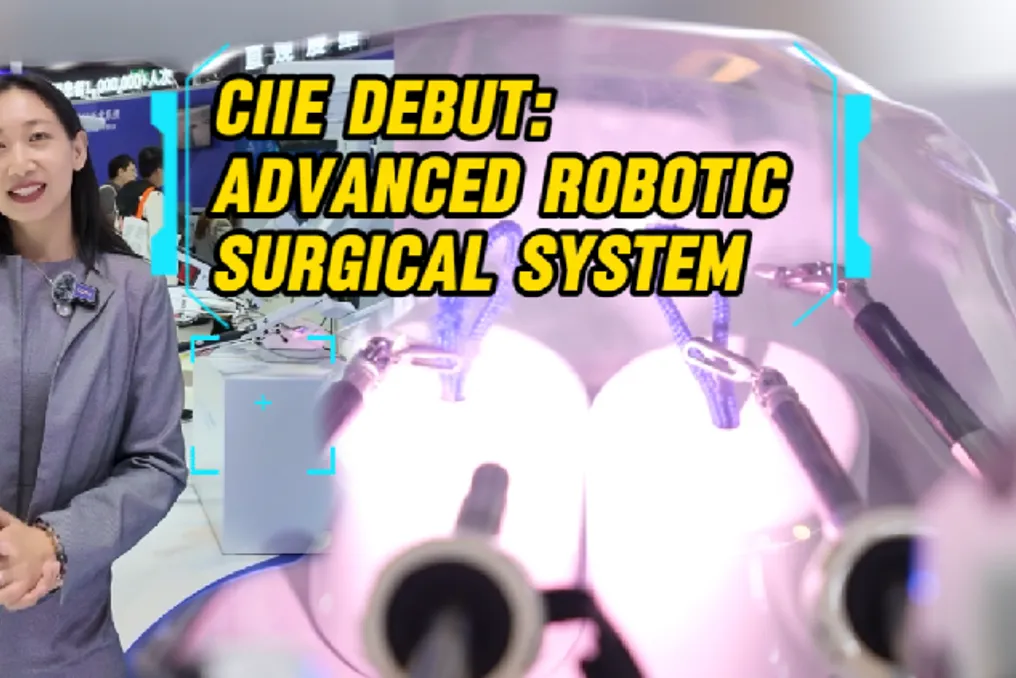
The da Vinci 5 surgical robotics system was presented for the first time at the CIIE exhibition. This system is equipped with advanced robotic technology designed to assist surgeons in performing complex operations with increased precision and control.

CGTN conducted a detailed review of this modern medical equipment.

Popular