India Pavilion Receives 'Lion of Visitors' for Best National Participation at Venice Biennale of Arts
Read more
The times of India
timesofindia.indiatimes.com

India Pavilion Receives 'Lion of Visitors' for Best National Participation at Venice Biennale of Arts

The national pavilion of India won the 'Lion of Visitors' award for best national participation at the 61st Venice Biennale of Arts. This represents significant international recognition for the country's contemporary art scene.

According to a representative, the received recognition highlights the ability of India's traditional artistic heritage to find modern expression and resonate with audiences worldwide.

Similar stories

Nine geological sites in India are vying for UNESCO World Heritage status
Read more
thebetterindia.com

Nine geological sites in India are vying for UNESCO World Heritage status

The most outstanding landscapes of India do not always attract attention due to monuments or well-marked tourist routes. Some are hidden in tropical forests, others rise above the sea, and some retain evidence of geological events that occurred millions of years ago.

Currently, several such remarkable places are attracting international attention. India's preliminary UNESCO heritage list was expanded in 2026, adding two particularly interesting natural heritage sites on the Andaman and Nicobar Islands: the Baratang Karst Mud Volcano Complex and the Andaman Subduction Volcanoes, which include the Barren and Narcondam Islands.

These new sites complement seven natural heritage sites presented in August 2025, showcasing a broad cross-section of India's geological history.

However, the question arises: what makes these places special, where can tourists visit them, and what should they know before traveling? More importantly, how can they be explored without damaging the very landscapes that make them unique?

Landscape shaped by two types of volcanoes

The first of the two new natural sites is the Baratang Karst Mud Volcano Complex, located on Great Andaman Island, approximately 100 km north of Sri Vijaya Puram (Port Blair).

Imagine a forested island where the earth opens into limestone caves, narrow fissures, and underground chambers. Over millions of years, marine organisms, including shells and corals, accumulated and compacted, forming limestone. Rainwater gradually dissolved parts of this rock, creating complex cave systems.

But the island has another geological feature. Its mud volcanoes, known locally as Jalki, erupt suspensions of mud, water, and gases, rather than molten rock. Unlike typical volcanoes, these formations do not erupt magma; their movement is driven by pressure and movement within layers of underground deposits.

After a period of dormancy of about 20 years, the Baratang mud volcanoes reactivated in 2025. The Geological Survey of India designated the mud volcano as a geo-heritage site in the same year. The caves also support specialized underground ecosystems, making their preservation important beyond geological appeal.

The second site, the Andaman Subduction Volcanoes, encompasses the Barren and Narcondam Islands. Both originated from tectonic processes related to the Indian Plate moving beneath the Burmese microplate.

Barren Island, located approximately 138 km northeast of Sri Vijaya Puram, is the only active volcano in South Asia. Its first recorded eruption dates back to 1787. It recently experienced minor eruptions in September 2025, after which an ash plume rose to about 1.2 km in January 2026.

Meanwhile, Narcondam presents a different picture. Its densely forested volcanic landscape rises 710 meters above sea level and supports species found nowhere else, including the Narcondam woodpecker. Unlike Barren Island, known for its marine environment, Narcondam is not open to tourism. Access is restricted, and visitors should not attempt independent trips or landings.

These islands are important precisely because their ecosystems remain relatively untouched. Inclusion in the UNESCO list should not be taken as an invitation to explore every part of them.

Seven other landscapes telling India's geological story

The two Andaman sites join seven natural sites presented to UNESCO in August 2025. Together, they demonstrate the diversity of India's geological heritage.

In Maharashtra, the Deccan Traps in Panchgani and Mahabaleshwar preserve evidence of massive volcanic eruptions around 66 million years ago. Successive lava flows created characteristic stepped rock formations in the region. Tourists are advised to stay on designated viewpoints and avoid damaging exposed geological formations.

Off the coast of Malpe in Karnataka, the St. Mary's Island Cluster is famous for its unusual columnar basalt formations. These polygonal rock structures formed when molten lava cooled and contracted approximately 85 million years ago. The islands are accessible by ferry, depending on seasonal conditions. Visitors should refrain from collecting rock fragments or climbing fragile formations.

The Meghalaya Megalayan Caves, including Maumlu, Mawsmai, Arwah, and Krem Puri, contain important geological data. The Maumlu Cave is particularly significant because mineral deposits found there helped establish the Meghalayan age—the youngest stage of the Holocene geological epoch. Cave formation takes thousands of years, so visitors must never touch, scratch, or break them. Research must be conducted with the permission of authorized guides.

The Naga Ophiolite in Nag district, Kiphire, provides insight into ancient oceanic crust and the Earth's upper mantle. Ophiolites are fragments of seafloor uplifted onto land due to tectonic activity. The landscape also holds ecological significance, necessitating local guidance and respect for wildlife.

In Andhra Pradesh, Erra Matti Dibbalu, or Red Sand Hills, near Visakhapatnam, displays striking reddish-brown sedimentary formations. These hills were formed under the influence of wind and water erosion, preserving evidence of changes in climatic and environmental conditions. Tourists should avoid walking on unstable formations and not leave litter.

Further south, the Tirumala Hill Natural Heritage includes the Eparkhayan unconformity and the Silatorananam natural rock arch. The latter is particularly interesting: its formation reflects an extremely ancient geological history, with rocks in this region recording over a billion years of Earth's past. The surrounding hills also hold religious significance, so visitors must adhere to temple and forest rules.

Finally, the Varkala cliffs in Kerala expose layers of the Varkala Formation, dating back to the Miocene-Pliocene period. Their vibrant sedimentary bands face the Arabian Sea, and natural springs add to the geological significance. However, the cliffs are under pressure from growing tourism and construction. Visitors should stay away from unstable edges and follow safety instructions.

Responsibility that comes with discovery

The popularity of a place can bring income to local communities, but it can also put pressure on fragile ecosystems. The challenge is to ensure that tourism does not destroy what makes these destinations worth visiting.

Before traveling, it is necessary to check local entry permits, seasonal restrictions, and forestry department guidelines. Access to some areas, especially caves and protected islands, is limited. One should never assume that being on the preliminary UNESCO list means it is open to unlimited tourism.

Whenever possible, choose local guides and community-managed accommodation. Use reusable water bottles, avoid single-use plastic, and take all trash with you. Do not collect stones, fossils, shells, or any other natural material. In coastal areas, avoid disturbing marine habitats, and in forested areas, maintain low noise levels and keep a safe distance from wild animals.

There are already examples of nature-conserving tourism in India. In Khonoma village in Nagaland, community tourism allows visitors to experience local culture while supporting conservation efforts. Similarly, community-run tour operators create opportunities for travelers to directly contribute to local livelihoods.

Travelers can also draw inspiration from five Indian trips that support wildlife and nature conservation, studying sustainable travel methods that minimize waste and respect local ecosystems.

India's geological heritage is not just a collection of impressive sights. These landscapes preserve evidence of volcanic eruptions, shifting tectonic plates, ancient oceans, and evolving ecosystems. Their significance extends far beyond their potential as tourist destinations.

Inclusion in the preliminary UNESCO list is an important step toward international recognition, but it is not the final goal. The true achievement will be ensuring that these places remain pristine for future generations.

Ultimately, the best way to experience a natural wonder is to leave it as wonderful for the next person.

}, {
Jatayu Center opened in Kerala dedicated to the figure of Jatayu, featuring a 200-meter statue
Read more
www.aajtak.in

Jatayu Center opened in Kerala dedicated to the figure of Jatayu, featuring a 200-meter statue

Due to the film 'Ramayana' by Nitesh Tiwari, which is currently being widely discussed, interest has grown in the location associated with Jatayu. A huge statue is located at this site in Kerala.

The film 'Ramayana' starred Ranbir Kapoor as Lord Rama, Sai Pallavi as Mother Sita, and Yash as Ravana. Notably, the veteran actor Anupam Kher voiced the character of Jatayu. According to the plot, Jatayu is a brave bird who fought against Ravana to protect Mother Sita, regardless of his own life.

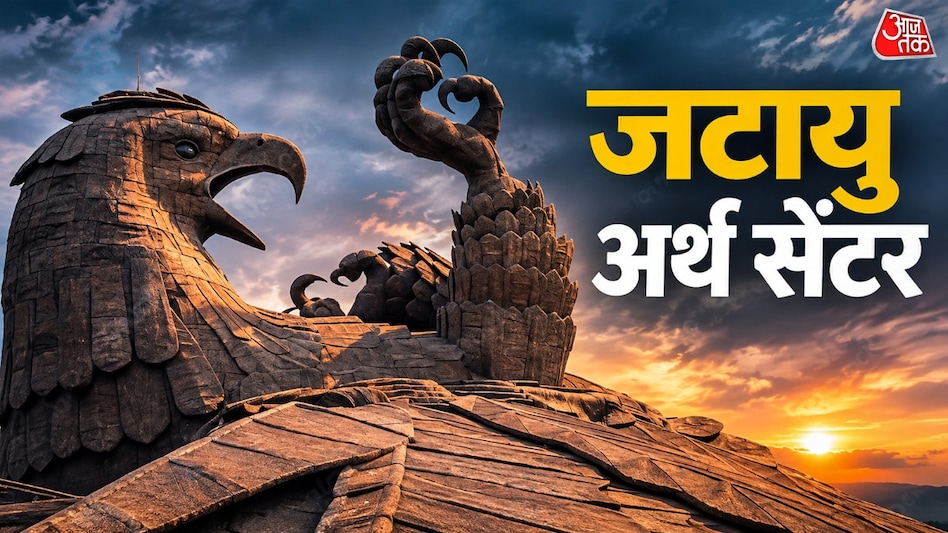
In memory of this heroic character, a monumental statue was created in Kerala, known as the world's largest bird statue. Tourists can not only view this giant sculpture but also enjoy various activities for adventure lovers.

The Jatayu Earth Centre is located in Chadayamangalam, Kollam district, Kerala state. The monumental statue of Jatayu is built on top of a hill situated approximately 1000 feet above sea level. The statue has approximate dimensions: a length of about 200 feet, a width of 150 feet, and a height of 70 feet.

The creation of this grand sculpture was realized by the renowned Malayalam film director and sculptor Rajiv Anchal and took about ten years. This statue serves not only as a tribute to Jatayu from the epic 'Ramayana' but also symbolizes protection and respect for women. According to legend, Jatayu lost his wings while trying to save Mother Sita from Ravana.

The place offers more than just viewing the majestic statue. Many attractions are provided for visitors here. Inside the statue, there is a multi-level audiovisual museum and a 6D theater where tourists can learn about Jatayu's history and related artifacts.

Furthermore, there is a Rama temple on the premises, which is believed to have footprints of Lord Rama. For thrill-seekers, a separate adventure zone has been created where activities such as zip-lining, rock climbing, rappelling, valley crossing, pentathlon, and team net climbing can be undertaken.

Various entry ticket options are available at the Jatayu Centre. The cost for viewing the main statue is approximately between 250 to 400 rupees. If using the ropeway to ascend the hill is planned, it may cost around 550–650 rupees per person. For ascending on foot via the walking path, the ticket will cost approximately 300–350 rupees.

Tickets for individual adventure activities must be purchased separately. The recommended time for visiting is from 10:00 AM to 5:00 PM. However, before traveling, it is essential to check the latest information on prices and schedules on the official website.

The most favorable period for visiting the Jatayu Centre is considered to be from October to March, as the heat decreases and the weather becomes comfortable for walks and sports on the hill during this time in Kerala.

The location is situated approximately 38 kilometers from the city of Kollam and 50 kilometers from Thiruvananthapuram. Access is possible by private car or taxi. If you plan a trip to Kerala, this unique location is worth including in your list of places to visit.

How Art Exhibitions Provide a Unique Experience of Aesthetics, Scale, and Technique
Read more
yourstory.com

How Art Exhibitions Provide a Unique Experience of Aesthetics, Scale, and Technique

PhotoSparks, a weekly column from YourStory launched in 2014, presents photographs that celebrate the spirit of creativity and innovation. Across more than 1030 publications, various events have been featured, including an art festival, a comic gallery, a world music festival, a telecommunications exhibition, a grain fair, a climate change exhibition, a wildlife conference, a startup festival, a Diwali coloring, and a jazz festival.

At the 65th National Art Exhibition, organized by Lalit Kala Akademi (LKA) in New Delhi, awards were presented to 20 artists. Among the awardees were Sanjay Kumar Sahani, Sanjib Kumar Gogoi, Santa Deb, Siddharth Shajirao Singade, Usharanjan Mandal, and Vijendra Sharma.

Sanjay Kumar Sahani is a contemporary visual artist who focuses on youth as an object of artistic contemplation, exploring themes of their identity, energy, and daily experience.

Sanjib Kumar Gogoi is known for his approach to figurative and abstract painting, characterized by textural effects and styles inspired by antiquity. He holds a Master's degree in Painting from Rabindra Bharati University in Kolkata and has over twenty years of creative experience.

Santa Deb is a contemporary sculptor whose practice demonstrates simplicity, balance, and aesthetic qualities of form. Siddharth Shajirao Singade and Usharanjan Mandal experiment with mixed media and alternative artistic materials, while Vijendra Sharma has established himself as a contemporary painter.

Familiarity with such artists helps visitors appreciate diverse cultural traditions, identities, and perspectives. The variety of works in genres such as painting, sculpture, engraving, drawing, and mixed media shows viewers how similar themes can be expressed in multiple ways, which is highlighted in this photo essay.

Contemplating original works of art encourages the audience toward creative thinking and the development of their own imagination. By engaging with topics such as environmental protection and urban life, they connect aesthetics and activism.

The combination of traditional and modern demonstrates that India's artistic heritage is a source of inspiration and motivation. This applies to artists, art lovers, collectors, historians, students, and the general public.

Observing the perfection of professional work stimulates emerging creators in their own artistic journey. While books and digital media are popular sources of art knowledge, art exhibitions provide unique opportunities for direct engagement with art.

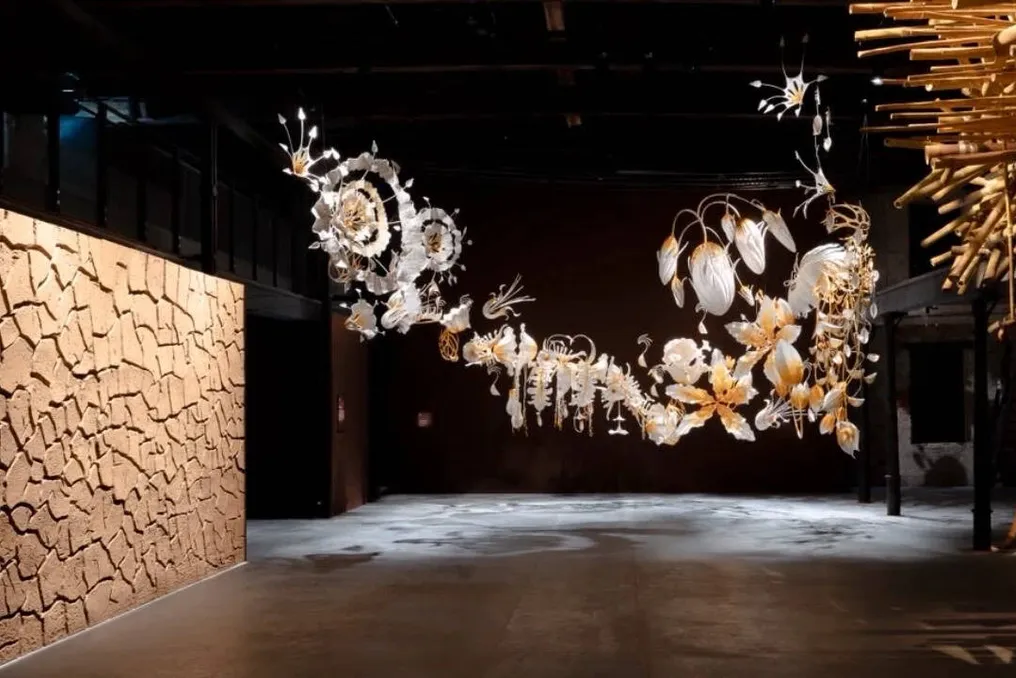
Exhibitions allow viewers to experience the actual size, dimensions, and physical impact of artworks, especially large paintings and installations. This prompts them to consider ideas and viewpoints they might not have encountered before.

Furthermore, exhibitions offer the chance to meet artists whose works may not be available in books or online platforms. This contributes to the discovery of new talents and creative approaches for the public.

By viewing pieces up close and from different angles, visitors can study brushstrokes, layers, textures, materials, and techniques. This helps in gaining a deeper understanding of the creation process and appreciating the perseverance and discipline required of artists.

Viewing an exhibition alongside other visitors, artists, curators, and art critics transforms art into a shared cultural experience. The composition, lighting, and environment of the exhibition create an immersive impression that digital images cannot fully replicate.

Art exhibitions offer the audience a direct, interactive, and sensory experience that goes beyond simply viewing images. This leads to a deeper understanding and appreciation of art.

In the case of a pan-Indian art exhibition, viewing original works from different regions promotes a deeper understanding of the country's diverse cultural identities. This extends to regional traditions, religious influences, and artistic heritage.

In conclusion, the 65th National Art Exhibition by LKA represents a national snapshot of contemporary Indian visual art. The exhibited works were selected from 6175 applications by 2495 artists from 27 states and union territories.

Thus, it is significant not only as an exhibition in the capital but also as one of the Academy's main mechanisms for identifying, recognizing, and ensuring national recognition among emerging and established visual artists in India.

Popular