Iran and Pakistan have joined forces to launch an international training course on vaccinology. The program aims to strengthen competencies in the field of vaccine development, production, and research, and it has attracted over 2000 applicants from 70 countries.
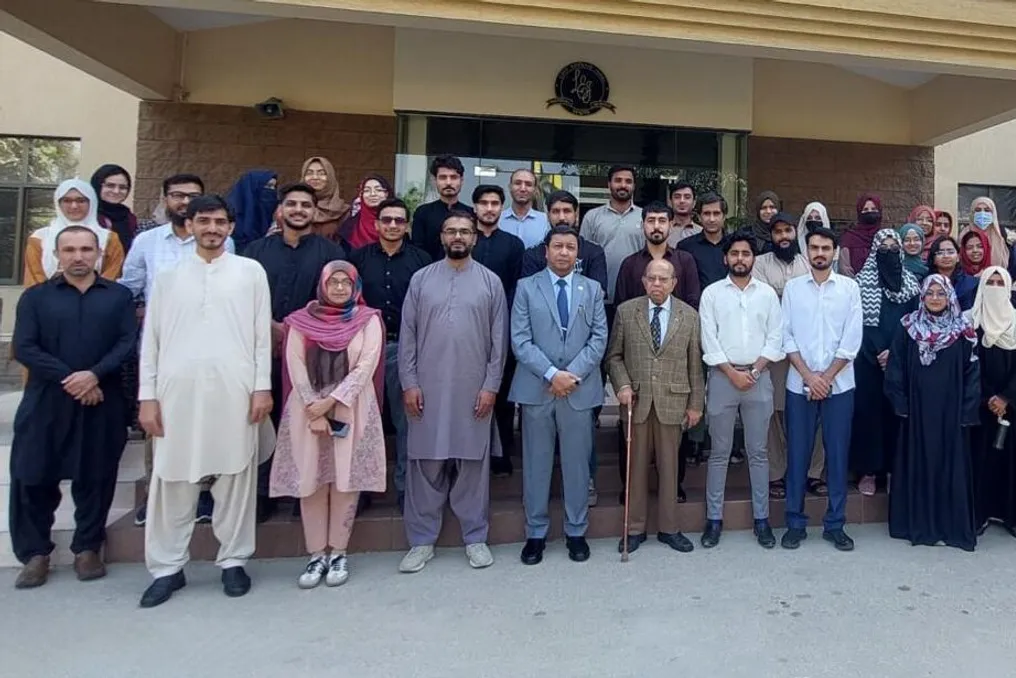
The six-week program, titled 'Vaccinology: From Research and Development to Vaccine Production,' was opened on November 23rd at the University of Karachi. The opening ceremony was conducted by Muhammad Iqbal Chaudhry, a Mustafa Prize 2021 laureate and General Coordinator of the Standing Committee for Scientific and Technical Cooperation of the Organisation of Islamic Cooperation (COMSTECH).
The course is organized by COMSTECH, the Pasteur Institute of Iran, and the International Centre for Chemical and Biological Sciences (ICCBS) at the University of Karachi. Currently, about 100 researchers, students, and healthcare professionals are participating in person, while other participants join online.
On the need for investment in vaccines
Speaking at the opening ceremony, Chaudhry emphasized the importance of Islamic states investing in domestic vaccine production capabilities and research to reduce dependence on foreign suppliers. He noted that the COVID-19 pandemic highlighted the significance of scientific innovation and local vaccine production. Furthermore, he stated that OIC member states must strengthen their scientific research institutions, train qualified scientists, and gain access to advanced vaccine technologies.
Chaudhry also expressed hope that this program will promote the exchange of scientific experience, expand cooperation between participating research centers, and create new opportunities for training young scientists.
Ehsan Mostafavi, head of the Pasteur Institute of Iran, stressed the role of interaction between scientific centers in advancing vaccine development. He added that specialized knowledge from various disciplines, as well as appropriate scientific and technical infrastructure, is necessary for conducting vaccine research and production.
The six-week course covers key aspects of vaccinology, including immunology, vaccine design, and production technologies. The program concludes with a final exam scheduled for December 28, 2026.
About the Mustafa Prize
The Mustafa Prize, established in 2012, is an international award in science and technology that recognizes outstanding scientific achievements and contributions capable of improving human life. This biennial prize honors leading researchers and scientists from the Islamic world, as well as those whose work contributes to scientific progress and international cooperation.
The prize covers several fields, such as medical and life sciences, information and communication technologies, nanoscience and nanotechnology, as well as fundamental and engineering sciences. Its goal is to stimulate scientific excellence, encourage innovation, and strengthen scientific collaboration between institutions and researchers.
In addition to recognizing distinguished scientists, the Mustafa Science and Technology Foundation supports initiatives aimed at linking scientific achievements with societal needs and developing young talent. These initiatives include the Science and Technology Exchange Program (STEP), the Noor Student Contest, and the KANS contest.
Chaudhry received the Mustafa Prize 2021 for his contribution to bioorganic chemistry and the discovery of natural compounds with therapeutic potential. His research group identified biologically active compounds from medicinal plants that can serve as a basis for creating new drugs. The sixth edition of the Noor Student Contest was also dedicated to honoring his scientific achievements.