Seven Underrated Popular Science Books Worth Adding to Your Reading List
Read more
YourStory [india, en]
yourstory.com

Seven Underrated Popular Science Books Worth Adding to Your Reading List

Popular science literature possesses a unique ability to change our understanding of the world, ourselves, and other people. Although popular publications often dominate recommendations, there are many equally fascinating books that receive far less attention than they deserve.

Popular science books offer material for any curious reader—from exploring human happiness and the psychology of daily decisions to uncovering stories of historical events. If you are looking for something beyond the usual bestsellers, these seven underrated works deserve a place on your list.

In 'The Art of Travel,' Alain de Botton explores the significance of travel through the lens of philosophy, personal experience, and observations of different places. Instead of presenting a standard guidebook, the author analyzes why people travel and how their expectations influence the resulting experience. The book touches upon themes such as anticipation, beauty, curiosity, and the connection between travel and happiness, drawing inspiration from figures like Charles Baudelaire and Vincent van Gogh.

It encourages readers to look beyond the destinations themselves and appreciate the small details, experiences, and perspectives that give travel meaning.

Journalist Eric Weiner, in 'Geography of Bliss,' travels to various countries to investigate the question: what makes people happy? He examines how culture, lifestyle, social connections, and personal beliefs influence people's perception of happiness. Combining elements of travel writing, research, and humor, Weiner considers why some societies seem happier than others, and whether happiness can be understood through geography. The book also challenges the idea that happiness is achieved by the same things for everyone; what brings satisfaction in one culture may look completely different in another.

It offers a fascinating introduction to the psychology and cultural impact of happiness while prompting readers to reconsider their own definition of a fulfilling life.

Poet and essayist Ross Gay, in 'The Book of Joys,' explores the importance of noticing small moments of happiness in everyday life. This book is a collection of short essays written over the course of a year, with each piece focusing on an experience, observation, or interaction that brought him joy. These moments range from unexpected conversations and acts of kindness to encounters with nature and simple pleasures. The interest of the collection lies in the fact that Gay does not ignore the complex realities of life; instead, he shows how moments of delight can coexist with sorrow, uncertainty, and social difficulties. His style invites readers to become more attentive to their surroundings and recognize the experiences they might otherwise miss.

It is a thoughtful reminder that happiness does not always come from major achievements; sometimes it can be found in the smallest parts of an ordinary day.

For all lovers of books, libraries, and the stories behind them, 'The Book of Libraries' offers a captivating reading experience. Susan Orlean investigates the 1986 fire at the Los Angeles Central Library, which destroyed or damaged hundreds of thousands of books. This incident remains one of the most significant fires in American library history. By investigating the mystery of the fire, Orlean also examines the history of public libraries, their cultural significance, and the people who have dedicated their lives to preserving knowledge. The book moves between historical investigation, personal narrative, and reflections on how libraries unite communities.

It provides a fresh perspective on libraries, showing that they are much more than just buildings filled with books; they are spaces that hold memories, encourage learning, and make knowledge accessible.

Why do smart people sometimes make irrational decisions? And why do two people looking at the same situation often come to completely different conclusions? In 'Thinking, Fast and Slow,' Michael Lewis explores the work and friendship of psychologists Daniel Kahneman and Amos Tversky, whose research changed the understanding of human judgment and decision-making. Through their experiments, the two researchers challenged the assumption that people always make rational decisions. Their work showed how cognitive biases, mental shortcuts, and emotions influence daily choices. Lewis presents their scientific discoveries in a narrative form that also explores their personal relationship and intellectual partnership.

This helps readers understand why human judgment is often imperfect and how unconscious biases can affect decisions in daily life.

'The Immortal Life of Henrietta Lacks' tells the extraordinary story of Henrietta Lacks, an African American woman whose cancer cells were collected without her knowledge in 1951. These cells, later known as HeLa cells, became one of the most important tools in medical research. They contributed to numerous scientific developments, including research related to vaccines, cancer, and genetics. However, behind these scientific breakthroughs was a family that largely did not know how Henrietta's cells were being used. Rebecca Skloot combines journalistic investigation, medical history, and the experience of the Lacks family to explore issues of medical ethics, consent, race, and scientific progress.

It reveals the human story behind a major scientific breakthrough and prompts readers to consider the ethical responsibilities associated with medical research.

In 'A Book of Comfort,' author Matt Haig collects short reflections, observations, quotes, and personal thoughts on finding hope in difficult times. Rather than following a traditional self-help structure, the book offers small encouragements that readers can turn to whenever they need support or a new perspective. It touches upon themes such as uncertainty, loneliness, gratitude, resilience, and the importance of appreciating everyday life. The short entries make the book easy to read page by page, without the need to follow a specific order. The book also reminds readers that difficult periods do not define their entire lives.

It serves as a gentle companion for readers who prefer reflective writing and simple reminders of hope, patience, and the value of ordinary experience.

The best popular science books do more than just provide information. They open up new perspectives, challenge conventional ideas, and encourage readers to become more curious about the world. Whether you want to understand human behavior through 'Thinking, Fast and Slow,' explore happiness through 'The Geography of Bliss,' or rediscover the beauty of everyday experience through 'The Book of Joys,' these books offer something different from traditional self-help and motivation books. You don't always need to follow bestseller lists to find your next favorite book; sometimes the most rewarding reading experiences come from discovering a work you never thought you would pick up.


Similar stories

Six Historical Novels of India for Studying the Country's History
Read more
yourstory.com

Six Historical Novels of India for Studying the Country's History

India's history is rich with royal dynasties, political conflicts, the struggle against colonialism, cultural transformations, and the stories of outstanding individuals. While historical books document these events, historical fiction offers a different way of perceiving them through fictional characters and creative interpretations of real occurrences.

Indian historical literature covers various eras—from the courts of the Mughals and the last days of the Sikh Empire to the British colonial period and the Partition of 1947. These novels blend historical settings with themes of love, ambition, identity, courage, and survival.

Below are six essential Indian historical novels that offer an engaging introduction to the country's past.

The novel 'The Glass Palace' unfolds against the backdrop of the British invasion of Burma in 1885 and tells the stories of several families whose lives intersect in Burma, India, and Malaya. It begins with Rajkumar, a young orphan who witnesses the fall of the Burmese monarchy and the exile of its royal family. As Britain takes control, Rajkumar starts a new life in forest trade, and his personal journey becomes intertwined with the lives of people affected by colonialism, migration, and war.

The work spans nearly a century, exploring the consequences of British imperialism, economic exploitation, and political upheaval. Amitav Ghosh also analyzes how historical events shape individual identity and intergenerational relationships.

'The Twentieth Wife' immerses readers in the world of the Mughal Empire through the remarkable journey of Mehrunnisa, who later becomes Empress Nur Jahan. Born into a Persian family, Mehrunnisa grows up with ambitions that exceed traditional expectations for women. Her life changes when she meets Prince Salim, the future Emperor Jahangir. Their relationship develops over several years, ultimately placing her at the center of Mughal political and royal life.

The novel examines court politics, royal marriages, the pursuit of power, and the difficulties faced by women in a male-dominated society. It also provides insight into the customs, traditions, and power structures within the Mughal court. Indu Sundaresan blends historical details with fictional narrative to portray the life of one of the most influential women in Mughal history.

'The Last Queen' focuses on Maharani Jindan Kaur, who became known as the wife of Maharaja Ranjit Singh and mother of Maharaja Duleep Singh, the last ruler of the Sikh Empire. The action takes place during the decline of the Sikh Empire in the nineteenth century. The novel tracks Jindan's transformation from a young woman to a queen deeply involved in the political struggle of her kingdom. After the death of Ranjit Singh, the empire faces internal conflicts and increasing British interference. Jindan fights for her son's position and the preservation of Sikh independence, but political conspiracies and colonial ambitions gradually change the course of her life. The work highlights the strength, determination, and sacrifices of a woman who refused to be a passive figure in history, while also exploring motherhood, power, betrayal, and resistance during a significant period of Indian history.

The setting of 'The Henna Artist' is post-colonial Jaipur, where Lakshmi rebuilds her life after escaping an abusive marriage and asserts herself as an independent woman. Arriving in Jaipur, she establishes a successful career as a henna artist, serving wealthy ladies from influential families. Her artistic skills and knowledge of traditional remedies make her a trusted confidante among the city's elite. However, Lakshmi's carefully constructed life is disrupted when her younger sister, Radha, unexpectedly appears in her world. Their reunion brings forth family secrets, complex choices, and emotional complications that threaten the independence Lakshmi worked so hard to achieve. Through a detailed depiction of post-colonial Jaipur, the novel explores class differences, female independence, social expectations, and the changing status of women in Indian society.

Anchal Malhotra's historical novel 'The Book of Everlasting Things' is set against the backdrop of the Partition of India in 1947. The story follows Sameer Vijay, a young Hindu student in a family perfumery business, and Firdaus Khan, a Muslim girl from Lahore. Their lives intertwine through mutual affection and growing relationships. As political tensions rise and the subcontinent divides, they find themselves in circumstances beyond their control. The partition of their homeland brings displacement, separation, and uncertainty into their lives. The novel uses the world of spirits, memories, and sensory experiences to show how people maintain their identities, relationships, and cultural roots during times of immense change. It also examines the emotional consequences of migration and the long-term impact of the Partition on families and future generations.

'Train to Pakistan' is one of the most famous Indian novels about the 1947 Partition. Written by Khushwant Singh, it explores the human cost of India's division through the experiences of people living in a small Punjabi village called Mano Majra. Before the Partition, Mano Majra was home to both Sikh and Muslim communities who had lived together peacefully for generations. However, as the country divides, violence and fear gradually creep into the village. The arrival of trains carrying bodies from the new border completely changes the atmosphere. Residents are forced to confront religious tension, political uncertainty, and complex moral dilemmas. At the heart of the story are Jaggu Singh and Iqbal, two men whose lives are tied to the unfolding tragedy. Their experience shows how ordinary people suffer from decisions made during moments of political turmoil. Rather than focusing solely on political leaders and historical events, Khushwant Singh portrays the Partition through the lives of common people.

Historical fiction allows readers to explore the past beyond dates, battles, and political events. Through personal experiences, relationships, and fictional characters, these novels offer a deeper understanding of the peoples and societies that shaped India's history. Whether it is the grandeur of the Mughal Empire in 'The Twentieth Wife', the courage of Maharani Jindan Kaur in 'The Last Queen', or the heartbreaking reality of the Partition in 'Train to Pakistan', each book offers a unique perspective on the country's past. For readers wishing to study Indian history through literature, these six novels will be an excellent starting point.

Five Books from Bill Gates' Recent Reading List Through the End of 2026
Read more
yourstory.com

Five Books from Bill Gates' Recent Reading List Through the End of 2026

Bill Gates is known not only for creating Microsoft but also for his curiosity regarding science, technology, history, and human behavior. Through his reading recommendations, he regularly introduces readers to books that challenge conventional ideas and offer fresh perspectives on the world.

His reading lists are particularly interesting because they cover topics beyond business and technology, including personal development, global issues, and interpersonal relationships.

As of November 2026, five notable recommendations from Gates are based on two sources: his summer reading list from July 2026 and his appearance on The Ezra Klein Show in September 2026. These books touch upon fiction, artificial intelligence, financial history, and international development.

One of the books is a novel about an elderly woman whose life unfolds through letters and correspondence. Through exchanging views with family, friends, and strangers, the story explores themes of loneliness, relationships, regret, and the possibility of rebuilding connections. It serves as a reminder of how communication can help people better understand themselves and restore contacts even after difficult experiences.

The book, written by former USAID employee Nicholas Enrich, analyzes the process of dismantling the U.S. Agency for International Development (USAID). It provides an inside look at the decisions, institutional challenges, and consequences faced by employees of this organization. The work examines the theme of public service, international development, and the impact of political decisions on the institutions and communities they serve.

Another book focuses on the development of artificial intelligence through the history of Demis Hassabis and DeepMind. Sebastian Mallaby examines the scientific ambitions, breakthroughs, competition, and safety challenges that shaped modern AI. For those interested in technology, innovation, and the future of artificial intelligence, this book offers insight into the people and decisions behind one of the biggest technological shifts of our time.

In a novel recommended by Gates, a family travels by autopilot car when a serious accident occurs, resulting in a death. This incident raises complex questions about responsibility and accountability. The question arises: who should be held responsible in a fatal accident involving technology—the driver, the manufacturer, or the company behind the software? The story explores the intricate relationship between artificial intelligence, human decisions, and moral responsibility. Gates highly praised how the novel handles these issues while maintaining a compelling plot.

A non-fiction book analyzes the Wall Street crash of 1929 and the events that led to one of the most significant financial crises in modern history. Andrew Ross Sorkin dissects the key players, financial decisions, and market conditions underlying this collapse. The book also emphasizes the link between speculation and investment, showing how financial mistakes can have consequences far beyond the stock market. Gates recommended it due to its detailed investigation and the lessons it teaches about understanding financial history to avoid repeating past errors.

Bill Gates' recent recommendations cover a wide range of topics: from artificial intelligence and financial history to interpersonal relationships and government institutions. The interest of this selection lies in the fact that each book offers a different way of comprehending the world. Whether you prefer fiction, business, technology, or history, these recommendations provide an opportunity to explore ideas outside your usual interests. If you are planning your reading list through the end of 2026, these five books are worth considering.

Five Books by Jaun Eliy Reflecting the State of Generation Z
Read more
www.aajtak.in

Five Books by Jaun Eliy Reflecting the State of Generation Z

Although Jaun Eliy's poems often become popular in social media videos, to truly understand Jaun, one must turn to the pages of his books. His poetry resonates with the modern Generation Z, which struggles with anxiety, overthinking tendencies, and relationship difficulties.

Jaun speaks the truth directly, a truth we often hide even from ourselves. His works touch upon themes of love, loneliness, deteriorating relationships, societal hypocrisy, and internal human conflicts. If you want to immerse yourself in Jaun's world, these five books must be on your reading list.

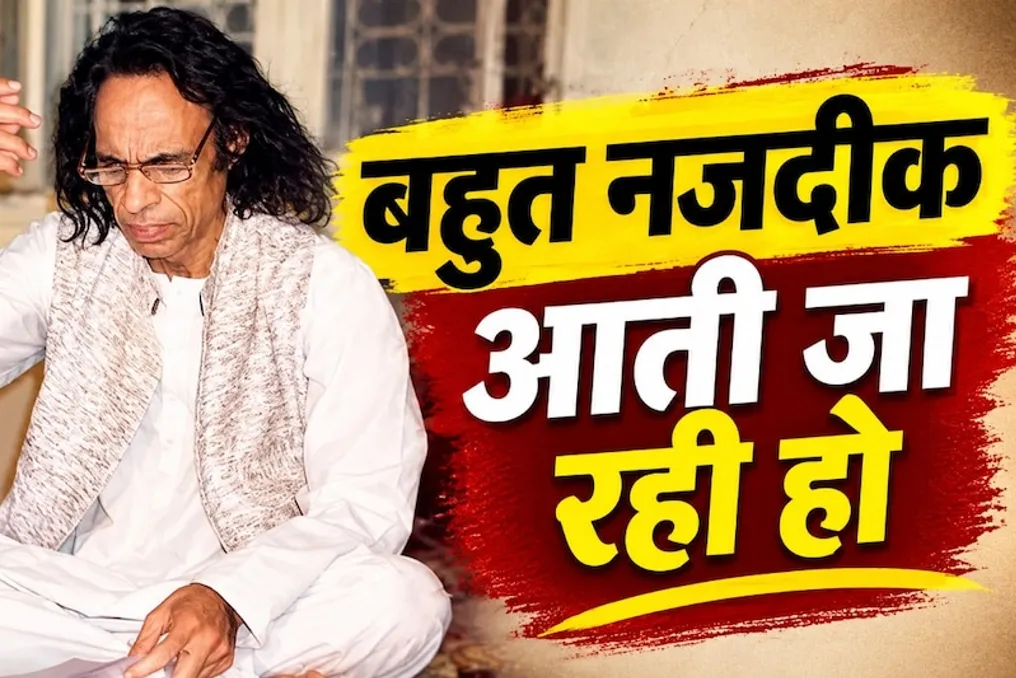
The first book, 'Shayad,' is Jaun Eliy's first poetry collection and was published in 1990. Its distinctive feature is a long and candid preface that allows one to understand Jaun's rebellious nature and philosophy. This book breaks traditional molds of love and presents loneliness from a new perspective. It contains the line: 'Are you getting very close, have you decided to break up?'

The book 'Yaani,' published in 2003 after Jaun's death, is the quintessence of his philosophical and existential views. In it, the meaninglessness of life, the speed of time, and human internal contradictions are described in simple yet profound language. For a generation prone to excessive self-analysis, this book serves as a kind of mirror. It quotes: 'Who will take care of this house, when something breaks every day?'

'Human,' released in 2004, is intended for those who want to feel not only the romance of love but also its bitter truth and pain. It collects Jaun's poems that describe the silence after a broken heart and self-blame. One line states: 'The cure is that they forced me, otherwise I listened to no one.'

In the book 'Lekin,' published in 2006, a different image of Jaun Eliy is revealed. In it, he directly criticizes the rules, hypocrisy, and false relationships created by society. This book is essential for young people who dare to think differently from the crowd and question the existing system. It contains the line: 'What evil is it that now your face comes to mind when I look.'

The last book, 'Goya,' released in 2008, demonstrates the most mature and sensitive period of Jaun's poetry. It reflects the fragility of relationships, the burden of memories, and a strange indifference to life. This collection simultaneously brings comfort and deeply shakes. It contains the phrase: 'Now I remember everything, I forgot someone.'

These five books by Jaun Eliy are not just collections of poems; they explore the truth hidden inside human beings that we often try to ignore. These books, easily accessible in Devanagari, offer an opportunity to pause and talk to oneself in this hectic life. If you have only read Jaun online, these books will allow you to connect with his true essence.

Popular