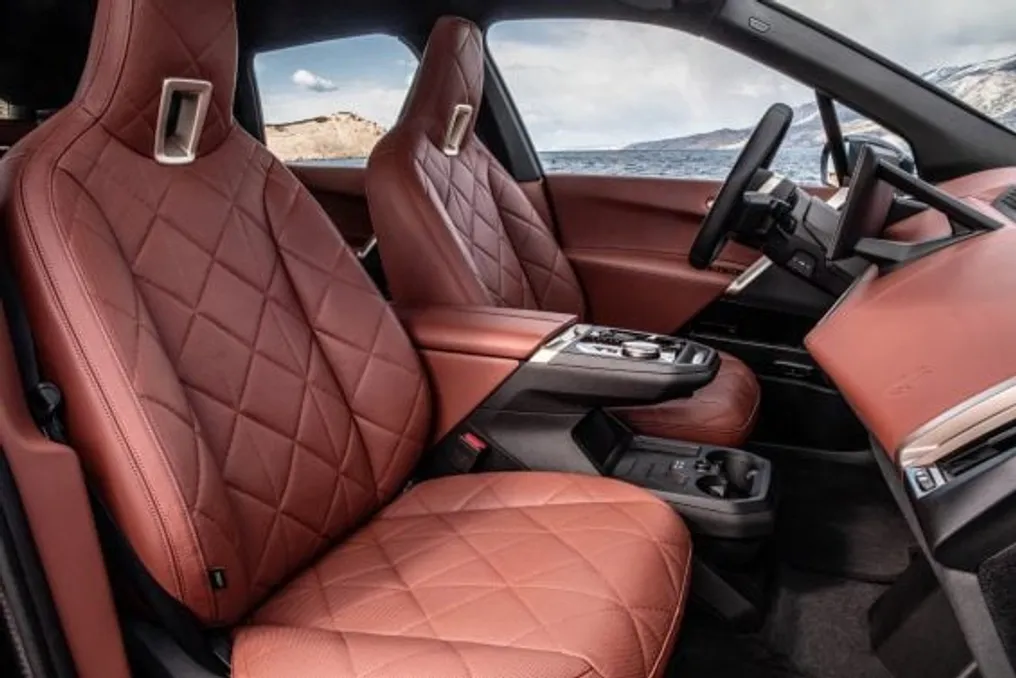
New York bans monthly charges for items already included in vehicles, but maintains exceptions for manufacturers
Read more
AutoPapo
autopapo.com.br

New York bans monthly charges for items already included in vehicles, but maintains exceptions for manufacturers

In the state of New York, USA, charging monthly fees for features already installed in cars has been prohibited. Governor Kathy Hochul signed this legislation on Monday, the 23rd, preventing manufacturers, dealerships, and their representatives from charging subscriptions for functionalities already present in the vehicle.

The new guidelines will take effect at the end of February 2027. The ban applies when the feature uses equipment that was installed at the time of purchase or leasing and continues to operate after being activated, without requiring continuous costs or support from the manufacturer or third parties.

One example cited is the heated seat, whose installation does not generate additional expenses for the manufacturer after it is placed in the car. It is important to note that financing and leasing installments are not considered subscriptions under this law.

However, the legislation establishes important exclusions. Updates to navigation systems, entertainment, satellite radio, onboard Wi-Fi, telematics, 24-hour assistance, and any services that depend on cellular or data connection will not be covered by the prohibition.

Furthermore, driver assistance and autonomous driving systems that require software are also exempt. Although hands-free driving is one of the examples used by the government to justify the law, these software-dependent technologies remain outside the scope of the prohibition.

Manufacturers will still be allowed to charge for software updates, but not those intended to correct security vulnerabilities, as these must already be provided free of charge according to federal regulations.

Non-compliance with this law can result in a fine of up to US$250 (approximately R$1,490) per point of sale for each infraction. The New York State Department will be responsible for defining how these points will be counted.

The case of the heated seat gained notoriety in 2022, when BMW began charging about R$107 (US$18) monthly to activate the feature in markets such as the UK and Germany. Due to the criticism received, the brand opted to suspend this charge in the following year.

In New York, a preliminary version of this bill was approved in 2025 but was vetoed. The most recent version gained approval in the state Senate with 57 votes in favor and 3 against, with the support of Attorney General Letitia James. By signing the law, Hochul classified the charging practice as a deceptive business model.
Similar stories

Ministry of Ecology Eases Vehicle Disposal Rules, Relieving Auto Manufacturers of a Financial Burden of 25,000 Crore Rupees
Read more
business-standard.com

Ministry of Ecology Eases Vehicle Disposal Rules, Relieving Auto Manufacturers of a Financial Burden of 25,000 Crore Rupees

The Ministry of Environment has amended the vehicle disposal rules so that auto manufacturers are not required to account for projected future costs of vehicle recycling in their financial reports. This decision was made several months after the Society of Indian Automobile Manufacturers (Siam) warned that existing rules could impose a financial burden of 25,000 crore rupees on the industry.

The amendment to the Environmental Protection Rules (End-of-Life Vehicles) 2025 was officially notified on November 20. It was clarified that Rule 4(6), concerning manufacturer obligations upon cessation of operations, will apply exclusively if the manufacturer completely ceases its business. This provision does not apply to auto manufacturers who continue to operate in India.

This change alleviates industry concerns regarding the financial implications of the 2025 disposal rules combined with the accounting standard Ind AS 37, which governs provisions, contingent liabilities, and contingent assets. Auto manufacturers feared that the combination of these norms would require them to recognize projected costs for recycling previously sold vehicles as liabilities.

The Environmental Protection (End-of-Life Vehicles) Rules came into effect on April 1, 2025, to ensure environmentally sound disposal of vehicles that have reached the end of their useful life. Under these rules, auto manufacturers must meet annual recycling targets determined based on the number of vehicles they sold 15–20 years ago.

Earlier this year, Siam sent a letter to the ministry warning that once the Central Pollution Control Board (CPCB) announced the environmental compensation rate for non-compliance, auto manufacturers might need to create substantial financial reserves under Ind AS 37.

The Siam letter stated: 'Once the Environmental Compensation (EC) cost is announced by the CPCB (Central Pollution Control Board), auto manufacturers may be required to create significant aggregate financial reserves in accordance with accounting standards (IND AS 37). Preliminary estimates indicate a potential one-time impact on the industry of approximately 25,000 crore rupees in gross terms and about 9,000 crore rupees in discounted terms in the financial year 2025–26.'

The amendment published on November 20 clearly established that this provision will only come into effect upon the complete closure of the auto manufacturer's operations. The November 20 notification stated: 'Provided that the amended provision (6) comes into force only after permanent cessation of operations by manufacturers and shall not apply to manufacturers who continue to operate.'

Furthermore, the notification outlines the actions manufacturers must take when closing operations. They are required to provide the CPCB with data on vehicles introduced to the market during a specified period, after which the CPCB will determine their outstanding Extended Producer Responsibility (EPR) obligations.

The notification clarifies: 'Additionally, at the time of permanent cessation of operations, the manufacturer must notify the Central Board of the vehicles introduced to the market over the preceding fifteen years for vehicles or twenty years for non-vehicles, depending on the case, in the format provided by the Central Board in this regard, and the Central Board shall subsequently determine and report the Extended Producer Responsibility obligations for this manufacturer as of the date of cessation of operations...'

This means that upon complete closure of an auto manufacturer, the CPCB will calculate its outstanding EPR obligations based on vehicles sold over the previous 15 years for vehicles and 20 years for other modes of transport. The auto manufacturer will then have to assess the cost of fulfilling these obligations, including the expense of purchasing EPR certificates, and reflect this estimated amount as a liability or provision in its balance sheet.

According to the rules, auto manufacturers can fulfill their recycling targets by purchasing EPR certificates from registered vehicle recycling facilities through a centralized online portal. These facilities issue certificates based on the weight of steel extracted from disposed vehicles. Auto manufacturers can purchase these certificates to meet their EPR obligations without engaging in the actual recycling process.

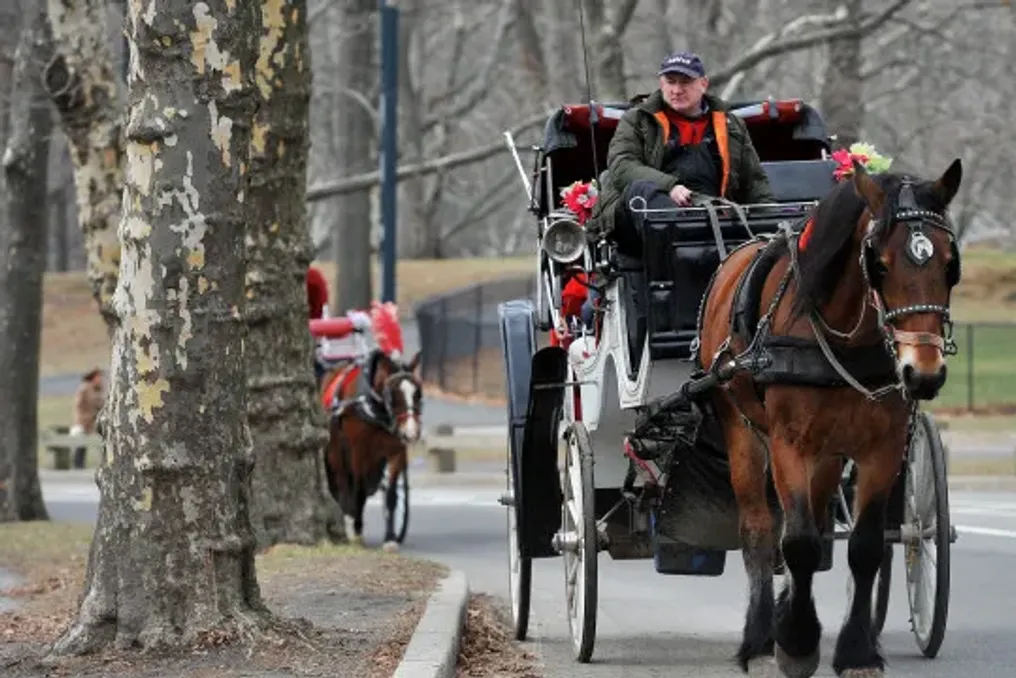
New York bans horse-drawn carriages after 150 years of operation in Central Park
Read more
noticiasaominuto.com

New York bans horse-drawn carriages after 150 years of operation in Central Park

The New York City Council President, Zohran Mamdani, has signed a law that will end the service of horse-drawn carriages in the city, marking the end of a 150-year period in Central Park. The new legislation will take effect on June 1, 2028.

Mamdani stated in a press release, after signing the bill approved by the City Assembly on October 22 with 40 votes in favor, seven against, and two abstentions, that for one and a half centuries, carriages were a common sight in Central Park, and this cycle is now coming to an end.

This legislation, named the 'Romanch Act,' was promoted by Councilman Christopher Marte in honor of Romanch Mahajan, an 18-year-old who died on June 17 after being involved in an accident with a carriage in Central Park. This was the first fatal incident recorded in the tourist area.

The city representative emphasized that despite the termination of the activity, the city has an obligation to support the workers dependent on this profession, ensuring them financial support and new professional opportunities to continue their future projects.

On Tuesday, the council executive announced a set of measures intended to assist approximately 200 people affected by the business closure, including license holders, carriage drivers, and horse handlers.

Furthermore, Mamdani will mandate a feasibility study to analyze the use of electric carriages and pedal-assisted electric bicycles as alternatives within Central Park, as well as electric carriages in its surrounding area.

Animal welfare organizations, such as PETA, announced a donation of $50,000 (equivalent to over 45,000 euros) for animal reform, while NYCLASS celebrated the approval of the measure. This proposal arose after several previous accidents where horses used in the carriages lost control on public roads.

Conversely, the industry union warned of potential litigation in federal courts, arguing that the bill does not offer a clear outlook for the workers. Figures such as former US President Donald Trump also criticized the ban weeks earlier, alleging that it was motivated solely by a single fatal accident.

With the implementation of this law, New York will join other major American metropolises that have already abolished horse-drawn carriages in 2028, such as Philadelphia, Chicago, and San Antonio, transforming one of Manhattan's most recognizable postcards into a cinematic memory, present in films like 'Home Alone' or 'Sex and the City.'

Popular