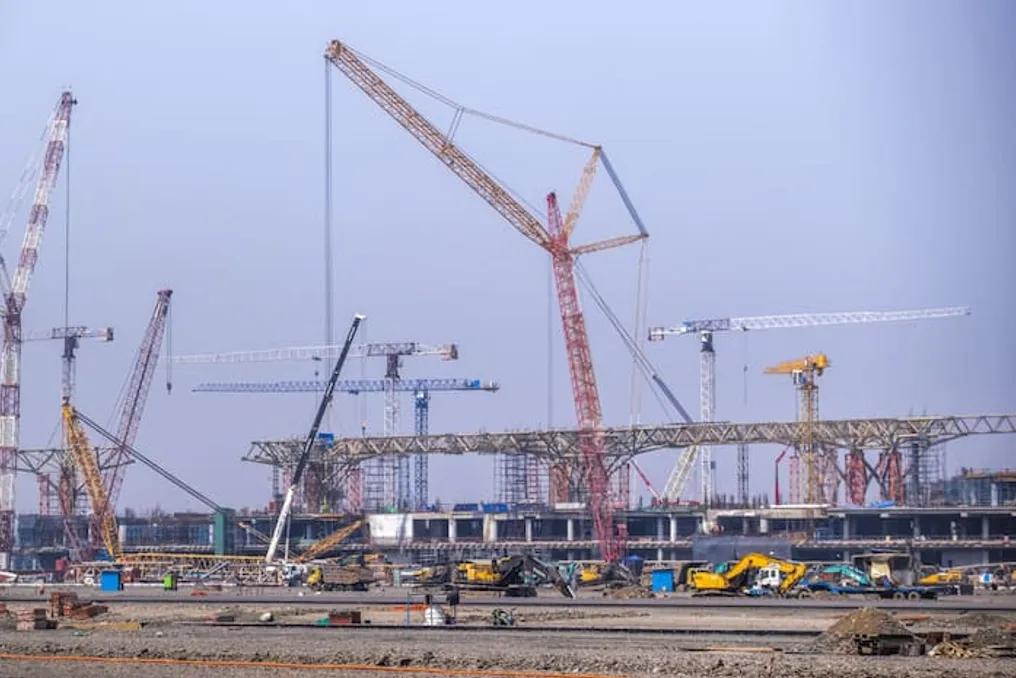
Cabinet Approves Rs 11,000 Crore Scheme to Stimulate Construction Equipment Manufacturing
Read more
Business Standard
business-standard.com

Cabinet Approves Rs 11,000 Crore Scheme to Stimulate Construction Equipment Manufacturing

The Union Cabinet has approved a program worth Rs 11,000 crore aimed at encouraging domestic manufacturing of construction and infrastructure equipment (CIE). This scheme provides incentives to manufacturers over five years following a two-year period for establishing production capacities.

This initiative comes amid China's imposition of export restrictions on Tunnel Boring Machines (TBMs) and related equipment. These restrictions raised concerns about India's dependence on foreign suppliers of specialized machinery required for major infrastructure projects, such as the high-speed railway between Mumbai and Ahmedabad. The restrictions took effect on November 18th and require exporters to obtain permits from Chinese authorities before shipping the equipment.

The Indian government stated on Wednesday that the new incentive system, which will be overseen by the Ministry of Heavy Industries, is not directly linked to China's restrictions. The government noted that the scheme's objective is to boost local CIE and component production, as well as establish a specialized CIE testing center in the country, thereby strengthening self-reliance and positioning India as a key player in the global CIE market.

India's CIE industry currently ranks third globally, behind China and the USA, with a market value of approximately Rs 97,500 crore in FY25. The government forecasts that this market will double to around Rs 2.28 trillion by FY30, driven by investments in ports, housing, and other infrastructure projects.

The government emphasized that the scheme aims to motivate the production of technologically advanced equipment, such as hydraulic excavators, tunnel boring machines, port cranes, and off-road trucks, and also includes the establishment of modern CIE testing centers in the country.

The program will run for eight years, starting from the fiscal year 2026-27 (FY27). The first two years, FY27 and FY28, are designated as a preparatory period for setting up production facilities. This will be followed by five years of incentive payments, from FY29 to FY33. The final year, FY34, will be used to calculate incentives based on sales growth recorded in FY33.

The scheme has two components. The first component offers discounts ranging from 8% to 13% on sales for accredited Original Equipment Manufacturers (OEMs) and component manufacturers, based on sales growth over five years. Sales growth is defined as the increase in sales compared to a set base year. The second component provides a grant of up to Rs 375 crore as viability gap funding for establishing a specialized testing center.

The approval of this scheme followed nearly two years of discussions between the construction equipment industry and the government regarding financial incentives for developing local production. In July 2024, the Indian Construction Equipment Manufacturers Association (ICEMA) proposed a Production Linked Incentive (PLI) scheme worth Rs 10,000 crore during a meeting with then Finance Secretary T. V. Somantanan, who is now Cabinet Secretary. The PLI scheme provides financial rewards to companies based on additional production or sales volume, encouraging them to ramp up domestic manufacturing.

In the second half of 2025, the government began inter-ministerial consultations and preparation of the scheme for the CIE sector. The proposal was subsequently submitted to the Union Budget for FY27 in February 2026.

The public sector undertaking BEML is considering developing its own tunnel boring machines. The company has developed plans to manufacture these machines in India, initially focusing on smaller models used in metro, hydropower, irrigation, and water supply projects. Shantanu Roy, Chairman and Managing Director of BEML, told Bloomberg earlier this month that the company is engaging a global consultant to support the development process. Roy stated that the company intends to develop its own technology rather than simply assembling machines from imported components: 'It will be proprietary technology... The intellectual property will be Indian.'

The need to develop domestic production became particularly urgent after China imposed restrictions. In 2024, two tunnel boring machines manufactured by the German company Herrenknecht at its facility in Guangzhou, China, for the Mumbai-Ahmedabad high-speed rail project, were held in a Chinese port for over a year. The machines eventually arrived in India in March 2026.

Tunnel boring machines are massive mechanical drills used to bore underground passages through soil and rock. They are essential for constructing metro tunnels, railway tunnels, road tunnels, and underground infrastructure. The new scheme may provide an additional incentive for companies like BEML to invest in local manufacturing, although their eligibility for benefits will depend on detailed guidelines and the approval process under this scheme.
Similar stories

AM/NS India invests 90 billion rupees in automotive steel plant in Gujarat
Read more
business-standard.com

AM/NS India invests 90 billion rupees in automotive steel plant in Gujarat

ArcelorMittal Nippon Steel India (AM/NS India) has invested approximately 90 billion rupees in its automotive steel plant located in Hazira, Gujarat state. This project is part of a larger company expansion program worth 600 billion rupees, and the complex is expected to be operational within a few weeks.

According to Rajan Dara, Director and Vice President (Sales and Marketing) of AM/NS India, this automotive complex represents one of the largest capital investments in the domestic steel industry's automotive steel line. The complex will increase the domestic availability of high-strength automotive steels, including grades with tensile strength up to 1180 megapascals (MPa), thereby reducing the dependence of automakers on imported specialized steel.

The expansion is based on the commissioning of the Continuous Galvanizing and Annealing Line (CGAL) in 2024 and the Continuous Galvanizing Line (CGL) in 2025. Furthermore, in 2026, the company plans to add a Pickling and Tandem Cold Rolling Machine (PLTCM) with an annual capacity of 2 million tons.

Dara noted that the company's internal goal is to eliminate the need to import high-value steel across all segments, including automotive, construction, defense, heavy plates, and steel for construction technologies. In the automotive sector, import dependency was nearly 10 percent, and the new capacities are intended to remove the need to import steel grades that can be produced domestically. The company also intends to export finished products.

AM/NS India also plans to launch a specialized automotive steel service center in Sanand, Gujarat, which will process 500,000 tons annually. This facility will serve automakers and component suppliers, complementing the company's existing service centers in Pune, Chennai, and the National Capital.

Separately, AM/NS India aims to commence operations at some facilities of its proposed 8.2 million-ton steel plant in Anakapalli, Andhra Pradesh, by 2029. Dara reported that land development work began after the project started in early this year.

Regarding the raw material base, Dara called for reforms in iron ore auction and mining policies. He argued that rising bidding premiums and the low efficiency of some designated mines could undermine India's competitiveness in steel production. In his view, the country needs to improve the efficiency of mining operations and maintain the price competitiveness of iron ore to sustain investment in the sector.

Additionally, Dara mentioned that India may face a scrap metal shortage for about 10–12 years and will remain dependent on imported scrap for some time. AM/NS India expects to source about 10 percent of its scrap needs domestically in industrialized regions such as Gujarat and Maharashtra.

On decarbonization, he stated that carbon capture may be a more realistic option for India in the short term than hydrogen-based steel production, which currently remains commercially challenging due to current costs and technological levels.

RSS-affiliated organization presents 17 major demands to the government, including increased PM-KISAN subsidies and 100% state procurement of pulses.
Read more
www.aajtak.in

RSS-affiliated organization presents 17 major demands to the government, including increased PM-KISAN subsidies and 100% state procurement of pulses.

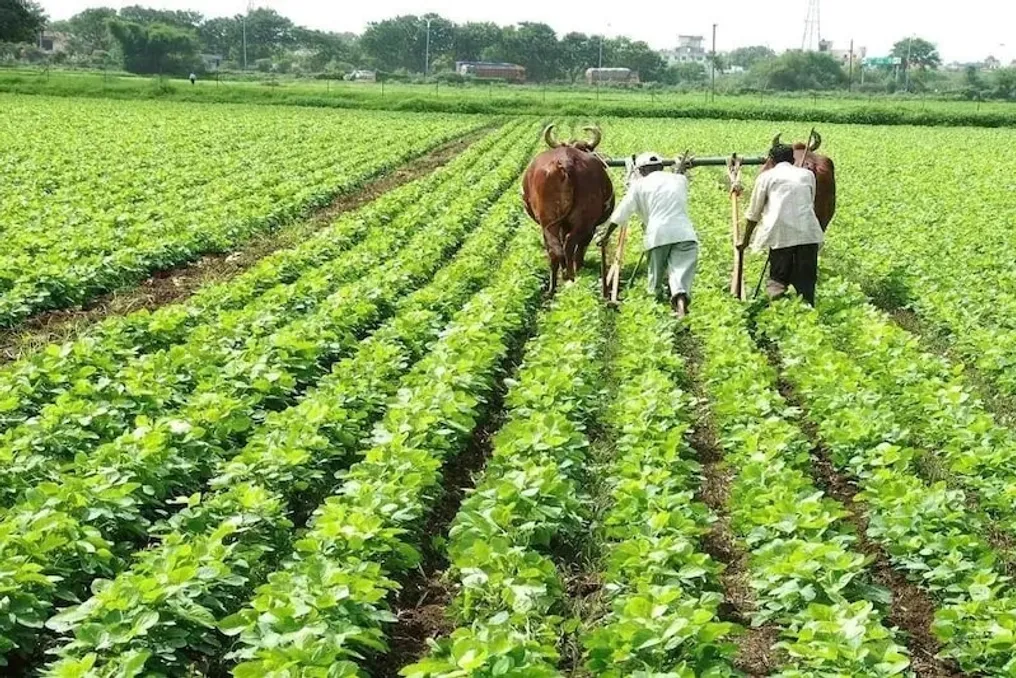
Prior to the presentation of the central budget for the 2027-28 financial year, the Indian Farmers' Association (BKS), affiliated with Rashtriya Swayamsevak Sangh (RSS), submitted a list of its demands to the government. This organization called for an increase in financial assistance under the Prime Minister's Farmer Welfare Program (PM-KISAN), ensuring 100% state procurement of pulse crops, and providing incentives for small farmers to maintain local cattle.

The Indian Farmers' Association conveyed 17 points of proposals to Nirmala Sitharaman, the Ministry of Finance. These demands were voiced at a preliminary consultative meeting before the budget, held on November 16th at Kartavya Bhavan, New Delhi. The representative of BKS was the All India General Secretary, Mohini Mohan Mishra. This followed an initial consultation meeting with the finance minister's economists.

BKS stated that the cost of agricultural inputs such as seeds, fertilizers, pesticides, and other agro-industrial materials is constantly rising. Consequently, the organization insists on increasing the financial support provided to farmers under the PM-KISAN scheme. According to the organization, about 85 percent of all farmers in the country are small and marginal, and this program has provided them with significant help.

To achieve self-sufficiency in pulse production, the organization demands that the state procure these crops in full (100%). Furthermore, a budget allocation was requested for creating infrastructure, including the procurement of maize, transportation, and storage. BKS believes this will help meet the country's needs for ethanol production and poultry feed.

The Indian Farmers' Association seeks incentives for small and marginal farmers for maintaining indigenous cattle breeds. The organization emphasizes the necessity of promoting local breeds adapted to various agro-climatic zones. In their view, this will promote cow-based livestock farming and allow farmers to gradually transition to chemically clean agricultural practices.

The farmer organization associated with RSS proposed increasing budgetary allocations to support natural and organic farming. It also suggested creating a separate market system for organic products, which should include capabilities for procurement, distribution, processing, branding, and sales. This would eliminate the difficulties faced by farmers engaged in organic production. BKS also demanded ensuring small farmers' access to simple and affordable organic certification through Krishi Vigyan Kendras (KVKs). Additionally, it was proposed to establish organic market spaces through Public-Private Partnerships (PPP) along national highways.

The Indian Farmers' Association insists on establishing district-level standardization centers to test for chemical residues in grain crops. The organization desires a separate grain testing system for food supplied to the public through the Public Distribution System (PDS) to prevent the supply of food with high levels of chemical residues.

To achieve self-sufficiency in edible oils, the organization calls for greater attention to the National Mission on Oilseeds and specifically the mustard mission. It was proposed to prioritize the dissemination of mustard seeds from the research center in Bharatpur and ensure their procurement by government agencies. This could help increase the sowing area and yield of mustard.

The organization demands the release and delivery of traditional seed varieties to farmers through agricultural science centers. These varieties should include not only aromatic rice but also drought-resistant, flood-resistant, salinity-tolerant, pest-resistant, and disease-resistant strains. BKS also requested budgetary support for the cleaning, improvement, and distribution of these seeds. In the organization's opinion, this will help address climate change issues, reduce malnutrition, and promote sustainable agriculture.

BKS requires sufficient funds to be allocated in the budget for more effective utilization of water from the Indus, Chenab, Jhelum, Ravi, Beas, and Sutlej rivers for irrigation purposes. As part of this proposal, it was suggested to strengthen irrigation capabilities in Jammu and Kashmir, Punjab, Haryana, Rajasthan, and Gujarat to aid in combating issues such as drought and floods.

The Indian Farmers' Association demands a larger budget allocation for straw management. Moreover, to boost the country's cotton production, it was proposed to promote the CICR-Dada Lad cotton cultivation technology approved by the Indian Council of Agricultural Research (ICAR). The organization noted that farmers practicing natural and organic farming often do not benefit from subsidies for organic fertilizer production. Therefore, they also demanded the provision of fertilizer subsidies to such farmers through Direct Benefit Transfer (DBT).

Popular