Seriti Institute is strengthening its presence in Stendalton by establishing a permanent local base and a new Multi-Functional Agri-Node (MFAN). This initiative aims to connect youth, farmers, new enterprises, and local communities with necessary skills, support, networks, and opportunities.
It is important to note that Seriti Institute is an independent organization operating in South Africa and is distinct from Seriti Mining. The institute's activities cover areas such as youth development, livelihoods, food security, agriculture, environmental sustainability, skills development, and community development.
The expansion of Seriti Institute's operations in Stendalton, Mpumalanga province, is part of a long-term plan to bring these opportunities closer to the population and create space for local development initiatives to grow. The new facility, made possible by Astral's support, will serve as both a base for Seriti Institute's programs in the region and a home for the developing MFAN.
The MFAN is envisioned not merely as an office or a program venue; its goal is to become a community-oriented platform. Here, young people can gain work experience and skills, farmers can access support and networks, new businesses can find opportunities and partnerships, and local organizations and stakeholders can collaborate to address shared community needs.
For young people growing up in Sachile and the wider Stendalton area, this access is particularly significant. Twenty-eight-year-old Tumelo Tsototsi spoke about the difficulties young people face when trying to enter the job market, noting that there are insufficient opportunities for youth.
For Presish Mokoena, aged 21, the opportunity to participate in Seriti Institute's work opened a new path. She first learned about the institute through the National Youth Service program and later saw a social media advertisement for an internship. After applying, she started the program in April, gaining exposure to agriculture, where she previously had little experience.
Mokoena noted that through the program, she progressed from being a simple community member aware of Seriti's work to an intern acquiring practical knowledge and skills. For her, having Seriti Institute in Stendalton means that young people do not always have to seek opportunities elsewhere. She emphasized the importance of their work for the community, noting that they hire and give chances to young people.
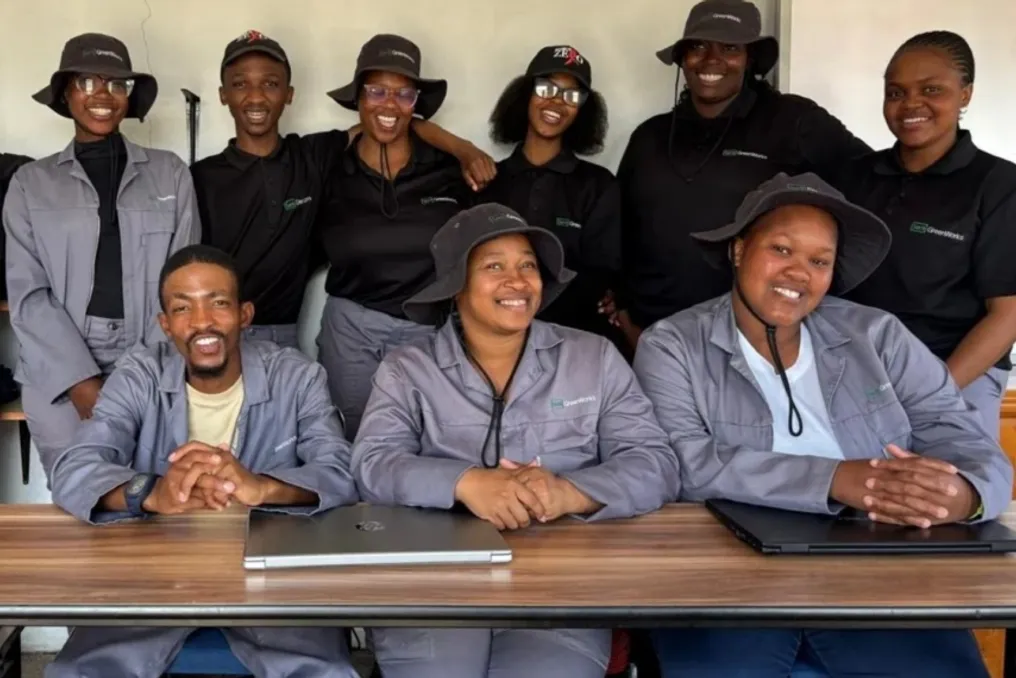
The new facility in Stendalton already demonstrates the practical benefit of this local presence. Currently, programs managed by Seriti Institute, including the Social Employment Fund, the National Youth Service, and GreenWorks internships, are being implemented at this site. Fifty National Youth Service participants and ten Jet Green interns are currently at the Stendalton office. Their activities include recycling, composting, environmental awareness, climate change campaigns, and community revitalization initiatives.
The reconstruction of the new building itself has become a learning opportunity. Twenty-five participants interested in construction, electrical work, and plumbing are gaining practical experience by observing the contractor working on site. Thus, the process of creating the new facility is already contributing to achieving its main objective—creating conditions for learning, gaining experience, and strengthening pathways to employment or entrepreneurship.
For the Operations Manager of Seriti Institute in Stendalton, Nomfundu Khlela, establishing a permanent presence is critical for the organization's engagement with communities. Khlela oversees Seriti Institute's programs operating from the Stendalton office and collaborates with the municipality, local stakeholders, and partners to coordinate activities and strengthen on-the-ground implementation.
The planned MFAN will further develop this work: for farmers, it will provide stronger links to information, resources, support, stakeholders, and opportunities; for youth, it will offer an additional pathway into agriculture, skills development, work experience, and entrepreneurship; and for new enterprises, it will be a place to establish contacts with partners, networks, and growth-enabling opportunities. In the long term, the plan is to create a local ecosystem where these different groups do not operate in isolation but become increasingly interconnected.
Astral's support played a key role in realizing both the move to the new premises and the creation of the MFAN. This partnership helped form the physical infrastructure upon which Seriti Institute can deepen its work in Stendalton. Thus, the investment is not just about opening another office, but laying a solid foundation.
It is about creating a visible and accessible local presence where people can interact with Seriti Institute, understand the opportunities available to them, and connect with the programs, partners, and networks that can support their development. For young people like Tsototsi and Mokoena, the true value of these investments will be measured by the changes that occur on the ground. This could start with first work experience, acquiring a practical skill, accessing a network, supporting a business idea, or getting acquainted with agriculture as a potential livelihood. The ambition for Stendalton is to create a place where more such connections can happen—a community hub where people can come, interact, learn, and find opportunities.