Sanjay De, who dreamed of becoming a pilot, achieved a monthly income of 1 lakh rupees after mastering coding
Read more
Aaj Tak
www.aajtak.in

Sanjay De, who dreamed of becoming a pilot, achieved a monthly income of 1 lakh rupees after mastering coding

Sanjay De, a 23-year-old resident of Pandua, a small town in the Hooghly district of West Bengal, emphasizes that one's origin or birthplace should not determine a person's potential. He believes this is a lesson learned from his life journey that inspires others.

Coming from a humble economic and social background, Sanjay had limited knowledge of technology and higher education in his early years and lacked a clear career plan. Nevertheless, he gradually found his direction and is now interning in data science at Prefer, where he will receive a stipend of 100,000 rupees monthly.

Sanjay's journey began in a boarding school where the use of mobile phones and laptops was prohibited. After this, he managed to qualify for the regional round of an international college programming competition and secure this internship. His curiosity, persistent hard work, and making difficult career decisions played a key role in this process.

Currently, Sanjay is pursuing a Bachelor of Science in Computer Science at Scalar School of Technology in Bangalore, while also studying for a BSc in Computer Science at BITS Pilani. He attempted to start his own business, worked on machine learning-related projects, and developed an interest in systems engineering.

His transition from discovering coding through movies to securing an internship at Prefer demonstrates the importance of perseverance, practical learning, and deep subject understanding. Sanjay grew up in Pandua without a defined career path due to financial difficulties and limited information about higher education. In childhood, he dreamed of being a pilot because he loved airplanes very much.

His father, Gopal De, is an insurance agent at LIC, and his mother, Soma De, is a homemaker. Sanjay studied at Jawahar Navodaya Vidyalaya in Hooghly, which was a boarding school where mobile phones and laptops were not allowed.

His first encounter with programming happened after entering college. The ways hacking and computer science were portrayed in films sparked his curiosity. Sanjay notes: 'There wasn't one specific moment that ignited my interest. The way hacking and computer science were depicted in movies attracted me. When I started to understand how any system works from the inside, my initial curiosity gradually turned into a real passion for technology.'

Initially, Sanjay started studying Information Technology at Jadavpur University. However, after the first year, he dropped out and enrolled in Scalar School of Technology. He was looking for a curriculum that was practical and met industry needs.

The opportunity arose through a recruitment drive organized by Scalar School of Technology. The selection process consisted of three stages: resume screening, an online exam, and a technical interview at the company's office. His previous internship at Zero XPPL and projects related to systems and machine learning helped him pass the initial screening. Experience in competitive programming gave him an advantage in the online exam. The technical interview tested his understanding of the fundamentals of data science and machine learning.

Sanjay explains that two main factors set him apart from others: firstly, strong demonstrable technical skills; and secondly, the ability to grasp any topic from its fundamentals. He believes that instead of just memorizing formulas or ready-made structures, it is important to break down topics into smaller parts and study them from the beginning.

He did not maintain a rigid schedule, dedicating about 7-8 hours daily to coding and problem-solving, including study and practice. Among his achievements are qualification for the regional ICPC stage in 2024 and 2026. In 2024, he ranked 188th in the Amrapuri region. He also achieved 433rd place in WBJEE and 10,819th place in JEE Main. Within CBSE AISSCE, he was in the top 0.1% of students in social studies.

At Scalar, he received a merit-based scholarship of 50% and made the dean's list. In school, the idea of an internship paying 100,000 rupees per month seemed daunting to him, but thanks to persistent hard work, this goal became achievable. Sanjay recalls: 'It was hard to imagine such an opportunity in school. Gradually, seeing my development after entering college and working consistently, I started to believe I could achieve a good opportunity.'

Sanjay's college journey was not limited to academics and programming. Along with friends, he founded a new company, Delta Education, related to education and technology, which allowed him to gain initial business creation experience. However, later he faced...
Similar stories

POWERGRID announces recruitment for Engineer Trainee position; selection based on GATE-2026 results
Read more
www.aajtak.in

POWERGRID announces recruitment for Engineer Trainee position; selection based on GATE-2026 results

For candidates who participated in the GATE-2026 examination, an employment opportunity has opened up at the state-owned company. The Maharatna company Power Grid Corporation of India Limited (POWERGRID) has launched recruitment for Engineer Trainee positions. Notably, no separate written examination will be conducted for this recruitment; selection will be based on GATE-2026 scores and subsequent selection rounds.

Qualified applicants can apply online on the company's official website. This recruitment is intended for the Electronics specialization. A total of 33 vacancies will be filled across various categories, including General, OBC, SC, ST, and EWS. Initially, candidates will be shortlisted based on their GATE-2026 results, followed by a group discussion and a personal interview.

To participate in this recruitment, candidates must possess a full higher education degree (BE, BTech, or BSc in Engineering) from a recognized university or institution. The specialization must be related to electronics, such as Electronics, Electronics and Communication, Electronics and Telecommunication, Electronics and Electromechanics, or Telecommunication Technology. Furthermore, candidates must have scored at least 60 percent.

The maximum age limit for candidates is set at 28 years, calculated as of November 27, 2026. However, candidates from reserved castes will be granted age relaxation: 3 years for OBC (non-creamy layer), 5 years for SC/ST, and 10 years for Persons with Benchmark Disabilities (PwBD).

The blank GATE score is also extremely important. In addition to meeting academic requirements and age restrictions, the candidate must possess a valid blank GATE-2026 score. This score must be in the subject of Electronics and Communication (EC), as applications for this vacancy based on GATE scores from other subjects are not permitted.

The selection process at POWERGRID involves several stages. First, candidates will be shortlisted for the next round based on the normalized score obtained in the relevant GATE-2026 subject. Subsequently, the selection procedure will include behavioral assessment, group discussion, and a personal interview.

The selection process includes the following stages:

  • GATE-2026 Score: Candidates are shortlisted for the next stage based on the normalized score in the relevant subject.
  • Behavioral Assessment: This stage assesses the candidates' behavioral and personality aspects.
  • Group Discussion: Here, the candidates' communication skills and manner of expressing thoughts are tested; this stage is purely qualifying.
  • Personal Interview: This is a crucial selection stage where the candidates' understanding of the subject and other necessary skills are evaluated.

When forming the final ranking, the highest weight (85 percent) will be given to the GATE-2026 score. The group discussion will receive 3 percent, and the personal interview will receive 12 percent. Thus, the role of the GATE score remains the most significant, although the results of the interview cannot be ignored.

After being selected for the Engineer Trainee position, candidates will be provided with a one-year traineeship. During this period, they will receive a monthly salary ranging from 30,000 to 1,20,000 rupees. Additionally, they will receive 12 percent of IDA, HRA, and basic salary, along with other benefits. Upon completion of the one-year term, the candidate will be appointed as Assistant Engineer.

In this role, they will also receive a monthly salary according to the pay scale of 30,000 to 1,20,000 rupees, with an annual Cost to Company (CTC) potentially reaching approximately 14.33 lakhs. Furthermore, after permanent appointment, candidates will receive inflation allowance, allowances, compensatory benefits, bonuses, Provident Fund (PF), pension, and other retirement-related benefits.

Uttar Pradesh Government to Launch Tablet Distribution Program for Students as Part of Digitalization
Read more
www.aajtak.in

Uttar Pradesh Government to Launch Tablet Distribution Program for Students as Part of Digitalization

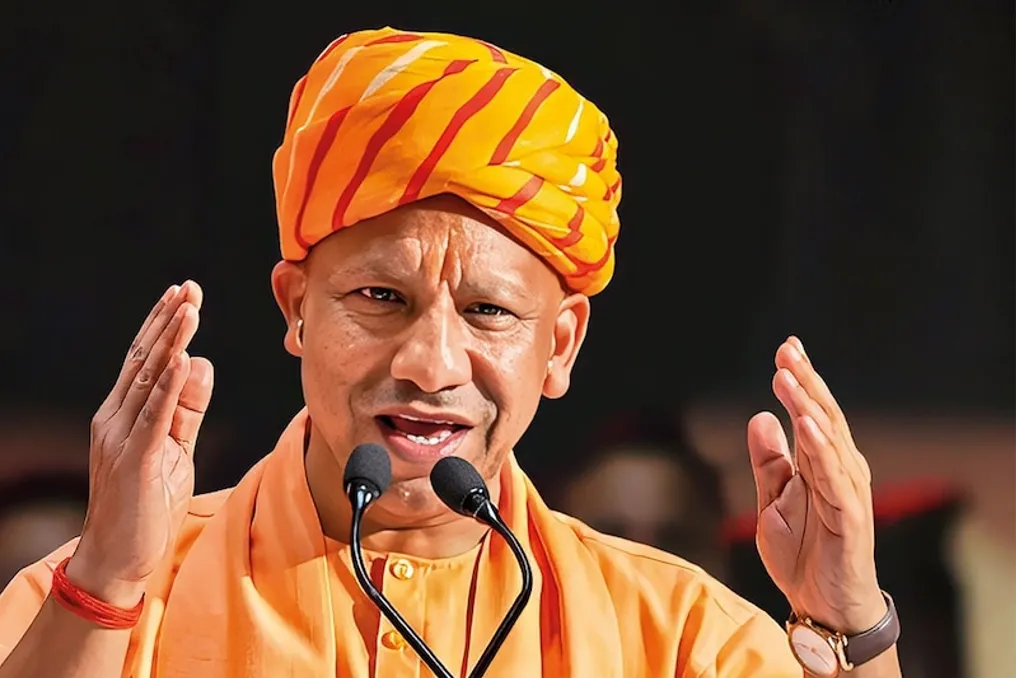
The Uttar Pradesh state government is launching a new phase of the tablet distribution program to integrate the new generation of youth, known as Gen-Alpha, into the field of digital education and technology. The ceremony for handing out tablets to about 50 thousand students is scheduled for November 15 in Lucknow, where the event will be inaugurated by Chief Minister Yogi Adityanath.

As part of this initiative, the government has set a goal to distribute approximately 2.5 million tablets by 2026-27. This program will be conducted under the 'Swami Vivekananda Yuva Sashaktikaran Yojana' scheme. The government emphasizes that the aim of this step is to connect the state's youth with new technologies and digital learning.

During the event, which will take place on November 15 at the Rashtra Praneraan venue in Lucknow, about 50 thousand schoolchildren will receive tablets. The distribution marathon will be led by Chief Minister Yogi Adityanath. Participants from various districts will include students from Lucknow, Hardoi, Sitapura, and Unnawa. This scheme ensures access to digital devices for students, allowing them to apply technology in the educational process.

The Uttar Pradesh government is preparing to distribute about 2.5 million tablets during 2026-27. The November 15 event is the next step in this direction. The government's main objective is to provide a large number of students with digital gadgets. Tablets and smartphones have already been distributed in the state; according to the government, about 6 million such devices were issued since 2021, and now the target is 2.5 million for the period 2026-27.

Following the event in Lucknow, a similar event will also take place in Gorakhpur. However, information regarding the date and the number of students who will receive tablets in Gorakhpur has not yet been provided. The government aims to connect the youth with digital education and technology through this program. The November 15 event will be the next phase of this campaign, where 50 thousand students are planned to receive tablets on the first day, while the overall target for the year is set at 2.5 million tablets.

Scientists in Uzbekistan receive up to 10% salary supplement for confirmed scientific activity
Read more
podrobno.uz

Scientists in Uzbekistan receive up to 10% salary supplement for confirmed scientific activity

Rules for calculating bonuses for employees with academic degrees have been adjusted in Uzbekistan. Now, when determining the size of additional payments, scientific activity must be taken into account and recorded in the Science ID system, and all achievements are subject to verification in a centralized electronic database.

These changes are enshrined in Cabinet of Ministers Decree No. 604. According to the new regulations, all information about employees' scientific, teaching, and work activities will be aggregated in an electronic system. Before this data is used to assign bonuses, it will undergo a authenticity verification procedure.

Thus, to receive additional payments, scientists will not just need to claim their successes; the results of their research must be entered into the electronic register and officially confirmed. If the information does not pass verification, it will not be taken into account when calculating bonuses.

A separate incentive mechanism has been developed for researchers who demonstrate a high level of scientific activity through the Science ID identification system. For such indicators, it is possible to receive a bonus reaching 10% of the salary. However, this does not guarantee an automatic salary increase for everyone with academic degrees; the amount of payments will directly depend on compliance with established criteria and confirmed results.

The implementation of the new system is planned in stages. By the beginning of 2027, an electronic register of scientific and innovative institutions must be created, and registration through the my.gov.uz portal and public service centers will begin in February of this year. A fully unified database on scientific activity should be launched by April 1, 2027.

It was previously also reported that a reform in the field of doctoral training in Uzbekistan was underway, including the introduction of differentiated scholarships for young researchers and a change in the payment procedure for scientific supervisors, which will take place in 2027.

Popular