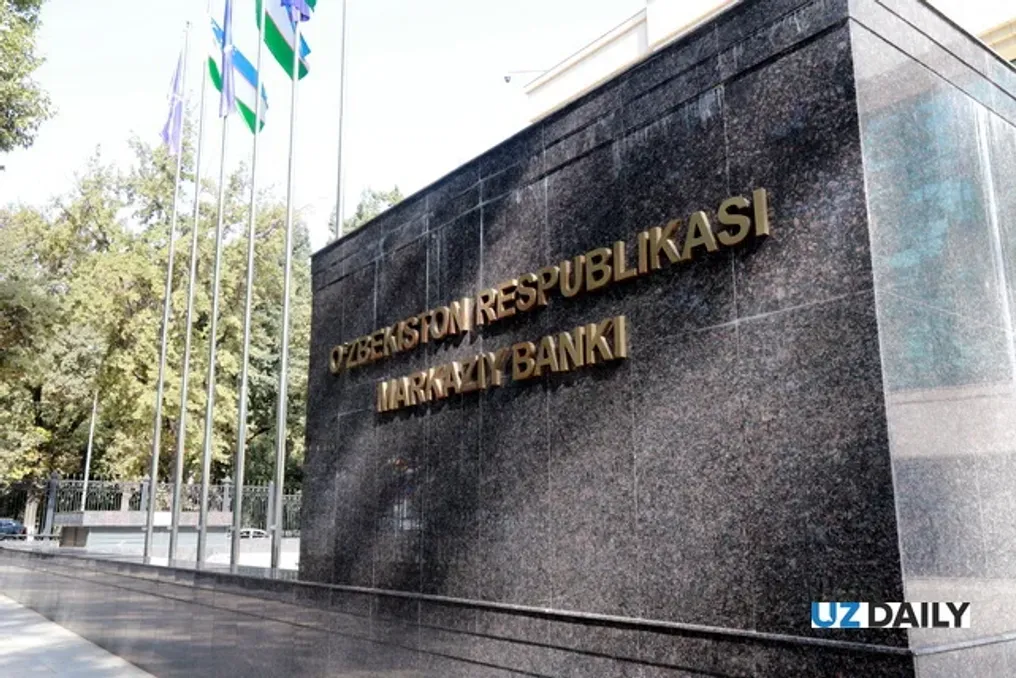
Average rate for soum loans in Uzbekistan decreased to 19.3% in October 2026
Read more
UzDaily
uzdaily.uz

Average rate for soum loans in Uzbekistan decreased to 19.3% in October 2026

According to data from the Central Bank of Uzbekistan, the weighted average nominal interest rate for loans in the national currency of Uzbekistan in October 2026 was 19.3% per annum. This figure decreased by 1.1 percentage points compared to the previous month and by 0.6 percentage points year-on-year.

The average deposit rate in soums decreased to 17.1%, which is 1.9 percentage points lower than a year ago. The average rate for soum loans for individuals was 19.4%, which is 2.6 percentage points lower than in October 2025. On average, loans to legal entities were assessed at 19.2%, slightly higher than a year ago.

Loans with a repayment period of up to one year had an average rate of 17.7%, while longer-term loans were assessed at 20.3%. These data excluded microloans and credit cards.

Commercial loans in soums in October were issued at an average rate of 21.8%. This was 0.2 percentage points lower than in September and 1.3 percentage points lower than the previous year. Rates for individuals and legal entities were 21.8% and 21.9%, respectively. The most expensive loans were short-term commercial loans for individuals with a term of up to one year, where the rate reached 29%.

The average rate for subsidized loans was 11.1%. It increased by 0.3 percentage points during the month but decreased by 0.6 percentage points year-on-year.

Real Interest Rates and Inflation Expectations

The real interest rate for soum loans reached 9.4% for individuals and 9.8% for enterprises. In September, the corresponding rates were higher—10.2% and 10.6%. Over the year, the real rate for individuals increased by 0.5 percentage points, and for businesses by 3.3 percentage points. For commercial loans, the real rate was 11.6% for individuals and 12.3% for enterprises.

The Central Bank defines the real interest rate as the nominal rate minus inflation expectations. Inflation expectations among individuals in October were at 9.1%, and among enterprises at 8.5%. During the month, expectations among individuals rose by 0.4 percentage points, while business expectations fell by 0.7 percentage points.

The interest rate for foreign currency loans remained at 10.4%, unchanged compared to October 2025. Compared to September, it decreased by 0.1 percentage point.

Individuals placed deposits in soums at an average rate of 18.4%, which is 2.5 percentage points lower than a year ago. The deposit rate for legal entities was 15.7%, which is 0.7 percentage points higher than during the month, but 1.4 percentage points lower than a year ago. Deposits with a term of up to one year had an average rate of 15.2%, and longer-term ones of 17.7%.

According to the Central Bank, inflation stabilization has allowed for relatively high real interest rates on deposits in the national currency.

The real rate on deposits placed by individuals was 8.5%, which is 0.3 percentage points higher over the year. For legal entities, it rose to 6.6%, compared to 5.3% in September, and increased by 1.2 percentage points year-on-year.

The interest rate on foreign currency deposits was 4.9%. This is 0.5 percentage points higher than in September and 0.2 percentage points lower than a year ago. Individuals placed deposits in foreign currency at an average rate of 5.3%, and for legal entities at 4.3%.


Similar stories

Mortgage lending in Uzbekistan increased by 39.5% from January to October
Read more
uzdaily.uz

Mortgage lending in Uzbekistan increased by 39.5% from January to October

According to published statistics on mortgage lending, commercial banks in Uzbekistan issued 75,800 mortgage loans to individuals totaling 23.6 trillion soms between January and October 2026.

The total value of mortgage loans showed an increase of 39.5% compared to the same period in 2025.

In the primary housing market, banks provided loans amounting to 17.4 trillion soms, representing an annual growth of 42%. Regarding the secondary market, banks allocated 6.2 trillion soms in mortgage loans, an increase of 33% year-on-year.

Of the total amount of loans issued, 12.2 trillion soms was directed to men, and 11.4 trillion soms to women. Compared to the period from January to October 2025, the volume of mortgages issued to men increased by 20.9%, while lending to women grew by 67%.

Banks also issued 22,300 mortgage loans to young borrowers, which is 36.5% more than last year. The total amount of mortgage loans provided to youth reached 7.2 trillion soms, an increase of 42.9% compared to the same period last year.

Fraud losses in Uzbekistan reached 278.3 billion soms by October 2026
Read more
uzdaily.uz

Fraud losses in Uzbekistan reached 278.3 billion soms by October 2026

The Central Bank of Uzbekistan reported that between January 1 and October 1, 2026, Uzbek citizens suffered fraud losses amounting to 278.3 billion soms. Furthermore, 113.1 billion soms were successfully blocked through prompt actions.

This data was obtained by analyzing complaints registered on the Ministry of Internal Affairs' 'Cardblock' platform. The Central Bank utilizes a Unified Platform for analyzing fraud reports to process this information.

Details of Fraud Cases

Among the registered types of fraud, the largest losses are associated with malicious software installed on mobile devices. During this period, 18,830 such cases were recorded, resulting in losses of 79.3 billion soms.

Other cases included 611 incidents where victims followed fraudulent instructions over the phone, leading to losses of 27.7 billion soms. Additionally, Telegram account hacks accounted for 2,808 fraud cases with losses totaling 21.9 billion soms.

Financial pyramids and fake trading platforms caused 1,044 cases with losses of 15.1 billion soms. Another 1,086 cases related to transfers into schemes resembling financial pyramids, defrauding citizens of 14 billion soms.

Online purchases generated 3,571 complaints because sellers failed to fulfill delivery obligations or provide services after receiving advance payments; total losses in this category amounted to 10.5 billion soms.

Another category is fraudulent online loans taken out in citizens' names. Scammers convinced people they were helping them cancel loans, only to then take out new loans in their names. Authorities registered 130 such cases with losses of 10.6 billion soms.

There were also 272 cases of fraud related to payments in online games, which resulted in losses of 900 million soms. Moreover, 11,475 complaints concerned withdrawals from bank cards and e-wallets without specifying a particular type of fraud, with total losses in this group reaching 98.1 billion soms.

The Central Bank separately noted complaints about automatic debits from accounts for loan repayments. Some citizens mistakenly considered these operations as fraud and reported them to law enforcement agencies. Investigations revealed that banks were debiting funds to repay outstanding loan debt. A total of 2,737 such complaints were registered for an amount of 7.6 billion soms, but the regulator did not classify these transactions as confirmed cases of fraud.

Representatives of the Ministry of Internal Affairs are conducting preliminary checks and investigations into all registered fraud cases.

The Central Bank advises citizens to avoid downloading APK files from messengers or unknown sources. It also warns against sharing bank card details and verification codes with individuals claiming to be from banks or law enforcement agencies. To protect Telegram accounts, users are recommended to activate two-factor authentication. When making online purchases, buyers should verify the reliability of sellers.

The regulator strongly urges citizens not to fall for suspicious investment offers promising high returns or quick money-making schemes. Anyone who discovers fraudulent activities must immediately contact their bank or payment service, as well as law enforcement agencies.

Yield on Uzbek Som Bonds Decreased to Approximately 9%
Read more
uzdaily.uz

Yield on Uzbek Som Bonds Decreased to Approximately 9%

Nodirbek Achilov, Deputy Chairman of the Central Bank of Uzbekistan, reported that the yield on state bonds denominated in Uzbek som has decreased from 12.25% in April to approximately 9%. This information was shared during his presentation of the IMF's regional economic forecast for the Caucasus and Central Asia.

Achilov commented on the impact of rising interest rates in developed economies on the cost of government borrowing in Uzbekistan. He noted diverging trends in both domestic and international markets: the cost of borrowing in US dollars and other major international currencies is increasing, while the issuance of government bonds in the national currency is becoming cheaper.

"When they issued bonds in April, the rate was 12.25%, and now in som terms it is 9%. It dropped sharply after entering the GBI index," stated Achilov.

Furthermore, the Deputy Chairman of the Central Bank mentioned that international financial institutions are studying the possibility of raising funds in the domestic market of Uzbekistan. The interest in issuing bonds in som is partly due to the country's floating exchange rate and its significant reserves. These international organizations aim to reduce the cost of attracting capital in the national currency.

Achilov added that international financial institutions plan to place bonds in the domestic som market to attract funds from the local market. He also emphasized that further development of the capital market will increase the volume of financial resources within the country.

IMF Resident Representative in Uzbekistan, Koba Gvenetadze, also noted high investor demand for the country's government bonds. Uzbekistan issues debt securities in euros, US dollars, and som. These issuances attract demand that several times exceeds the offered volumes, while coupon rates are gradually decreasing.

Gvenetadze commented: "Uzbekistan issues bonds in three currencies—euros, US dollars, and Uzbek som—and they have been oversubscribed several times, while coupon rates are falling. This indicates that investors consider investments in Uzbekistan very attractive."

He also presented the structure of Uzbekistan's external debt. Most of this debt comes from loans from development partners with relatively low fixed interest rates. Nevertheless, the country also attracts financing through markets, so it must consider the possibility of higher borrowing costs in international markets. The IMF assessment shows that Uzbekistan's debt remains sustainable even under a stress scenario.

Popular