World Bank is working on seven projects in Guinea-Bissau
Read more
Noticias ao Minuto
noticiasaominuto.com

World Bank is working on seven projects in Guinea-Bissau

The World Bank Group continues its cooperation with the current authorities of Guinea-Bissau to accelerate the implementation of seven ongoing projects in the Portuguese-speaking country, an institutional source reported to the Lusa agency today.

A World Bank official stated that the Group continues to work with transitional authorities and sectoral ministries to execute its existing project portfolio, focusing particularly on accelerating the deployment and transformation of available financing into tangible development results for the people of Guinea-Bissau.

According to the World Bank website, seven projects are active in the country with a total value of nearly $185 million (€168.5 million). These funds include $85 million designated for improving transport links in the north of the country, as well as various initiatives aimed at enhancing connectivity, developing the power grid, and strengthening public administration.

When asked about engagement with the authorities following the military coup in Guinea-Bissau on November 26, 2025, led by General Horta Inta-a, former Head of the Presidency Security Service, the institution noted that 'the World Bank Group remains in Guinea-Bissau through its national office in Bissau, supporting the country's and its people's development priorities.'

It was mentioned that 'disbursements were temporarily suspended after the events of November 26, 2025, and resumed in April 2026.'

In September, World Bank representative in Guinea-Bissau, Rosa Brito, highly praised the 'significant progress' made in the financial execution of the institution's funded projects, exceeding the regional benchmark by 20% over the last two fiscal years. According to reports from several media outlets, Rosa Brito emphasized that in 2025, a rate of 21.9% was achieved, and this rose to 25.3% in the current year, despite the pause following the coup.

Rosa Brito also commented that 'these results demonstrate the country's ability to achieve better performance when there is joint mobilization around clear and common goals.' The World Bank representative confirmed the financial institution's commitment to maintaining 'close cooperation' with the Guinean executive branch, sectoral ministries, and implementation units.

She added that the World Bank Group's central focus for the future is the 'acceleration of implementation' of current initiatives, optimizing the overall portfolio level, and ensuring that investments bring 'concrete and tangible benefits' to the people of Guinea-Bissau.

The Guinean military forces staged a coup on November 26, 2025, one day before the publication of parliamentary and presidential election results, overthrowing then-President Umaro Sissoko Embale. They formed the National Transitional Council (CNT), which assumed the powers of parliament, and appointed Ildio Vieira Te as Prime Minister and Finance Minister. The opposition believes this was a staged coup allowing Sissoko Embale, who has been residing in Morocco since the coup, to return to power through new presidential and parliamentary elections scheduled by the military for December 6.
Similar stories

Mozambique President calls for reduction of bureaucracy to improve business climate
Read more
noticiasaominuto.com

Mozambique President calls for reduction of bureaucracy to improve business climate

The President of Mozambique called for the reduction of bureaucratic obstacles in the country and the improvement of business conditions with the aim of implementing projects that promote job creation and income.

Daniel Chapo delivered his speech at the closing of the Second International Investment Conference in Gaza, a province in southern Mozambique, which was held under the slogan 'Turning potential into investment, investment into prosperity.'

Chapo stated that investing in Mozambique, and especially in Gaza, needs to be simpler, more transparent, and more competitive. He advocated for simplifying and digitizing administrative procedures, combating corruption, and strengthening legal certainty to attract productive investments to the province.

During this address, the head of state also appealed for the mobilization of both domestic and external, responsible, and long-term investments.

According to Daniel Chapo, who emphasized the potential of this southern province, the true success of the conference should be measured not by signed memoranda or declarations of intent, but by actually implemented investments and benefits received by the population.

The President asked the Provincial Executive Council of Gaza, considered the breadbasket of the Mozambican nation, to work together with state representative services and central government institutions to ensure systematic monitoring of commitments made during the conference.

He explained that this process must be based on concrete action plans with clearly defined responsibilities, deadlines, and monitoring and evaluation mechanisms to support the implementation of announced projects.

In his speech, Daniel Chapo also insisted that foreign investments should contribute to strengthening national entrepreneurship, promoting knowledge and technology transfer, and integrating Mozambican companies into supply chains.

He stressed: 'We do not want large investments isolated from the national economy, but investments that create opportunities for small and medium local enterprises, especially for youth and women.'

The government highlighted Gaza as a province with the potential to become a platform for production and trade for domestic markets and South African markets, pointing to opportunities in agriculture, agro-processing, tourism, logistics, energy, mineral resources, fishing, and aquaculture.

According to Daniel Chapo, the economic transformation of the province requires investments in roads, energy, water, communication, and logistics to reduce production costs, bring producers closer to markets, and increase the region's competitiveness.

He concluded his speech by stating: 'We want to send a clear signal to state institutions: the investor should find a partner in the State who facilitates, directs, and helps solve problems, not the biggest obstacle to overcome.'

Six countries secured their participation in the 2027 Africa Cup of Nations
Read more
cgtn.com

Six countries secured their participation in the 2027 Africa Cup of Nations

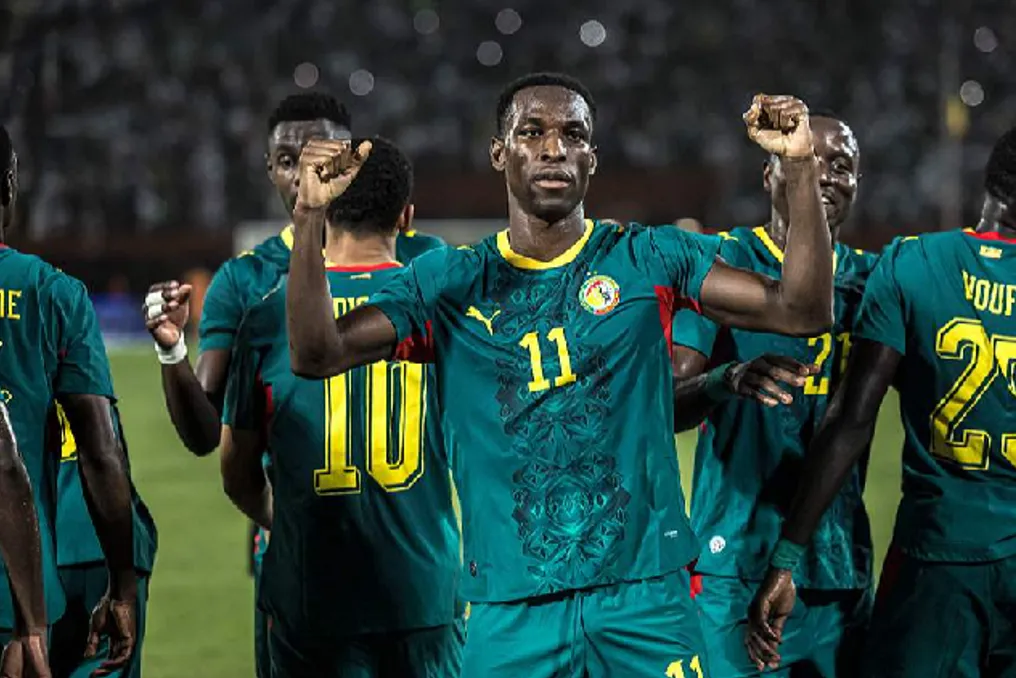
Six additional countries have guaranteed their spot in the 2027 Africa Cup of Nations: Morocco, Senegal, Benin, Burkina Faso, Cameroon, and Mali. Two more qualification rounds are yet to take place.

Morocco maintained its flawless run in Group A, defeating Niger 1-0 on Tuesday. The goal was scored by 17-year-old Abdellah Ouazzan, who netted his first international goal. North Africa accumulated 12 points after four matches.

Meanwhile, Senegal qualified without playing a single match. Mozambique's 1-0 victory over Ethiopia in Group J allowed the West Africans to avoid falling outside the top two.

This qualification process is taking place against the backdrop of an ongoing dispute between Senegal and Morocco regarding the 2025 AFCON title. Senegal was stripped of the trophy by the Confederation of African Football (CAF) appeals committee following a protest during the final, which they had initially won against host nation Morocco. The matter was reviewed by the Court of Arbitration for Sport (CAS), and a decision is expected at the end of November.

In other groups, Mali beat Rwanda 2-0, and Burkina Faso defeated Mauritania 3-1, securing qualification for both Burkina Faso and Benin from Group F. Cameroon's place was confirmed after Comoros defeated Congo 1-0.

Several teams were under pressure. Nigeria, a three-time AFCON winner, drew goallessly with Tanzania and trails leaders Guinea-Bissau by three points. Cape Verde suffered its third defeat in four, losing to Liberia 2-0.

South Africa moved closer to qualification, winning 2-1 against Kenya and taking first place in its group ahead of the decisive match against Guinea in March.

The tournament, which will feature 24 teams, will be held in Kenya, Uganda, and Tanzania from June 19 to July 17, 2027. The remaining qualification matches are scheduled for March.

Central Asian Countries and Azerbaijan are Developing a Unified System of Non-Cash Payments via QR Codes
Read more
podrobno.uz

Central Asian Countries and Azerbaijan are Developing a Unified System of Non-Cash Payments via QR Codes

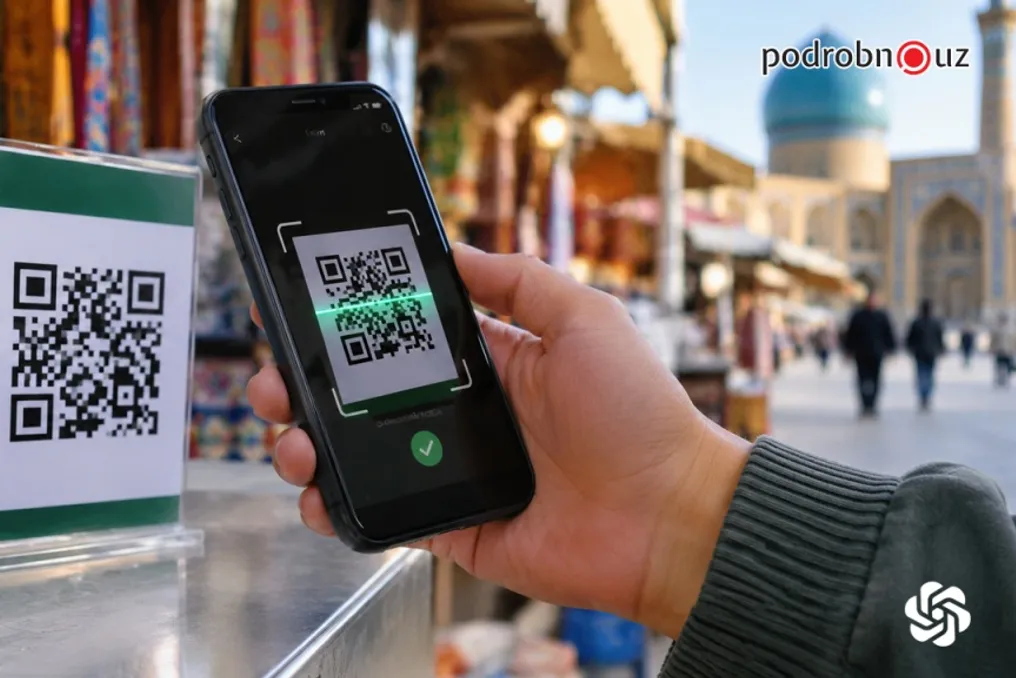
Residents of Uzbekistan in the future will be able to simplify the process of paying for purchases in Kazakhstan, Kyrgyzstan, Tajikistan, and Azerbaijan, as they will not need to install additional applications or use exchange bureaus. The central banks of the five countries have reached an agreement to work on the integration of their national instant payment systems, which will allow tourists to use QR codes through their regular banking applications.

The preliminary agreement was reached during a meeting of representatives of national and central banks held in Dushanbe. Uzbekistan, Azerbaijan, Kazakhstan, Kyrgyzstan, and Tajikistan are participating in this initiative.

A joint working group will be formed to develop the project, comprising specialists from banks and national payment systems. The group's task is to agree on technical aspects, including the format for exchanging payment messages, the structure of necessary details, and transaction security standards. Upon completion of its work, a roadmap for the gradual implementation of this system will be presented.

It is expected that the introduction of a unified mechanism will significantly ease daily financial operations for citizens traveling throughout the region, as well as stimulate the growth of mutual trade and tourism exchange.

Discussions on integrating QR payments in Central Asia have been ongoing for several months. The parties decided to forgo the creation of a separate supranational regulator, focusing efforts instead on unifying technical standards, digital identification procedures, and data exchange rules.

Some bilateral solutions are already operational; for example, in October 2025, Kyrgyzstan and Kazakhstan launched a QR payment mechanism between their banks. Additionally, Uzbekistan and Kazakhstan are in the process of preparing mutual payments using national QR codes, which will allow Uzbek citizens to pay for goods in Kazakhstan, and Kazakh citizens while visiting Uzbekistan.

Popular