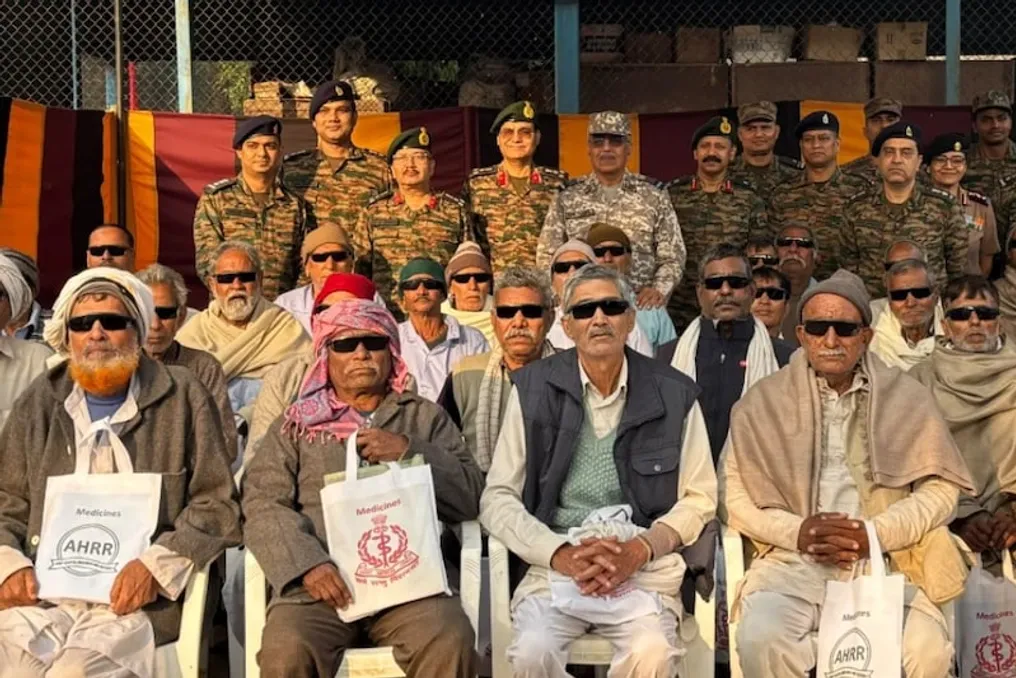
Indian Army's 'Drishhti' Operation Conducted Surgical Treatment for 412 Patients in Meerut
Read more
Aaj Tak
www.aajtak.in

Indian Army's 'Drishhti' Operation Conducted Surgical Treatment for 412 Patients in Meerut

The Indian Army once again demonstrated its readiness to serve the community by conducting a large-scale surgical eye camp at the military hospital in Meerut, Uttar Pradesh. Over three days, 412 surgical interventions were performed as part of this event, including 197 needy citizens from western Uttar Pradesh. It is important to note that all operations were performed completely free of charge.

The campaign, named 'Operation Drishhti', took place from November 21 to 25. This was the thirteenth edition of the project and was dubbed the largest eye surgery camp in western Uttar Pradesh to date. During the campaign, surgeries were conducted to treat cataracts, glaucoma, retinal diseases, and eye growths. Special attention was given to 55-60 patients who could not see due to severe and mature cataracts.

To prepare for this initiative, the army's medical team conducted screenings in several districts, including Baghpat, Bulandshahr, Hapur, Shamli, and Muradabad, by organizing screening camps. Patients requiring surgery were transported to the Meerut military hospital, where operations were carried out from November 22 to 24.

The success of this initiative is supported by numerous touching stories. For instance, the life of 30-year-old Akshay Kumar changed drastically after an eye injury in 2019. Akshay, who worked as a rickshaw driver, lost his sight. After seven years of living in darkness, he learned about this camp in Meerut and successfully underwent surgery. Another example is 63-year-old Ravinder Rati from Rajpur Kalana, who lived in darkness for three years due to severe cataracts complicated by diabetes. He decided to attend the camp, where he also had surgery performed.

The concept of 'Operation Drishhti' was developed on the initiative of Defence Minister Rajnath Singh with the aim of providing residents of remote and needy areas of the country access to quality ophthalmological treatment. The campaign was headed by Brigadier Sanjay Kumar Mishra, Head of the Ophthalmology Department of the Army Hospital (Research and Referrals) in Delhi Cantt. At the conclusion of the camp on November 25, a closing ceremony was held with the participation of the Director General of the Armed Forces Medical Services, Air Marshal Sandeep Theradji, and the Uttar Pradesh government minister Dom Somendra Tomar. They interacted with the patients and the medical team.


Similar stories

Rumors of mass eye illness in children at kindergartens in Tashkent region denied
Read more
podrobno.uz

Rumors of mass eye illness in children at kindergartens in Tashkent region denied

Information about an alleged mass outbreak of eye diseases among children attending kindergartens in the Tashkent region was actively circulating on social networks. Parents shared observations regarding redness, itching, and tearing in their children.

However, the regional health department issued a denial of these reports. The department specified that cases of conjunctivitis were recorded in only one child.

Details of the case

According to the department's data, on November 10, a child with symptoms of eye problems appeared at one of the preschool institutions in the Parkent district. The kindergarten staff decided not to allow him to attend classes and referred him for a medical examination. A district ophthalmologist subsequently diagnosed acute conjunctivitis, which is inflammation of the eye lining, and prescribed appropriate treatment.

It was established that similar signs of malaise were also present in the child's father and his older son. According to the department, all family members are receiving necessary medical support.

The kindergarten administration confirmed that the other pupils showed no signs of illness. Furthermore, no other complaints of this nature had been registered in the area.

Recommendations and context

The health department strongly recommended that parents remain vigilant about their children's health and immediately consult specialists if redness, tearing, or any discharge is observed.

It was also mentioned that a previous investigation into a mass illness among pupils of three kindergartens had been conducted in the Fergana region.

Risk of Vision Loss from Weight Loss Drugs: Doctors Advise Against Stopping Treatment Due to Fear
Read more
www.aajtak.in

Risk of Vision Loss from Weight Loss Drugs: Doctors Advise Against Stopping Treatment Due to Fear

The U.S. Food and Drug Administration (FDA) has issued a warning regarding the use of popular drugs for treating diabetes and obesity, such as semaglutide (GLP-1). The FDA pointed out the possibility of developing eye diseases (NAION) when taking these medications.

In NAION, blood supply to the optic nerve is disrupted, which can lead to sudden vision loss in one eye without pain. Following this warning from the FDA, people have raised questions about the real danger of taking GLP-1 drugs.

In NAION, there is insufficient blood supply to the optic nerve, causing sudden vision deterioration or blurring. This condition is quite rare.

GLP-1 analogs have revolutionized the treatment of diabetes and obesity; for some patients, they have improved blood sugar control, promoted weight loss, and reduced the risk of heart disease. Dr. Monica Sharma, Senior Endocrinology Consultant at Akash Healthcare, notes that, like any medication, they have side effects, but the risk of vision loss is extremely small. Therefore, patients taking these drugs should not stop treatment on their own due to fears. Nevertheless, if a person suddenly notices changes in vision, such as vision loss in one eye without pain or blurring, they must undergo an examination immediately.

Dr. Monica Sharma emphasizes that GLP-1 drugs are intended for the treatment of diabetes and weight loss. In recent years, many people have started taking drugs like semaglutide without a doctor's prescription. However, starting treatment independently is not recommended. These medications are prescribed only after assessing the patient's weight, medical history, and diabetic status, and the dosage is determined exclusively by a doctor.

Before starting GLP-1 medications, be sure to inform your doctor about your history of eye diseases. If you have diabetes, do not skip regular vision checks. If you experience sudden vision loss or blurring, consult a doctor or ophthalmologist immediately. It is also important not to change the dosage or regimen without consulting a doctor.

Popular