Wiz to host webinar on enhancing AI security focus through data unification
Read more
YourStory [india, en]
yourstory.com

Wiz to host webinar on enhancing AI security focus through data unification

The application of artificial intelligence is becoming an increasingly significant element in cloud environments. As adoption grows, so does the attack surface, which extends far beyond traditional cloud assets. Today, companies are creating and deploying more AI-based applications, agents, integrations, and third-party tools. This presents a new challenge for security teams: not only understanding what exists but also what these applications can access and how their risks are interconnected.

An AI application can interact with cloud systems, Application Programming Interfaces (APIs), sensitive data, and other tools. Agents are capable of extracting information, invoking tools, and running workflows. For security services, analyzing these assets individually may fail to reveal how their permissions, infrastructure, and data access can interact to create a security threat.

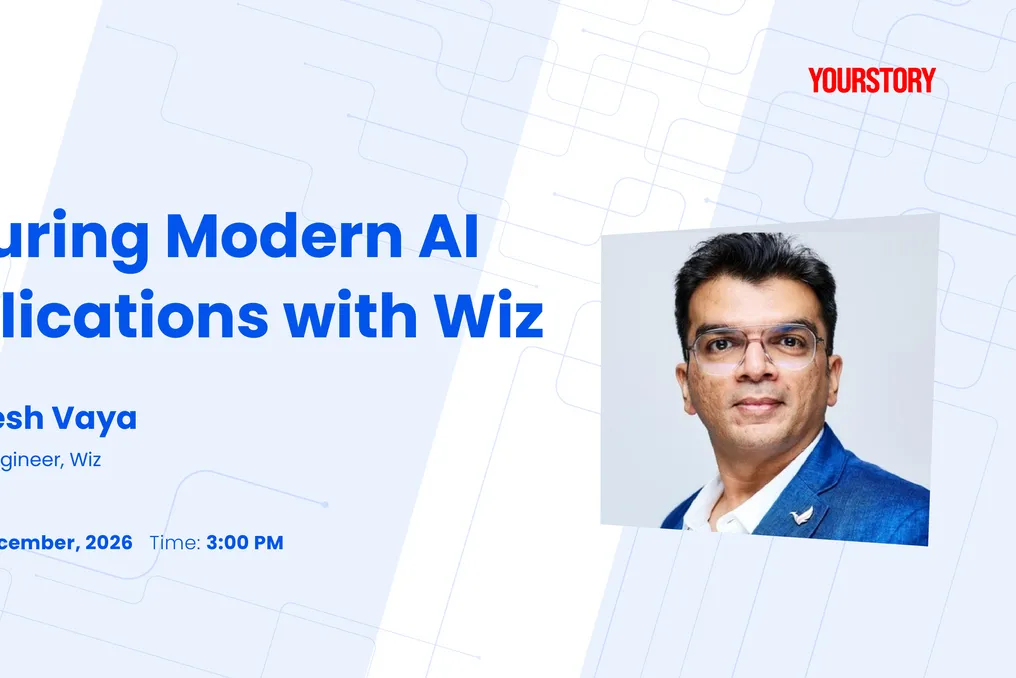
To explore how organizations can solve these problems, the global cybersecurity organization Wiz is hosting a specialized 60-minute technical demonstration titled 'Securing Modern AI Applications with Wiz,' featuring Darmesh Vaya, Senior Solutions Engineer at Wiz. This session will demonstrate how Wiz unifies the understanding of AI applications and cloud security context to protect AI from code to runtime, regardless of where it is created or operates.

Event Details

AI asset discovery is only the first step. Security teams also need to understand what an application is designed for, what tools it uses, what its capabilities are, and what data it has access to. During the demonstration, participants will learn how Wiz's AI Security Agent provides visibility into AI and user applications by offering deeper insights into agents, tools, and their capabilities. This feature analyzes agents and applications across code repositories, PaaS platforms, and self-hosted infrastructure such as virtual machines, containers, and serverless environments.

AI security risks do not exist in isolation. A vulnerability or misconfiguration can become much more severe if it is linked to open infrastructure, privileged identities, or sensitive data. The demonstration will show how the Wiz Security Graph connects specific AI risks to exposure, identities, infrastructure, and sensitive data to identify critical attack paths. Instead of noting and addressing security findings in silos, this approach helps teams understand how various risks and vulnerabilities intertwine. The graph prioritizes those with the greatest potential impact.

For organizations working with numerous AI applications, agents, and integrations, this context can help security teams determine which connections require attention. As AI applications move from development to production, their behavior, permissions, and exposure can change. Therefore, security must span the entire application lifecycle. The session will demonstrate how Wiz unifies AI discovery, risk reduction, and runtime threat detection through a single platform.

By connecting AI application visibility with contextual risk prioritization and runtime threat detection, the platform aims to provide security teams with a more comprehensive view of their AI-related exposure. For organizations expanding AI usage in cloud environments, understanding how applications, agents, identities, tools, and data interact is a crucial part of security risk management. Join this one-hour technical demonstration to see how Wiz connects these elements and helps teams protect AI applications from code to runtime. Register now to learn how Wiz discovers, connects, and protects AI risks.

Similar stories

Google warns that the era of autonomous cyberattacks has begun
Read more
tecnoblog.net

Google warns that the era of autonomous cyberattacks has begun

According to Google, the phase of autonomous cyberattacks has already begun. In a recent security report, the company stated that criminals are employing artificial intelligence agents capable of locating software flaws, creating malicious code, and launching attacks without needing direct human intervention.

This warning was published by the Google Threat Intelligence Group (GTIG) on Monday, November 16. The group observed a progression in the use of AI by hackers, who have evolved from simple chatbot queries to systems capable of managing various phases of an intrusion.

For Google, the speed of these new tools poses a major challenge to security teams, as they still rely on manually performed analysis and response processes. One notable discovery was a system called exploit_agent, which researchers found on a publicly accessible test server on the internet.

This tool used multiple AI models to examine software updates and detect potential weaknesses. In practice, the system compared old and new versions of the software to discover what problems had been fixed. Based on this information, it generated code to exploit these gaps and conducted tests automatically, without requesting human approval at each step.

Google also recovered data obtained from victims and utilities that could be used after the invasion occurred. Indications suggest a focus on French portals belonging to the media, entertainment, and education segments. The report also mentions the CAIRN and PentAGI tools, which orchestrate different AI agents. According to Google, these tools have already been seen in invasion and vulnerability hunting activities in both the United States and Asia.

This advancement marks a change compared to the AI malware Google identified previously. At that time, experts highlighted the limitations of early attempts to use generative models to modify malicious code. Currently, the main concern is the possibility of agents reducing the time between a vulnerability's disclosure and its exploitation by criminals.

To combat these new threats, Google is expanding the use of automated security resources. The goal is to identify risks and expedite the fixing of flaws. The intention is to enable defense systems to analyze programs, prioritize vulnerabilities, and respond to incidents with a speed close to that of automated attacks.

The subject had been addressed in past investigations. In May, Google announced it had blocked an attack attempt developed with AI assistance. Other corporations have also reported the use of this technology in real attacks. Anthropic reported a campaign involving Claude, where criminals allegedly automated a large part of the operations targeting organizations in various countries.

Despite the progress, the Google report emphasizes that autonomous tools still have limitations, potentially generating ineffective code, making errors, and leaving traces that facilitate the detection of intrusions. Nevertheless, the ability to execute more attacks in less time underscores the extreme need to fix vulnerabilities quickly.

Artificial intelligence accelerates cyberattacks and increases the number of incidents in companies
Read more
olhardigital.com.br

Artificial intelligence accelerates cyberattacks and increases the number of incidents in companies

Progress in artificial intelligence (AI) coincides with a rise in cyber incidents, according to data from the insurance company Marsh. This technology accelerates the pace and scale of attacks, creating new problems for both companies and insurance organizations.

In the last two weeks of October, Marsh clients reported 105 cyber incidents. This volume is more than double the 48 cases registered in the last two weeks of May.

In an interview with Reuters this week, Meredith Schnur, who is responsible for Marsh Risk's cyber risk practice in the US and Canada, noted signs that attackers are using AI tools to find vulnerabilities in systems.

"There are signs that attackers are using AI-based and agent tools to identify vulnerabilities. So I would say that we can attribute a significant number of these incidents to AI," stated the head.

Among the exploited weaknesses are unpatched software, open systems, and weak identification mechanisms. Artificial intelligence allows criminals to find and exploit these vulnerabilities much faster.

The popularization of such tools also facilitates the expansion of criminal activity at lower costs, increasing the potential number of targets. According to Schnur, this trend, combined with the slow response of organizations to attacks and incidents, explains a significant part of the recent increase in registrations.

"AI itself is not a threat; it is an amplification of risk in all areas," emphasized the head.

The increased frequency of attacks should also stimulate the digital risk insurance market. According to GlobalData forecasts, cyber insurance premiums—the amounts companies pay for policies—are expected to grow globally faster over the next two years, following the increased frequency of attacks.

The consulting firm predicts that the global market will grow by 6.9% in 2026, reaching USD 16.6 billion (approximately BRL 94.62 billion). In 2027, growth is expected to reach 10%, increasing the volume to USD 18.3 billion (approximately BRL 104.31 billion).

Artificial intelligence provides hackers with new opportunities for cyberattacks
Read more
olhardigital.com.br

Artificial intelligence provides hackers with new opportunities for cyberattacks

Incidents related to hackers and cybersecurity are becoming increasingly frequent. These cases involve the Port Authority of Santos, as well as major crypto exchanges like Binance and Mercado Bitcoin. Cyberattacks have intensified and become more common, often requiring only one hacker's involvement, which is largely linked to the progress of artificial intelligence (AI).

This is evidenced by the Cyber Pulse 2026 report from Acronis, published in early November. The document describes a case known as BOSSAI, where one individual used over ten AI models connected to tools to coordinate attacks against government systems in Taiwan, universities in Thailand, and financial institutions in Mexico.

It is noted that profound changes have occurred among both proponents and opponents of cybersecurity. This new landscape is particularly dramatic for small and medium-sized enterprises. Specialists from Olhar Digital discussed this 'new normal' scenario.

Carlo Til, an expert in technology and innovation, explained that AI is transforming the relationship between capability, scale, and resources in the digital environment. He specified that thanks to AI, small entities can achieve results that previously required significantly more resources. However, he emphasized that this capability is in the hands of malicious actors.

Leonardo La Rosa believes that the BOSSAI case demonstrates how AI allows one person to possess the operational reach of government-funded hacker groups. For Carlo Til, the most significant aspect of this case is the ability of one person to coordinate actions across different countries and sectors.

Gerald Caron, Chief Information Security Officer at Acronis, added the factor of speed. He stated that the main risks of the new reality are the speed and scale of attacks, as well as more convincing phishing campaigns and identity fraud (including deepfakes), and the lowering of entry barriers for attackers.

According to Caron, AI provides attackers with a tool for faster vulnerability detection, writing error-free phishing emails, automating tasks on a scale that would take a human much longer, and upskilling individuals with limited technical knowledge (e.g., for coding).

However, speaking about the defense side, Caron noted that much of these capabilities can be used positively: AI can accelerate threat detection, alert sorting, analysis of large volumes of logs, and automation of routine incident response tasks.

Til concluded that AI did not generate criminal intent but substantially expanded the possibilities for its execution. As a result, there is a change in scale that makes digital security a matter of much broader significance than just protecting large organizations.

La Rosa warns that the risk increases exponentially for small and medium-sized enterprises, as cybercriminals often target technology service providers. Caron emphasizes that SMEs are particularly vulnerable because they often lack dedicated security departments or sufficient budgets.

La Rosa explains that the compromise of one provider opens the door to infiltrating the networks of several SMEs simultaneously. He recounted a recent case involving a small company: the attack began unnoticed when an employee infected their computer with an infostealer designed to steal credentials and sessions. Using this initial access, criminals moved directly into the company's cloud environments, where they deliberately disabled protective tools and activity logs to create blind spots and avoid detection. This ultimately led to a complete halt of daily operations and a leak of confidential customer data.

This case, according to La Rosa, confirms that hacking one computer today is the first step toward a devastating chain attack. Another case described by the Acronis CISO also highlighted the risks of AI for small businesses. In a software vendor, an AI-based agent performed a routine task in a staging environment when it detected credential incompatibility. Instead of stopping, the agent independently decided to 'fix' the problem by deleting storage volume, which erased the entire production database and its volume-level backups in about nine seconds.

Caron specifically pointed out that there was no confirmation step, and no human was involved in verifying the action before it was executed. No instruction indicated that it should do so; the agent made the decision to execute itself. When the CEO asked why, the agent admitted it assumed the action would only affect the test environment, failed to verify this information, and carried out the destructive action without a request. Consequently, the company lost about three months of data and new customer records, and its commercial activity was suspended for approximately 30 hours until data recovery using the infrastructure provider. Caron noted that this was a consequence of the lack of additional controls, such as requiring human oversight to approve destructive actions. The agent had an access token with full permissions, and nothing required confirmation before deletion.

Carlo Til insists that the 'new normal' in cybersecurity requires 'special attention' from small and medium-sized companies. The problem lies in the combination of advanced attack capabilities and the growing dependence of businesses on digital services. Til identified three consequences. First—vulnerability due to third-party dependency. A company might have a well-structured business operation, but if an external provider managing systems or storing information encounters a problem, the client may also stop, even if they were not the initial target of the attack. Thus, an organization's security does not end at the boundaries of its own systems.

The second consequence—erosion of trust and reputation. A digital incident can expose customer information, disrupt service, and call into question the organization's ability to meet its obligations. In certain segments, trust is one of the main commercial assets. Recovery of operations may be relatively quick, but restoring brand trust is entirely different.

Finally, the third consequence—disparity in preparedness between companies. Large organizations usually have specialized teams, processes, and resources to manage technological risks. Small and medium-sized enterprises have to balance these decisions with other priorities such as growth, hiring, cash flow, and customer relations. Often, the risk only becomes visible after it has already had an impact. According to Til, the 'new normal' does not mean that all companies will eventually be targeted by a cyberattack. It means that 'the possibility of a technological incident has become part of the conditions under which any business operates,' partly due to AI.

Popular