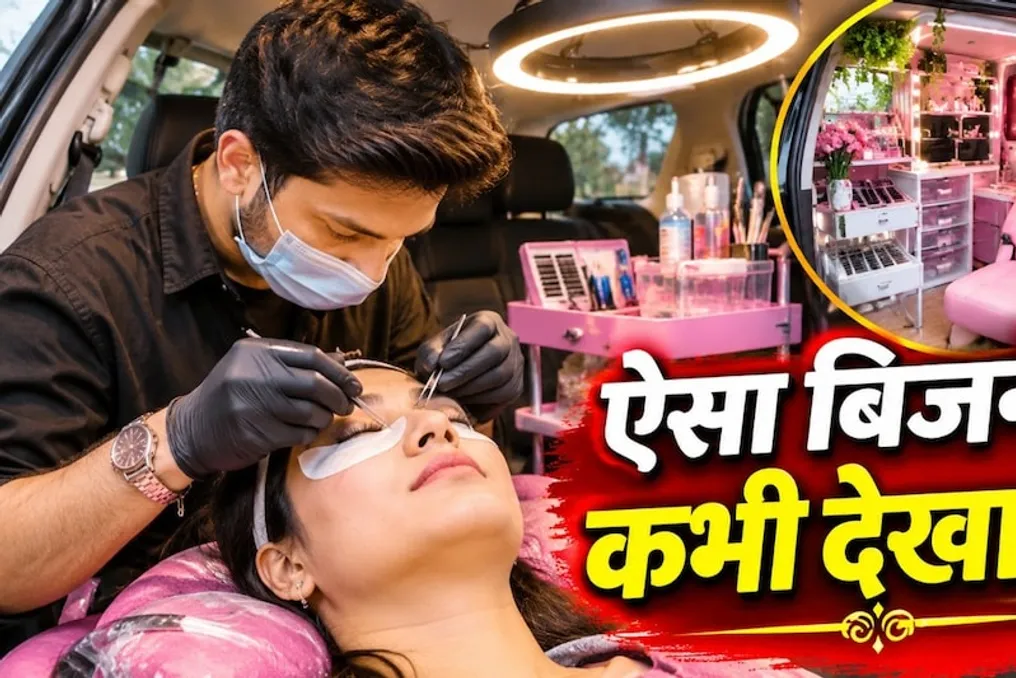
Man in China earns 6.5 lakh per month by turning his car into a mobile beauty salon
Read more
Aaj Tak
www.aajtak.in

Man in China earns 6.5 lakh per month by turning his car into a mobile beauty salon

In China, one individual has developed a unique method of earning money that is actively being discussed on social media. Instead of using his car only for transportation, this person has converted his vehicle into a mobile beauty studio. He provides services to enhance women's eye appearance while working directly in the car.

He claims that through this small business, he earns about 50,000 yuan monthly, which is equivalent to approximately 6.5 lakh Indian rupees. This man, named Xiaofei, is from the city of Chongqing in China and is about 30 years old. In his car, he offers eyelash extension services.

The specialty of his business is that he does not need to visit large beauty salons or stores. He uses his car as a studio and delivers services to clients on-site. This allows clients to receive service without leaving home and at a time convenient for them.

Xiaofei's story is interesting because he was not initially involved in the beauty industry. Before starting eyelash extensions, he worked various jobs, including mechanic, electrical welder, and truck driver. About three years ago, he began his career as an eyelash extension technician, gradually mastering the profession and building his own business in this field.

According to Xiaofei, many female clients wanted him to come to their homes to perform the eyelash extension procedure. However, since he is a man, this could cause discomfort for some clients and also create inconvenience for the clients themselves. To solve this problem, he equipped a workspace directly in his car. Now, clients come to his car to receive the eyelash extension service, saving them the need to visit salons.

Clients pay more for the eyelash extension service in Xiaofei's car than in regular beauty salons. According to reports, he charges between 300 and 500 yuan per client, which is approximately 3500–6000 Indian rupees. The work on one client takes about an hour. First, he photographs the client's eyes and lashes, and then, using photo editing, shows various lash designs. The client chooses the design they like, after which the extension is applied to the lashes according to the selection.

This unusual business model of Xiaofei is attracting public attention on social media. Some users praise his idea, while others believe that with skills, one can build a successful business even in a small space. Xiaofei asserts that his mobile beauty studio in a car brings him a monthly income of about 50,000 yuan, or approximately 6.5 lakh rupees. His story demonstrates that starting a business does not always require large stores or expensive offices; a new path to earning can be found by understanding customer needs and showing creativity.

Similar stories

Content creator Jotica Singh earned 2,420 rupees from her main job and content, with an additional income of 90,000 rupees
Read more
www.aajtak.in

Content creator Jotica Singh earned 2,420 rupees from her main job and content, with an additional income of 90,000 rupees

In the modern world, many people strive to create additional sources of income alongside their main job. This does not always require large investments or the development of a new business plan. A prime example of this approach is the content creator Jotica Singh. She managed to monetize her existing skills, which opened up a new path for her earnings.

Jotica Singh previously earned by combining full-time employment with content creation. However, she transformed her understanding of social media and content strategy into a new activity. According to her, it was thanks to this new direction that she received an income of 90,000 rupees in October.

Jotica shared a detailed report on her October earnings in a video published on social media. According to her data, the total income for that month amounted to 3.32 lakh rupees. Of this amount, 1.15 lakh rupees came from her main job, and 1.27 lakh rupees came from content creation. Additionally, a new project in branding consulting brought her 90,000 rupees.

Using her experience in creating and promoting organic content on social media, Jotica decided to launch her own side business. The first step was to compile a list of 100 brands whose products matched her interests. This list included brands related to cosmetics and clothing. She then began sending cold emails to these companies, offering her services without prior acquaintance or contact.

Jotica's work involves planning organic content for brands. This includes generating content ideas, conducting research, and suggesting new topics and formats to increase brand reach on social media. Meanwhile, the responsibility for the actual creation and publication of content on the brands' accounts remained with the companies themselves. Initially, she faced the issue that many companies offered her low pay, ranging only from 2 to 5 thousand rupees. However, considering this rate too low for her experience and level of work, she started setting her price at 30 thousand rupees per brand.

Thanks to this approach, three brands agreed to collaborate with her. Nevertheless, she clarified that payment from the third brand had not yet been received. In her video, she emphasized that the income from this new consulting activity reached 90,000 rupees.

Based on her experience, Jotica advised people to identify their skills and consider how they can be used to create new earning opportunities. She noted that by understanding one's own abilities and developing a well-thought-out plan that is then consistently implemented, a second source of income can be created even while having a main job.

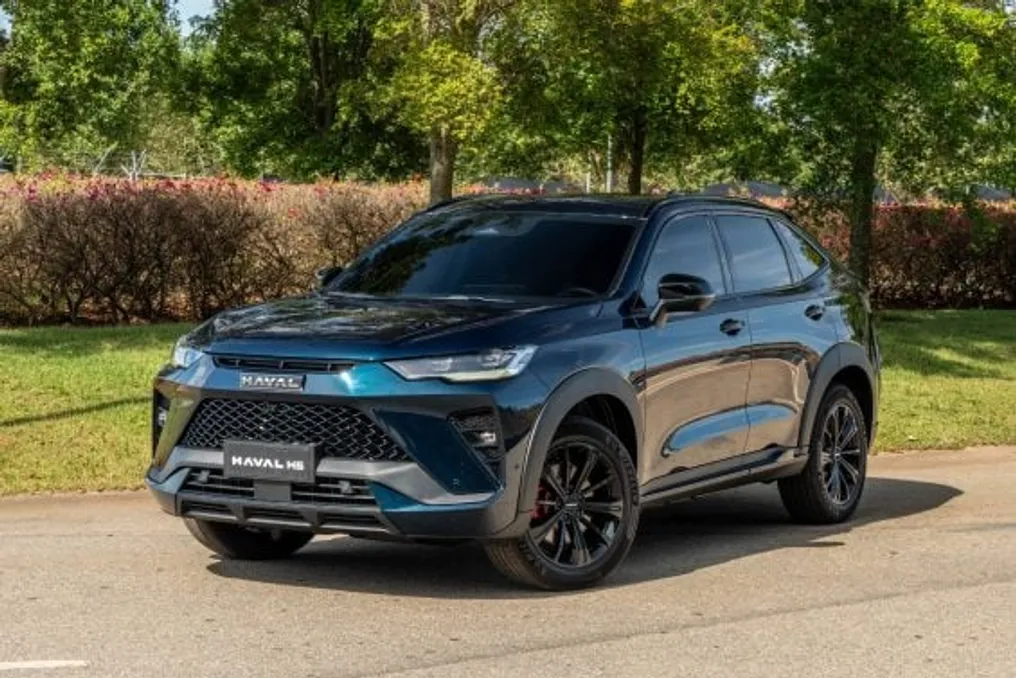
Haval H6 approaches leadership among best-selling cars in Brazilian retail
Read more
autopapo.com.br

Haval H6 approaches leadership among best-selling cars in Brazilian retail

Over the last three years, the retail sector has shown distinct growth in the Brazilian market, presenting a sales profile different from that observed in direct sales. In October, the most commercialized vehicle in this modality was the BYD Dolphin Mini, which achieved a minimal advantage of only 100 units over the GWM Haval H6.

For comparison, in direct sales, the Hyundai HB20 registered the highest number of registrations. However, in the retail segment, this model occupied the 36th position, totaling only 993 units sold.

The progress of Chinese vehicles is notable in this type of sale, although established brands maintain a strong presence. In October, the Toyota Yaris Cross ranked third, followed by its competitor, the Volkswagen T-Cross.

The combustion engine hatchback with the best performance in retail was the Chevrolet Onix. Regarding entry-level SUVs, the Volkswagen Tera leads the ranking, positioning itself in sixth place.

The hybrid SUVs Omoda 5 and Jaecoo 7 have been standing out in retail. These brands belonging to Chery are achieving the best results among new Chinese models launched in 2025 and 2026.

There was a drop in new car sales in retail during October; the participation of this channel decreased from 53.7% to 51.9% when compared to September. This reduction can be partly attributed to the electoral period.

Considering the year-to-date accumulation, retail accounts for 55% of all automobile registrations in Brazil. In this annual overview, Volkswagen leads sales in this modality, followed by BYD. Chevrolet holds the third position, Fiat is in fourth place, and Toyota is in fifth place.

Popular