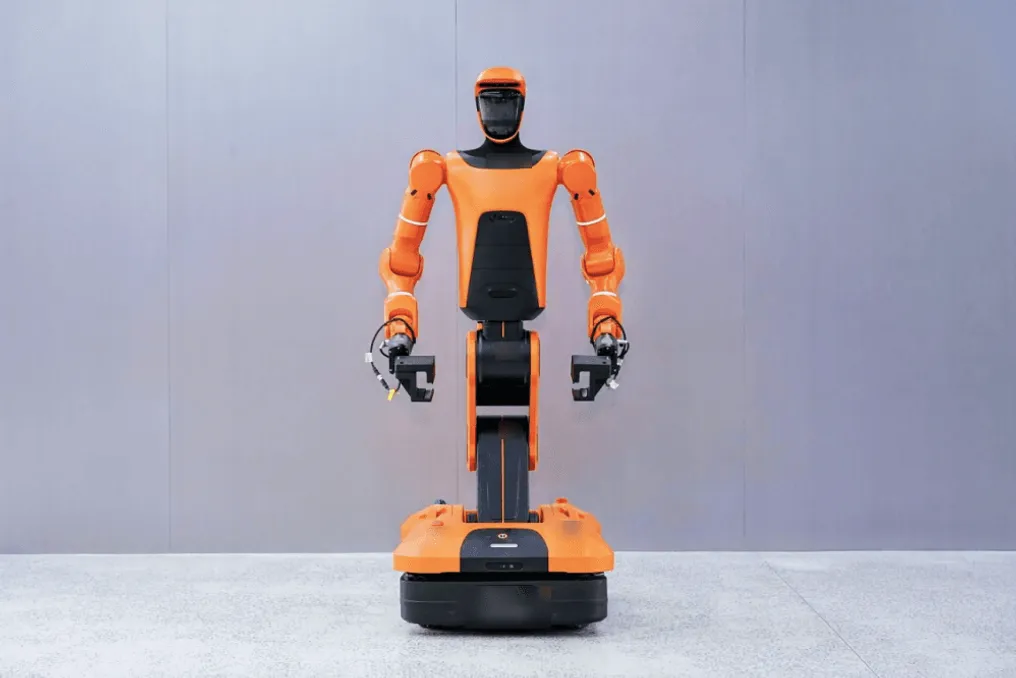
FiveAges presents CE conformity assessment reports for its wheeled robot Jiling
Read more
Pandaily
pandaily.com

FiveAges presents CE conformity assessment reports for its wheeled robot Jiling

FiveAges has announced that its wheeled humanoid robot, Jiling, has completed a comprehensive set of compliance and safety assessments related to CE marking. Furthermore, the company has entered into a cooperation agreement with the testing organization SGS. The Chinese reports mention a certificate presentation ceremony scheduled for November 24th and position this work as preparation for industrial application in Europe.

According to information from the company itself, this package of checks covers machinery safety, radio equipment, and electromagnetic compatibility. Functional safety assessments according to the ISO 13849 series and cybersecurity work addressing standard EN 18031 were also conducted. The reports also refer to collaborative robot assessments based on ISO/TS 15066 and EN ISO 10218-2. These categories describe the scope of the assessment performed; however, certificate identifiers, tested configurations, and any exceptions were not independently verified for this article.

It is important to distinguish between technical data and marketing claims. FiveAges and the presented reports use broader promotional descriptions: 'the world's first wheeled humanoid robot capable of operating in the European Union without safety isolation.' This priority claim has not been independently confirmed and should not be considered a legal conclusion applicable to all factory settings, tasks, or robot installations.

The European Commission clarifies that the CE marking is a manufacturer's declaration that the product complies with applicable requirements, not confirmation that the EU or another body has deemed the product safe. Therefore, the claimed certification package should not be interpreted as an unconditional authorization to remove protective barriers in any deployment; applicability still depends on the intended use of the robot and the conditions considered in the safety assessment.

The company describes protective functions, such as speed reduction or safe stopping when people approach, as well as safety control functions. These statements pertain to the declared safety design but do not establish independently observed reliability in an active European production line. The announcement did not confirm the existence of new motion performance benchmarks or completion of deployment in the European park.

In public English communications by FiveAges, the name Jiling is used, including the trademarks Jiling-L1 and Jiling-S1. This certification report does not independently specify which configurations are covered. Since no directly verifiable SGS announcement or certificate registry entry could be found in public materials, the certification and its scope remain attributed to the company's report.
Similar stories

X Square Robot introduces WALL-OSS-1.0 model with planning mechanism and API
Read more
pandaily.com

X Square Robot introduces WALL-OSS-1.0 model with planning mechanism and API

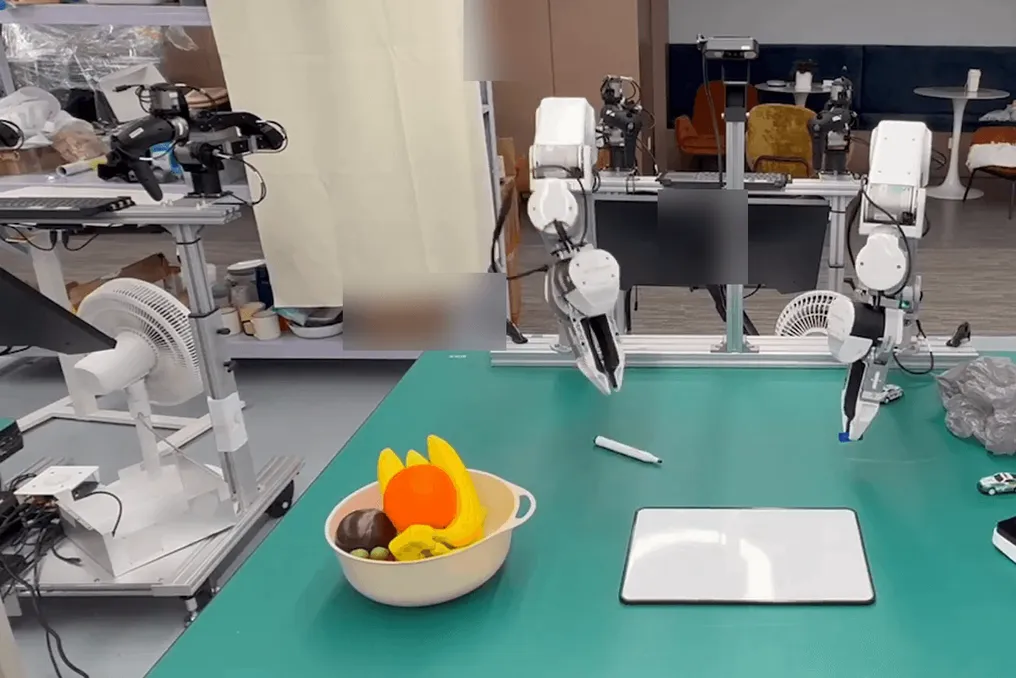
X Square Robot has introduced the WALL-OSS-1.0 model on November 23rd, accompanied by a vision and language-based foundation, the XR Harness coordination structure, and the WALL-API-1.0 interface for developers. The company asserts that preliminary training should be used to solve unfamiliar manipulation tasks, rather than fine-tuning for specific tasks.

Chinese reports and the company's technical presentation describe two training stages. In the first stage, action data along with multimodal materials are used to link language and vision understanding with physical behavior. In a later stage, an action expert is added to improve action generation. These descriptions are those provided by the developers, not an independent assessment of general intelligence.

In an open evaluation involving 312 different real-world tasks selected by assessors, the company reported a zero-shot success rate of 55.1% without demonstrations or task-specific fine-tuning. Examples include working with unfamiliar objects, tool use, coordinated two-handed manipulation, and recovery from interruptions. This figure is a result stated by the provider within its evaluation conditions, not a guarantee of reliability in arbitrary conditions.

Separately, the company reported a score of 1101 out of 1500 in its physical robotics evaluation, ManipArena. The presentation explicitly emphasizes that this comparison differs from the 312-task evaluation because the task sets and protocols vary. These results should not be combined into a single benchmark or considered independently reproducible.

XR Harness divides longer tasks into planning, execution, and hardware interaction stages. The planning level adjusts steps based on observations and feedback; WALL-OSS-1.0 executes individual steps, while another level connects to the robot's controllers and sensors. This structure is designed for model coordination, not for ensuring readiness for uncontrolled deployment.

The public weights have a narrower scope. The company's Hugging Face organization lists wall-oss-1.0-lite-robodojo and the corresponding base repository, both marked with the Apache-2.0 license and containing available weight files. Their registered updates predated the announcement on November 23rd.

The first variant is based on the Qwen3.5 policy, fine-tuned for RoboDojo simulation; its card indicates it has not been tested on real robots. The base card is positioned as a preview that is not identical to the Lite release. These checkpoints do not confirm the full announced family of models, the API system, or the policy underlying the 312-task physical evaluation in the form of downloadable weights.

CEPRI Institute Developed Robot to Inspect 35 Insulators in Six Minutes
Read more
pandaily.com

CEPRI Institute Developed Robot to Inspect 35 Insulators in Six Minutes

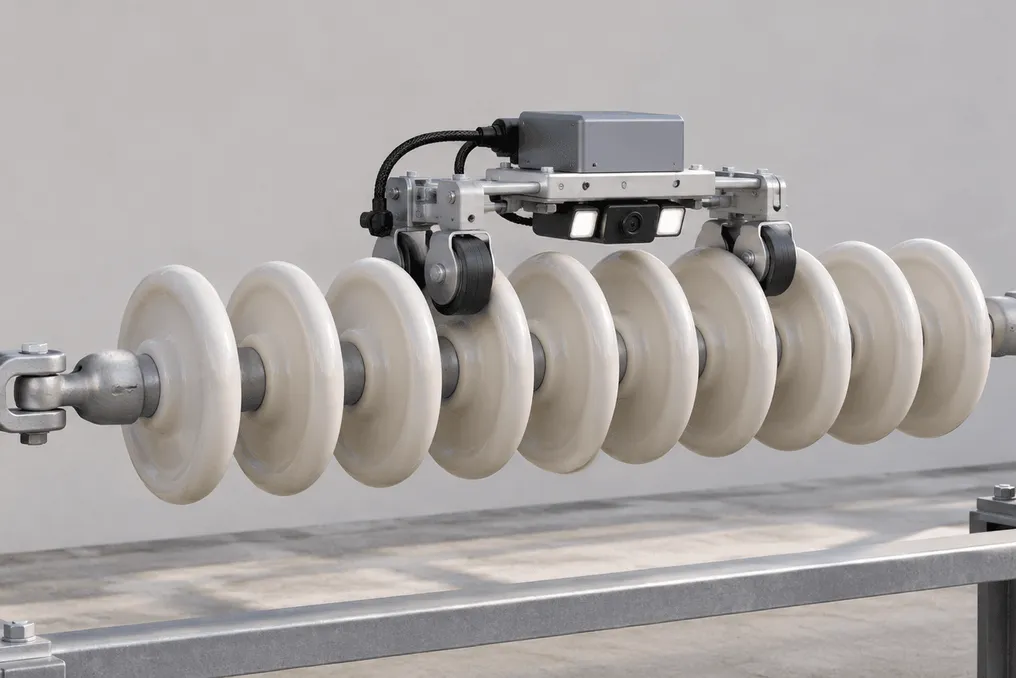
The Chinese Institute of Electric Power Research (CEPRI) has created a robotic system designed to diagnose defective insulators on high-voltage power transmission lines. This system allows inspections to be conducted without taking the line out of service or requiring personnel to climb onto the towers.

The system is aimed at detecting low resistance or zero values in porcelain insulators. These components typically provide electrical insulation while simultaneously withstanding mechanical loads. Prolonged exposure to weather conditions, as well as electrical and mechanical stress, can lead to deterioration of the insulator material, potentially causing insulation failure or damage to the entire insulator string.

The institute's research group specializing in transmission reported that they combined photoelectric probing with the analysis of electric field distortions caused by these defects. Over a development period exceeding five years, the team miniaturized crystalline sensors, expanded their measurement range, and integrated the detection method into a complete robotic setup.

According to the report, the full development cycle and comprehensive testing of the system were completed in October. The mention of November 23rd refers to the date of the report's publication, not the moment the robot began operating nationwide or was deployed in a large commercial park.

In a scenario inspecting a 500 kilovolt power line, project staff stated that the robot is capable of checking a string of 35 insulator discs in approximately six minutes. They also cite identification accuracy rates above 95% and operational efficiency that is about 80% higher than traditional manual inspection.

It is important to note that these results are data provided by the project for the described configuration. The article does not present a full evaluation sample, a detailed definition of the baseline efficiency, or independent replication of the data. Therefore, these figures should not be considered a universal guarantee of inspection for all voltage levels, weather conditions, or insulator designs.

Avoiding climbing onto towers during inspection can reduce the risk of height exposure and danger from live lines for workers. However, this does not mean that the installation, maintenance, and any associated tasks are completely safe, nor that human supervision is not required throughout the equipment's lifecycle.

The cited report does not include the name of a commercial model, the number of deployed units, or an implementation schedule. Its contribution is limited to the claimed achievement of integrating sensors and robots with specific test assertions, distinguishing it from inspection systems that use drones or lifts employed by other utilities.

Popular