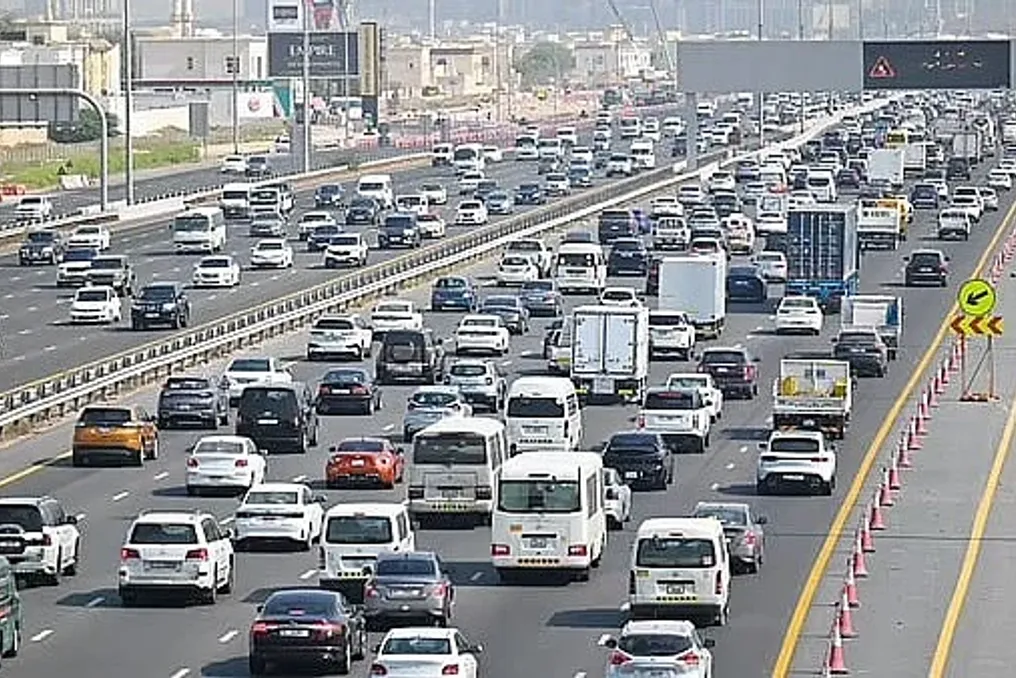
A few months ago, Nabil Mansour, an expatriate from Egypt living in Al Nahda, faced the issue of his commute home from his office in Al Quoz taking almost two hours due to road detours, long queues, and slow traffic. However, in recent weeks, the situation has started to change, and he has begun returning home earlier.
This outdoor sales employee reported that his evening commute time has decreased from nearly two hours when construction began to about an hour and a half. He noted that morning trips to the Corniche bridge are still slowed down by detours along the Corniche, but the evening journey through the new tunnel on the Corniche road and the new connection towards Al Nahda saves him 20 to 25 minutes.
For Mansour, the timing is also important: being able to pass through heavily congested sections near the Dubai-Sharjah border earlier contributes to a smoother journey further on. Nevertheless, getting stuck in queues in these areas can still significantly increase travel time.
Mansour is one of many drivers who have noticed improved traffic between Dubai and Sharjah after the opening of new road connections at the beginning of this month. However, their experience shows that the relief depends not only on the route and direction of travel but also on the time of departure from home or work.
Ashif K, an Indian accountant living in Al Majaz 3, also noted that the evening trip from Abu Hail to Dubai has become easier, although congestion has not completely disappeared. During construction, his evening commute took about an hour, but now it takes approximately 40–45 minutes.
He explained that since he starts work late, the morning hours are never the most difficult. The main change occurred in the evening when he returns to Sharjah, where difficulties now arise. Ashif usually leaves at 10:20 AM, avoiding the early morning rush hour when thousands of drivers head to Dubai. However, his return journey starts around 8:00 PM, when many roads leading into Sharjah are very busy. He added that evening traffic towards Al Taawun from Dubai remains heavy.
One of the main bottlenecks is the point where traffic splits into three directions: towards Al Nahda, Al Taawun, and the Buhaira area.
For Nasima Ahmed, a teacher living near the Sahara Centre in Al Nahda, the improvements are minor but welcome. Nasima starts her journey much earlier. Every morning, her husband drives her to work in Al Garhoud before heading to his office. Since classes start at 7:00 AM, they leave home at 6:00 AM to avoid the morning rush. Two months ago, the trip took about 45–50 minutes in the morning, but now it takes approximately 35 minutes.
She noted that ten to fifteen minutes may seem like a small amount, but at this time, it is the difference between starting the day calmly and starting it in a hurry. Nasima reported that managing traffic at the junction near the Dubai-Sharjah border has become easier thanks to the opening of some new links. Nevertheless, for her, leaving early remains important, as even a small delay can lead to getting caught in more intense traffic. She also completely avoids evening drives.
After finishing work around 3:00 PM, she uses the Dubai Metro from Al Garhoud, transfers from the Red Line to the Green Line at Union Station, and then goes to Stadium Station. From there, she takes a short bus and walks home. She concluded: 'Car in the morning, metro in the evening—that's how we manage.'
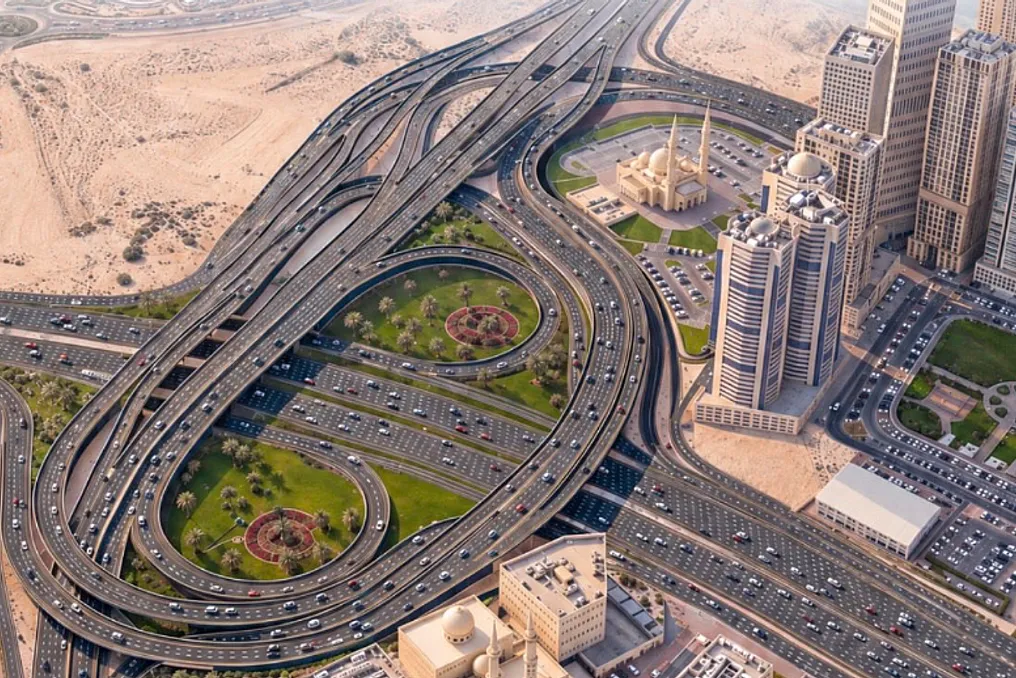
These improvements became possible after the opening of the first phase of the new Sharjah road network on November 4th. The project includes the partial opening of the Al Taawun interchange, as well as new bridges and intersections connecting major roads towards Dubai. The first phase provides one-way traffic from Sheikh Mohammed bin Zayed Road towards Expo Centre Sharjah. However, several connections are still under development, including the Al Taawun tunnel and other intersection improvements.
Another major project is planned along Al Ittihad Road, one of the main routes between Dubai and Sharjah. The Ministry of Energy and Infrastructure recently announced a tender for improvements at the Al Nahda interchange and Al Ittihad Road. This project involves eight bridges with a total length of four kilometers and 4.5 kilometers of service roads. Although these changes are expected to improve traffic flow, confirmation of the construction of the new Al Ittihad road project has not yet been received.