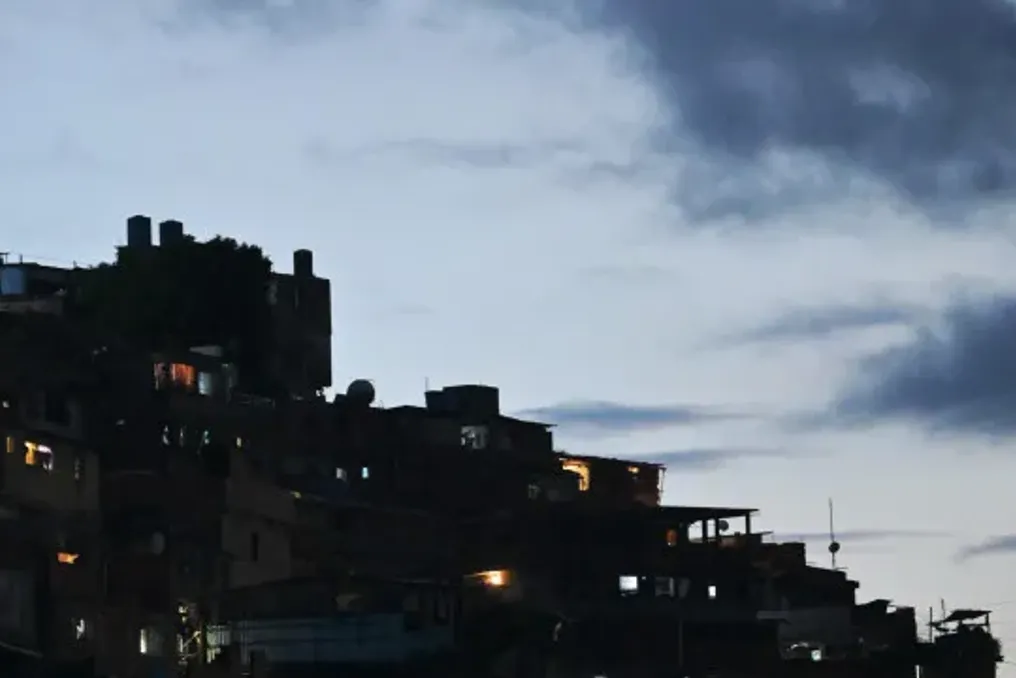
Venezuela records highest electricity demand in nine years amid consumer complaints
Read more
Noticias ao Minuto
noticiasaominuto.com

Venezuela records highest electricity demand in nine years amid consumer complaints

Venezuela is recording the highest electricity demand in the last nine years. This increase coincides with user complaints about outages, failures, and fluctuations in power supply.

According to data from the National Electric Corporation (Corpoelec), the peak demand was reached on Tuesday, November 23, within the National Electric System (SEN), amounting to 16,597 megawatts (MW). In a joint statement with the Ministry of People's Power, the state company explained that this figure also reflects an increase of 9.3% compared to the maximum peak registered in 2025.

Local authorities attribute the increased demand directly to high temperatures and the consequences of the 'Super El Niño' climate phenomenon, as well as the country's economic recovery. These factors, according to the authorities, stimulate consumption and create maximum load on the electrical infrastructure during the hottest and most active hours.

The statement calls on citizens for joint efforts and shared responsibility, suggesting the rational use of high-consumption equipment during peak load hours in the day and evening to reduce the strain on local circuits.

Corpoelec also emphasized that its personnel are under constant monitoring and are operationally mobilized around the clock to ensure network stability.

Parallel to the local authorities' announcement of rising demand, the local press reports that residents of several inland states, including Lara, Aragua, Portuguesa, Cojedes, and Guárico, continue to face unplanned power outages lasting from 8 to 16 hours per day, as well as frequent voltage fluctuations that damage household appliances. The press notes that Corpoelec does not publish an official load management schedule (electricity rationing).

Over the past two months, Corpoelec has been forced to repeatedly deny false rationing schedules and fake messages spread on local social networks due to uncertainty among consumers.
Similar stories

Venezuelan workers hold partial strike in public sectors demanding salary adjustments
Read more
noticiasaominuto.com

Venezuelan workers hold partial strike in public sectors demanding salary adjustments

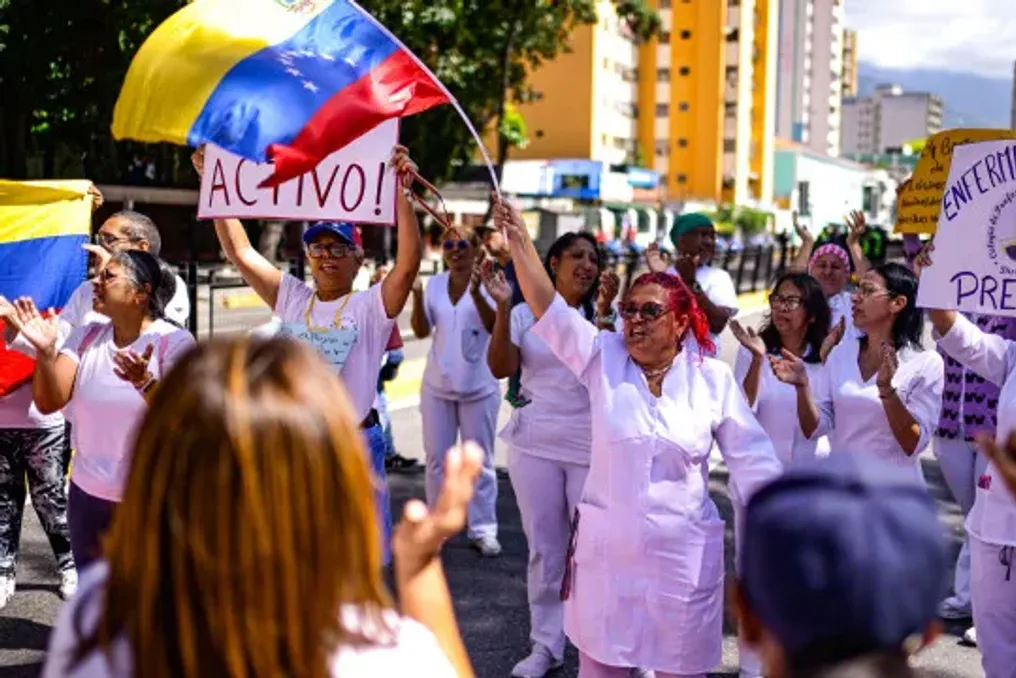
Employees in the health, education, and university sectors in Venezuela participated in a twelve-hour partial strike, the first since Delcy Rodríguez assumed the role of interim president of the country. The main objective of the workers was to pressure for salary increases and the receipt of an adequate Christmas bonus.

According to data compiled by local unions and labor associations, the stoppage achieved an average national participation rate of 80%. Participation was even higher in public universities, reaching 90%, while in hospitals, adherence varied between 60% and 80%, at which point only essential emergency services were maintained.

In Caracas, protesters, including retirees and pensioners, blocked important traffic routes, such as the Francisco Fajardo highway near the Central University of Venezuela (UCV), and the road connecting the capital to the neighboring coastal state of La Guaira, in the city of Catia.

Mauro Zambrano, a union leader in the hospital sector, told journalists that the workers were on the streets and that the strike would continue because they would not accept a symbolic subsidy. He warned that otherwise, highway blockades would become daily.

In the Venezuelan capital, peaceful and simultaneous protests occurred in various locations, such as Plaza Venezuela, San Martin, Catia, Plaza O'Leary, Caricuao, Altagracia, and Antímano. During these events, posters displayed phrases such as 'infamous salaries,' 'salary increase now,' and 'we demand decent wages.' The private television channel Venevisión broadcast images of these protests, which were also reported by the local press in other states, including Aragua, Anzoátegui, Apure, Barinas, Carabobo, Zulia, Bolívar, and Lara.

The local press reported that more than 120 union and professional organizations supported these actions. Protesters contest the fact that the minimum wage and basic pension have been frozen since March 2022 at 130 monthly bolívares, which is equivalent to approximately 12 cents of the euro at the current official exchange rate. This amount contrasts significantly with the monthly income of 240 dollars (218.22 euros) obtained in the private sector.

Furthermore, they reject the fractional payment of 150 dollars (136.40 euros) regarding the Christmas bonus, demanding the full amount of 960 dollars (873 euros), as stipulated in collective agreements.

Deyanira Romero, representative of the University Workers' Union, told journalists that this stoppage is just the beginning and that they will not give up the streets, potentially escalating into a general strike. She warned the government to consider the workers if it wishes to prevent such a strike.

Teachers claim that the sector is in a 'humanitarian emergency' and appeal to interim president Delcy Rodríguez, arguing that the country has sufficient financial resources to offer decent salaries and bonuses to workers. Among the retirees, criticisms focused on the devaluation of the purchasing power of pensions and state subsidies. They reported receiving a benefit of 1,600 bolívares, which corresponds to 2.5 dollars (2.27 euros), an amount considered insufficient even to buy a kilo of bones, and they demand complete security, adequate pensions and housing, in addition to food and medicine assistance.

This movement represents the first strike since January 2026, when Delcy Rodríguez assumed the interim presidency of Venezuela, following a US military intervention that resulted in the detention of then-president Nicolás Maduro by the United States.

Venezuela approves electricity law reform to encourage private and foreign investment
Read more
noticiasaominuto.com

Venezuela approves electricity law reform to encourage private and foreign investment

The Venezuelan Parliament, controlled by Chavismo, unanimously approved a partial amendment to the electricity legislation. The objective of this reform is to stimulate both private and foreign investment in the sector, which has faced a prolonged crisis that intensified this year due to increased energy demand.

The new Organic Law of the Electric System and Service complements other modifications to the Venezuelan legal framework, aiming to allow strategic sectors to be opened to international capital. The regulation stipulates that production activities may be carried out by the state operator, as well as by qualified private and mixed companies.

According to the regulation, permits granted to private entities will have a maximum validity period of 25 years. Jorge Rodríguez, president of the National Assembly (AN), stated during the debate that the law does not aim at privatization of the sector, but rather at promoting the inclusion of private sectors in electricity generation and self-generation.

The Ministry of Electric Energy will be responsible for granting concessions for productions exceeding 50 megawatts (MW) or involving or impacting public domain assets, main transmission systems, distribution and commercialization in exclusive service areas, or integrated regional systems.

After qualification is complete, the operating company must return and transfer to the state corporation, Corpoelec, or whomever is designated, all incorporated, constructed, or acquired assets without any charge during its operation period.

Additionally, the law stipulates that any divergences or controversies of any nature that cannot be resolved amicably between the parties must be submitted to Venezuelan courts or alternative dispute resolution mechanisms, such as mediation and arbitration.

Regarding oil companies, the legislation requires them to guarantee and ensure a continuous, regular, reliable, sufficient, and stable supply of electrical energy for the execution of their primary operations. This must be done through self-generation, cogeneration models, or contracting third parties, aiming to ensure operational autonomy.

Independent electricity production societies and oil companies do not require government authorization to generate energy for their internal networks, except when there is interconnection with the national grid.

Venezuela has faced an electricity crisis for more than ten years, but in the last twelve months, power outages have increased, leading to demonstrations in various states of the country. The opposition and experts point to corruption and maintenance deficiencies as causes of the problems, while the Government attributes the situation to sanctions, climatic events, and alleged sabotage actions. The interim President of Venezuela, Delcy Rodríguez, had recently promised that the crisis relief would occur soon.

Popular