
EUA reject Brazil's request for WTO panel on US tariffs
Read more
Noticias ao Minuto
noticiasaominuto.com

EUA reject Brazil's request for WTO panel on US tariffs

The United States (US) rejected a request made by Brazil to establish a panel at the World Trade Organization (WTO) regarding North American tariffs applied to Brazilian goods.

In a statement released on Tuesday, the WTO informed that the US not only opposed but also expressed regret over the Brazilian request. Despite this, Washington assured its willingness to dialogue with Brasília with the aim of ensuring greater balance and reciprocity in bilateral trade relations.

The US justified that the two tariffs imposed on Brazilian products aim to address long-standing concerns related to Brazilian policies that, according to them, harm American companies.

Brazil brought the WTO into action in July against two tariffs implemented during Donald Trump's administration. One of these tariffs was 25%, applied because Washington considered that Brazil adopted practices deemed unfair towards American companies. Furthermore, the US imposed 12.5% tariffs on Brazil, along with dozens of other countries, due to alleged failure in inspecting imports of items produced with forced labor.

The Brazilian government requested the formation of a panel after consultations held between the two countries on September 25, but the WTO reported that these conversations were unable to resolve the dispute.

Four days earlier, the US had rejected a request from China to participate in the consultations requested by Brazil at the WTO. According to the organization's rules, countries involved in the consultations must authorize the presence of a third member.

The North American position was formalized in a communication sent by the US delegation to China on September 21 and subsequently distributed to the WTO's Dispute Settlement Body. In this document, the US mentioned having received a letter from China, dated August 6, in which Beijing asked to participate in the consultations requested by Brazil.

The US argued that the consultation request presented by Brazil 'does not concern any acts, policies, or practices of China' nor 'any tariffs imposed on products originating from China.' For this reason, the US declared that the Chinese claim of having a significant commercial interest in the consultations was unfounded.

The communication sent to the Chinese delegation clearly stated: 'The United States is, therefore, rejecting your request to participate in these consultations.' In August, China had justified its request by alleging a 'substantial commercial interest' in the discussions between the two countries. China also highlighted that such measures impacted its exports to the North American market, except for some specific products, and modified the competitive conditions of its goods due to the extra tariffs imposed.

Similar stories

EUA impose license requirements for semiconductor exports to Brazil and other countries
Read more
noticiasaominuto.com

EUA impose license requirements for semiconductor exports to Brazil and other countries

The United States has implemented new rules requiring licenses for the export of advanced semiconductors destined for Brazil, while maintaining stricter restrictions against China. This action is part of a larger effort to limit access by nations deemed high-risk to American technologies.

The regulation was announced today by the U.S. Department of Commerce. It defines new conditions for the export, re-export, and transfer of sophisticated computing equipment, including semiconductors used in the development of artificial intelligence models.

Brazil has been included in a list of five locations that now require prior permission to receive certain semiconductors and advanced computing equipment subject to U.S. controls. In addition to Brazil, this list covers Indonesia, Malaysia, Singapore, and Thailand—countries that the Department of Commerce points out present an above-normal risk of technology diversion.

The document explains that these countries are being included due to concerns that advanced computing equipment, governed by Export Administration Regulations (EAR), could be diverted without authorization to problematic entities and nations.

Therefore, all license applications for exports directed to these five countries will be evaluated on a case-by-case basis, considering whether the operations pose a threat to U.S. national security or foreign policy interests.

This analysis will also take into account the efficiency of national export control systems and each country's cooperation with the American Bureau of Industry and Security (BIS) in enforcing these restrictions.

Despite this, the regulation provides an exception for transactions involving companies based in the U.S. or whose headquarters are located there, provided specific communication obligations to U.S. authorities are met.

Exporting companies are required to provide monthly reports detailing the participants in the operations, the end buyers, the products traded, and their technical specifications.

Regarding China, the guidelines maintain a significantly more restrictive regime, where requests for authorization for most exports of certain advanced equipment are subject to a 'presumption of denial.'

The document allows for individual review for some lower-capacity semiconductors intended for end-users in China or Macau, provided they meet defined technical limits and supplementary information is provided to the authorities.

The U.S. restrictions also aim to prevent Chinese companies from circumventing controls by using data centers located in other nations or remotely accessing processing capacity of equipment made with U.S. technology.

In this context, the regulation requires licenses for certain activities involving data centers that offer a large volume of computational capacity to companies based in China, Macau, or other territories under specific U.S. restrictions.

Additionally, the rule mandates that both data center operators and foreign manufacturers must intensify the vetting of their clients, including identifying any direct or indirect ownership or control ties to companies from these covered territories.

According to the Department of Commerce, the use of this computational power can assist in intelligence and military activities, such as the development of advanced conventional weapons and weapons of mass destruction, cyber espionage, targeted sabotage, algorithm theft, and disinformation dissemination.

The Department of Commerce emphasizes that access to this computational capacity can be used to train and execute advanced superintelligence models, which may support military and intelligence activities that threaten U.S. national security or foreign policy interests.

Brazil joins international agreement to mitigate space debris and ensure satellite protection
Read more
olhardigital.com.br

Brazil joins international agreement to mitigate space debris and ensure satellite protection

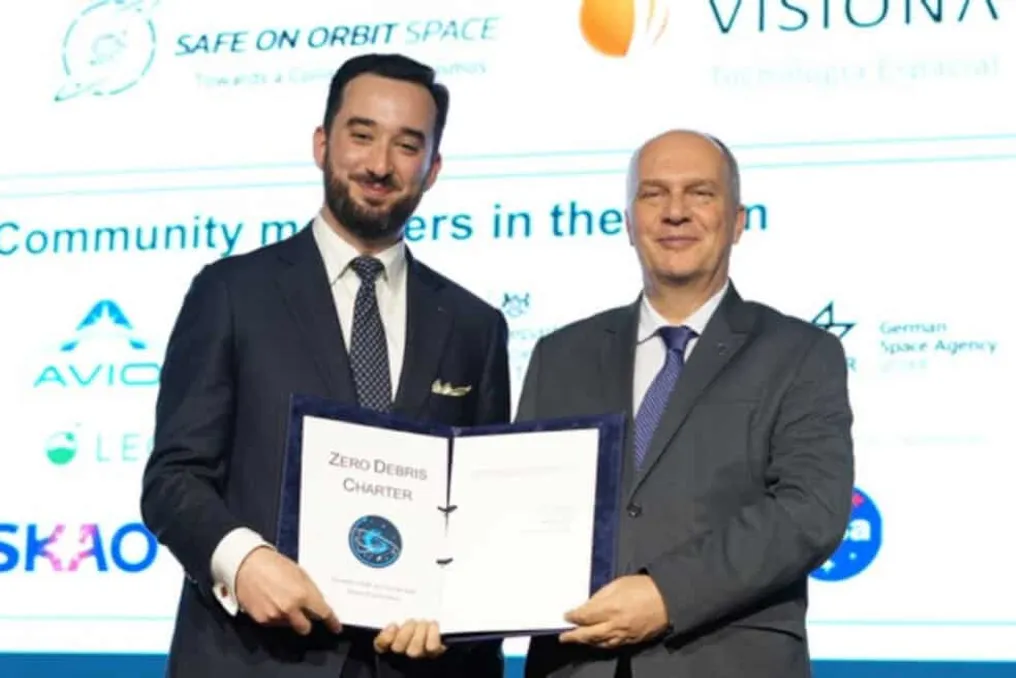
Brazil formalized its adherence to an international pact aimed at reducing the amount of space debris and enhancing the safety of satellites in orbit. This acceptance of the so-called Zero Debris Charter occurred on November 4th during the 8th Space Sustainability Summit, officially ratified by the Brazilian Space Agency (AEB). Brazilian companies Visiona Espacial and Safe on Orbit also signed this document.

This initiative, led by the European Space Agency (ESA), brings together governments, companies, higher education institutions, and other entities in the space sector. The central purpose is to define procedures to reduce debris creation and maintain operational conditions in space until the year 2030.

The agreement stipulates several actions, such as preventing orbital collisions and explosions, improving the monitoring of space objects, and planning appropriately for the disposal of satellites and other equipment after the completion of their functions.

The AEB, an agency linked to the Ministry of Science, Technology, and Innovation (MCTI), announced Brazil's entry into this commitment. According to the Agency's president, Marco Antonio Chamon, sustainability must be a factor considered from the initial phase of space project development.

The Zero Debris Charter constitutes a global agreement designed to encourage more sustainable methods in space activities. Its development began in 2023 through a collaborative process coordinated by the ESA, involving various representatives from industry, academia, and space agencies.

The document establishes collective goals and principles valid until 2030. One objective is to increase the availability of data on space objects measuring up to five centimeters in low Earth orbit and 20 centimeters in geostationary orbit. This would facilitate better risk assessment and maneuver planning to avoid impacts.

Additionally, the Charter mandates that the probability of generating debris from fragmentation or collisions should be less than one event in a thousand objects during their time in orbit.

Space debris comprises artificial artifacts that remain in orbit without performing any operational function. This category includes deactivated satellites, rocket parts, equipment remnants, and waste generated by explosions or collisions.

Even small particles can pose a danger to active satellites, as these fragments move at extremely high speeds, making potential impacts with small objects quite risky. The scenario could worsen, as a collision can generate new fragments, which then pose extra threats to other missions.

The concern extends beyond scientific activities, as satellites are vital for navigation, communication, environmental monitoring, and weather forecasting services. Damage to these devices can impact terrestrial services and infrastructure.

One of the pillars of the Zero Debris Charter is considering the fate of equipment even before its launch. When a satellite completes its useful life, it should not remain indefinitely in an orbital area used by other equipment. Depending on the altitude and mission characteristics, tactics can be implemented to remove it from the operational zone or induce its reentry into the Earth's atmosphere.

The initiative also sets goals for removing objects from low and geostationary orbits, aiming for a minimum success rate of 99% in vacating these regions after missions conclude.

Another aspect addressed is the reduction of risks to people on the surface. Certain components of space equipment may survive atmospheric passage and reach the ground.

It is important to note that the Zero Debris Charter does not have mandatory legal force. According to the ESA itself, it constitutes a collaborative commitment, dependent on the contribution of participants according to their capabilities and restrictions.

In the Brazilian context, the adherence did not come with new regulatory rules for those operating satellites, nor were specific national deadlines defined for the application of the measures. Thus, the country's participation signals an engagement with international space sustainability practices, during a period of growth in orbital activities and increasing attention to operational safety.

Popular