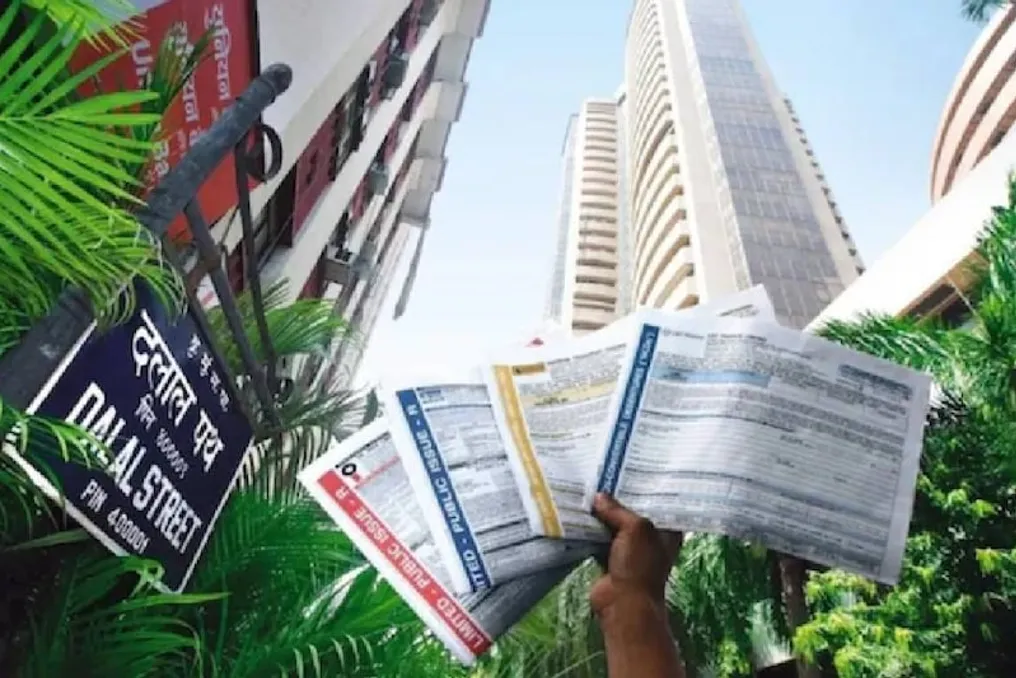
National stock markets demonstrated strong growth on Wednesday due to broad demand. The Sensex index increased by more than 1700 points, which is 2 percent, reaching a daily high of 84,156 points. Similarly, Nifty 50 rose by 500 points, or 2 percent, reaching a daily high of 25,500 points.
The growth was uniform across sectors, with banking and financial sector stocks leading the gains. The Nifty Financial Services index jumped by 2.4 percent, and the Nifty Bank index grew by 1.9 percent. Among major banking companies, HDFC Bank, ICICI Bank, and Axis Bank all showed growth of more than 3 percent. Additionally, the Nifty IT index also rose by 1.9 percent.
Analysts attribute this surge in market sentiment to a combination of factors: a sharp change in the position of institutional investors in India (FII), unwinding of artificial intelligence (AI) trends, the strengthening of the rupee, and higher-than-expected profit growth figures. VK Vijayakumar, Chief Investment Strategist at Geojit Investments, noted that the improvement in India's fundamentals, reflected in the impressive 27% growth in Nifty 50 profits in the second quarter, can support the growing inflow of FII and lend stability to the market. He also emphasized that India has become the best large market globally as of this month.
As of 10:40 AM, the BSE benchmark rose by 1,672 points, or 2.03 percent, reaching 84,108 points. The Nifty 50 traded 480 points higher, or 1.88 percent, at 25,825 points.
Key Drivers of Market Growth
Analysts note that Indian stocks were rising despite the deepening technology downturn in Asian markets. The slowdown in AI trends continues to support the Indian IT sector, reducing concerns about disruptions to traditional services. While Asian stocks fell because the US tech rally subsided, Asia's chip-dependent markets suffered the main losses. South Korea's Kospi fell by 5.7 percent, and Taiwan's TAIEX declined by 7 percent as two key AI trading barometers came under pressure. Japan's Nikkei 225 dropped by 3.3 percent. Overnight in the US, Nasdaq fell by 1.5 percent, and Nvidia lost some of its gains after Jensen Huang returned as CEO by 5.9 percent, while Anthropic fell 6.5 percent below its IPO price.
According to the Deutsche Bank Research Institute report, India's low correlation with other global indices suddenly appears as an advantage, contributing to record foreign investment inflows into Indian stocks.
FII Activity
On Monday, FIIs acquired shares worth 545.728 billion rupees. Analysts believe that foreign investors have become the main driver of market growth in recent weeks, with net investments exceeding the one trillion rupee mark, reaching 1.27 trillion rupees in November, the highest monthly inflow. Vijayakumar stated that 'the vicious cycle of FII selling leading to rupee devaluation, which causes further FII selling, has turned into a virtuous cycle of FII buying, leading to rupee strengthening and stimulating further FII purchases.' This strong inflow in November followed FIIs withdrawing 348.43 billion rupees in October and 358.61 billion rupees in September.
Strong Earnings Figures
Brokerage firms have become more optimistic about corporate earnings after public companies published strong results for the second quarter. Consolidated adjusted net profit grew by 30.4 percent year-on-year, the fastest growth in 12 quarters. Net sales volume increased by 22.4 percent, the highest figure in 16 quarters. Following this, Motilal Oswal Securities raised its EPS estimate for Nifty 50 for the 2027 fiscal year to 1,243 rupees. Elara Capital forecasts EPS growth of 9.9 percent, 17.1 percent, and 14.5 percent in 2026-27, 2027-28, and 2028-29, respectively. HDFC Securities believes that such high return on profit is remarkable given the uncertain economic environment due to global turmoil and high crude oil prices. Overall year-on-year profit growth in the second quarter of the 2027 fiscal year was the highest in the last three years, exceeding the narrow range of 2-12 percent.
Oil Price Decline
On Wednesday, oil prices moderately decreased, partially offsetting yesterday's rise. Concerns over supply disruptions in West Asia were neutralized by increased supply and the prospect of market surplus. Brent crude futures fell by 0.5 percent to $90.9 per barrel, and WTI dropped by 0.6 percent to $81.5. Mohammed Imran, analyst at Mirae Asset Sharekhan, noted that President Donald Trump's signal about the possibility of negotiations with Iran before the end of the year reduced the immediate risk of renewed US military strikes. 'Price movements suggest that traders are betting on better supply availability and a more comfortable global balance by the end of the year and in 2027. Supplies in the Middle East also remain high.'
Technical Analysis and Recovery After Monday's Sell-off
Earlier on Monday, the market closed sharply lower after a strong rally last week. Pabitro Mukherjee, Vice President of Research at Bajaj Broking, suggested that after a recent strong rise of more than 15 percent in just 4 weeks, some consolidation is likely. He believes that Nifty will likely consolidate in the range of 24,800–25,800 in upcoming sessions, forming a base for the next upward move toward the previous all-time high of 26,373 level.
Short-term support is set at levels 24,800–24,600, which, according to him, is the convergence point of the recent breakout zone, the 20-day EMA, and the 38.2% retracement of the rally over the last 4 weeks.