Yamaha initiated a pilot project for electric bicycle battery swapping in Berlin, Germany, nearly a year after the scheduled start date for commercial service. This test began at the end of October but was formally announced by the manufacturer only last Tuesday (10th).
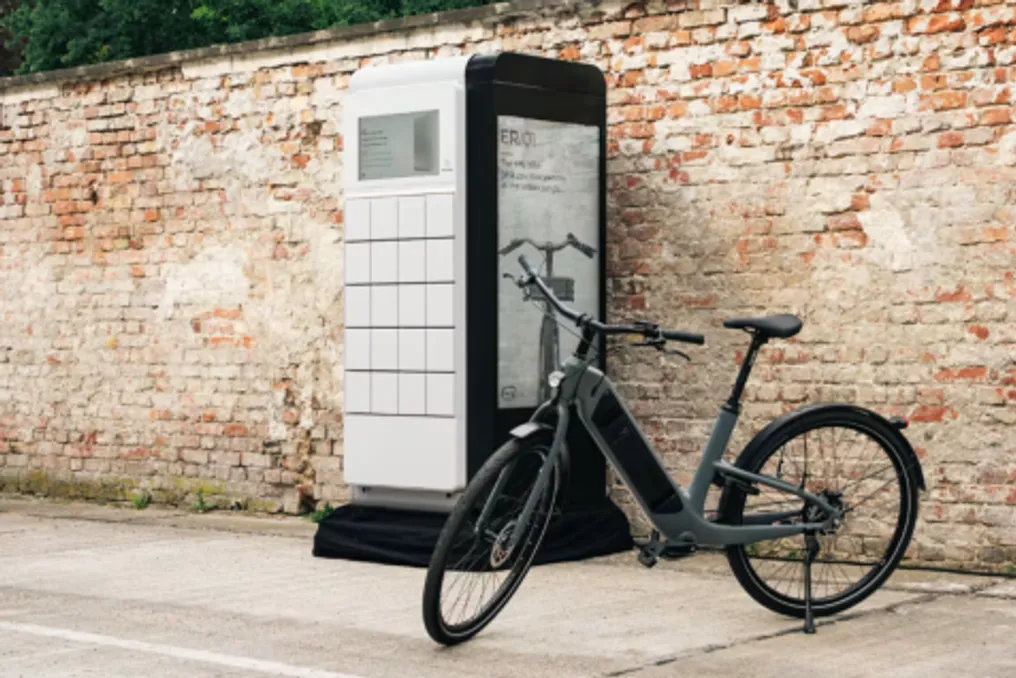
The operation is conducted by Enyring, a subsidiary established by Yamaha in the German capital in December 2023. The system works with the brand's own electric bicycles, removable batteries, and swap stations distributed throughout the city, allowing the user to replace a discharged battery with a charged one at the nearest point instead of recharging it from an outlet.
Logistics companies, bike rental services, and corporate mobility service providers are participating in this pilot, using the vehicles daily while Yamaha collects data on operational efficiency and equipment usage.
Project Overview
Enyring was initially conceived with the goal of starting operations in the first half of 2025, in both Germany and the Netherlands. Subsequently, the commercial launch was postponed to the fourth quarter of 2025, covering Berlin and Amsterdam, with plans for about 40 stations in the German capital and 20 in the Dutch capital.
After more than a year, what is being presented is merely a test, restricted to Berlin. Furthermore, there has been a shift in the target audience: the initially planned model was for the end consumer, who would purchase the bicycle and subscribe to the battery service separately. Currently, the focus is on corporate fleets that use the vehicles continuously, justifying the investment in a network of stations.
One aspect that diverges from Yamaha's own narrative is that Enyring's batteries are exclusively compatible with the brand's bicycles. This contrasts with SBMC, a consortium created to standardize interchangeable batteries in Category L vehicles, which includes other manufacturers such as Honda, KTM, and Piaggio. Thus, although there is an open standard in the concept, the practical system is closed.
Challenges in the Brazilian Market
The prospects for implementing a similar system in Brazil are considered low, given the current market situation. The main obstacle lies in Yamaha's performance in the national electric segment.
The Neo’s Connected, which was Yamaha's first electric motorcycle in the country and the first from a major Japanese company to enter the Brazilian market, was launched at the end of 2024 for R$ 33,990, with production in Manaus (AM). In April of this year, the manufacturer permanently reduced the price by R$ 8,000, bringing it down to R$ 25,590, but this model remains the most expensive electric motorcycle in Brazil.
This price reduction did not change the landscape. According to the Fenabrave registration ranking, Yamaha did not feature among the top 15 brands registering electric motorcycles in the country. This result contrasts with its performance in the combustion vehicle market, where the company holds the second position.
A battery swapping network requires scale, meaning economic viability is only achieved with a large volume of circulating vehicles and many daily swaps. This is the model adopted by companies serving delivery drivers in São Paulo. Vammo, for example, operates over 400 stations in Greater São Paulo and partnered with 99 to provide a thousand electric bikes via subscription, in addition to opening its first base outside the metropolitan area in Campinas in October. Conversely, Mottu, a leader in delivery driver rentals, slowed the expansion of its electric fleet due to costs.
Yamaha has not disclosed similar plans for Brazil. Due to the low sales of the Neo’s Connected and the absence of an electric bicycle line in the country, the necessary vehicle base to make a station network economically sustainable locally is missing.
Yamaha's urban strategy in Brazil focuses on scooters, where the brand has directed its updates. The ZR Hybrid Connected was introduced as the most accessible entry option, starting at R$ 14,090. The NMax 160 received updates for the 2027 line, and the XMAX 300 Connected remains the top-of-the-line model in the category, with an initial price of R$ 38,690.
At the Interlagos Festival, the brand presented the Tracer 7 and the R7, but constant updates also occur among scooters, all of which are gasoline-powered. The Neo’s Connected was chosen to debut in the electric segment, but until it reaches the desired number of buyers, battery swapping remains a topic restricted to Europe.